
⭐ EXPERT-REVIEWED  |  ✅ UPDATED 2026  |  🔒 NO SPONSORED BIAS  |  📚 EVIDENCE-BASED

Category: AI Business Tools

  • Best AI Employee Recognition Tools 2026: Boost Team Morale

    Best AI Employee Recognition Tools 2026: Boost Team Morale

    Key Takeaways

    • AI-powered recognition platforms move beyond static anniversary rewards to provide real-time, behavior-based acknowledgment.
    • Automated sentiment analysis helps managers identify high-performing teams while ensuring no achievement goes unnoticed.
    • Integration with communication hubs like Slack and Microsoft Teams is essential for embedding recognition into daily workflows.
    • Personalization engines use AI to match rewards with individual employee preferences, significantly increasing the perceived value of incentives.
    • Modern employee retention tools leverage predictive analytics to highlight morale dips before they lead to voluntary attrition.

    In the high-velocity professional landscape of 2026, the traditional annual performance review has become a relic of a bygone era. Companies are increasingly recognizing that the heartbeat of sustainable success is not just capital or strategy, but a consistently engaged, recognized, and motivated workforce. Enter the era of intelligent employee appreciation: a paradigm shift powered by machine learning and natural language processing. Today’s sophisticated AI employee recognition platforms are doing more than just facilitating automated gift card distribution; they are acting as the architectural bedrock for healthy organizational culture. By leveraging employee engagement AI, leadership teams can now foster a transparent, high-trust environment where efforts are rewarded in real-time, effectively mitigating the burnout risks associated with remote and hybrid work models. As we explore the top-tier solutions for modern organizations, it is clear that the integration of automation into peer-to-peer and management-led recognition is no longer a luxury—it is a foundational requirement for talent acquisition and long-term retention.

    Why AI is Transforming Employee Recognition Programs

    The transition from legacy reward systems to AI-augmented recognition represents a shift from reactive to proactive human capital management. Historically, recognition programs suffered from a “top-down” bottleneck: recognition was often tied to the sporadic availability of managers or the rigid cycle of an annual review. This resulted in what many organizational psychologists describe as the “recognition gap,” where high-performing employees felt undervalued despite consistent contributions because their work was not explicitly acknowledged in the moment. AI for company culture bridges this gap by democratizing recognition and ensuring that it is data-driven, consistent, and equitable.

    One of the primary catalysts for this transformation is the application of natural language processing (NLP) within automated employee rewards software. Modern platforms scan public and private communication channels to detect keywords, project milestones, and expressions of gratitude. When an employee consistently displays core values—such as “collaboration,” “innovation,” or “customer focus”—the AI highlights these contributions to leadership. This capability does more than just simplify administrative tasks; it provides actionable intelligence to HR departments regarding who is actually driving value within the organization. Unlike legacy systems that relied on memory or spreadsheets, AI creates an objective audit trail of contributions that can be used to inform promotion tracks, performance bonuses, and long-term development plans.

    Furthermore, AI-driven platforms address the inherent biases that plague manual recognition programs. Humans are prone to “proximity bias”—the tendency to favor those we see most often or with whom we share similar backgrounds. By using algorithmic prompts, these tools remind managers to recognize employees who might otherwise be overlooked, such as those working on long-term, non-visible technical projects or those operating in asynchronous time zones. This ensures that the recognition is meritocratic and broad-reaching. When employees see that the recognition system is fair and based on actual work output rather than interpersonal visibility, their trust in the organization deepens. This creates a feedback loop where engagement fosters higher performance, which is then captured by the AI, triggering further recognition and reward, ultimately becoming one of the most effective employee retention tools available to modern enterprises.

    Key Features to Look for in AI Rewards Software

    Selecting the right platform requires a deep dive into the specific features that distinguish high-performing tools from basic notification systems. The most critical component of any top-tier team appreciation software is the personalization engine. Generic rewards, such as a standardized digital gift card or a company-branded coffee mug, rarely inspire genuine loyalty. AI-powered platforms excel by utilizing predictive analytics to offer a catalog of rewards that align with individual interests, geographic locations, and life stages. For instance, an employee who demonstrates a passion for professional development might receive a curated list of relevant certifications or workshops, while another might prefer wellness-focused rewards or charitable donations. This individualization is managed by AI models that learn from historical redemption patterns, effectively turning the rewards catalog into a dynamic, personalized storefront.

    Another essential feature is the integration of sentiment and performance analytics. Advanced systems do not simply track how many “points” an employee receives; they analyze the sentiment of the recognition messages themselves. By correlating positive sentiment in team feedback with employee tenure, these platforms provide HR leaders with a clear view of which teams are thriving and where morale might be suffering. This is critical for identifying early warning signs of turnover. If the volume of peer-to-peer appreciation within a specific department drops significantly over a one-month period, the platform can alert department heads, allowing them to investigate potential stressors or communication breakdowns before they escalate into resignations.

    Security and scalability are equally paramount. As these tools process significant amounts of employee data—including performance reviews, communication logs, and personal preferences—they must adhere to strict data privacy standards, such as GDPR and SOC2. A platform’s ability to scale is also vital for growing organizations. Look for tools that offer robust API capabilities and white-labeling options, allowing the platform to grow and evolve alongside your company brand. Finally, ensure the system includes a “budget guardrail” feature. AI can effectively manage reward points distribution based on pre-set budgetary caps, ensuring that the recognition program remains fiscally sustainable while still allowing for the meaningful celebration of milestones. Below is a comparison of current approaches to employee recognition and how they align with business objectives.

    Approach Mechanism Best For
    Predictive Analytics Focus Uses historical data to flag potential attrition and morale drops. Large enterprises focused on high-stakes talent retention.
    Peer-to-Peer Social Engine Encourages decentralized recognition via social-media-style feeds. Collaborative startups and flat-structured organizations.
    Value-Based Behavioral AI Recognizes contributions specifically tied to company core values. Mission-driven companies and established corporate cultures.

    How AI Automates Peer-to-Peer Recognition Cycles

    Peer-to-peer recognition is the most authentic form of appreciation, yet it often fails in practice because it requires active effort. Employees are busy, and unless they are prompted to notice the small, day-to-day contributions of their colleagues, those contributions tend to remain unacknowledged. AI transforms this manual, often-neglected process into an automated, habit-forming loop. Through proactive “nudge” technology, AI-driven platforms can periodically prompt users to recognize a colleague based on shared project activity or collaborative intensity detected in the company’s task-management systems.

    The workflow typically functions as follows: The AI integrates with project management tools or calendars to identify when a cross-departmental collaboration occurred. For example, if a developer completes a pull request that a product manager reviewed, the platform recognizes that a collaborative task has reached completion. Instead of relying on the individuals to remember to send a “thank you,” the system sends a nudge to the parties involved, suggesting they recognize each other’s efforts. The platform can even offer a set of AI-generated templates to make the recognition process faster, turning a potential five-minute writing task into a thirty-second acknowledgment. This reduces the cognitive load on the employee, making them significantly more likely to engage in the recognition culture.

    Furthermore, AI manages the reward distribution that accompanies peer appreciation without requiring manual approval for every transaction. Organizations set parameters within the platform—such as monthly budgets for point-based rewards—and the AI handles the balance, the peer-led authorization, and the communication of the reward. This decentralized approach fosters a culture of horizontal appreciation where employees feel their work is validated by those who work alongside them every day. It also creates a “social proof” element; when public recognition feeds show that top performers are consistently being praised by their peers for specific skills, it sets a cultural standard for excellence. This form of peer-to-peer engagement is highly effective in building community, particularly in remote-first environments where physical water-cooler moments are non-existent, making these peer-to-peer recognition tools essential for maintaining team cohesion.

    Integrating Recognition Platforms with Slack and Teams

    In the modern digital workplace, if a tool does not live where the employees work, it effectively does not exist. Recognition platforms that require users to log into a separate portal often suffer from low adoption rates. This is why the most successful AI employee recognition platforms prioritize deep, seamless integration with primary communication hubs like Slack and Microsoft Teams. By embedding the recognition experience directly into the flow of work, companies remove the friction of jumping between tabs, ensuring that appreciation becomes a natural part of the workday.

    Integration strategies generally involve the deployment of a dedicated bot within the workspace. These bots function as both a facilitator and a cheerleader. When a user tags a colleague in a channel with a specific command (e.g., /recognize), the bot captures the interaction, logs the contribution, and publishes a celebratory message in a dedicated “#kudos” or “#shoutouts” channel. This public display of appreciation is vital for morale; it allows the entire organization to see the wins happening in real-time, which builds momentum and fosters a sense of collective progress. From an AI perspective, the bot acts as a listening post, aggregating these interactions to provide managers with monthly reports on team contribution trends.

    The technical implementation of these integrations is usually straightforward, utilizing webhooks and secure API endpoints to ensure data privacy. However, the true value lies in the “context-awareness” that sophisticated integrations offer. A high-quality integration will pull information from your HRIS (Human Resources Information System) to ensure that the recognition data is accurate—such as tracking the department of the recipient or calculating the tenure-based reward thresholds. By synchronizing this data, the platform ensures that rewards are not just social accolades but are also tied to the employee’s formal profile, providing HR with a consolidated view of engagement metrics. When deploying these integrations, it is best practice to start with a soft launch in specific pilot teams. This allows leadership to monitor the “vibe” of the new recognition culture and adjust the tone of the AI-led prompts and bot notifications before a company-wide rollout. A well-integrated recognition bot can become a beloved part of the digital office, reinforcing values and providing small, regular dopamine hits that sustain long-term engagement.

    Top AI Platforms for Personalized Employee Rewards

    With the market for automated employee rewards software expanding rapidly, companies must evaluate platforms based on their ability to handle sophisticated personalization rather than just transaction volume. As of 2026, the industry leaders are those that have moved past basic reward fulfillment to offer a “concierge-style” experience. These platforms utilize AI to synthesize behavioral data, personal interests, and performance metrics into a unique reward strategy for every staff member. This means that instead of offering a one-size-fits-all gift card, the platform might suggest a donation to a charity the employee supports, a subscription to a professional journal, or credits toward a local experience or retail partner that aligns with their personal interests.

    The current market leaders typically fall into three distinct categories. First, there are the “Full-Stack Engagement Suites” that provide recognition as part of a larger ecosystem of performance management and pulse-surveying tools. These are ideal for organizations looking for a centralized source of truth for all things related to culture and performance. Second, there are “Micro-Recognition Specialists” that focus exclusively on peer-to-peer appreciation. These tools are often faster to implement, highly intuitive, and emphasize social connectivity, making them a strong fit for agile teams that prioritize quick feedback loops. Finally, there are the “AI-First Analytics Platforms,” which prioritize data density and predictive modeling, offering deep insights into organizational health that can be used to drive high-level HR strategy.

    When selecting a platform, leadership must weigh the importance of “feature depth” versus “ease of adoption.” A platform with a highly complex AI engine might offer profound insights, but if the interface is not intuitive for the average employee, the system will not see the usage rates required to train the AI effectively. Many experts suggest prioritizing platforms that offer robust mobile applications, as employee recognition often happens on the go. Furthermore, ensure that the vendor provides clear documentation regarding how their AI models handle data—specifically, look for transparent documentation on how they avoid bias and how they protect sensitive employee communication. By choosing a partner that aligns with your specific cultural needs, you can transform your approach to appreciation from a transactional administrative task into a strategic engine for growth and retention.

    Measuring the Impact of Recognition on Employee Retention

    The transition from traditional, annual performance reviews to continuous, AI-driven recognition represents a paradigm shift in organizational psychology. To understand the return on investment (ROI) for these platforms, HR departments must move beyond vanity metrics—such as the number of “likes” or “badges” issued—and focus on predictive indicators of employee churn. AI-powered employee recognition platforms now offer advanced analytics dashboards that correlate recognition frequency with tenure, absenteeism, and internal mobility.

    When measuring the impact of these tools, organizations should first establish a baseline for retention rates among specific cohorts. By segmenting data, leaders can observe whether teams that utilize peer-to-peer recognition tools show higher stability compared to teams relying on top-down, infrequent praise. Modern engagement AI systems aggregate unstructured data from recognition notes to perform sentiment analysis. If the software identifies an uptick in appreciative language regarding specific managers or team goals, it often serves as a leading indicator of high morale and reduced voluntary turnover.

    Furthermore, effective measurement requires tracking the “velocity” of recognition. Does the recognition occur in real-time, or is there a delay? Systems that prompt users to acknowledge contributions immediately following a project milestone tend to correlate more strongly with higher retention scores. By mapping the frequency of recognition against exit interview data, firms can identify the specific moments where employee sentiment begins to decline, allowing HR to intervene before a resignation is tendered. Advanced platforms provide these insights via predictive modeling, identifying high-risk individuals based on a sudden withdrawal from the recognition platform’s social ecosystem.

    Budgeting for AI-Driven Appreciation Initiatives

    Investing in automated employee rewards software requires a nuanced approach to budgeting that accounts for both software subscription fees and the fluctuating costs of the rewards themselves. Many organizations struggle to categorize these expenditures, often debating whether they belong under “Tech Infrastructure” or “Human Resources Operations.” A successful budget for AI appreciation initiatives typically splits costs into three distinct buckets: recurring platform costs, reward budget allocations, and change management investment.

    The platform cost is usually a per-user, per-month (PUPM) subscription model. However, hidden costs can arise from implementation and integration. You must account for the billable hours required for your IT or HRIS team to connect the platform with existing communication tools like Slack or Microsoft Teams. If the recognition tool lacks native API capabilities for your specific tech stack, custom development work may be necessary, which can increase initial capital expenditure.

    Budgeting for rewards—the actual monetary or point-based compensation—should be viewed as a variable expense rather than a fixed cost. It is recommended to establish a “reward pool” that scales based on company performance metrics. If the firm exceeds its quarterly targets, the budget for rewards can automatically increase, creating a direct feedback loop between company success and employee benefit. Below is a comparison table designed to help stakeholders evaluate different platform investment tiers.

    Platform Type Core Capability Best For Cost Structure
    Enterprise AI Suites Deep People Analytics & Global Compliance Large Global Corporations High PUPM + Custom Setup
    Mid-Market Automation Slack/Teams Integration & Peer Recognition Scaling Tech Startups Flat Monthly Fee + Reward Pool
    Point-Based Marketplace Gift Card/Swag Fulfillment Remote-First Distributed Teams Markup on Reward Redemptions

    Finally, do not overlook the budget for “social friction”—the effort required to drive platform adoption. A tool that is purchased but never used is a sunk cost. Allocating a portion of the budget toward training materials, internal marketing campaigns, or even “super-user” incentives can prevent the platform from becoming abandoned software, ensuring the investment achieves its intended impact on team appreciation.

    Balancing Automated Recognition with Authentic Human Connection

    The greatest risk in deploying AI for company culture is the potential for dehumanization. While automated reminders can ensure that no employee goes unnoticed, there is a fine line between a thoughtful acknowledgment and a robotic, scheduled message. To maintain authentic human connection, the AI should be positioned as an assistant that facilitates recognition rather than a surrogate that performs it.

    The most effective strategy is to use AI to bridge the gap in context, not to replace the expression of gratitude. For example, an AI system can notify a manager that a direct report has reached a milestone or completed a specific, difficult task. It can even suggest a draft message based on the employee’s documented achievements. However, the final output must be tailored by the human leader. If a manager consistently uses generic templates provided by an AI, employees will quickly sense the lack of sincerity, which can be more damaging to morale than receiving no recognition at all.

    Furthermore, organizations should foster “human-centric” rules of engagement. Encourage employees to include specific, non-automated details in their peer-to-peer recognition messages. If an automated software prompts a user to write a “Thank You” note, that prompt should encourage the user to describe exactly what the other person did and why it mattered to the project outcome. By emphasizing the “why” and “how” over the “what,” teams can maintain an authentic culture of appreciation while leveraging the organizational benefits of automated tracking and notification systems.

    Security and Data Privacy Considerations for HR Tech

    Implementing AI-powered tools necessitates a rigorous review of data security, especially when these platforms process sensitive employee performance and sentiment data. HR data is inherently personal, and the introduction of AI algorithms that analyze individual behavior creates a new surface area for potential privacy breaches. Before deploying any team appreciation software, the organization must verify that the vendor complies with international standards, such as GDPR in Europe or SOC2 Type II certification in North America.

    Key concerns include data residency, anonymization, and access control. Where is the employee data stored? If the recognition tool uses generative AI to analyze sentiment, is that data being used to train the vendor’s public-facing models? Responsible vendors will guarantee that all data used for internal sentiment analysis remains siloed within the enterprise environment and is never shared across other clients. Organizations must demand “zero-retention” or “private cloud” agreements if they operate in highly regulated sectors.

    Additionally, HR leaders should implement strict role-based access control (RBAC). A manager should be able to see recognition trends for their direct reports, but they should not necessarily have access to the raw sentiment analysis data of peers across other departments. Transparency is essential; the company must clearly communicate to employees what data is being collected, how the AI is analyzing it, and how that information will (or will not) influence performance reviews. Building trust through privacy is just as important as building morale through recognition.

    Frequently Asked Questions

    How does AI improve upon manual employee recognition programs?

    AI improves recognition by removing the bias of forgetfulness and ensuring consistent coverage across a team. Manual programs often rely on the manager’s memory or the “loudest” employee, whereas AI-powered platforms ensure that quiet contributors are recognized for their data-backed milestones, ensuring a more equitable distribution of praise.

    Can AI-driven recognition inadvertently create a toxic competitive environment?

    Yes, if not managed correctly. If recognition is displayed on a public leaderboard without context, it can foster unhealthy competition. To avoid this, successful companies configure their platforms to focus on individual growth, team-based goals, and core company values rather than simple “score-keeping.”

    Is it necessary to have a dedicated HR tech budget for these tools?

    While some smaller companies start with basic integrations, a dedicated budget is recommended. Without a clear financial allocation, these tools often lack the necessary integration support or reward fund, leading to low adoption rates and poor integration with the existing company culture.

    How do these platforms ensure sentiment analysis is accurate?

    Most modern tools utilize Large Language Models (LLMs) tuned specifically for corporate communication. These systems are trained to recognize the nuances of professional praise, sarcasm, and professional growth, which significantly improves the accuracy of sentiment analysis compared to general-purpose NLP tools.

    What should we do if employees ignore the recognition platform?

    Low adoption is usually a symptom of leadership neglect rather than a software failure. If managers are not actively using the tool to acknowledge their own teams, employees will follow suit. Start by ensuring leadership models the behavior by sending regular, high-quality recognition notes through the platform.

    Are these tools compliant with privacy laws when they monitor employee sentiment?

    Yes, provided the vendor adheres to strict data privacy standards like GDPR and CCPA. Legitimate HR platforms focus on aggregate sentiment data rather than identifying individual grievances for disciplinary action. Always check the vendor’s privacy policy to ensure employee sentiment data is encrypted and not used for third-party profiling.

    Conclusion

    In the evolving landscape of 2026, the intersection of technology and human connection has never been more critical. AI-powered employee recognition platforms offer a transformative opportunity to scale appreciation, normalize peer-to-peer feedback, and provide HR leaders with the data necessary to improve retention and culture. However, technology is only the enabler; the success of these initiatives relies on a strategy that prioritizes human authenticity, rigorous data security, and thoughtful integration into the daily workflow.

    By moving beyond generic rewards and utilizing AI to highlight specific, valuable contributions, your organization can foster a culture where every team member feels seen, valued, and empowered. If you are ready to modernize your company culture, begin by auditing your current recognition processes, selecting a platform that aligns with your specific organizational goals, and committing to a culture where gratitude is a daily occurrence, not a yearly event.

    Take the next step: Schedule a demo with three of the top-rated AI recognition platforms discussed in this guide and conduct a pilot program with a single department to measure the immediate impact on team morale and engagement metrics.

    By aismarttoolsreview Editorial Team

  • Best AI Employee Feedback Platforms 2026: Top 5 Compared

    Best AI Employee Feedback Platforms 2026: Top 5 Compared

    Key Takeaways

    • AI-driven platforms have shifted from simple survey tools to predictive systems that anticipate turnover and burnout before they manifest.
    • Natural Language Processing (NLP) allows for deep sentiment analysis, transforming qualitative employee comments into actionable data points.
    • Modern performance management AI helps democratize feedback, ensuring managers remain accountable through data-backed coaching prompts.
    • The best employee retention software prioritizes automated action plans, closing the “feedback loop” that often stalls human-led initiatives.
    • Selecting the right platform requires balancing robust data security with intuitive interfaces to drive high adoption rates across diverse workforces.

    As we head into 2026, the workplace has evolved into a hyper-dynamic environment where the traditional annual review is effectively obsolete. Organizations are no longer satisfied with static, point-in-time snapshots of morale. Instead, they are turning to sophisticated AI employee feedback systems to provide a continuous, nuanced pulse of the company culture. For HR leaders and talent managers, the challenge is no longer gathering enough data; it is processing the deluge of information effectively. This article by the aismarttoolsreview Editorial Team explores how AI is reshaping the employee experience, allowing organizations to pivot from reactive management to proactive, data-informed leadership.

    Why AI-Driven Employee Feedback is Crucial in 2026

    In 2026, the competitive landscape for talent has reached a point of saturation where employee experience is the primary differentiator for high-performing organizations. The shift toward AI employee feedback has moved beyond a trend; it is now a baseline expectation for enterprises aiming to maintain high engagement levels. When companies rely on outdated manual processes, they often find themselves analyzing data that is already weeks or months old, making it impossible to address immediate cultural shifts or interpersonal friction.

    AI platforms bridge this gap by offering a continuous stream of insight. Unlike legacy systems, modern AI tools use machine learning algorithms to identify patterns in how employees communicate, work, and collaborate. By integrating these systems, HR departments can now monitor the pulse of the organization with precision, detecting subtle trends in sentiment that would be invisible to the human eye.

    For instance, consider the way AI identifies shifts in engagement. Where a human manager might observe a dip in productivity, an AI-powered system can correlate that dip with a recent change in departmental policy, a shift in team-wide work hours, or even the communication style of a particular leader. This depth of visibility is critical for employee retention software. Experts generally agree that the cost of replacing an employee often far exceeds the cost of implementing a system designed to improve morale and proactively catch burnout.

    Furthermore, AI-driven feedback facilitates an inclusive environment. Many employees, particularly those in remote or hybrid settings, often feel unheard if they do not have a strong rapport with their direct supervisor. AI platforms provide an anonymous, secure, and structured outlet for every voice, ensuring that the feedback pipeline is equitable. By removing the fear of retribution through automated, de-identified data processing, these platforms encourage a higher volume of honest input. This, in turn, provides leadership teams with a much more accurate map of the organizational landscape, allowing them to make strategic decisions based on aggregate sentiment rather than anecdotal evidence gathered in passing. The maturity of these systems in 2026 means that businesses are no longer guessing what drives performance—they are measuring it in real-time.

    How AI Enhances Real-Time Pulse Surveys

    Real-time pulse surveys have undergone a significant transformation through the application of artificial intelligence. In previous years, these surveys were often hindered by low completion rates and the administrative burden of manual analysis. Today, automated feedback tools leverage AI to create adaptive questioning, meaning the survey evolves based on how the employee engages with it. If an employee provides a neutral response to a question about work-life balance, the AI can intelligently trigger a follow-up question to dig deeper into the specific cause—whether it be workload, meeting frequency, or tool friction—without the user feeling like they are being cross-examined.

    This responsiveness is a hallmark of sophisticated performance management AI. Because these systems are designed to be short and frequent rather than long and infrequent, they significantly reduce survey fatigue. By automating the cadence of these pulses, organizations can achieve higher participation rates. AI engines also excel in sentiment analysis, utilizing Natural Language Processing (NLP) to parse through open-ended responses. Instead of categorizing feedback into rigid numerical scales, AI can extract themes from paragraphs of text, identifying concerns about leadership transparency, career progression, or team culture with surprising accuracy.

    Tool Approach Core Functionality Best For
    Predictive Sentiment Analytics Identifies burnout patterns before resignation occurs. Large remote-first enterprises.
    Automated Action Planning Links survey gaps to specific manager interventions. Teams focused on leadership growth.
    NLP-Driven Qualitative Insights Translates open-ended feedback into topical clusters. Rapidly scaling startups.
    Integration-Heavy Pulse Systems Syncs data from Slack, Jira, and Email activity. Tech and engineering-led firms.

    When we consider the integration of these tools into daily workflows, the advantages become clearer. In 2026, many leading platforms offer API connections to existing messaging and project management software. This allows the AI to trigger a pulse survey precisely at a moment that is contextually relevant—for example, immediately after a high-pressure project deadline or a major team restructuring. This temporal relevance captures authentic sentiment rather than memory-based feedback. By continuously learning from these data points, the platform becomes smarter over time, customizing itself to the unique cultural vernacular of the organization. This reduces the need for constant HR recalibration and allows the system to surface only the most high-impact insights for human review.

    Key Features to Look for in Feedback Platforms

    When selecting a platform for 2026, the sheer number of options can be overwhelming. To cut through the noise, decision-makers should prioritize specific features that demonstrate technical maturity. First and foremost is the security and anonymity framework. For AI employee feedback to be effective, employees must trust that their comments are truly private. A high-quality platform will utilize sophisticated hashing and masking algorithms to ensure that while trends are visible to leadership, individual identities remain protected unless the employee specifically opts to disclose them.

    Secondly, look for robust predictive modeling capabilities. A great platform does not just report what happened last month; it uses historical data to forecast trends. If the platform can highlight a “risk score” for teams based on engagement trends, it moves from being a repository of information to an active warning system. This is a critical component of modern employee retention software, as it empowers HR to intervene with coaching or resource adjustments long before a team faces a turnover crisis.

    Thirdly, the user interface (UI) for both administrators and employees must be seamless. If the survey process feels like a chore, participation rates will plummet. The best tools utilize gamification, intuitive mobile apps, and low-friction interfaces that encourage rapid responses. For managers, the dashboard should be intuitive, providing data visualizations that are easy to interpret without requiring a data science degree. If a manager cannot understand their team’s feedback score at a glance, they are unlikely to take action on it.

    Finally, prioritize platforms with strong interoperability. Your feedback software should not live in a silo; it should feed data into your Human Resources Information System (HRIS) and talk to your team collaboration tools. This interconnectedness allows for a more holistic view of the employee lifecycle. When an AI tool can cross-reference feedback sentiment with performance ratings and turnover metrics, it provides a 360-degree view of the organization that is essential for long-term strategic planning. Platforms that lack these integration capabilities will likely struggle to provide the granular, actionable insights that modern HR teams demand.

    Improving Manager Accountability with AI Insights

    The role of the manager is frequently the biggest variable in the employee experience equation. Unfortunately, historically, it has been difficult to objectively measure a manager’s impact on team sentiment. In 2026, performance management AI serves as an objective third party that holds leadership accountable by quantifying the “people-side” of management. By analyzing feedback data, AI systems can now provide personalized coaching prompts to managers, helping them bridge the gap between their intended leadership style and their team’s perception.

    Consider a manager who, according to sentiment analysis, is perceived as being inaccessible or failing to provide clear direction. An AI platform can detect this trend in real-time and provide the manager with automated “nudge” notifications. These suggestions might include scheduling one-on-ones, clarifying project goals during the next team sync, or increasing the frequency of constructive feedback. This shifts the management paradigm from corrective action—where a manager is only coached after a problem has occurred—to a preventative model where they are supported in real-time.

    Furthermore, AI insights can help identify systemic bias in management. By analyzing how feedback varies across different demographic groups within a single manager’s team, the AI can highlight potential blind spots. If a manager consistently receives more negative feedback from a specific subset of their team, the system can flag this for HR review without making a formal accusation. This objective, data-driven approach allows for constructive conversations about management style, grounded in evidence rather than subjective complaints.

    It also encourages a culture of accountability by tracking improvements. If a manager receives a set of coaching prompts, the AI continues to monitor sentiment scores in the weeks following those interventions. If the scores trend upward, the system reinforces the behavior. If the scores remain stagnant, the system can escalate the need for higher-level intervention or mentorship. This creates a loop of continuous improvement that benefits both the individual leader and the organization as a whole, moving management training from a yearly workshop into a daily, integrated practice.

    Automating Action Plans from Survey Results

    The most common point of failure for employee feedback initiatives is the “survey void,” where data is collected, reviewed, and then forgotten. This lack of action often leaves employees feeling cynical and disillusioned, leading to a permanent decline in participation. Modern AI employee feedback platforms solve this by automating the action-planning process, ensuring that every insight translates into a measurable outcome. When a survey indicates a systemic issue—for instance, a widespread perception of inadequate career growth opportunities—the platform doesn’t just display a chart; it generates a series of actionable recommendations.

    These recommendations are not generic advice. They are tailored to the organization’s specific context. For example, if the AI notes a trend of “meeting overload” in the engineering department, it might suggest that the department head implement “no-meeting Wednesdays” or utilize specific asynchronous communication tools. Some platforms even go a step further, allowing for the direct assignment of these tasks to relevant team leaders within the software, with integrated deadline tracking.

    This automation extends to the feedback loop itself. Once an action plan is implemented, the platform can automatically schedule a follow-up “micro-pulse” survey to gauge the impact of that specific change. This creates a closed-loop system where leadership can verify whether their interventions actually improved morale. It effectively turns the organization into a living laboratory where culture is treated with the same rigorous experimentation and improvement cycle as product development.

    By automating the transition from “what the employees think” to “what we are doing about it,” these platforms minimize the administrative load on HR and management. They ensure that employees see the fruits of their participation, which is a powerful motivator for long-term engagement. When people see that their feedback results in visible, positive changes in their day-to-day work lives, their willingness to provide high-quality input in future surveys increases dramatically. In 2026, the success of an organization is defined by its ability to react, and these automated action-planning features are the primary engine driving that agility.

    The Role of Natural Language Processing in Feedback

    The transition from traditional, checkbox-based surveys to AI-driven qualitative analysis marks a paradigm shift in human resources. At the core of this evolution is Natural Language Processing (NLP), a branch of artificial intelligence that allows software to parse, interpret, and derive meaning from human language. In the context of employee feedback, NLP acts as the digital bridge between raw sentiment and actionable intelligence.

    Modern AI employee feedback platforms utilize specific NLP techniques, primarily Sentiment Analysis and Topic Modeling, to process thousands of open-ended responses in seconds. Sentiment Analysis goes beyond mere keyword detection; it evaluates the polarity and nuance of statements. By recognizing linguistic markers, sarcasm, or frustration, the AI assigns a score to specific comments, enabling HR managers to see if an office sentiment is trending toward burnout or high engagement without reading every single message.

    Topic Modeling, often powered by Latent Dirichlet Allocation or transformer-based models, identifies emerging themes within unstructured data. For example, if a significant number of employees mention “workload,” “meeting fatigue,” or “software tools” in their feedback, the system automatically clusters these mentions into thematic buckets. This prevents the “hidden data” problem, where critical feedback remains buried in lengthy, ignored survey responses. By distilling thousands of words into identifiable pillars, NLP allows leadership to focus their resources on the issues that matter most to the workforce.

    Furthermore, advanced NLP models are increasingly capable of detecting the intensity of sentiment. A system that can distinguish between a mild annoyance regarding a broken printer and a significant grievance regarding company culture provides a level of clarity that manual review can rarely achieve at scale. This granular insight into employee engagement software data ensures that the feedback loop is no longer just a periodic check-in but a continuous stream of organizational health data.

    Balancing Employee Privacy and Data Analytics

    The implementation of performance management AI introduces a complex tension between the desire for deeper analytical insights and the fundamental right to workplace privacy. As firms adopt more sophisticated automated feedback tools, they must proactively address the ethical boundaries of data collection. Transparency is the bedrock of this balance. Organizations should explicitly disclose how AI systems collect data, what metrics are being generated, and, crucially, who has access to the raw versus the aggregated feedback.

    Many experts emphasize the importance of data anonymization at the point of ingestion. An effective privacy-first strategy involves de-identifying responses before they reach the AI processing engine. While HR may need to track trends by department or seniority, individual identities should remain shielded to encourage radical honesty. When employees fear that their negative feedback will lead to professional repercussions, the quality of the data diminishes, rendering the AI insights ineffective. Platforms that offer “anonymity thresholds”—where data is only displayed if the respondent group is large enough to prevent the identification of individuals—are becoming the industry standard.

    Data minimization is another critical security principle. Organizations should resist the temptation to “hoard” data. Instead, they should define specific outcomes for their AI pulse surveys. If the goal is to measure engagement related to hybrid work policies, the system should be scoped to track only relevant parameters. By clearly communicating the “why” behind data collection, companies can build the trust necessary to sustain long-term engagement with these systems.

    Top 5 AI Feedback Platforms Compared

    Platform Key AI Capability Best For
    CultureEngine Predictive Turnover Modeling Retention-focused enterprises
    SentimentAI Pulse Real-time Sentiment Clustering Rapid-response agile teams
    FeedbackLoop Pro Conversational AI Interviewing Deep-dive qualitative research
    MetricSync HR Integration-heavy Performance Metrics Large-scale corporate HR
    BridgeAI Cross-platform Engagement Analytics Remote-first organizations

    When selecting from these platforms, consider the specific maturity of your organization. Companies that struggle with high attrition rates might prioritize platforms like CultureEngine, which uses historical data to predict churn risk. Conversely, organizations focused on project velocity often prefer tools like SentimentAI Pulse for its ability to aggregate sentiment in real-time, allowing team leads to adjust workflows before project deadlines are impacted. The choice of employee retention software must align with your internal culture and the specific technological requirements of your HR team.

    Integrating AI Feedback Tools with Existing HRIS

    For AI feedback platforms to be truly transformative, they must function as part of a unified ecosystem rather than a siloed tool. Integrating these platforms with an existing Human Resources Information System (HRIS) creates a continuous data loop. When an AI tool can pull data from an HRIS—such as tenure, department, or recent project participation—the quality of the analytics increases significantly. It allows for “contextualized feedback,” where the system understands that feedback regarding remote-work frustrations is coming specifically from a cohort of employees in a particular region or role.

    Standardized API connections are the primary mechanism for this integration. Many modern automated feedback tools offer pre-built connectors for popular HRIS platforms. The objective is to achieve a single source of truth. When data flows bidirectionally, HR managers can trigger surveys based on milestones tracked in the HRIS, such as an employee’s one-year anniversary or the completion of a major training program. This automation reduces the administrative burden on HR teams while ensuring that feedback is always timely and relevant.

    However, integration projects require rigorous data mapping. Organizations must ensure that data fields, such as “manager ID” or “department code,” are perfectly synchronized. Mismatched data can lead to skewed analytics, where insights are attributed to the wrong cohorts, potentially leading to misguided management decisions. A phased approach—starting with a pilot integration to verify data integrity—is generally recommended over a full-scale deployment.

    Strategies to Increase Employee Participation Rates

    The most sophisticated performance management AI is useless if participation rates are low. Low engagement with surveys is typically a symptom of “feedback fatigue,” where employees feel their past contributions haven’t led to visible change. To combat this, organizations must shift their strategy from long, comprehensive surveys to short, frequent pulse checks.

    Visibility is the primary driver of participation. When employees see the results of their feedback translated into concrete policy changes, they are much more likely to contribute in the future. Communicating these “wins”—such as a change in meeting schedules or a new professional development benefit derived from employee feedback—is essential. This “closing the loop” process demonstrates that the AI platform is a genuine tool for improvement rather than a performative exercise.

    Additionally, gamification and ease of access play a role. Modern tools that allow feedback submission via Slack, Microsoft Teams, or a dedicated mobile app reduce friction. Removing the requirement to log into a separate, cumbersome web portal can double participation rates. Furthermore, framing feedback as an opportunity for employees to shape their own workplace experience, rather than an administrative requirement, fosters a culture of ownership and high response rates.

    Frequently Asked Questions

    How does AI ensure the accuracy of employee feedback data?

    AI platforms ensure accuracy by removing the human bias inherent in manual synthesis. Through NLP and machine learning algorithms, these tools consistently apply the same logic to every comment, identifying trends and sentiment regardless of the reviewer’s mood or fatigue levels. When configured correctly, the AI serves as an objective auditor of the organization’s collective voice.

    Can AI feedback tools replace human HR managers?

    AI tools are designed to augment, not replace, HR professionals. By automating the data collection and synthesis process, these platforms free HR teams to focus on the human side of the business: coaching, conflict resolution, and strategic initiatives. AI provides the “what” and the “where,” but HR managers provide the “how” and the “why” when it comes to implementing organizational change.

    What is the difference between an AI pulse survey and a traditional annual review?

    Traditional annual reviews are often backward-looking and reactive. In contrast, AI pulse surveys are frequent, proactive, and predictive. By sampling smaller amounts of data on a weekly or bi-weekly basis, AI platforms can identify problems in real-time, allowing leadership to address issues before they escalate into turnover or toxic cultural shifts.

    How can a company protect itself from biased AI outcomes?

    Bias in AI typically stems from skewed datasets or improperly defined parameters. To mitigate this, companies should audit their platforms for inclusive language processing and ensure that the survey questions themselves are designed by professionals to be neutral. Regularly reviewing the AI’s output for anomalies and ensuring diverse oversight during the implementation phase are also standard best practices.

    Are AI employee feedback platforms suitable for small businesses?

    Yes, though the scale of implementation differs. Small businesses can benefit significantly from AI platforms by using them to maintain a strong culture as they grow. While a small team may not need complex enterprise-level analytics, tools that offer simplified sentiment tracking can help founders stay connected to employee morale without the need for a dedicated HR department.

    What is the most common reason AI feedback initiatives fail?

    The most common cause of failure is a lack of leadership follow-through. If employees provide honest feedback through an AI platform but see no evidence that the organization is taking action based on those insights, participation will inevitably drop. A successful initiative requires a clear commitment from leadership to listen, analyze, and act upon the data collected.

    Conclusion

    The integration of AI into the employee feedback landscape is no longer a futuristic vision; it is a current necessity for organizations aiming to remain competitive in 2026. By leveraging the power of Natural Language Processing and automated pulse surveys, companies can unlock a level of insight that was previously inaccessible, fostering a culture of transparency, accountability, and high engagement. While challenges regarding privacy and integration remain, the strategic application of these tools provides a distinct advantage in both retention and performance optimization.

    As you evaluate the best AI employee feedback platforms for your organization, remember that the technology is only as effective as the culture it supports. Choose a platform that aligns with your specific operational needs, commit to transparent communication with your workforce, and prioritize the “closing of the loop” to demonstrate the true value of feedback. The future of work is collaborative, data-driven, and intensely focused on the human experience—embrace these AI tools to build a more resilient and satisfied workforce today.

    By aismarttoolsreview Editorial Team

  • Best AI Document Management Systems 2026: Top 5 Compared

    Best AI Document Management Systems 2026: Top 5 Compared

    Key Takeaways

    • AI-powered document management is transitioning from a luxury to a mandatory enterprise standard for handling unstructured data.
    • Automated document processing reduces human error by automating extraction, classification, and metadata tagging at scale.
    • Enterprise content management now requires native machine learning capabilities to remain competitive in data-heavy environments.
    • The best document management software integrates seamlessly with existing tech stacks rather than existing in a silo.
    • Choosing the right platform depends on balancing complex regulatory compliance needs against ease of user adoption.

    In 2026, the sheer volume of digital information generated by modern enterprises has moved beyond the capacity of manual oversight. As organizations struggle to reconcile legacy archives with real-time data streams, the emergence of the sophisticated AI document management system has become a pivotal inflection point for operational efficiency. The digital transformation landscape is shifting away from static, folder-based storage toward dynamic, intelligence-driven ecosystems that not only store files but proactively interpret them. For decision-makers and IT architects, selecting the right software is no longer just about storage capacity—it is about deploying a cognitive infrastructure that transforms raw data into actionable intelligence. This guide, compiled by the aismarttoolsreview Editorial Team, examines the state of the art in document management to help you navigate the complex market of 2026.

    Why Traditional Document Management Is Becoming Obsolete

    For decades, traditional document management systems functioned primarily as digital filing cabinets. They relied on manual metadata entry, hierarchical folder structures, and rigid permission settings to organize enterprise content. While these methods served the needs of an era characterized by predictable document types and slower information velocity, they are rapidly becoming obsolete in the face of modern digital complexity. The primary failure of these legacy systems is their inability to process unstructured data. Today, a significant percentage of enterprise content exists in the form of emails, chat transcripts, sensor logs, and non-standardized PDFs. Traditional systems require a human operator to physically categorize these files, which creates a significant bottleneck in productivity.

    Furthermore, human-dependent filing systems are notoriously susceptible to inconsistency. Even with standardized naming conventions, the variability in human judgment ensures that documents are frequently misfiled, duplicated, or lost in sub-directory deep-dives. This leads to the “information silo” effect, where departments maintain their own distinct repositories, preventing cross-functional collaboration. Experts generally agree that the cost of searching for misfiled or missing information in large organizations represents a substantial drain on bottom-line profitability. As information density increases, the time spent manually managing these files grows exponentially, yet the retrieval speed remains stagnant or even declines as the volume of junk data accumulates.

    The modern enterprise landscape also demands a level of agility that traditional systems cannot provide. With the transition toward remote and hybrid work environments, document accessibility has shifted from a physical office requirement to a global cloud-based necessity. Legacy software often requires significant investment in on-premises server architecture, which struggles to scale effectively during periods of rapid growth. Moreover, traditional systems lack the ability to provide real-time, context-aware security. When access permissions are set manually, the risk of human error—such as over-provisioning access to sensitive documents—is high. Conversely, a modern AI document management system utilizes behavioral analytics to monitor how information is being accessed, providing a dynamic security layer that adapts to user behavior. As data privacy regulations become more stringent worldwide, the inability of legacy platforms to automatically flag and redact sensitive personally identifiable information (PII) renders them a liability rather than an asset. Transitioning to automated workflows is no longer just an optimization strategy; it is a fundamental requirement for maintaining compliance and operational resilience in a high-speed data economy.

    How AI Enhances Document Organization and Retrieval

    The core value proposition of AI-powered document organization lies in its ability to move beyond keyword matching toward semantic understanding. Traditional systems function on the “contains” logic: if you search for “Q3 report,” the system returns every file with that character sequence. AI, however, employs Natural Language Processing (NLP) and Large Language Models (LLMs) to grasp the context, intent, and relationship between documents. When an AI system ingests a file, it does not merely index the text; it performs an intelligent scan that identifies document types, extracts key entities, and recognizes the underlying business logic within the content.

    Automated document processing acts as the engine of this transition. By utilizing Optical Character Recognition (OCR) combined with computer vision, an AI system can ingest a scanned invoice or a handwritten contract and immediately map the relevant data points into structured fields. This process—often referred to as Intelligent Document Processing (IDP)—eliminates the need for manual data entry. Beyond extraction, AI algorithms facilitate auto-classification. As a document enters the system, the AI analyzes its contents and automatically routes it to the correct department, applies the appropriate retention policy, and assigns relevant metadata tags. This automated lifecycle management ensures that every piece of information is organized without human intervention, significantly reducing the “data graveyard” effect.

    Retrieval efficiency is equally revolutionized through vector-based search capabilities. Instead of relying on exact match queries, modern platforms utilize semantic search, which maps the user’s intent to the conceptual meaning of documents stored within the system. If a user queries, “What was our primary risk assessment for the EMEA region last winter?”, the AI retrieves the specific file—or even the relevant paragraph within a longer file—even if the document title does not contain those exact words. This leap in accessibility empowers employees to surface information that was previously buried in deep archives. Moreover, AI-driven organization allows for the creation of virtual file structures. Instead of moving a file into a single rigid folder, the system can display a document in multiple virtual contexts based on its metadata. This makes content discovery intuitive, as the system can anticipate the user’s needs based on their current role, project, and past behavior. By continuously learning from user interactions, the system refines its indexing logic over time, ensuring that the most relevant information is always prioritized in search results, thereby fostering a more responsive and intelligent enterprise content management strategy.

    Approach Technology Used Best For
    Rule-Based Automation If-Then Logic, Regex Simple, repetitive tasks with fixed formats.
    Cognitive IDP NLP, Computer Vision, LLMs Unstructured data extraction and complex documents.
    Predictive Analytics ML Models, Trend Analysis Automated retention and proactive security.
    Semantic Retrieval Vector Databases, Embeddings Intuitive searching in massive, messy archives.

    Key Features to Look for in AI Document Platforms

    When evaluating the best document management software for your organization, the technical specifications often differentiate between a functional tool and a strategic asset. While standard features like cloud-native storage and encryption are baseline expectations, the true differentiator lies in the platform’s capacity for seamless integration and modular intelligence. One of the first features to scrutinize is the platform’s API flexibility. An AI system that exists as an island, requiring users to manually move files into its interface, will inevitably face poor adoption rates. The most effective systems act as an invisible layer that plugs directly into your existing CRM, ERP, and email clients, allowing users to interact with the document management backend without leaving their primary workspaces.

    Another crucial capability is adaptive metadata generation. Unlike legacy systems that rely on the user to fill out a complex form when uploading a document, modern systems should “watch” the document and automatically extract metadata. Look for platforms that support customizable machine learning models; you should be able to train the system to recognize industry-specific terminology or unique internal document formats. If your business deals with specialized legal or engineering documents, an out-of-the-box system might struggle; a platform that allows for localized training on your own document corpus is significantly more valuable.

    Security features must also be “AI-native.” This goes beyond basic role-based access control. Modern platforms employ context-aware security, where the system assesses the risk level of an access request in real-time. For example, if an employee suddenly requests access to a massive volume of sensitive files from an unusual IP address at 3:00 AM, the system should be intelligent enough to flag or block the request automatically. Furthermore, look for integrated PII masking and redaction. Regulations such as GDPR or HIPAA require proactive protection of sensitive data; the best software can identify sensitive strings—like social security numbers or credit card info—and redact them in real-time based on the viewer’s permission level.

    Scalability and performance monitoring are the final pillars of a robust platform. As your organization grows, the system should not slow down. Check for evidence of efficient indexing—how long does it take for a newly uploaded document to become searchable? Furthermore, analytics and reporting dashboards are essential for leadership. You should be able to visualize how documents are moving through your organization, identify bottlenecks in your automated workflows, and track user engagement. A platform that provides actionable insights into your information lifecycle—such as which documents are rarely used or which departments are prone to data hoarding—enables you to optimize your storage costs and improve your internal processes continuously. By focusing on these features, you ensure that your investment is not just a digital bucket, but a sophisticated system that grows with your enterprise.

    M-Files vs Documentum: Enterprise Powerhouses Compared

    In the upper echelon of the market, M-Files and Documentum stand out as the titans of enterprise content management. While both cater to large-scale organizations with complex requirements, they approach the challenge of document management from distinct architectural philosophies. M-Files is defined by its “metadata-driven” approach, which represents a fundamental departure from the folder-based structures that have dominated computing since the early 1990s. In M-Files, a document is not “stored” in a folder; instead, it is defined by what it is and what it relates to. By assigning metadata properties—such as “Project,” “Client,” “Status,” and “Date”—the document is automatically indexed and made available across the entire enterprise. This allows users to find files based on their context rather than their physical location, effectively neutralizing the friction of siloed information.

    Documentum, currently part of the OpenText ecosystem, is arguably the industry veteran of the enterprise content management space. It is renowned for its immense scalability and rigorous handling of complex, highly regulated information lifecycles. Where M-Files focuses on agility and ease of use, Documentum excels in environments where strict compliance, high-volume archival, and granular audit trails are the top priority. Its architecture is incredibly robust, allowing for deep customization and the orchestration of highly complex, multi-stage workflows that span global offices and fragmented IT infrastructures. Documentum is the choice for organizations that operate in highly regulated sectors, such as pharmaceutical development or national defense, where the document lifecycle is subject to strict, immovable legal standards.

    When comparing these two, the primary trade-off is between the “Metadata-First” agility of M-Files and the “Workflow-Heavy” power of Documentum. M-Files tends to have a shorter implementation cycle and a lower barrier to entry for non-technical staff, as it mirrors the way people think about information rather than requiring them to understand a complex filing hierarchy. Its AI, known as Aino, provides intelligent metadata suggestions and summaries, which reduces the manual workload significantly. Conversely, Documentum is a deeper, more heavy-duty platform that often requires a dedicated team of system administrators to manage effectively. Its strengths lie in its deep integration capabilities within massive, pre-existing legacy environments and its ability to handle immense volumes of static, highly secure content. For an enterprise, the choice often comes down to internal culture: does your organization prefer a platform that empowers decentralized, agile document management (M-Files), or one that offers absolute, locked-down structural control for highly repetitive and regulated workflows (Documentum)? Both platforms offer enterprise-grade security and AI-enhanced features, but they ultimately serve different operational rhythms.

    DocuWare vs Laserfiche: Best for Workflow Automation

    When the primary objective of your transition to an AI document management system is the automation of complex business processes, DocuWare and Laserfiche emerge as the two primary contenders. Both have established themselves as industry leaders in the mid-market and enterprise segments, providing extensive tools to replace manual, paper-heavy workflows with digital, automated alternatives. However, they cater to slightly different operational needs through their respective toolsets. DocuWare is frequently praised for its ease of deployment and its user-friendly interface, which makes it particularly attractive for finance and HR departments that need to automate invoice processing or employee onboarding without months of technical configuration.

    DocuWare’s intelligence-driven automation excels in “capture-to-action” scenarios. Its Intelligent Indexing service is among the best in the industry at learning from human intervention. When a user manually corrects a piece of metadata that the AI extracted, DocuWare learns from that correction instantly, ensuring that future documents of that type are processed with higher accuracy. This creates a feedback loop that significantly reduces the time-to-value for automated workflows. It is a highly “plug-and-play” experience, allowing organizations to digitize a manual process—like expense reporting—in a matter of days rather than months. If your enterprise is looking to achieve quick wins in automation while maintaining a high standard of accuracy in data entry, DocuWare offers a streamlined, highly efficient environment.

    Laserfiche, conversely, offers a broader, more deeply customizable suite of automation tools that extends beyond document management into the realm of Business Process Management (BPM). It is an excellent choice for organizations that require the construction of complex, multi-departmental forms and routing workflows. Laserfiche provides a powerful low-code process designer that allows IT teams to build sophisticated logic trees, where a document’s journey through the organization can trigger various sub-tasks, external API calls, and conditional approvals. It feels less like a document repository and more like an operational backbone. If your goal is to orchestrate entire business processes—not just organize the files involved in them—Laserfiche provides a more comprehensive set of building blocks.

    The “AI” in Laserfiche focuses heavily on enhancing these processes. It features robust form-recognition capabilities, which are ideal for government agencies or large manufacturing firms that deal with highly heterogeneous document streams. While DocuWare is the champion of streamlined, rapid automation, Laserfiche is the architect’s choice for large-scale enterprise automation projects. When making your final decision, consider the expertise available in your internal IT department. If you have the bandwidth for custom logic development, the platform depth of Laserfiche can provide a significantly higher ceiling for your automation capabilities. If you require a fast, reliable, and intelligent solution that provides immediate relief to your staff with minimal overhead, DocuWare’s focus on intelligent capture and user-centric design typically yields better results for most mid-to-large-sized business applications.

    Leveraging OCR and Natural Language Processing for Search

    The core utility of any modern AI document management system lies in its ability to transform static, unstructured files into dynamic, queryable data. Traditionally, document management relied heavily on manual metadata entry—tagging files with keywords or organizing them into rigid folder structures. If a user forgot to tag a document or misspelled a file name, the file effectively vanished into the “digital abyss” of the company server. AI changes this paradigm by utilizing Optical Character Recognition (OCR) coupled with sophisticated Natural Language Processing (NLP).

    OCR has evolved significantly. Early versions struggled with handwritten notes, faded scans, or low-resolution PDFs. Current AI-driven engines utilize machine learning models trained on millions of document variants to recognize characters with high fidelity, regardless of orientation or document noise. Once the text is extracted, NLP takes over to parse the semantic meaning of that content.

    Instead of searching for a specific filename, users can now employ natural language queries. For instance, a procurement manager could search for “invoices from last month that exceeded five thousand dollars for hardware supplies.” An AI-powered document organization system doesn’t just look for those keywords; it interprets the intent, extracts the financial values from the recognized tables, identifies dates from the headers, and categorizes the vendor type automatically. This capability shifts the workload from the human user to the software, allowing for near-instantaneous retrieval of highly specific information from repositories containing millions of pages.

    Security and Compliance in AI-Driven Document Storage

    As enterprise content management becomes increasingly automated, the threat landscape shifts. Centralizing sensitive documents in an AI-powered system offers significant efficiency gains, but it also creates a consolidated target for potential breaches. Therefore, security and compliance are no longer peripheral concerns; they are foundational requirements. Modern systems employ a “security-first” architecture that includes granular role-based access control (RBAC), multi-factor authentication (MFA), and end-to-end encryption for data both at rest and in transit.

    Compliance is particularly critical for industries like healthcare, finance, and law. Automated document processing must adhere to strict regulatory frameworks such as GDPR, HIPAA, or SOC 2. The best document management software solutions assist in this by offering automated retention policies. If a document reaches its legal expiration date, the AI can trigger an automated deletion or archival process, ensuring the firm remains compliant without manual auditing. Furthermore, many systems now include “audit logs” powered by blockchain or immutable ledgers, ensuring that every time a document is accessed, edited, or shared, a tamper-proof record is created. This level of oversight is vital for organizations that need to prove their data handling practices to regulators or internal risk committees.

    Integrating AI Document Tools with Your Existing Tech Stack

    An AI document management system is rarely a standalone silo. Its true value is realized when it interacts seamlessly with the rest of your organization’s digital ecosystem. Integration typically occurs through robust APIs or pre-built connectors that link the document hub with CRM platforms, ERP systems, and communication tools like Slack or Microsoft Teams.

    Consider the workflow of an automated document processing pipeline. An invoice arrives in an email inbox. An integration tool picks up that file, sends it to the document management software, which OCRs the content and extracts the invoice details. The system then pushes the data into your accounting software to create a draft entry and notifies the finance team via a messaging app. This level of orchestration requires high interoperability. When evaluating software, look for platforms that offer support for webhooks, RESTful APIs, and common integration marketplaces like Zapier or Make. The goal is to eliminate “swivel-chair” work—the process of copying data from one screen to another manually—which is the primary driver of human error in enterprise content management.

    Feature Standard DMS AI-Powered DMS Best For
    Metadata Manual entry Automated extraction Large enterprises
    Search Keyword-based Semantic/Contextual Knowledge management
    Routing Manual filing Automated workflows High-volume operations
    Security Basic permissions Compliance-aware AI Regulated industries

    Cost-Benefit Analysis: Is Upgrading to AI Worth the Investment?

    Transitioning to an AI-driven system is a significant capital expenditure, but it is often justified by the reclamation of “hidden” costs. Many organizations fail to account for the time spent by high-salaried employees searching for documents, recreating lost files, or manually entering data into systems. When you calculate the “cost of search”—the time wasted by staff looking for information—the ROI of an AI-powered system often becomes clear within the first 12 to 18 months.

    There are also qualitative benefits that are harder to measure but equally impactful. Reduced risk of non-compliance, faster turnaround times for client requests, and the ability to extract actionable insights from historical documents can provide a competitive advantage that outweighs the license fees. However, companies must be wary of “feature bloat.” It is essential to conduct a pilot phase where a small team tests the system to ensure the AI’s accuracy levels meet your internal standards. If the system requires too much human intervention to “fix” the AI’s categorization mistakes, the cost-benefit balance shifts unfavorably. Start with a cost-benefit calculation that includes training hours, integration development, and the long-term subscription costs versus the projected hours saved across your most document-heavy departments.

    Choosing the Right Document Solution for Your Team Size

    Not every organization needs a monolithic enterprise content management system. The “best” document management software is highly dependent on your team’s specific requirements.

    Small Teams and Startups: Focus on ease of use and rapid deployment. You likely need a solution that integrates natively with existing cloud storage (like Google Drive or OneDrive) and offers pre-configured templates for common tasks. Look for systems that emphasize “plug-and-play” AI features, such as automatic receipt scanning or smart folder suggestions, without requiring an IT administrator to manage.

    Mid-Market Organizations: As your team grows, the need for scalability and complex permission hierarchies increases. You should look for platforms that offer custom workflow automation. At this stage, the AI should be capable of handling more sophisticated document types, such as contracts or technical drawings, and should support custom taxonomies that align with your industry-specific business processes.

    Large Enterprises: At the enterprise level, the requirement shifts to security, high-volume ingestion, and global regulatory compliance. You need a system that can handle distributed teams, massive storage footprints, and advanced API access for custom development. These organizations often benefit from systems that support hybrid deployment models—keeping sensitive data on-premises while using AI engines in the cloud to process information.

    Frequently Asked Questions

    How does AI improve search accuracy compared to traditional keyword searching?

    Traditional search relies on exact string matching. If you search for “financial report” but the file is named “Q3_results,” traditional systems may miss it. AI-powered systems use semantic search, understanding that “financial report” and “Q3_results” are contextually similar based on the document’s content, date, and headers, leading to significantly higher recall and relevance.

    Is my data secure when using cloud-based AI document management?

    Reputable AI document management systems utilize advanced encryption standards (AES-256 for data at rest and TLS for data in transit). Many also offer “Bring Your Own Key” (BYOK) encryption, where you maintain control over the decryption keys. It is crucial to verify if the vendor is SOC 2 Type II compliant and offers regional data residency options to meet your local legal requirements.

    Can AI handle handwritten documents or specialized legal forms?

    Yes, modern AI models have reached a level of sophistication where they can read cursive and stylized handwriting with high accuracy. For legal forms, AI can be trained on specific document templates to extract key entities like case numbers, party names, and jurisdictional references, which are then mapped directly to your database fields.

    How long does it typically take to train an AI document system to recognize my files?

    Most modern systems are “pre-trained” on millions of documents, meaning they work out of the box for standard file types like invoices, resumes, and purchase orders. If you have highly specialized documents, systems often allow for “fine-tuning,” which can take anywhere from a few days to a few weeks depending on the volume of training data provided.

    Does using AI document software replace human workers?

    AI is designed to augment human workers, not replace them. By automating the tedious, repetitive tasks of filing, tagging, and data entry, AI frees up staff to focus on high-value cognitive work, such as analyzing the data extracted or improving client relationships. It essentially transforms the role of a document clerk into that of a data analyst.

    What happens if the AI incorrectly categorizes a document?

    Errors can occur, which is why all enterprise-grade systems include a “human-in-the-loop” validation step. When the system has low confidence in an extraction or categorization, it flags the document for manual review. Users can easily correct these errors, and the system often uses these corrections to learn and improve its accuracy for future documents.

    Conclusion

    The landscape of enterprise content management is undergoing a fundamental shift. We have moved past the era of manual file cabinets and basic digital folders into a future where documents are active participants in business workflows. The AI document management systems of 2026 are more than just storage repositories; they are intelligent assistants that classify, process, and secure information in real-time, enabling organizations to operate with unprecedented speed and precision.

    When selecting your next document management solution, remember that the most effective tool is not necessarily the one with the most features, but the one that best integrates with your existing processes while solving your most acute productivity bottlenecks. Whether you are a small startup looking to automate invoicing or a global enterprise managing complex regulatory compliance, the investment in AI-driven document organization is increasingly becoming a prerequisite for staying competitive.

    Start your transition today by auditing your current document workflows. Identify the most time-consuming manual tasks and seek out a solution that specifically addresses those pain points. Embrace the efficiency of AI and reclaim the thousands of hours lost to the inefficiencies of traditional document management. Review our top 5 recommendations in our full comparison guide to find the perfect fit for your team.

    By aismarttoolsreview Editorial Team

  • Best AI Sales Coaching Tools 2026: Top 5 Platforms Compared

    Best AI Sales Coaching Tools 2026: Top 5 Platforms Compared

    Key Takeaways

    • AI sales coaching tools enable rapid skill acquisition by providing objective, data-driven feedback on every customer interaction.
    • Conversational intelligence for sales transforms unstructured voice and video data into actionable insights for managers and reps.
    • Top-tier sales performance software now integrates generative AI to automate roleplay, objection handling, and personalized coaching plans.
    • Modern B2B sales coaching requires a balance between automated metrics and human oversight to maintain team morale and authentic communication.
    • Choosing between leading platforms like Gong and Chorus.ai depends on your specific organizational scale, tech stack integration needs, and reporting requirements.

    The modern B2B landscape has shifted from a reliance on gut instinct to a data-first approach, and nowhere is this more apparent than in sales enablement. As the pressure to shorten sales cycles and increase conversion rates intensifies, revenue leaders are turning to advanced AI sales coaching tools to standardize high-performance behaviors. By leveraging large language models and natural language processing, these platforms are no longer just recording conversations; they are actively shaping the future of sales execution. This guide examines the leading solutions available in 2026, offering a technical deep dive into how these platforms can elevate your team’s performance through precise, scalable, and personalized coaching.

    Why AI Sales Coaching is Essential for Modern Teams

    In the past, sales management was constrained by the “manager as bottleneck” model. A sales leader could only listen to a fraction of calls, leading to subjective feedback that often suffered from recency bias or incomplete information. Today, the adoption of AI sales coaching tools has effectively democratized high-level coaching, ensuring that every representative, regardless of tenure, has access to consistent performance guidance. The primary necessity for these tools stems from the sheer volume of data generated in digital sales environments. When a mid-sized B2B organization conducts hundreds of hours of discovery, demo, and closing calls monthly, manual review is mathematically impossible. Automated systems bridge this gap by auditing 100% of interactions, identifying patterns that a human ear might miss, such as the cadence of silence, the frequency of competitor mentions, or the specific phrasing that triggers a prospect’s hesitation.

    Furthermore, AI sales training has become a critical pillar for remote and hybrid workforces. Without the ability to “tap a rep on the shoulder” in the office, sales leaders need a virtual feedback loop. These platforms provide an objective scoreboard for performance, which reduces the friction often associated with performance reviews. When a rep can see their own data—such as talk-to-listen ratios, sentiment scores, and discovery question completion—the coaching conversation shifts from a critique of character to a collaborative optimization of tactics. This data-driven culture fosters a sense of agency and accountability.

    The economic impact of this transition is significant. Organizations that implement AI-driven coaching often see a reduction in the time-to-productivity for new hires, as they can emulate the behaviors of top-performing peers who have been benchmarked by the software. Moreover, as B2B buyers become more self-educated, the sales representative’s role has moved from information provider to strategic consultant. AI platforms assist in this transition by ensuring that reps are not just following a script, but are actively addressing the nuanced pain points surfaced during calls. By analyzing sentiment and intent, these tools ensure that reps maintain empathy and focus throughout long, complex sales cycles, which is arguably the most difficult skill to coach manually at scale. Ultimately, these systems act as a 24/7 force multiplier for sales enablement teams.

    How AI Analyzes Sales Calls for Better Performance

    Conversational intelligence for sales relies on a sophisticated stack of machine learning models designed to parse audio and video data into structured, readable intelligence. The process begins with automated transcription, which is the baseline requirement. However, modern platforms go far beyond simple text conversion. They utilize Natural Language Understanding (NLU) to identify “moments of truth”—specific sections of a call where pricing is discussed, objections are raised, or competitive intelligence is dropped. These platforms annotate calls in real-time or post-call, allowing managers to jump directly to the most critical portions of a negotiation rather than scrubbing through an hour-long recording.

    The analysis layer is where the real value is extracted. These AI sales coaching platforms track specific KPIs, such as question-to-statement ratios, which are essential for effective discovery. If a rep dominates the conversation without letting the prospect speak, the AI flags the imbalance. Similarly, the software analyzes “talk-over” frequency, a key indicator of rapport building or impatience. When a prospect mentions a competitor, the platform automatically logs the mention, allowing the marketing and product teams to see real-time trends in competitive landscape shifts.

    Advanced sentiment analysis also plays a role in identifying when a deal is at risk. By analyzing tone, pitch, and word choice, the AI can detect frustration or waning interest in a prospect’s voice. This is a game-changer for B2B sales coaching, as it allows managers to intervene before a deal stalls. Beyond individual metrics, these tools perform aggregate analysis. They can identify the common linguistic traits of winning calls across an entire department. For instance, if the data shows that top-performing reps use a specific hypothetical scenario during their value proposition phase, that behavior can be codified into a “playbook” or training module within the software. This creates a feedback loop where the highest performing tactics are captured, analyzed, and disseminated to the rest of the team without human manual intervention.

    Key Features to Look for in Sales Coaching Software

    When evaluating sales performance software, the sheer number of available features can be overwhelming. Organizations should prioritize functionality that drives actionable behavior change rather than just passive reporting. First and foremost, you need robust integration capabilities. The software must sync seamlessly with your CRM (like Salesforce, HubSpot, or Microsoft Dynamics) to map call intelligence to specific deal stages, revenue numbers, and rep performance quotas. Without this integration, the insights remain siloed, making it difficult to measure ROI.

    Secondly, look for intelligent “snippet” or “highlight” capabilities. A manager should be able to create a library of best-practice calls—examples of perfect discovery, masterclass-level objection handling, or expert closing techniques—and share them with the team as part of an onboarding curriculum. Gamification is another powerful feature; when reps can see their own “leaderboard” metrics based on specific, coachable criteria, it encourages proactive self-improvement. Third-party integrations with video conferencing tools and email suites are also standard expectations for 2026. The ability to pull data from both sync (calls) and async (emails/Slack) interactions provides a holistic view of the customer relationship.

    Finally, consider the accessibility of generative AI features. The current generation of coaching software includes AI-driven roleplay assistants. Instead of relying on a manager to roleplay a difficult negotiation, a rep can practice against an AI bot that is programmed to simulate specific buyer personas and objections. This provides a safe, repeatable environment for practice. Below is a breakdown of how different approaches to sales coaching software prioritize these various features for different organizational needs.

    Approach Key Focus Best For
    Revenue Intelligence Platforms Full-funnel data aggregation and forecast accuracy Enterprise orgs with complex, high-volume sales cycles
    Specialized Coaching Suites Roleplay simulation, skill-based micro-learning Fast-growing teams focused on ramping new hires
    Conversation Intelligence (CI) Deep linguistic analysis and call insights Mid-market teams needing to improve core call skills

    Gong vs Chorus.ai: Choosing the Right Intelligence Platform

    In the market for B2B sales coaching, Gong and Chorus.ai are widely recognized as the primary incumbents. While both platforms provide conversational intelligence for sales, they serve slightly different organizational needs. Gong has evolved into a comprehensive “Revenue Intelligence” platform. Its strength lies in its ability to synthesize data not just from calls, but from the entire CRM, email, and calendar ecosystem to provide a predictive view of revenue. For a Sales VP, Gong is less of a coaching tool and more of a “command center” for the entire revenue operation. It excels at identifying which deals are likely to close, which are at risk, and why, by correlating call sentiment with CRM data entries.

    Chorus.ai, which was acquired by ZoomInfo, offers a distinct advantage regarding integration with high-intent lead data. Because it exists within the broader ZoomInfo ecosystem, it is particularly effective for teams that rely heavily on outbound prospecting and deep account research. The coaching interface is often described as more focused on the tactical level of the individual representative. For teams that want to dive deep into call metrics—like how many times a rep mentioned a specific value proposition or handled a pricing objection—Chorus provides a very granular, user-friendly experience that is often praised by front-line sales managers.

    The choice between them often comes down to the depth of the revenue stack. If you are a large enterprise that needs to forecast revenue with high precision while coaching reps, Gong’s infrastructure is built for that top-down visibility. If you are an organization that is highly dependent on ZoomInfo for lead generation and wants a platform that maps coaching directly to the top of the funnel—prospecting calls and discovery—Chorus offers a tightly coupled solution that streamlines the workflow for BDRs and SDRs. Both platforms are investing heavily in generative AI, with features that now summarize calls and generate follow-up emails, so the competitive gap in features is closing rapidly. The decision should therefore be based on which interface your sales managers prefer and how effectively the platform integrates with your existing tech stack, as the “stickiness” of these tools is directly related to how much time your team spends within them each day.

    Improving Sales Rep Onboarding with AI Guidance

    The onboarding phase is arguably the most critical period for a B2B sales representative, and it is here that AI sales coaching tools provide the highest measurable ROI. Traditionally, onboarding involves a mix of shadowing senior reps, reading static documentation, and roleplaying with managers. This process is time-intensive and highly variable in quality. AI-driven onboarding transforms this into a scalable, repeatable, and data-backed curriculum. By using conversation intelligence, new hires can listen to a curated “playlist” of high-performing discovery and demo calls from their veteran counterparts. They aren’t just listening for flow; they are observing how top reps handle specific difficult questions or how they frame pricing to maximize value perception.

    Modern platforms also enable “virtual roleplay” at scale. Instead of waiting for a manager’s availability, a new hire can engage with AI-powered coaching avatars. These avatars can be programmed to act as a skeptical prospect, an aggressive procurement officer, or a curious technical stakeholder. The AI assesses the representative’s response in real-time, checking for the inclusion of required messaging, tone, and logical flow. If the rep misses a key point or fails to address an objection, the AI provides immediate, objective feedback. This constant, low-stakes environment allows new hires to build “muscle memory” before they ever get on a live call with a real prospect.

    Moreover, these tools allow for the objective measurement of a ramp-up period. Managers can track when a new rep starts hitting target metrics, such as talk time, question depth, and sentiment outcomes. Rather than relying on the “feeling” that a rep is ready to take live discovery calls, the manager has empirical data showing the rep has mastered the necessary skills. This data-driven onboarding approach significantly reduces the time-to-first-deal and minimizes the risk of early turnover. When new hires see that their development is being tracked and supported by technology, they often report higher job satisfaction and clarity, as they don’t feel left to “sink or swim” in the early months of their tenure.

    Automating Feedback Loops for Better Closing Rates

    The traditional sales coaching model often suffers from a significant latency problem: the gap between a sales call occurring and a coach providing actionable feedback is frequently too wide to be effective. By the time a sales representative receives critique, the nuance of the conversation has faded, and the opportunity for immediate self-correction is lost. AI sales coaching tools are fundamentally shifting this paradigm by automating feedback loops, turning post-call reflection into a real-time iterative process.

    Automated feedback loops work by leveraging natural language processing (NLP) to parse call transcripts against high-performance benchmarks. When a representative deviates from a winning script, misses a critical discovery question, or fails to address a common objection, the AI generates a notification or an annotation within the platform. This removes the administrative burden on sales managers, who previously had to listen to hours of recorded audio to find the moments that mattered most. Instead, the AI highlights specific timestamps, providing a surgical approach to skill development.

    Furthermore, these systems promote “self-coaching,” which is often more sustainable than manager-led intervention. When a rep receives a scorecard immediately after a meeting—complete with sentiment analysis and talk-to-listen ratios—they are empowered to reflect on their own performance. This internal feedback loop builds autonomy. Over time, these platforms use machine learning to identify patterns in a specific rep’s behavior, such as a recurring tendency to interrupt prospects or a failure to mention specific pricing tiers. By flagging these habits consistently, the AI acts as a 24/7 accountability partner, driving incremental improvements in closing rates that compound over the fiscal year.

    Integrating AI Coaching with Your Existing CRM

    For AI sales coaching tools to provide genuine value, they cannot exist as isolated silos. Their utility is maximized only when they are deeply integrated with your existing customer relationship management (CRM) ecosystem. Seamless integration ensures that the data being analyzed is contextual, pulling from customer history, deal stages, and previous interactions. When an AI tool understands the specific account health, it can provide more relevant coaching advice, such as identifying if a rep is ignoring red flags on an enterprise-level opportunity.

    Most modern AI sales coaching platforms offer native connectors for major CRM systems, allowing for automated data syncing. This integration allows for “performance mapping,” where the software correlates specific coaching insights with actual deal outcomes. If a rep consistently receives coaching on “value proposition articulation” and subsequently sees a reduction in deal cycle duration, the CRM provides the empirical evidence to prove the efficacy of the coaching. This technical marriage of data allows sales leadership to identify which training modules lead to actual revenue movement rather than just vanity metrics like call volume.

    Integration Capability Best For Key Benefit
    Bidirectional API Sync Enterprise B2B Teams Automated deal updates based on call insights.
    Native Plug-in Mid-market Sales Teams Quick setup with minimal IT overhead.
    Webhook Automation High-velocity Sales Teams Custom triggers for specific call outcomes.
    Legacy System Middleware Organizations with Custom CRMs Data pipeline flexibility and data integrity.

    Beyond simple data syncing, successful integration often involves workflow automation. For example, if an AI coaching platform detects that a rep has mishandled a pricing objection, it can automatically trigger a task within the CRM for the manager to review that specific call or assign a mandatory micro-learning module. This turns passive data into active management workflows, ensuring that coaching is never “out of sight, out of mind.”

    Measuring the ROI of AI-Powered Sales Training

    Demonstrating the return on investment (ROI) for AI sales training is a frequent challenge for sales enablement leaders. Unlike a direct software purchase that yields immediate efficiency, AI coaching is an investment in human capital. To measure it effectively, organizations must look beyond anecdotal success stories and focus on quantifiable sales performance metrics that have been normalized over a reasonable timeline.

    A primary KPI for evaluating these platforms is the “Time to Productivity” for new hires. By utilizing AI-driven roleplay and real-time guidance, companies often observe that new representatives reach their quota attainment targets faster than those who rely solely on static training documentation. By comparing the ramp-up periods of cohorts using AI tools versus those who did not, leadership can calculate the monetary value of those additional months of productivity.

    Additionally, focus on “Win-Rate Correlation.” Track deals where coaching interventions occurred compared to those where they did not. If representatives who engage with AI-suggested battle cards and call feedback show a higher propensity to convert leads into closed-won deals, the platform is effectively paying for itself. It is also important to consider the “Opportunity Cost” of manager time. Calculate how many hours managers save by using AI to automate call auditing and performance reporting. If a manager saves five hours a week, and that time is reallocated to high-value strategy sessions, the ROI is reflected in both increased efficiency and better overall team morale.

    Overcoming Common Challenges in Sales Tech Adoption

    The introduction of AI into a sales environment is rarely without friction. Even the most advanced sales performance software can fail if it faces resistance from the end users. The most common hurdle is the “Big Brother” perception, where sales representatives feel that AI-powered conversational intelligence is being used primarily for surveillance rather than support. Addressing this requires a clear communication strategy that emphasizes the tool’s role as an assistant, not an auditor.

    To overcome this, leadership should involve high-performing reps in the implementation process. When top performers advocate for the tool, highlighting how it saves them from manual logging or helps them win deals, the cultural buy-in follows. Transparency is paramount; clearly outline what data is being tracked and how it will—and will not—be used in performance reviews. When representatives view the software as a “career accelerator” that helps them earn more commission rather than a “management tool” designed to penalize them, adoption rates typically skyrocket.

    Another technical challenge is “Alert Fatigue.” When an AI tool provides too many suggestions, it becomes noise. Administrators must fine-tune the platform’s triggers to ensure that feedback is meaningful and not overwhelming. Focus on high-impact areas—such as competitor mentions or high-stakes pricing discussions—rather than analyzing every filler word in a 45-minute discovery call. Start with a focused pilot program, refine the feedback loops based on team feedback, and scale the deployment once the benefits have been clearly demonstrated to the entire department.

    Frequently Asked Questions

    What is the difference between conversational intelligence and traditional sales coaching?

    Traditional coaching typically relies on manual call reviews, sporadic shadowing, and subjective feedback from managers. Conversational intelligence uses AI to automatically transcribe and analyze every sales call, providing data-driven insights, sentiment analysis, and pattern recognition that would be impossible for a human to capture at scale. It turns coaching from a hit-or-miss manual task into a continuous, objective process.

    Will AI replace human sales managers in the coaching process?

    Experts generally agree that AI is designed to augment, not replace, human managers. While AI can handle the analysis of call data and provide baseline suggestions, human managers are essential for building trust, understanding complex team dynamics, and providing the soft-skills mentorship that technology cannot replicate. AI frees up time for managers to focus on these high-level strategic activities.

    How does AI ensure data privacy for sensitive customer calls?

    Reputable AI sales coaching platforms typically utilize enterprise-grade encryption and adhere to strict compliance frameworks, such as GDPR and SOC 2. These tools often include features that allow admins to redact sensitive information—like credit card numbers or personal identifying data—from transcripts automatically. It is vital to vet vendors thoroughly regarding their data storage and processing policies before implementation.

    Can these tools be used effectively for remote or hybrid sales teams?

    Remote teams are arguably the primary beneficiaries of AI sales coaching. Because these teams lack the proximity that allows for “shoulder-to-shoulder” coaching, AI provides the digital infrastructure needed to maintain visibility and consistent training standards regardless of physical location. It ensures that every rep receives the same quality of feedback, regardless of their time zone or office setup.

    What is the minimum amount of sales data needed to start seeing results?

    While many platforms can provide basic insights after just a few dozen calls, the AI becomes more accurate and personalized as more data is processed. Most platforms require a “calibration” period of several weeks to learn the specific language, objections, and buying cycles unique to your organization’s product or service. You can expect to see actionable coaching trends within the first quarter of consistent use.

    How do I choose between an all-in-one platform and specialized point solutions?

    An all-in-one platform is typically best for organizations seeking to consolidate their tech stack and reduce vendor management complexity. Conversely, specialized point solutions often offer deeper, more specific features for niche requirements—such as advanced sentiment analysis or specific CRM integrations. Your choice should depend on whether your priority is platform cohesion or “best-in-class” depth for a specific bottleneck in your sales cycle.

    Conclusion

    As we head further into 2026, the competitive landscape for B2B sales is shifting toward organizations that can most effectively leverage data to refine human performance. AI sales coaching tools are no longer optional luxuries; they are the backbone of modern, high-growth revenue teams. By automating the feedback loop, seamlessly integrating with CRMs, and focusing on measurable outcomes, businesses can transform their sales departments into data-driven engines of success. The key to long-term adoption lies in clear communication, strategic rollout, and a commitment to using these tools to empower reps rather than simply monitoring them.

    To take the next step, evaluate your current gaps in sales performance. Are your new hires struggling to reach quota? Are your managers bogged down in admin work? Choose one of the platforms discussed in this guide that addresses your specific pain point and initiate a pilot program this quarter to witness the impact on your bottom line.

    By aismarttoolsreview Editorial Team

  • Best AI Employee Time Tracking Tools 2026: Top 5 Compared

    Best AI Employee Time Tracking Tools 2026: Top 5 Compared

    Key Takeaways

    • AI time tracking minimizes administrative overhead by automating log entries and categorizing work activities in real-time.
    • Modern workforce productivity tools utilize predictive analytics to balance workloads before employee burnout occurs.
    • The best time tracking software 2026 relies on privacy-first architecture, focusing on objective output rather than invasive keystroke logging.
    • Selecting the right platform requires balancing granular task insights with team autonomy and psychological safety.
    • Integrating automated timesheets into existing tech stacks creates a unified source of truth for project profitability and resource allocation.

    As the workplace continues to shift toward hybrid and asynchronous models, the challenge of measuring genuine output has moved beyond simple clock-in systems. In 2026, the gold standard for management has transitioned from monitoring presence to understanding performance. AI time tracking has emerged as the definitive solution for leadership teams seeking to harmonize project deadlines with employee well-being. By leveraging machine learning, these platforms eliminate the human error inherent in manual logging while providing managers with the high-fidelity data required for informed decision-making. This guide evaluates how the current generation of workforce productivity tools is redefining accountability, ensuring that your team stays focused on high-impact objectives rather than administrative friction.

    Why AI Time Tracking is Essential for Modern Teams

    In the past, employee time tracking was often viewed as a punitive measure—a digital shackle designed to punish slow output or enforce rigid office hours. However, the paradigm has shifted significantly. With the proliferation of decentralized global teams, leadership now views visibility not as a means of control, but as a strategic asset. The shift toward AI time tracking is driven by the necessity to quantify project profitability accurately, especially when team members operate across diverse time zones and overlapping project scopes. Without automated systems, companies typically struggle with “ghost hours,” where project budgets are depleted without a clear mapping of where that time was actually spent.

    For modern teams, AI time tracking is essential because it provides an objective baseline for performance. When employees are forced to manually track their time, they often experience “administrative tax”—the cognitive load and wasted minutes spent trying to remember which task they performed at 10:15 AM on a Tuesday. By automating this process, companies protect their employees’ time, allowing them to focus entirely on deep work. Furthermore, modern AI-driven solutions are designed to categorize activities based on context. For example, a developer writing code, a designer sketching in vector software, or an account manager drafting client emails can all be captured seamlessly by the software, which then maps those actions to specific project codes.

    Beyond simple logging, these systems serve as a safeguard against scope creep. Project managers often find that their original estimates fail to account for the hidden overhead of meetings, internal coordination, and technical debt. Automated timesheets reveal these gaps, allowing for more realistic resource allocation in future quarters. When the data is transparent and accessible to the team, it fosters a culture of shared responsibility. Team members can see where their time is going and self-correct their habits, leading to improved flow states and a reduction in multitasking, which is a known productivity killer. Ultimately, the integration of AI into time management is less about tracking the person and more about tracking the work, ensuring that effort is always aligned with business outcomes rather than just hours logged on a spreadsheet.

    How Automated Time Tracking Works in 2026

    The mechanics behind contemporary AI time tracking have evolved significantly from the screen-capture tools of the past decade. In 2026, the technology utilizes a combination of ambient logging, pattern recognition, and intent mapping. Instead of taking periodic screenshots, which often raises privacy concerns and lowers team morale, modern systems work through background agents that monitor active application usage and metadata. This data is then processed through natural language processing (NLP) and machine learning models to label activities appropriately. If an employee is toggling between a browser-based project management tool, a design application, and a communication suite, the AI recognizes the sequence and associates that cluster of activity with a specific client or task.

    The process generally begins with the installation of a lightweight sensor or an API-based integration with your company’s tech stack. Once integrated, the system builds a “behavioral fingerprint” of how work gets done. For instance, the AI learns that opening a specific SQL database viewer in tandem with a documentation file usually constitutes a “Database Migration” task. Over time, the software requires less manual input from the user. Instead of asking employees to fill out timesheets at the end of the week, the software presents a suggested draft based on the day’s activities. Employees can then review and approve these suggestions, giving them agency over their own data while drastically reducing the time spent on manual logging.

    A crucial component of this evolution is privacy-by-design. Developers have realized that invasive monitoring leads to high turnover and decreased motivation. As a result, the “black box” approach—where managers only see aggregated data rather than raw activity logs—is becoming the industry standard. The AI identifies trends in productivity and project allocation, offering high-level insights such as “The team spends 20% of their capacity on unplanned support tickets,” without requiring the manager to inspect every single application window an employee opened. This sophisticated approach ensures that the tracking serves as a bridge for communication rather than a barrier. It turns raw, noisy data into actionable intelligence, allowing teams to identify bottlenecks in the workflow that human observation might miss. By analyzing the cadence of project delivery, the system can even alert managers when a particular workflow is prone to delays, enabling proactive intervention before a deadline is missed.

    Key Features to Look for in AI Time Tracking Software

    Choosing the best time tracking software 2026 requires a discerning eye for features that balance utility with user experience. Not all tools are created equal, and the market is flooded with legacy products masquerading as AI-driven solutions. When evaluating a potential platform, the first feature to verify is the quality of its integrations. An AI tracker is only as good as the data it can access. It must integrate natively with your current project management stack (like Jira, Asana, or ClickUp) and communication tools (like Slack or Teams). If a tool cannot map activity to a specific task ID, its value is significantly diminished. Look for platforms that support bidirectional syncing, ensuring that time logged in the tracker automatically updates your project management system.

    Secondly, consider the depth of the AI’s categorization capability. The best tools offer granular, customizable rules. You want a system that doesn’t just label an hour as “Browser” or “System,” but recognizes the difference between “Researching Competitors” and “Browsing News Websites.” Advanced tools allow managers to define project-specific keywords or URL patterns, ensuring that the classification remains accurate to your business context. Furthermore, look for “predictive tagging” features, where the AI suggests project codes based on the employee’s calendar events. If a user is in a meeting titled “Q4 Budget Planning,” the AI should intelligently tag the subsequent work time to the “Finance” category without manual input.

    The third pillar is reporting and data visualization. While the raw data is important, the value lies in how that data is communicated to stakeholders. Effective tools offer customizable dashboards that visualize project burn rates, employee utilization, and potential burnout risks. These reports should be exportable and capable of being shared with non-technical stakeholders without revealing excessive private detail. Finally, prioritize data sovereignty and security. Because these tools process sensitive information about work habits and potentially proprietary workflows, ensure that the vendor provides enterprise-grade encryption and clear policies on how the training data is handled. Does the tool store raw logs, or does it process data locally and only send summary statistics to the cloud? Always prioritize vendors that offer granular control over privacy settings, allowing for a “do not track” or “pause” button that respects employee boundaries during lunch breaks or personal time.

    Top AI Time Tracking Platforms Compared

    The landscape of workforce productivity tools is broad, and finding the right fit depends on your organization’s scale and culture. While some tools are built for massive enterprises with complex compliance requirements, others focus on the agility needed by startups and creative agencies. The following table provides a breakdown of some of the most prominent contenders in the market for 2026, categorized by their primary strengths and use cases.

    Platform Core Strength Best For
    ChronosAI Advanced NLP Classification Large creative agencies
    ProjectPulse Native Jira/Asana Sync Engineering & IT teams
    InsightStream Predictive Workload Analysis Hybrid HR & Operations
    TaskMaster Pro Privacy-first Local Processing Security-conscious firms
    FlowMetric Focus-time Optimization Freelancers & small teams

    When selecting among these, consider your primary pain point. If your issue is inaccurate billing, a tool like ProjectPulse might be your best bet due to its tight integration with project management suites. If, however, you are worried about employee burnout, InsightStream offers better predictive analytics that can highlight when a team member is consistently working beyond capacity. ChronosAI, with its focus on advanced categorization, is excellent for teams that handle dozens of different clients simultaneously and need automated, accurate breakdown of hours by client. TaskMaster Pro is the clear choice for organizations operating in highly regulated industries like finance or law, where data privacy regulations are stringent and data must be handled with extreme care. FlowMetric takes a different approach, positioning itself as a productivity partner rather than a surveillance tool, which can be the winning choice for teams struggling with burnout and distraction.

    It is important to remember that the effectiveness of these platforms is rarely tied to the software alone; it is largely dependent on the implementation strategy. Before rolling out any of these tools to your workforce, ensure there is a clear communication plan. Explain that the transition to automated timesheets is designed to reduce the burden of reporting, not to increase the intensity of surveillance. The most successful teams often hold a pilot program where they invite feedback from employees. They allow the team to see their own data first, effectively turning the tool into a personal productivity assistant before expanding the management-facing analytics. This bottom-up approach to implementation often leads to higher adoption rates and less resistance compared to top-down mandates.

    Improving Workforce Productivity with Predictive Analytics

    The shift from reactive reporting to predictive analytics represents the most significant advancement in workforce productivity tools in the last five years. While standard time tracking merely tells you what happened in the past—such as how many hours were spent on a project last week—predictive analytics utilizes historical patterns to forecast future outcomes. This is the difference between a rearview mirror and a GPS. By analyzing millions of data points regarding task completion, meeting frequency, and response times, AI can now provide managers with early warnings about project trajectory. For instance, if the data suggests that a project team consistently struggles to meet deadlines during the final week of a sprint, the AI can flag this trend before the sprint even begins, suggesting a redistribution of tasks or a temporary adjustment to project scope.

    Predictive analytics also plays a vital role in resource management. Modern workforce productivity tools can assess an individual’s “capacity score” by monitoring not just the volume of hours worked, but the intensity of the work performed. High-intensity tasks—like heavy coding, complex writing, or data analysis—consume more cognitive resources than administrative tasks. The AI can identify when an employee is hitting a plateau or showing early signs of burnout, such as a drop in task completion speed or a sudden increase in context switching between applications. By providing this foresight, managers can intervene early, perhaps by adjusting deadlines or suggesting a rotation of responsibilities. This proactive care model significantly improves retention, as employees feel supported rather than exploited.

    Furthermore, predictive modeling helps with more accurate budgeting. Because the software tracks how long similar tasks have taken across the entire organization, it can provide highly accurate estimates for future project planning. Instead of relying on the optimistic guesses of project leads, firms can look at the data-driven reality of their team’s velocity. If the data shows that a specific type of task historically takes 20% longer than the team estimates, the AI will automatically suggest adjusting the timeline for future proposals. This alignment between historical reality and future planning ensures that companies stop under-bidding on projects and start managing their capacity with surgical precision. It essentially creates a feedback loop where every project completed makes the organization better at planning the next, leading to a compounding effect on efficiency that manual tracking systems could never achieve. By integrating these predictive insights into the daily workflow, leadership teams are equipped to move from managing by intuition to managing by objective, verifiable data.

    Balancing Transparency and Employee Privacy

    The implementation of AI-driven workforce productivity tools often creates a delicate tension between organizational oversight and the preservation of individual privacy. In 2026, the best-in-class AI time tracking platforms are those that prioritize “privacy-by-design,” shifting the narrative from invasive monitoring to supportive workflow optimization. When management introduces AI time tracking, transparency is the primary antidote to employee skepticism.

    Effective AI employee monitoring should be framed as a tool for autonomy rather than surveillance. Modern systems allow employees to review their own automated logs before submission, ensuring that private tasks or accidental recording of personal time can be pruned. By providing employees with the same high-level data insights that managers receive, companies foster a culture of mutual accountability. For instance, if an AI detects that a developer is consistently bogged down by context-switching, the transparent sharing of this data can lead to a constructive discussion about workload prioritization rather than punitive measures.

    To ensure ethical deployment, organizations must adopt clear policies regarding what data is collected. AI-driven solutions today often provide granular control settings, allowing administrators to restrict tracking to specific professional applications or website domains. Sensitive metadata, such as keystroke logging or screen recording, should be treated as a last resort and often disabled by default in high-trust environments. When employees know exactly what is—and what is not—being measured, the psychological safety necessary for high-performance work is maintained.

    Integrating Time Tracking with Project Management Suites

    The true power of automated time tracking is realized only when the data flows seamlessly into existing project management ecosystems. In 2026, standalone time tracking is rapidly becoming obsolete. The current gold standard involves bidirectional synchronization with platforms like Jira, Asana, Monday.com, and ClickUp. By integrating these systems, AI tools can automatically map specific activities to project milestones and task IDs, effectively closing the loop on project resource allocation.

    When time tracking is integrated with project management, the AI can cross-reference estimated versus actual hours in real-time. If a design team consistently exceeds their allocated time on a specific project phase, the AI can trigger proactive alerts, enabling project managers to adjust scopes or reallocate resources before a deadline is jeopardized. This level of synchronization eliminates the “manual logging gap,” where hours spent updating task statuses are often lost or forgotten by the end of the day.

    Integration Capability How AI Enhances Workflow Best for
    Deep Jira/DevOps API Sync Automatically links coding sessions to ticket numbers. Software Engineering Teams
    Client/Billing Portal API Auto-populates invoices based on verified project hours. Agencies and Law Firms
    Calendar/Meeting Parser Extracts meeting time and categorizes it as project-specific. Client-Facing Roles
    Custom Webhook Triggers Pushes time data into proprietary internal databases. Enterprise Operations

    Reducing Administrative Burden with Automated Timesheets

    For decades, the “timesheet” has been a source of universal professional frustration. It is a retrospective, error-prone, and often creative process that yields dubious data quality. AI-driven automated timesheets change this paradigm by shifting from manual entry to passive observation and classification. In 2026, top-tier AI tools utilize machine learning models that understand context—interpreting a browser session on a coding repository as “Development” and a communication suite as “Client Coordination.”

    The reduction of administrative burden is not merely about saving a few minutes at the end of the week; it is about reclaiming “flow state.” When an employee spends less time calculating hours and more time working, the overall ROI of the organization increases. Advanced AI tools can suggest time entries for the employee to approve, rather than requiring the employee to build them from scratch. This “human-in-the-loop” model ensures accuracy while respecting the employee’s role as the final arbiter of their own schedule.

    Furthermore, automated timesheets contribute to higher data integrity. Humans often “round up” or “round down” their hours based on memory or bias, leading to skewed billing cycles. AI, by contrast, operates on granular time-stamped logs, ensuring that project costing and client billing are based on objective reality rather than anecdotal estimation. This precision builds trust with clients, who can see exactly how their budget is being utilized on a task-by-task basis.

    Customizing Reporting for Different Team Structures

    A “one-size-fits-all” dashboard is rarely effective in a modern, diversified enterprise. In 2026, the best time tracking software offers modular, role-based reporting that caters to different stakeholders. A creative director, a project manager, and a Chief Financial Officer require vastly different views of the same underlying time data.

    For the project manager, the reporting focus is on throughput, velocity, and capacity planning. They need to see which teams are overloaded and which are under-utilized to prevent burnout and ensure resource balance. For the finance department, the reporting focus shifts to profitability: identifying which accounts are most labor-intensive and determining the actual cost of project delivery. For team leads, reports should focus on development and growth, helping them identify patterns in workflow that could be optimized through better documentation or improved communication strategies.

    Advanced platforms now allow users to create custom report templates using natural language processing (NLP). A user can simply ask the AI, “Show me a comparison of development hours spent on Project X versus Project Y over the last quarter,” and the system generates the corresponding visual breakdown. This democratization of data reduces the reliance on IT departments to pull manual reports and empowers decision-makers to obtain the insights they need on-demand.

    Selecting the Right Time Tracking Solution for Your Budget

    Choosing an AI time tracking tool is a capital expenditure that requires balancing feature density against implementation costs. While it is tempting to opt for the cheapest tier, experts generally suggest evaluating the “Total Cost of Ownership” (TCO). This includes the subscription price, the time required to train staff on the interface, and the potential costs associated with data migration from legacy systems.

    Startups and SMBs should prioritize tools with “pay-per-user” pricing and low-friction setup processes. These organizations benefit most from tools that offer out-of-the-box integrations with common software suites. Conversely, large enterprises with specific security requirements—such as on-premise deployment options, SOC2 compliance, and customized API access—must be prepared for higher tiered pricing that reflects these infrastructure demands.

    Finally, do not underestimate the value of the vendor’s support ecosystem. The transition to AI-driven time tracking is a cultural shift as much as a technical one. Seek out vendors that provide comprehensive onboarding documentation, webinar training for staff, and responsive support teams. In 2026, a platform that is feature-rich but difficult to configure will often end up being abandoned by the staff, resulting in a failed investment. Always pilot a new tool with a small, cross-functional team before committing to an organization-wide rollout.

    Frequently Asked Questions

    Does AI time tracking record everything an employee does on their computer?

    While some invasive monitoring software captures constant screenshots or keylogs, modern, professional-grade AI time tracking is generally designed to capture metadata—such as application names, window titles, and web domains—rather than individual keystrokes or private content. Responsible tools prioritize worker privacy by allowing employees to toggle tracking off during breaks or personal tasks.

    Can AI time tracking differentiate between productive work and passive time?

    Yes, advanced AI models use behavioral patterns to distinguish between active tasks and passive periods. By analyzing mouse movement, keyboard activity, and focus periods, the software can determine whether an employee is actively engaging with a project or simply idling. However, this data should always be treated as an indicator, not a definitive judgment of performance.

    How does AI time tracking impact team morale?

    The impact on morale depends entirely on how the software is introduced. If implemented as a tool for surveillance, it often damages trust. However, if positioned as an “assistant” that removes the administrative burden of manual logging and highlights burnout risks, teams often view it as a valuable resource that helps protect their work-life balance.

    Is it possible to integrate these tools with existing HR or payroll software?

    Most leading time tracking platforms in 2026 offer robust APIs and native connectors to major payroll and HRIS systems. This integration ensures that tracked hours can automatically flow into payroll processing, reducing manual data entry errors and ensuring that contractors and employees are paid accurately based on verified project data.

    Can these AI tools work for remote and hybrid teams?

    AI time tracking is exceptionally well-suited for remote and hybrid environments. Because these tools operate in the cloud and synchronize across distributed workforces, they provide managers with real-time visibility into project status regardless of physical location, effectively bridging the communication gap between office-based and off-site personnel.

    What if an employee forgets to track a task?

    One of the primary benefits of AI-powered systems is the elimination of “forgotten hours.” Because these tools operate in the background, they can generate an automated, suggestive log of activities based on actual system usage. Employees can then review these AI-generated suggestions, confirm their accuracy, and submit them, ensuring that even tasks that were never manually started are still accounted for.

    Conclusion

    The evolution of AI time tracking in 2026 represents a fundamental shift in how organizations perceive and manage human capital. By moving away from manual, subjective logging and embracing automated, data-driven insights, businesses can foster greater transparency, improve billing accuracy, and significantly reduce administrative fatigue. While the technology offers unprecedented visibility into the “how” and “when” of work, it is most effective when paired with a culture of trust and a commitment to employee well-being.

    Selecting the right tool involves more than just comparing feature lists; it requires a strategic alignment between the platform’s capabilities and your organization’s specific operational needs. As the workforce continues to evolve toward more flexible and distributed models, the ability to accurately measure time—and by extension, the ability to optimize resources—will remain a critical differentiator for competitive firms. Begin your transition today by auditing your current workflow gaps, identifying which manual processes can be automated, and piloting a solution that empowers your team to focus on high-impact output rather than administrative maintenance.

    By aismarttoolsreview Editorial Team

  • Best AI CRM Software 2026: HubSpot vs Salesforce vs Zoho

    Best AI CRM Software 2026: HubSpot vs Salesforce vs Zoho

    Key Takeaways

    • AI-powered CRM tools have evolved from simple database managers into predictive engines that anticipate customer behavior.
    • Small business owners should prioritize AI features that automate administrative overhead, such as data entry and meeting scheduling.
    • HubSpot, Salesforce, and Zoho each offer distinct AI strategies, ranging from highly integrated user experiences to complex, customizable enterprise ecosystems.
    • Effective AI sales software minimizes manual lead qualification, allowing teams to focus on high-intent prospects.
    • Choosing the best CRM 2026 depends on your team’s technical capacity and your specific need for automated workflows versus deep data analytics.

    As we navigate through 2026, the landscape of customer relationship management has fundamentally shifted. For small business owners, the days of manually updating spreadsheets and guessing which leads are ready to convert are rapidly becoming relics of the past. The emergence of sophisticated AI customer relationship management platforms has transformed the CRM from a passive digital filing cabinet into an active, intelligent partner in the sales process. Choosing the best AI CRM today requires a departure from traditional feature-checking and a deeper dive into how machine learning models, natural language processing, and predictive analytics can integrate into your existing revenue workflows. In this comprehensive review, the aismarttoolsreview Editorial Team examines the current market leaders—HubSpot, Salesforce, and Zoho—to determine which tools provide the most practical advantages for small businesses aiming to scale in an increasingly automated economy.

    Why Your Small Business Needs an AI-Powered CRM in 2026

    The imperative for small businesses to adopt AI-powered CRM systems is no longer a matter of keeping up with industry trends; it is a fundamental requirement for maintaining operational efficiency. In 2026, the market is saturated with noise, and small teams often lack the personnel to manually parse through every touchpoint a customer has with their brand. AI customer relationship management solves this by acting as a force multiplier, automating the repetitive tasks that typically lead to sales team burnout. When you leverage the best AI CRM, you are not merely automating a sequence of emails; you are enabling a system that learns from every interaction, identifying patterns in buyer behavior that a human agent might overlook.

    Consider the logistical burden of traditional lead management. A small business owner often spends significant hours documenting calls, categorizing lead sources, and manually adjusting follow-up reminders. When these processes are handled by robust CRM automation, the system logs interactions in real-time, extracts sentiment from communication, and triggers personalized engagement based on the specific stage of the funnel. This level of responsiveness is expected by modern customers who demand immediate, hyper-personalized interactions. Without an AI layer, small businesses often find themselves reacting to customer needs rather than anticipating them.

    Furthermore, AI tools have become increasingly democratic. Whereas these technologies were once the sole province of massive enterprises with dedicated data science departments, they are now packaged into intuitive, small business CRM tools that require little to no coding knowledge to deploy. This accessibility allows smaller teams to compete with larger organizations by optimizing their sales velocity. By offloading data hygiene—such as deduplicating contacts, enriching profiles with public data, and surfacing high-priority tasks—AI allows sales representatives to shift their focus toward high-value activities like relationship building and closing complex deals.

    The economic impact of this transition is significant. By minimizing the “dead time” between a lead expressing interest and a sales response, businesses often see an improvement in conversion rates. This is the core promise of modern AI sales software: it transforms the CRM from a place where data goes to die into a dynamic ecosystem where data drives revenue. For the small business owner in 2026, the decision is not whether to use AI, but which platform aligns best with their specific growth stage. Those who fail to integrate these tools risk being outmaneuvered by competitors who have already achieved a higher degree of responsiveness through machine learning and automation. The following sections will guide you through the leading platforms, ensuring your choice is informed by the actual functional reality of these tools rather than marketing rhetoric.

    Key AI Features to Look for in Modern CRM Platforms

    When searching for the best CRM 2026, it is easy to get lost in a sea of buzzwords. However, sophisticated buyers understand that not all AI is created equal. To identify a platform that will actually improve your bottom line, you must look for specific functional capabilities that address the friction points inherent in small business sales cycles. First and foremost, look for generative AI integrations that assist in content creation. This goes beyond simple templates; you want a system that can draft personalized follow-up emails, summarize meeting transcripts, and suggest relevant resources based on the specific objections a lead has raised during a discovery call.

    Predictive lead scoring is another non-negotiable feature. Rather than relying on static, manual criteria, a modern CRM should utilize machine learning to analyze historical data. It should ask: Which characteristics define our best customers? By comparing new leads against these models, the CRM can assign a real-time propensity score, allowing your sales team to prioritize their outreach effectively. This feature essentially filters the “noise” from your pipeline. If your software does not offer predictive insights, it is likely still stuck in the early 2020s, regardless of how many other features it claims to possess.

    Integration with communication channels is equally critical. The best AI CRM platforms automatically ingest data from emails, Slack, LinkedIn, and phone systems. They do not require your team to manually input information. Look for systems that offer automated call coaching or speech analysis—these tools can identify when a prospect is hesitant and provide your sales team with live cues on how to pivot their approach. This kind of “in-the-moment” intelligence is what differentiates top-performing teams from those that struggle to stay consistent.

    We also advise prioritizing platforms that offer robust data governance features powered by AI. Many small businesses suffer from “data rot,” where incomplete or inaccurate contact information leads to wasted effort. AI-driven cleaning tools can detect and merge duplicates, normalize formatting, and even fill in missing fields by cross-referencing public information. This keeps your pipeline healthy and ensures that your automation rules are firing based on accurate, clean data. When evaluating your options, use the following table to help clarify which type of solution fits your current business maturity level.

    CRM Platform Primary AI Focus Best For
    HubSpot Unified UX & Generative Content Scaling teams needing ease-of-use.
    Salesforce Advanced Predictive Analytics Enterprises needing deep customization.
    Zoho CRM Conversational AI & Zia Assistant Budget-conscious, feature-rich needs.

    HubSpot vs Salesforce: Comparing Enterprise AI Capabilities

    The rivalry between HubSpot and Salesforce is a defining feature of the CRM landscape. When evaluating these platforms for their AI capabilities in 2026, it is helpful to understand the philosophy behind each. HubSpot has approached AI through the lens of extreme usability. Their AI features, often bundled under their centralized engine, are designed to make the user experience seamless. For a small business, this is a significant advantage. The transition from manual entry to automated content creation feels native within the HubSpot ecosystem. If your team is small and lacks a dedicated IT staff, HubSpot’s “out-of-the-box” AI capabilities—such as their email drafting assistants and automated prospect research—provide immediate value with minimal configuration time.

    Salesforce, conversely, treats AI as a foundational infrastructure element. Through its AI cloud layer, Salesforce offers unparalleled depth in data modeling and predictive analytics. While this can result in a steeper learning curve, it also offers a level of precision that HubSpot sometimes struggles to match in highly complex, multi-layered enterprise environments. For a growing small business that expects to scale into a mid-market operation with complex, non-linear sales cycles, Salesforce’s ability to ingest massive amounts of unstructured data and generate highly granular insights is a powerful long-term asset.

    The comparison often comes down to the balance between “speed to value” and “depth of control.” HubSpot excels in speed. Their AI features are tightly coupled with their marketing and customer support hubs, meaning your AI-driven lead scoring automatically informs your email campaigns, which in turn feeds data back into your service tickets. This creates a closed-loop system that is remarkably efficient for growing businesses. You don’t have to worry about stitching together different AI models; the ecosystem is unified by design.

    Salesforce requires more deliberate planning. You may need to engage with partners or specialized consultants to properly configure its predictive engines to reflect your unique business logic. However, once that configuration is dialed in, the platform’s capacity to handle complex relationships, nested account structures, and massive datasets is essentially peerless. Salesforce is the choice for businesses that want a CRM that can evolve into an operating system for their entire company. In contrast, HubSpot is the choice for teams that prioritize agility and want to focus on execution rather than system administration. Both platforms now utilize advanced Large Language Models to offer natural language search, allowing users to query their database with simple prompts like, “Show me all leads in the Northeast with high intent that haven’t been contacted this week.” This functionality has brought them much closer together in terms of user experience, but their underlying architectures remain distinct.

    Zoho CRM and Its Unique AI Assistant Zia

    Zoho CRM has carved out a unique niche in the AI market, largely due to its commitment to providing sophisticated, affordable AI tools to businesses that might otherwise be priced out of the high-end CRM market. At the heart of Zoho’s offering is “Zia,” an AI assistant that has evolved into a comprehensive digital companion for sales professionals. Unlike some competitors that treat AI as a secondary bolt-on, Zoho has integrated Zia into the core of the CRM experience. This approach provides a unique value proposition for small business CRM tools, particularly for those looking to maximize functionality without incurring the high subscription costs typically associated with premium Salesforce or HubSpot tiers.

    Zia functions as both a tactical helper and a strategic analyst. Tactically, it assists in the day-to-day operations by providing sentiment analysis on email communications and suggesting the best times to call or email specific prospects. This is based on historical engagement patterns, meaning the system learns which communication cadences result in the highest response rates for each individual lead. For a small sales team, this “timing intelligence” can be the difference between a connection and a ignored notification. Zia’s ability to automate data entry through voice commands is also a standout feature, allowing field reps to update records on the fly without having to manually navigate desktop menus.

    Strategically, Zia excels in anomaly detection and trend forecasting. It can flag when a particular sales pipeline is behaving strangely—for example, if a specific product category is experiencing a sudden, unexplained drop in conversion rates. By surfacing these insights early, Zia empowers business owners to troubleshoot problems before they result in a quarterly shortfall. Furthermore, Zoho has invested heavily in “conversational AI,” allowing users to interact with their data through text or voice prompts. This accessibility makes complex reporting tasks much simpler for non-technical managers.

    One of the most praised aspects of Zia is its predictive lead scoring. While the technology behind it is complex, the user interface remains approachable. It doesn’t just give you a score; it provides the *reasons* behind that score, explaining that a lead is high-priority because they have visited the pricing page three times and opened your last two follow-up emails. This transparency is crucial for building trust in an automated system. If a sales rep understands *why* a lead is hot, they are far more likely to prioritize that follow-up. Zoho’s overall value proposition is focused on providing a comprehensive AI suite that is easy to navigate, deeply integrated, and highly cost-effective for small to medium-sized businesses that want to professionalize their sales infrastructure without the complexity of an enterprise-level implementation.

    Automating Lead Scoring and Sales Pipelines with AI

    Automating lead scoring is perhaps the most impactful application of AI sales software for a small business. In a manual environment, lead scoring is typically binary or static—you might award points based on a title or industry, but you fail to capture the nuance of engagement. Modern AI-powered systems take a multidimensional approach. They consider demographic data, firmographic details, and behavioral engagement signals simultaneously. By analyzing these data points, the AI can distinguish between a “marketing qualified lead” who is just browsing and a “sales qualified lead” who is actively moving through the decision-making process.

    The automation of the pipeline follows this scoring. Once a lead hits a certain threshold of engagement, the AI can automatically trigger a sequence of actions. This might include assigning the lead to a specific sales representative based on their current workload, sending an invitation to book a demo via an automated scheduling link, or flagging the record for a personalized outreach call from a senior manager. This level of orchestration ensures that no lead falls through the cracks and, equally importantly, that your sales team is not wasting time on prospects who are years away from a purchase decision.

    We see successful businesses implementing “progressive profiling” where the AI continually gathers information over time. As the prospect interacts with different pieces of content, the CRM updates their score, moving them dynamically through the pipeline stages. If a lead goes silent, the system can automatically transition them into a “nurture” track, providing relevant content to keep the brand top-of-mind without requiring human intervention. This automation frees up sales staff to engage only when the timing is optimal, which significantly improves morale and retention rates within the team.

    The technical implementation of these automated pipelines often starts with defining your “Ideal Customer Profile” (ICP) within the CRM settings. Once the AI has a benchmark of what success looks like, it can begin the process of “Lookalike Modeling.” It scans your current, closed-won customer base to identify common traits—such as the size of the company, the tools they use, or the specific pages they visited on your website—and then seeks out new leads that mirror those characteristics. This shifts your lead generation strategy from “casting a wide net” to “precision targeting.” By automating the triage and enrichment process, your team gains hours of time each week that can be redirected toward high-impact tasks like crafting custom value propositions or conducting complex negotiation calls. In 2026, the CRM is not just a storage system; it is the engine that drives your growth by ensuring that your sales focus is perfectly aligned with the highest probability of conversion.

    Improving Customer Retention Through Predictive Analytics

    For small businesses, the cost of acquiring a new customer significantly outweighs the investment required to retain an existing one. AI-powered customer relationship management (CRM) software transforms retention from a reactive guessing game into a proactive science. Predictive analytics, a core feature of modern AI sales software, allows businesses to identify churn signals long before a customer decides to cancel a subscription or stop purchasing.

    Predictive analytics works by ingesting historical data—including purchase history, support ticket frequency, website engagement metrics, and email interaction patterns—to create a “health score” for every individual account. For instance, if a long-time client suddenly stops clicking your newsletter links and simultaneously increases their frequency of technical support inquiries, the AI assigns a low health score and triggers an automatic alert for the account manager.

    This level of insight allows small teams to intervene at the precise moment of friction. Instead of sending generic “we miss you” emails, sales teams can provide targeted solutions, such as offering a consultation call for a product the customer seems to be struggling with. By leveraging AI to predict customer behavior, businesses shift from maintaining a list of contacts to nurturing a dynamic community of loyal users.

    Furthermore, predictive models assist in identifying the “best” customers—those with the highest lifetime value (LTV). By analyzing the characteristics of these high-value segments, AI helps small businesses focus their retention efforts where they will have the greatest impact. This ensures that the limited time and resources of a small sales team are directed toward relationships that truly drive long-term revenue growth.

    How AI Integrations Reduce Manual Data Entry

    Manual data entry is arguably the most common reason CRM adoption fails among small businesses. When sales representatives spend hours inputting contact details, transcribing meeting notes, and logging phone calls, they are not selling. AI-driven CRM automation acts as a digital assistant that handles these repetitive tasks with high precision.

    The primary mechanism for reducing manual labor is natural language processing (NLP). When a sales representative completes a client call, the integrated AI automatically captures the audio, transcribes the conversation, and summarizes the key action items. These summaries are then populated directly into the CRM fields, creating a structured database of customer interactions without a human ever touching a keyboard.

    Data enrichment is another powerful AI feature. When a salesperson enters a simple email address or a LinkedIn profile URL, the AI automatically scours the web to fill in the missing pieces: job titles, company sizes, industry verticals, and public-facing social media activity. This eliminates the need for manual research, ensuring that your team always has a complete profile of every prospect before making contact.

    Integration with email clients and calendars creates a “self-filling” CRM. AI plugins monitor incoming emails and recognize when a prospect is asking for a quote or scheduling a demo. The AI then suggests a response or automatically updates the prospect’s status in the sales funnel. By removing the clerical burden, businesses empower their sales teams to focus on strategy and relationship building, which are the true drivers of revenue in 2026.

    Choosing the Right CRM Based on Your Growth Stage

    Not every AI-powered tool is built for every business size. Selecting the right CRM depends on your current growth phase, the complexity of your sales cycle, and your technical bandwidth. Small business CRM tools often fall into three distinct categories based on their design philosophy.

    Growth Stage CRM Focus Key Requirement Best for
    Early-Stage Startup Simplicity & Speed Ease of setup Zoho CRM
    Growth-Oriented SME Marketing & Sales Alignment HubSpot Marketing Hub integration HubSpot
    Enterprise-Transitioning Scale & Customization Advanced API/Data modeling Salesforce

    For early-stage startups, the primary goal is often rapid experimentation. You need a CRM that is lightweight and intuitive, allowing you to track leads without needing a dedicated administrator. Zoho excels here because its modular design allows small businesses to activate only the features they need, effectively keeping costs low while providing a robust suite of automation tools.

    For SMEs in the growth phase, where marketing and sales teams are beginning to specialize, HubSpot is frequently preferred. Its primary strength lies in its unified ecosystem. When your marketing team captures a lead via an AI-generated landing page and that lead is seamlessly passed to the sales CRM, the friction that typically destroys small business workflows disappears.

    Companies moving into the enterprise stage often require deep, complex workflows that are specific to their industry—such as customized compliance tracking or highly granular territory management. In these scenarios, Salesforce is the gold standard. While it demands a steeper learning curve and potentially a dedicated implementation partner, the sheer depth of its customization options ensures that the CRM scales alongside your business for years to come.

    Common Mistakes When Implementing AI in Your CRM

    Implementing AI is an investment in infrastructure, and businesses often stumble because they treat it as a “set and forget” project. One common error is the failure to sanitize existing data. AI models thrive on clean, structured information; if your CRM database is filled with duplicate entries, outdated email addresses, and incomplete records, the AI will produce skewed, unreliable insights.

    Another frequent mistake is the lack of staff training. Employees who feel threatened by automation or who do not understand how to interpret AI-generated recommendations will likely revert to manual processes. Effective implementation requires a cultural shift where the team views the CRM as a partner, not a surveillance tool or an extra burden. Managers should provide clear workshops on how to read AI-suggested lead scores and how to leverage the system’s predictive insights during team meetings.

    Finally, many businesses make the mistake of over-automating. While automation is powerful, human connection is still the bedrock of high-value sales. Using AI to personalize every single touchpoint can result in a “robotic” tone that alienates prospects. The best approach is to use AI to handle data-heavy administrative tasks, leaving the actual conversation and empathetic problem-solving to your human representatives.

    How to Migrate Your Existing Customer Data Safely

    Migrating to a new AI-powered CRM is a significant undertaking that requires a methodical approach to ensure zero data loss. The process should begin with an audit of your current data structure. Map out which fields in your old system correspond to the fields in the new CRM. If you are moving from a legacy system to a platform like HubSpot or Salesforce, ensure that your custom fields are mapped correctly to avoid losing specific metadata during the transfer.

    Once you have mapped the data, it is critical to perform a “test migration.” Migrate a small subset of your data (e.g., 5-10% of your total records) and verify that all information—including call notes, deal stages, and customer history—appears accurately in the new system. Only after this test passes should you proceed with the full migration.

    Security during this transition is paramount. Ensure that you are exporting data through encrypted channels and that the destination CRM supports secure API integrations. It is often wise to keep the legacy system running in “read-only” mode for several weeks after the transition is complete. This acts as a final safety net, allowing you to cross-reference records if any anomalies are discovered during the initial rollout phase of your new AI-powered solution.

    Frequently Asked Questions

    Is AI-powered CRM software too expensive for small businesses?

    While enterprise-tier AI integrations can be costly, many CRM providers offer tiered pricing specifically designed for smaller operations. These tiers often provide essential AI features like lead scoring and automated data entry at a price point that scales with your user base, making them more affordable than traditional, manual-heavy business processes.

    Do I need technical expertise to set up AI features in my CRM?

    Modern CRM platforms like HubSpot and Zoho have moved toward “low-code” or “no-code” interfaces. Most AI features are now activated via simple toggle switches in the settings menu. While highly complex custom workflows may require a consultant, the standard AI-driven analytics and automation tools are generally accessible to non-technical users.

    Can AI CRM tools really replace a dedicated sales assistant?

    AI excels at the “mechanical” aspects of sales: logging calls, enriching contact data, and scheduling follow-ups. However, AI cannot replace the critical thinking, empathy, and creative problem-solving that a human sales professional provides. AI is best viewed as a tool that amplifies your team’s efficiency rather than a total replacement for human staff.

    How secure is my customer data when using AI in the cloud?

    Leading CRM providers prioritize data security as a core component of their business model. They utilize industry-standard encryption, frequent security audits, and strict adherence to data privacy regulations like GDPR. Provided you manage user permissions correctly, these platforms offer a higher level of security than most local or spreadsheet-based storage methods.

    How long does it take for the AI to “learn” my business?

    Most AI models built into modern CRMs begin providing value almost immediately by using pre-trained datasets. However, the system becomes significantly more accurate after 30 to 90 days of operation. During this time, the AI ingests your specific sales history and interaction patterns, allowing it to fine-tune its predictive analytics to your unique customer base.

    What if the AI makes a wrong recommendation?

    AI is a probability engine, not a crystal ball. If the system suggests an incorrect lead score or an inappropriate email template, users should always have the ability to override the suggestion. By providing feedback to the system—often through a simple “thumbs down” or manual adjustment—the underlying algorithm learns from its errors and improves over time.

    Conclusion

    The landscape of customer relationship management in 2026 is defined by the intelligent use of data. For small businesses, the adoption of AI-powered CRM software is no longer a luxury but a strategic necessity. By leveraging predictive analytics for retention, automating the tedious aspects of data management, and selecting a platform that aligns with your specific growth stage, you position your business to scale more efficiently than ever before.

    The transition to an AI-augmented workflow requires careful planning, a commitment to data hygiene, and a focus on keeping the “human element” at the forefront of your sales strategy. As these tools continue to evolve, the businesses that thrive will be those that use AI to clear the clutter, allowing their people to build deeper, more meaningful relationships with their customers.

    Are you ready to transform your sales process? Evaluate your current pain points, test the platforms that match your growth requirements, and begin your transition today. Your future efficiency—and your customers—will thank you.

    By aismarttoolsreview Editorial Team
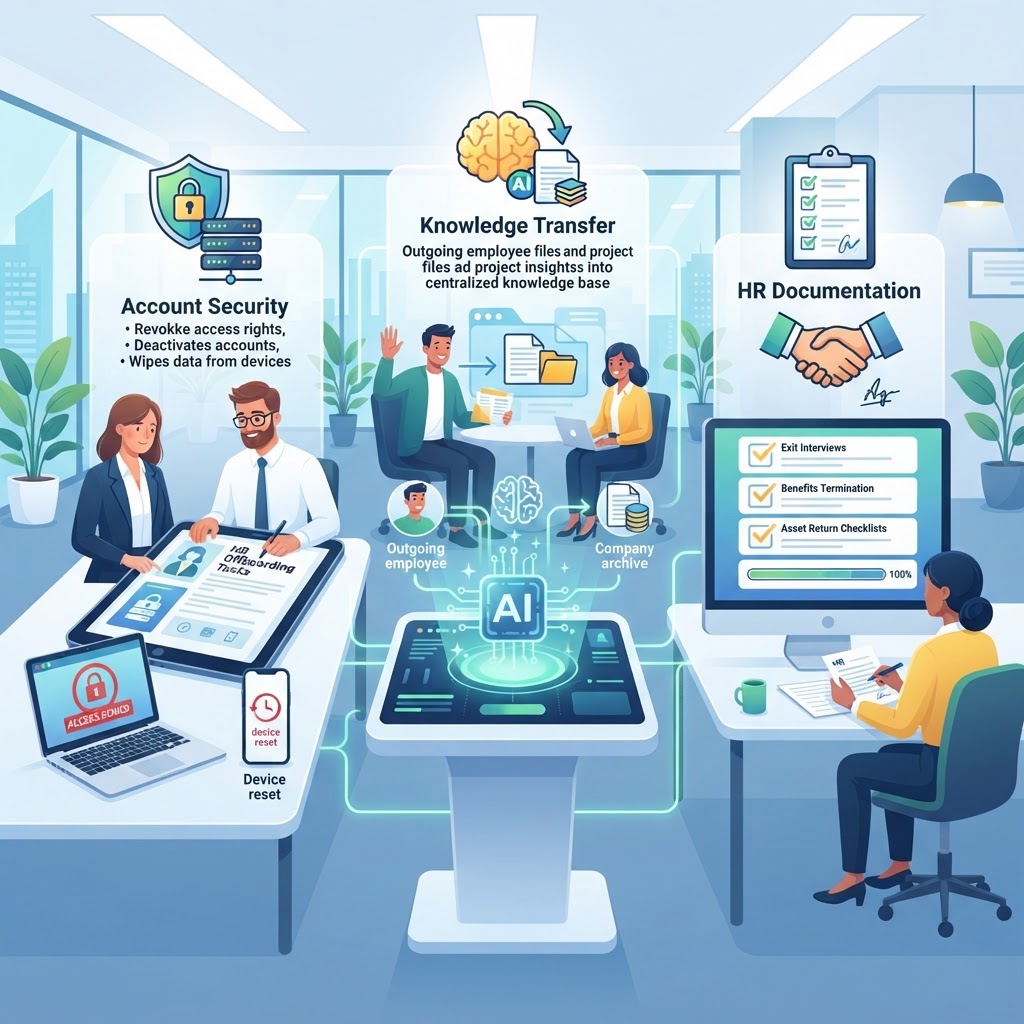
  • Best AI Customer Support Chatbots 2026: Top 5 Platforms Compared

    Best AI Customer Support Chatbots 2026: Top 5 Platforms Compared

    Key Takeaways

    • Modern AI customer support chatbots in 2026 have evolved beyond basic scripting to utilize LLM-driven conversational intelligence for complex problem resolution.
    • Implementing AI help desk software significantly reduces ticket volume by handling routine inquiries instantly, allowing human agents to focus on high-value escalations.
    • Integration capabilities are the primary differentiator between top-tier platforms, as seamless synchronization with existing CRM systems is mandatory for personalized support.
    • Customization features now allow businesses to align automated customer service tools with their specific brand voice through fine-tuning and sentiment-aware responses.
    • Selecting the best AI chatbot platforms requires a balance between technical robustness, ease of maintenance, and the ability to scale alongside your user base.

    The landscape of customer experience is undergoing a fundamental transformation as we approach the midpoint of the decade. Businesses are no longer debating whether to implement AI, but rather how to optimize their existing stacks to meet the high-velocity demands of the digital consumer. As expectations for instantaneous, personalized support grow, the role of AI customer support chatbots has expanded from simple FAQ deflectors to sophisticated digital employees capable of navigating complex workflows. For organizations seeking to maintain a competitive edge, choosing the right AI help desk software is now a mission-critical decision. This analysis breaks down the leading solutions for 2026, examining the technical nuances that define the current generation of automated customer service tools.

    Why AI Chatbots Are Essential for Modern Customer Support

    The modern digital marketplace is defined by the expectation of “always-on” availability. In previous years, customer support was reactive, relying heavily on human-staffed queues that faced significant pressure during peak traffic. Today, AI customer support chatbots serve as the first line of defense, providing a bridge between customer intent and resolution. These systems are no longer limited to keyword matching; instead, they leverage advanced natural language understanding (NLU) to interpret intent, context, and sentiment, which is vital for providing empathetic and accurate responses.

    One of the primary drivers for the adoption of AI-powered systems is the sheer scalability they offer. Human support teams operate under linear constraints—more customers require more headcount, training, and overhead. In contrast, an AI chatbot for business can handle tens of thousands of inquiries simultaneously without degradation in performance. This is particularly valuable during seasonal spikes or unexpected technical outages, where the ability to maintain consistent service levels can protect brand reputation and customer loyalty. When a system can parse the nuances of a customer’s query, cross-reference their order history, and provide a resolution—or even perform an action like a refund or password reset—it transforms support from a cost center into a strategic asset.

    Furthermore, the data generated by these interactions provides business leaders with unprecedented visibility into the customer journey. By categorizing inquiries, identifying friction points, and highlighting product shortcomings, these tools offer actionable insights that were previously hidden in unstructured email threads or phone transcripts. Automated customer service tools allow teams to pivot from reactive firefighting to proactive customer success. For example, if an AI help desk software detects a rise in questions regarding a specific new feature, the product team can be alerted to update the documentation or UI instantly. This feedback loop is essential for organizations that prioritize iterative growth and data-driven decision-making. By offloading repetitive, low-complexity tasks to automated agents, businesses ensure that their human personnel remain focused on tasks that require critical thinking, emotional intelligence, and complex problem-solving. This human-AI synergy is the cornerstone of sustainable growth in 2026.

    How AI-Powered Support Tools Reduce Response Times

    Response time is a primary metric that correlates directly with customer satisfaction (CSAT) and churn reduction. Conventional support models rely on queuing systems that are prone to bottlenecks. AI-powered support tools fundamentally alter this dynamic by introducing zero-latency responses. When a customer initiates a chat, the AI does not need to look up documentation in a separate window or check with a manager; the system acts as an interface for the entire knowledge base simultaneously. This capability allows for instant acknowledgment and, frequently, instant resolution.

    The reduction in response time is achieved through several technological vectors. First, Large Language Models (LLMs) allow these systems to parse multi-part queries in a single pass. Where a human agent might take several minutes to read, interpret, and formulate an answer for a multi-faceted question, an AI agent processes the entire block of text in milliseconds. Second, these tools are often integrated directly with backend APIs. This means the system can verify an account status, check a shipping carrier’s database, or update a billing profile while the user is still actively typing. By removing the “human-in-the-middle” delay, the time to resolution (TTR) drops from hours to seconds.

    Moreover, AI help desk software utilizes predictive modeling to preemptively assist users. If a user logs into their account and navigates to the “Help” page, the AI can proactively surface relevant support articles or even open a chat window asking, “I see you are looking at our shipping policy, would you like to track your order?” This proactive engagement prevents the need for a support ticket altogether. By addressing potential friction points before the customer even submits a formal request, companies significantly reduce the load on their support infrastructure. This is not merely about speed; it is about efficiency. When the AI handles the simple, repetitive inquiries—such as “Where is my order?” or “How do I reset my account password?”—human agents are freed to address the nuanced, high-complexity cases that truly require a human touch. This tiered approach to support architecture ensures that the most time-sensitive issues are addressed immediately, while more complex technical escalations receive the dedicated focus they deserve, thereby optimizing the entire support workflow.

    Platform Primary Strengths Best For
    Intercom Advanced AI automation, messenger-first interface, proactive engagement. High-growth startups and SaaS companies.
    Zendesk Deep omni-channel integration, enterprise-grade reporting, modular scaling. Large-scale enterprises with diverse workflows.
    Ada No-code automation builder, advanced intent resolution, brand focus. E-commerce brands needing custom logic.
    Salesforce AI CRM-native intelligence, cross-departmental data access. Businesses already deep in the Salesforce ecosystem.

    Intercom vs Zendesk AI: Comparing Feature Sets

    In the 2026 market, Intercom and Zendesk represent two distinct philosophical approaches to AI help desk software. Intercom has long championed the “conversational” paradigm, focusing on a chat-first experience that feels organic and fluid. Its AI capabilities, centered around their advanced Fin bot, are designed to leverage massive amounts of historical conversation data to suggest, and often automate, resolutions. Intercom’s feature set is particularly noted for its ease of use; it allows non-technical support managers to build complex automated workflows using visual builders. The focus here is on reducing the barrier between the user’s question and the automated response, making it an ideal choice for digital-native companies that operate primarily through their web or mobile applications.

    Zendesk, by contrast, operates from the perspective of an omni-channel powerhouse. Zendesk AI is built into a massive, mature infrastructure that manages support across email, voice, chat, social media, and third-party messaging platforms. Its primary strength lies in its robustness and its ability to handle complex, ticket-based workflows that require escalation paths, multi-departmental routing, and stringent compliance tracking. While Intercom feels like a sophisticated chat layer, Zendesk is an operating system for customer support. Their AI tools focus heavily on “agent assistance”—suggesting macros, summarizing long ticket threads, and automating the classification of incoming support requests—which is highly effective for teams handling thousands of varied inquiries daily.

    When comparing the two, businesses must consider their specific operational architecture. If the priority is a highly polished, quick-to-deploy automated interface that integrates directly into a product’s UI, Intercom’s AI tools provide a streamlined experience that is difficult to match. The platform excels at creating a cohesive, conversational flow that guides the user toward a resolution without making them feel as if they are navigating a standard help desk. Conversely, organizations that require deep historical data integration, complex permissions models, and the ability to manage support across a global network of disparate communication channels will find that Zendesk’s platform offers more versatility. Zendesk’s AI modules are designed to augment the capabilities of the agent at every step of the support process, rather than simply acting as a standalone chatbot. Ultimately, the choice between these two platforms hinges on whether a company views its support automation as a front-facing conversation tool or a backend operational engine.

    Evaluating Customization and Brand Voice Consistency

    Maintaining a consistent brand voice across automated touchpoints is a significant hurdle for businesses. An AI chatbot for business that sounds robotic or lacks the cultural nuance of the company’s human representatives can inadvertently alienate customers. In 2026, the best AI chatbot platforms offer sophisticated tools to mitigate this, moving beyond simple greeting modifications toward deep, model-level fine-tuning. Effective customization now involves training the AI on a proprietary corpus of data that represents the brand’s specific tone, terminology, and values. This ensures that the bot does not just provide accurate technical information, but does so in a way that aligns with the established persona of the business.

    To achieve this, platforms now allow for “tone-shifting.” A brand targeting a Gen-Z demographic can configure its AI to be more concise, informal, and emoji-friendly, while a financial services provider can enforce a professional, authoritative, and cautious tone. This level of granular control is vital because the chat interface is often the only interaction a customer has with the company. If the website reflects a premium, luxury brand, but the chatbot uses generic, clunky phrasing, the cognitive dissonance can damage trust. Advanced platforms allow developers to define “negative constraints”—lists of words or styles the bot should strictly avoid—ensuring that the conversational logic stays within the predefined brand guardrails.

    Furthermore, the evolution of RAG (Retrieval-Augmented Generation) has revolutionized how these tools present information. Instead of relying solely on the LLM’s general knowledge, modern systems retrieve information from a company’s internal wiki or knowledge base and then use the LLM to rewrite that information in the company’s branded style. This “best-of-both-worlds” approach ensures that the factual content is verified and accurate, while the delivery is tailored to the business’s identity. Teams should also look for platforms that provide A/B testing for chatbot dialogues. By testing different versions of a bot’s response style on small segments of users, companies can gather real-time data on how tone changes impact customer sentiment. This iterative approach to “conversational design” allows support leaders to refine their automated scripts, ensuring they are as effective as they are on-brand. When these systems are implemented with a focus on stylistic consistency, they stop being mere tools and become a genuine extension of the customer experience department.

    Seamless Integration with Existing CRM Systems

    The true power of AI customer support chatbots is only realized when they are deeply integrated into the existing ecosystem of business tools. An isolated chatbot is merely an intelligent FAQ; a fully integrated chatbot is a powerful operational agent. Integration with Customer Relationship Management (CRM) systems is the single most important technical requirement for scaling support. Without this, the chatbot remains a “black box” that knows nothing about the user it is speaking to. When a bot can read the CRM, it understands the user’s lifetime value, their recent purchases, any active support tickets they have open, and even their current subscription status. This context changes the conversation from “How can I help you?” to “Are you asking about your latest order from last Tuesday?”

    Top-tier AI help desk software providers offer native connectors to major CRMs like Salesforce, HubSpot, and Microsoft Dynamics, as well as robust APIs for custom legacy systems. These integrations need to be bidirectional. It is not enough for the bot to read data; it must be able to write data back to the CRM. If a bot successfully resolves a technical issue, it should automatically update the case status in the CRM, append the chat transcript to the contact record, and adjust the customer’s satisfaction score if a survey is completed. This automation removes the manual administrative burden that often plagues support teams. Furthermore, this data connectivity enables highly sophisticated personalization. The bot can trigger specific workflows based on the user’s loyalty tier or geographical location, offering localized promotions or routing the user to a specialized support team if they are a VIP client.

    Another technical aspect to consider is the latency of data synchronization. The best platforms use event-driven architectures where updates in the CRM are pushed to the chatbot in real-time. If a user receives an automated email about a service outage, the bot should be aware of that context immediately, allowing it to address the user’s concerns before they are even mentioned. Choosing a platform with high-uptime APIs and well-documented webhooks is essential for maintaining this level of synchronization. Organizations should audit their current CRM data architecture before selecting an AI tool, ensuring that their customer profiles are clean, categorized, and accessible. In the current ecosystem, the quality of your AI-driven support is limited only by the quality and accessibility of your data. By prioritizing platforms that offer seamless, low-code integration, businesses ensure that their automated customer service tools can evolve alongside their internal databases, creating a resilient and intelligent support infrastructure that pays dividends in both operational efficiency and customer retention.

    Security and Data Privacy Standards for AI Support

    When integrating AI customer support chatbots into your business infrastructure, security and data privacy are not optional features; they are the bedrock of operational integrity. As AI systems ingest, process, and occasionally store sensitive user information—ranging from order history to personally identifiable information (PII)—businesses must ensure their chosen platforms adhere to rigorous international standards.

    The primary benchmark for any enterprise-grade AI help desk software is compliance with GDPR (General Data Protection Regulation) in Europe, CCPA (California Consumer Privacy Act) in the United States, and SOC 2 Type II reporting. SOC 2 compliance is particularly critical, as it evaluates the effectiveness of a service organization’s controls over security, availability, processing integrity, confidentiality, and privacy over an extended period. When vetting an AI provider, request their latest SOC 2 report; a failure to provide this should be treated as a significant red flag.

    Beyond external compliance, businesses should prioritize platforms that offer robust data encryption both in transit and at rest. Advanced tools now provide “data masking” capabilities, where the AI is trained to automatically redact credit card numbers, social security digits, or private medical details before they are logged into a transcript or processed by a Large Language Model (LLM). This ensures that even if a database were compromised, the most sensitive data remains illegible.

    Another emerging standard is the ability to maintain data residency. Many global corporations operate under strict mandates requiring that data stay within specific geographical borders. Look for AI chatbot platforms that allow you to select server regions, ensuring your customers’ interaction logs do not transit through jurisdictions where your data governance policies may be legally challenged.

    Finally, consider the vendor’s approach to model training. You must clarify whether your company’s unique support logs are being used to train the vendor’s foundation models. Ideally, you want a “zero-retention” or “private instance” policy where your proprietary interaction data is siloed and used exclusively for your specific bot’s intelligence, preventing your business intelligence from leaking into the public model training set.

    Managing the Handoff Between Chatbots and Human Agents

    The transition between an automated customer service tool and a human agent is often the most critical point in the customer journey. If this “handoff” is disjointed, it creates a “bouncing” effect where the customer feels they must repeat their entire story, leading to rapid degradation of brand loyalty. Effective AI help desk software acts as an extension of the human team, not a replacement.

    To manage this transition effectively, you must implement “Sentiment and Intent Triggers.” A well-configured bot should monitor for indicators of frustration—such as repeated queries, specific negative sentiment, or requests for a manager—and automatically escalate the ticket to a human before the customer reaches a boiling point. The system should possess the intelligence to detect when a complex multi-step inquiry is outside the bot’s current knowledge base capability and gracefully hand off the session.

    The “contextual handoff” is the gold standard here. When a bot passes a chat to an agent, it should not just send a generic “customer needs help” notification. It must push the full interaction transcript, the intent classification, and any associated customer metadata directly into the agent’s dashboard. This allows the human representative to jump into the conversation with, “I see you’ve already tried resetting the router; let’s look at the firmware version together,” rather than starting from zero.

    Furthermore, businesses should utilize “Co-pilot Mode.” In this configuration, the bot remains active during the human-agent interaction, suggesting responses based on internal documentation or CRM data. The human agent retains final approval over the bot’s suggestions, turning the automation tool into a real-time research assistant. This reduces the Average Handling Time (AHT) while ensuring that human empathy and nuanced decision-making remain at the core of the resolution.

    Cost Analysis: Choosing the Right Plan for Your Business

    The pricing models for AI chatbot platforms have evolved from simple per-agent seats to complex volume-based architectures. Determining the “right” plan requires an audit of your ticket volume, the complexity of your support requests, and your anticipated growth trajectory.

    Feature Tier Best For Scaling Potential Integration Depth
    Entry/Starter Small Businesses/E-commerce Low to Moderate Basic Email/FAQ
    Professional Growing Mid-sized Teams High CRM & Helpdesk APIs
    Enterprise Large Global Corporations Maximum Custom LLM/Hybrid Cloud
    Custom/SaaS-Scale High-Volume Tech Companies Unlimited Full White-Label/AI Tuning

    When analyzing costs, avoid the “per-agent” trap. Many businesses mistakenly believe that purchasing fewer agent licenses will save money, but if the chatbot is underpowered, the human agents become overloaded by “re-work” from ineffective bot sessions. Look for platforms that price based on “Resolved Conversations” or “Active Conversations.” This aligns the vendor’s incentives with your goal: high automation rates.

    You must also factor in the “Implementation Overhead.” Many low-cost tools offer a “plug and play” experience but require massive manual labor to set up the knowledge base. Higher-cost enterprise tools often come with dedicated Success Managers and AI engineers who handle the initial ingestion of your knowledge base, which can drastically reduce the time-to-value. If your team is small and lacks technical depth, investing in a slightly more expensive “Managed Service” or “White-Glove” plan may actually result in a lower Total Cost of Ownership (TCO) by eliminating the need for internal developers.

    Measuring ROI Through Customer Satisfaction Scores

    Measuring the success of customer support automation is often reduced to “how many tickets were deflected.” While volume reduction is a key metric, it is not the only indicator of success. A bot that deflects 50% of tickets but drops your Customer Satisfaction (CSAT) score by 20% is failing your business. Real ROI is found at the intersection of automation rate and sentiment retention.

    To measure this effectively, you should implement “Post-Interaction Micro-Surveys.” Immediately after a bot resolution, invite the user to rate the interaction on a 1-5 scale. Cross-reference this data with “Bot-to-Human Handover Rates.” If you see high CSAT with your bot but high abandonment rates at the handover stage, it indicates that the bot is failing to accurately recognize when a human is truly needed, causing customer attrition.

    Another metric to consider is “Resolution Speed per Intent.” Segment your tickets by topic (e.g., “Password Reset,” “Refund Status,” “Technical Troubleshooting”). If the AI reduces the resolution time for a “Refund Status” query from three hours to three minutes without impacting CSAT, you have quantified a specific efficiency gain. Calculate the cost of an agent’s time spent on these routine tasks versus the cost of the automated resolution. Over the course of a year, these micro-gains across thousands of tickets often reveal that the software has paid for itself within a single quarter.

    Finally, track “Resolution Accuracy.” Use a subset of your human agents to perform a periodic “Quality Audit” of the AI’s closed tickets. If the AI is giving technically incorrect information, even if the customer didn’t immediately complain, it could be causing long-term damage to your brand. High ROI is not just about speed; it is about maintaining a high standard of truth across every automated touchpoint.

    Best AI Chatbot Features for Scaling Global Operations

    Scaling a support operation across multiple languages and time zones requires more than just a translator; it requires localized cultural intelligence. The best AI chatbot platforms for global scaling offer “Dynamic Multi-Language Support.” This does not mean simple machine translation; it refers to the bot’s ability to recognize the customer’s language and access specific, region-compliant knowledge bases. For instance, a return policy in the EU may differ significantly from one in the US; the bot should be smart enough to pull the relevant local policy without human intervention.

    Another vital feature for global scaling is “Omnichannel Presence Management.” Your customers might be on WhatsApp in Brazil, LINE in Japan, and traditional web-chat in the US. A truly global AI tool must provide a unified inbox that synchronizes these threads. If a customer starts a conversation on your website and later follows up via SMS, the bot should maintain a persistent identity across both platforms, preserving the conversation history seamlessly.

    Global teams also benefit from “Time-Zone Agnostic Workflow Routing.” When a support request comes in, the bot should automatically route it based on the language detected and the current working hours of your specialized global support hubs. If the bot cannot resolve the issue, it should intelligently queue the ticket for the next available expert in the correct region, rather than letting it sit in a general global queue where it might be ignored until the next business day.

    Lastly, look for “Scalable Knowledge Ingestion.” As you add new products or enter new markets, the ability to update your knowledge base once and have that update propagated globally in real-time is essential. Avoid platforms that require you to manually sync documentation across different “bot instances” for different languages. The goal is a “Global Source of Truth” where the AI acts as a localized interface to a centralized, well-governed pool of business intelligence.

    Frequently Asked Questions

    Is AI help desk software a replacement for human customer support agents?

    Generally speaking, no. AI chatbot platforms are designed to augment the capabilities of human teams by handling repetitive, high-frequency, and low-complexity tasks. By automating routine inquiries, AI allows human agents to focus on high-touch, complex, and emotionally charged customer issues where human empathy and critical thinking are indispensable.

    How long does it typically take to deploy an AI chatbot across a business?

    Deployment timelines vary significantly based on the complexity of your current knowledge base and integration requirements. A basic FAQ-based chatbot can often be deployed in a matter of days. However, a full-scale enterprise integration involving deep API connectivity with CRMs and ERP systems can take several weeks of testing, training, and fine-tuning to ensure high accuracy.

    Can AI customer support chatbots handle sensitive user data securely?

    Yes, provided the platform you choose is built with enterprise-grade security. Look for providers that offer SOC 2 compliance, end-to-end encryption, and specific data governance settings. It is essential to ensure that the vendor does not use your sensitive customer data to train their public-facing models unless you have explicitly opted into such a program.

    What is the difference between a rule-based bot and a generative AI chatbot?

    Rule-based bots follow a rigid decision tree, often leading users through pre-set paths (e.g., “If user clicks X, show option Y”). Generative AI chatbots, by contrast, use Large Language Models (LLMs) to understand the intent and context of a user’s query, allowing them to provide conversational, human-like answers even when the question is phrased in an unexpected or complex way.

    How do I know if my business is ready for an AI customer support platform?

    Most businesses are ready when they reach a threshold of ticket volume that creates bottlenecks for their support staff. If your team spends the majority of their time answering repetitive questions that are already documented in your help center, you are an ideal candidate for automation. Even smaller businesses can benefit, provided they have a well-organized knowledge base ready for ingestion.

    Can these tools integrate with existing software like Salesforce, Zendesk, or Shopify?

    Most modern AI help desk software platforms are designed specifically for interoperability. They typically offer native integrations with popular platforms like Salesforce, Zendesk, and Shopify, allowing the bot to look up account details, check order statuses, or process refunds directly within the chat window without requiring the customer to leave the conversation.

    Conclusion

    Choosing the right AI customer support chatbot in 2026 is a strategic decision that goes far beyond selecting a software interface. It involves balancing the need for rapid automation with the imperative to maintain brand trust and data security. By prioritizing platforms that offer seamless human handoffs, robust privacy standards, and the flexibility to scale across global markets, you can transform your support department from a cost center into a powerful engine for customer loyalty and operational efficiency.

    As you evaluate the options, remember that the most successful implementations are those that view AI as a partner to their human team rather than a total replacement. Start with a clear assessment of your current ticket volume and pain points, select a solution that integrates deeply with your existing tech stack, and continuously measure your results through both technical metrics and customer sentiment. The technology is ready to scale your operations—it is up to you to implement it with a customer-first focus.

    Ready to upgrade your support experience? Start by auditing your top 10 most frequent customer inquiries and matching them against the features of our top-rated platforms to see which solution best fits your specific business needs.

    By aismarttoolsreview Editorial Team

  • Best AI Employee Offboarding Tools 2026: Simplify Transitions

    Best AI Employee Offboarding Tools 2026: Simplify Transitions

    Key Takeaways

    • Automating offboarding with AI reduces security risks by ensuring immediate, systematic revocation of IT access across all enterprise platforms.
    • AI-driven exit interview tools provide granular sentiment analysis, helping HR teams identify systemic cultural or management issues.
    • Modern AI offboarding software standardizes knowledge transfer, preventing the loss of critical institutional data during transitions.
    • Effective employee transition tools integrate directly with Identity and Access Management (IAM) systems to remove human error from the termination workflow.
    • Scalable HR offboarding automation enables consistent compliance and documentation, protecting the organization from legal and regulatory liabilities.

    As the workplace landscape becomes increasingly decentralized and digitally dependent, the departure of a team member has evolved from a simple desk cleanup into a complex operational challenge. In 2026, forward-thinking organizations are no longer relying on manual checklists and disjointed email threads. Instead, they are turning to advanced AI offboarding software to manage the high-stakes intersection of human resources, information security, and knowledge management. By leveraging sophisticated algorithms, enterprises can now ensure that every departure—whether voluntary or involuntary—is handled with precision, empathy, and ironclad security. This guide explores the architectural shift toward intelligent workforce transitions and how these systems are redefining the HR technology stack for the modern enterprise.

    Why Automate Your Employee Offboarding Process

    The traditional offboarding process is frequently fragmented, error-prone, and reactive. When HR professionals rely on manual spreadsheets or rudimentary email reminders, the probability of oversight increases exponentially. An automated offboarding process is not merely a convenience; it is a critical defensive layer for the organization’s cybersecurity posture and a vital component of its employer branding. When an employee leaves, the window of vulnerability—the time between their last day and the complete severance of their digital credentials—must be closed instantly. Manual processes often fail to account for the myriad of SaaS applications, shadow IT tools, and cloud storage permissions that an individual may have accumulated over their tenure. By utilizing automated workflows, IT and HR departments can ensure that access is revoked uniformly across the entire tech stack simultaneously.

    Beyond security, there is the matter of operational continuity. High-performing organizations treat offboarding as a transition, not just a termination. When a role becomes vacant, there is a risk of critical institutional knowledge vanishing along with the employee. Automating this phase allows organizations to trigger pre-configured knowledge capture sequences, prompting employees to catalog their workflows, active projects, and password rotations before they depart. This proactive approach turns what is usually a chaotic scramble into an orderly handoff, preserving the value of the departing employee’s work for their successor.

    Furthermore, HR offboarding automation serves as a catalyst for cultural refinement. By removing the administrative burden from human resource staff, AI-powered systems free up managers to focus on the human element of the transition: mentorship, constructive feedback, and the preservation of professional relationships. Employees who feel that their exit process was handled professionally and efficiently are more likely to become long-term brand ambassadors. Conversely, a disorganized exit can lead to friction, legal complications, and potential damage to the company’s reputation. Implementing these tools signals that the organization values structured management and respects the time of both the leaving employee and the team remaining behind. As businesses scale, the ability to replicate this consistent experience becomes a benchmark of operational maturity.

    Approach Technology Baseline Best for
    Manual Offboarding Spreadsheets, Email, Manual IT Tickets Micro-startups with low turnover
    Semi-Automated Systems Basic ITSM tools, Workflow Templates Small-to-Midsize Enterprises
    AI-Driven Automation Predictive Analytics, API-Led IAM Integration Large Enterprises & High-Growth Tech

    Key Features to Look for in AI Offboarding Software

    Selecting the right AI offboarding software requires a deep audit of your current IT infrastructure and HR requirements. The most effective tools in 2026 are those that operate as an orchestration layer between disparate systems. At a minimum, your chosen software must offer seamless integration with your existing Identity and Access Management (IAM) provider. If the AI cannot communicate with your identity provider to kill a session in real-time, it is merely a glorified checklist tool. Look for solutions that offer robust API connections to the core applications your staff uses daily, such as project management software, CRM platforms, and cloud storage repositories.

    Another essential feature is the inclusion of customizable, intelligent offboarding checklists. Static checklists are insufficient for modern, role-based environments. Instead, look for AI engines that dynamically update tasks based on the specific department, seniority level, and hardware assets assigned to the individual. For example, an engineer should have a different workflow than a marketing manager, requiring unique steps regarding source code repository access and intellectual property handling. The AI should have the capability to recognize these distinctions and adjust the task list automatically, ensuring that no stone is left unturned without requiring manual input from an HR generalist.

    Data privacy and security compliance are also non-negotiable. Modern workforce transition tools must be compliant with international data protection standards, ensuring that when employee information is processed, stored, or deleted, it adheres to the highest level of regulatory governance. Furthermore, auditing capabilities are crucial. You need a dashboard that provides a clear, time-stamped trail of every action taken during the offboarding process—from the moment an exit is initiated to the final archival of files. This audit log is an invaluable asset for internal audits, legal disputes, and ensuring that your company maintains its certifications for security frameworks like SOC2 or ISO 27001. Finally, look for platforms that offer advanced reporting, enabling leadership to gain insights into turnover trends and potential systemic risks that may be driving employees to leave in the first place.

    How AI Enhances Exit Interview Analysis

    The exit interview has long been an underutilized data source. Historically, these conversations were recorded in handwritten notes or static documents that were rarely analyzed for aggregate trends. AI exit interview software is revolutionizing this by transforming qualitative, unstructured verbal feedback into actionable quantitative data. These tools utilize Natural Language Processing (NLP) to parse sentiment, identify recurring pain points, and categorize feedback according to departmental themes. By deploying AI to conduct or analyze these sessions, organizations can remove the human bias—both from the interviewer and the interviewee—that often clouds the truth during a departing employee’s final hours.

    When an employee engages with an AI-driven interview platform, the system can ask adaptive, follow-up questions based on the sentiment of previous responses. If a departing team member mentions dissatisfaction with project management, the AI can pivot to explore that specific area in greater detail without the employee feeling pressured to tailor their response to a sympathetic or judgmental HR interviewer. The AI then categorizes this information into structured themes such as “leadership effectiveness,” “compensation,” “cultural fit,” or “work-life balance.” These insights allow HR leaders to see patterns that they might have previously missed. If 30% of departing engineers cite the same bottleneck in the build process, that is not just anecdotal noise—it is a clear signal for a system-wide engineering upgrade.

    This automated analysis also provides an added layer of anonymity that encourages genuine candor. Employees who are fearful of bridge-burning are often hesitant to provide honest feedback to their direct managers or HR departments. An AI system, perceived as neutral and consistent, often yields more objective responses. Over time, the software builds a cumulative database of company sentiment, allowing HR teams to map the health of their corporate culture longitudinally. By correlating exit interview data with engagement surveys and performance reviews, AI tools help HR departments predict turnover before it happens. This predictive power represents the pinnacle of workforce management—moving from a state of reacting to exits to actively shaping the environment to prevent preventable departures.

    Automating IT Access Revocation and Data Security

    The most immediate danger during the transition phase is the persistence of digital access. In the modern cloud-native enterprise, an individual may have accounts across dozens of platforms, ranging from internal slack channels to sensitive financial databases. Traditional manual deprovisioning is often slow and prone to human error, leaving ghost accounts open for days or even weeks. AI offboarding software mitigates this by acting as a central controller for access revocation. By connecting directly to your SSO (Single Sign-On) and IAM systems, these tools can execute a “kill switch” function that revokes access across the entire organizational perimeter the moment an employee’s termination is processed in the HRIS (Human Resources Information System).

    Beyond simple access revocation, intelligent tools can handle the complex logic of data offboarding. This includes the automated migration of ownership for assets. For instance, if an employee leaves, the system can automatically reassign their cloud documents and shared folders to their manager or a designated successor, ensuring that files do not become “orphaned” or inaccessible. Furthermore, AI can scan for sensitive information contained within an employee’s personal work drives, alerting security teams if it detects proprietary data that should be moved to a secure, company-wide repository before the account is fully purged. This automated oversight ensures that the intellectual property remains within the company’s custody, regardless of whether the employee departed on good or bad terms.

    Security automation also extends to hardware management. When an employee is offboarded, the system can automatically generate a shipping label, trigger a request to the IT department for hardware collection, and log the asset status in the organization’s inventory database. This removes the administrative friction between HR, IT, and office management. If the hardware is not returned within a specific window, the AI can trigger automated follow-up communications, escalating the issue to the appropriate security or management team. By automating the entire lifecycle of access—from the digital credentials to the physical devices—organizations reduce their attack surface and ensure that sensitive company data never leaves with the employee, thereby maintaining compliance with strict internal security policies and external regulatory requirements.

    Streamlining Knowledge Transfer with AI Documentation

    Institutional memory is the lifeblood of any organization, yet it is often the most fragile component during personnel shifts. When a specialist departs, the “unwritten rules” and complex, idiosyncratic knowledge they possess often leave with them. AI-powered documentation tools are designed to capture this tacit knowledge systematically, converting it into a searchable, accessible knowledge base. Instead of asking a departing employee to write a manual in their final week—a task often performed with minimal enthusiasm—these AI tools prompt employees throughout their tenure to log processes, tag resources, and record project workflows. By the time a resignation is submitted, a significant portion of the employee’s critical knowledge is already digitized and organized.

    During the final transition phase, the AI can then summarize the departing employee’s documented contributions and highlight gaps that require attention. The software can generate a personalized transition plan, suggesting which team members should inherit specific projects or responsibilities based on their current workload and skill alignment. This takes the guesswork out of the handover process, ensuring that the team lead does not have to spend hours reconstructing the workflow manually. The AI documentation acts as a bridge between the outgoing employee and the successor, significantly reducing the “ramp-up” time for the new hire or the team member absorbing the workload.

    Furthermore, these tools utilize semantic search capabilities, ensuring that the knowledge captured is easily retrievable by others in the organization. If a future team member encounters a problem that the departed employee once solved, they can query the system and receive a context-aware answer derived from the documentation provided during the previous exit. This creates a cumulative, self-improving knowledge base that becomes more valuable as the organization grows. By shifting the perspective on knowledge transfer from a “last-minute chore” to a “continuous contribution,” AI-enabled tools ensure that the departure of an employee does not result in a loss of organizational velocity. The result is a more resilient, better-documented workforce that can withstand the inevitable changes of a modern business environment.

    Benefits of Standardizing Offboarding for Company Culture

    When an employee exits an organization, the process is often viewed as a logistical hurdle rather than a cultural milestone. However, standardizing offboarding through AI-driven workflows serves as a critical final chapter in the employee experience. When companies lack a structured departure strategy, the resulting ambiguity can lead to fractured morale among remaining staff, who may perceive the exit as disorganized or unceremonious.

    Standardization ensures consistency, which is the cornerstone of psychological safety. When every employee—regardless of seniority or department—undergoes a predictable, respectful transition, it signals to current team members that the company values its people until their very last day. Automated offboarding processes remove the emotional labor from managers, allowing them to focus on gratitude and professional well-being rather than chasing down equipment or tracking down signatures.

    Furthermore, a standardized process prevents the “knowledge drain” that often accompanies an exit. By utilizing AI tools to capture institutional knowledge through systematic handovers and structured exit interviews, the company honors the departing employee’s contribution. This creates a positive lasting impression, often turning former employees into long-term brand advocates or potential “boomerang” hires who may return to the organization with enhanced skills later in their careers.

    Finally, standardization promotes fairness. When offboarding is manual and inconsistent, it opens the door to perceptions of favoritism or discriminatory treatment. Automated workflows ensure that every individual is treated according to the same established organizational policies, thereby reinforcing the company’s commitment to ethical conduct and corporate integrity.

    Top AI Platforms for Managing Employee Transitions

    The marketplace for workforce transition tools has matured significantly by 2026, moving beyond simple task management to sophisticated AI orchestration platforms. These tools integrate with your communication channels, IT systems, and payroll to ensure a seamless transition.

    Platform Core AI Strength Best For
    TransitionFlow AI Predictive offboarding timeline generation High-growth tech companies with frequent turnover
    ExitLogic Systems Sentiment analysis in exit interviews Organizations prioritizing cultural health diagnostics
    VaultGuard HR Automated asset reclamation and security triggers Data-sensitive environments and remote-first firms
    UnifiedLeave.ai HRIS-integrated lifecycle orchestration Mid-to-large enterprises with complex legacy systems

    TransitionFlow AI excels at creating dynamic timelines. If a manager updates an exit date in the HRIS, the platform automatically adjusts all associated checklists, including IT hardware recovery, document retrieval, and knowledge transfer meetings. This eliminates the “rescheduling nightmare” common in manual handovers.

    ExitLogic Systems focuses on the human element. By deploying AI-driven sentiment analysis, it detects themes in exit interview responses that human reviewers might miss. For instance, it can aggregate anonymous feedback to alert leadership to recurring issues in specific management tiers or office locations, providing actionable data for retention improvements.

    VaultGuard HR is the premier choice for organizations where security is paramount. The platform integrates directly with cloud access management tools, automatically revoking credentials and triggering multi-factor authentication resets the moment an employee’s departure is finalized. It removes the risk of “orphan accounts” that can pose significant cybersecurity threats.

    Integrating Offboarding Tools with Your Current HRIS

    The efficacy of any automated offboarding process hinges on the strength of its integration with your existing Human Resources Information System (HRIS). An AI tool that operates in a silo is merely another layer of administration. A truly effective integration creates a bidirectional flow of data.

    Most modern HRIS platforms provide robust APIs, which allow AI transition tools to monitor lifecycle events. When an HR professional marks an employee status as “terminated” or “resigned” in systems like Workday, BambooHR, or Rippling, the AI offboarding software should instantly ingest this trigger. This data ingestion initiates the entire sequence of events without manual intervention: triggering the creation of an offboarding task board, sending automated calendar invitations to stakeholders, and notifying the IT department of hardware return requirements.

    Implementation typically involves three distinct layers of connectivity:

    1. Data Syncing: Ensuring personal information, role details, and manager hierarchies are updated in real-time.
    2. Event Triggering: Enabling the AI tool to act upon changes in the employee record (e.g., changing status triggers an asset reclamation request).
    3. Feedback Looping: Writing exit interview results or survey data back into the HRIS profile, allowing HR to track historical trends in turnover reasons for future analytics.

    Before selecting a tool, ensure it offers “no-code” integration connectors. This allows your HR operations team to customize workflows—such as adding a specialized checklist for remote employees who need to ship laptops back via prepaid couriers—without requiring assistance from internal software engineers.

    Mitigating Legal Risks with Automated Compliance Checks

    The legal landscape of employee termination is fraught with complexity, particularly regarding local labor laws, non-compete clauses, and data protection regulations like GDPR or CCPA. Automated offboarding software serves as a digital compliance officer, ensuring that no regulatory step is omitted during the transition process.

    AI tools minimize liability by enforcing strict adherence to documentation standards. For example, the software can mandate the digital signing of non-disclosure agreements (NDAs) or IP assignment documents before final severance or final pay is processed. By maintaining a immutable audit trail of when these documents were presented, read, and signed, the company builds a robust defense against potential future litigation.

    Furthermore, automated systems handle the technical aspects of data sovereignty. In an era where employees often use personal devices, these tools can automatically trigger remote wipes of company-sensitive applications, ensuring that proprietary data does not leave with the employee. This automated “digital sanitization” prevents inadvertent data leaks, which are often the primary source of legal disputes following an exit.

    Compliance checks also extend to wage and hour laws. AI systems can ensure that the final paycheck is calculated correctly, accounting for unused vacation days, pending commissions, and local tax requirements, thereby reducing the likelihood of wage theft allegations. By removing human error from the payroll and compliance process, companies significantly lower their risk profile.

    Measuring the Impact of Efficient Offboarding on Retention

    It might seem counterintuitive to measure retention by observing how effectively a company handles departures, but the connection is profound. Efficient, humane, and professional offboarding is an investment in the remaining workforce. When employees witness their colleagues leaving in a manner that is respectful, orderly, and transparent, their own anxiety regarding their future at the company is reduced.

    To measure the impact of these tools, organizations should track specific key performance indicators (KPIs) through their AI transition software:

    • Time-to-Clearance: The duration between an employee’s final day and the successful return of all company assets. Decreasing this time correlates with better operational efficiency.
    • Transition Satisfaction Scores: Surveys automatically sent to the departing employee 30 days after their exit. High scores often indicate that the transition was seamless, which protects the company’s reputation.
    • Knowledge Transfer Completeness: A metric indicating the percentage of critical handover tasks marked as “completed” by both the outgoing employee and their successor.
    • Boomerang Hire Rate: Tracking how many former employees express interest in returning to the company, a strong signal of a positive legacy.

    By monitoring these data points, HR leaders can correlate improved offboarding processes with broader organizational outcomes like higher employee engagement scores and lower voluntary turnover rates among remaining staff. When offboarding is automated and handled with precision, it shifts from being a “loss” to being a managed transition that protects the organizational culture.

    Frequently Asked Questions

    How do AI offboarding tools handle sensitive employee data privacy?

    Modern AI offboarding platforms are designed with strict data privacy protocols. They typically employ end-to-end encryption for all stored documents and restrict access to personnel records using role-based access controls. Furthermore, these tools are built to comply with international data protection regulations, ensuring that personal identification information (PII) is handled only as necessary for the transition process and purged according to established retention policies.

    Can offboarding software be customized for different departments?

    Yes, most AI-based offboarding platforms support “workflow branching.” This allows organizations to create specific checklists for different departments. For example, a software engineer might have a checklist that includes revoking GitHub access and backing up local code repositories, whereas a marketing employee’s checklist might prioritize transferring social media account credentials and brand asset ownership. These workflows can be triggered automatically based on the employee’s department tag in the HRIS.

    Will automating offboarding make the process feel “robotic” to employees?

    While the administrative tasks are automated, the goal is actually to free up human time to make the process more personal. By having the AI handle the repetitive checklists, managers are liberated to spend their time having meaningful, face-to-face exit conversations. When implemented correctly, the technology acts as a silent assistant, ensuring the employee receives all necessary paperwork and benefits information without the manager getting bogged down in administrative minutiae.

    Do these tools require a dedicated IT team for implementation?

    Most 2026-era offboarding tools are designed for HR administrators rather than IT specialists. They utilize low-code or no-code interfaces, meaning that once the initial API connection to the HRIS is established—which is often a “plug-and-play” process—HR staff can manage and update workflows independently. Most vendors provide comprehensive support teams to assist with the initial setup phase to ensure all data mapping is correct.

    How does AI help in conducting better exit interviews?

    AI improves exit interviews by removing the bias and inconsistency of human-led questionnaires. By using natural language processing (NLP), AI tools can analyze free-form text responses to identify underlying trends, such as recurring complaints about a specific department or a feeling of stagnation in career development. This converts qualitative, subjective feedback into quantitative, actionable insights that executive teams can use to refine retention strategies.

    What happens to an employee’s access during the offboarding process?

    AI offboarding platforms typically integrate with Identity and Access Management (IAM) systems. Depending on the company’s security policy, the AI can trigger “staged offboarding.” For instance, it might revoke access to sensitive financial servers immediately upon notice, while keeping email access active for a limited time to facilitate the handover. All access changes are logged, providing a clear audit trail of exactly when permissions were revoked, which is essential for compliance and security audits.

    Conclusion

    In the modern, high-velocity business landscape, the departure of an employee should be treated with the same level of strategic importance as their onboarding. The shift toward AI-enabled offboarding in 2026 is not merely about administrative convenience; it is about protecting the integrity of your company culture, ensuring absolute security, and maintaining legal compliance in an increasingly complex regulatory environment. By leveraging automation, companies can eliminate the friction, errors, and emotional stress that traditionally plagued the transition process.

    Investing in the right software allows your HR team to stop chasing paperwork and start focusing on the human elements of the transition. Whether it is through sentiment analysis, automated asset recovery, or seamless integration with your existing stack, these tools provide a structured, dignified, and secure exit that serves as a final, positive touchpoint in the employee life cycle. As organizations compete for talent and strive for operational excellence, the maturity of their offboarding process will become a defining differentiator. Start evaluating your current transition workflows today—the benefits to your culture and your bottom line are too significant to ignore.

    By aismarttoolsreview Editorial Team

  • Best AI Grant Writing Tools 2026: Secure Funding Faster

    Best AI Grant Writing Tools 2026: Secure Funding Faster

    Key Takeaways

    • AI grant writing software significantly reduces the administrative burden by accelerating prospect research and drafting cycles.
    • Modern tools utilize Large Language Models (LLMs) to synthesize organizational data into compelling, donor-specific narratives.
    • Effective AI for non-profits must prioritize data security and ensure that generated content adheres to rigid funder compliance requirements.
    • Grant writing automation tools help organizations maintain a consistent pipeline by identifying relevant funding opportunities in real-time.
    • Success with AI tools depends on the quality of the organizational knowledge base provided to the model, not just the technology itself.

    Securing sustainable funding remains one of the most significant challenges for non-profits, research institutions, and social enterprises in 2026. As the competitive landscape for grants intensifies, traditional manual application methods often fail to keep pace with the sheer volume of opportunities and the exacting standards of institutional funders. Enter the new wave of AI grant writing software—a transformative category of technology designed to shift the focus from tedious administrative labor to high-impact strategy. By leveraging sophisticated language models and real-time database integrations, these platforms are redefining how organizations identify, qualify, and apply for mission-critical funding. This guide explores the evolving ecosystem of AI-powered grant tools, providing a roadmap for those looking to automate their workflow while maintaining the narrative integrity essential to winning awards.

    1. Why Use AI for Grant Writing and Prospect Research

    The transition toward AI-powered grant writing software represents a fundamental shift in resource allocation for non-profits and academic organizations. Historically, the process of finding and applying for grants was characterized by “information asymmetry,” where the time required to research a funder’s history, priorities, and eligibility criteria often outweighed the capacity of the team involved. When organizations choose to write grant proposals with AI, they are not merely replacing human effort; they are augmenting the capacity of their staff to handle large-scale information synthesis that would otherwise be impossible to process manually.

    One of the primary advantages of utilizing AI for non-profits is the ability to conduct deep-dive prospect research at scale. Traditional grant databases are vast, often containing tens of thousands of active opportunities. Manually filtering these opportunities based on complex mission statements, geographic restrictions, and specific programmatic focus areas is a high-latency task prone to human error. AI-driven systems, conversely, employ vector search and semantic matching algorithms to ingest the entirety of an organization’s mission and history. These systems then compare this “organizational footprint” against the evolving criteria of global grant databases. This allows for a proactive approach to funding where opportunities are identified based on thematic alignment rather than keyword matching alone.

    Beyond search capabilities, AI tools excel in the “cold start” phase of proposal development. Writers often experience significant cognitive load when staring at a blank document. AI tools act as a sophisticated sounding board, offering structural outlines based on the specific requirements of the Request for Proposal (RFP). By identifying the core questions and constraints—such as word counts, specific metrics of success, and mandatory documentation—the AI organizes the writing process into manageable modules. This structure ensures that no part of the funder’s requirements is overlooked, which is a frequent cause of disqualification in highly competitive grant cycles.

    Furthermore, the democratization of data analysis via AI means that smaller non-profits can compete with large institutions that traditionally relied on expensive, dedicated grant-writing consultants. With the right software, an organization can ingest its past successful proposals to train a personalized style guide. This ensures that every subsequent grant proposal maintains the “voice” of the organization while benefiting from the refined phrasing and data-backed impact statements generated by the AI. By automating the foundational research and initial drafting stages, staff members are freed to focus on high-level relationship building and strategic partnership cultivation—tasks where human intuition remains irreplaceable. The synergy between high-speed automation and domain-specific oversight is what makes modern AI grant writing software a necessity for any organization aiming to thrive in the 2026 funding environment.

    Approach Primary Utility Best For
    Semantic Database Matching Finding relevant grants through conceptual alignment. Organizations with niche or multifaceted missions.
    LLM-Based Narrative Drafting Generating long-form prose and impact narratives. Reducing writer’s block and standardizing tone.
    Compliance & Logic Checking Verifying constraints and requirement consistency. Complex, multi-part federal or institutional applications.

    2. Top Features to Look for in AI Grant Software

    Selecting the right AI grant writing software requires an understanding of the technical architecture that powers these tools. Not all platforms are created equal; the best grant proposal tools are defined by their ability to integrate deep institutional knowledge with secure, high-utility generative capabilities. When evaluating these platforms, decision-makers should prioritize features that focus on data integrity, integration with existing workflows, and the ability to handle complex grant requirements.

    The most crucial feature in any robust AI grant tool is a “Knowledge Base” or “Repository” function. Effective AI models perform best when they are grounded in high-quality, verified data. The software should allow users to upload past proposals, impact reports, board resolutions, and organizational bios. This repository acts as the “source of truth,” ensuring that the AI pulls from the organization’s actual history when generating new narratives. Without this grounding feature, an AI tool is prone to hallucination—generating facts or project outcomes that do not align with the organization’s track record, which can lead to immediate rejection by funders.

    Another essential capability is “Contextual RFP Parsing.” This feature allows the software to digest a lengthy, complex PDF or web-based RFP and extract the specific requirements, including deadlines, evaluation rubrics, and forbidden formatting. Advanced tools will not just summarize these requirements but will create an automated checklist for the user. This ensures that every section of the application—be it a budget justification or a specific DEI statement—is addressed according to the funder’s exact terminology. This feature alone significantly reduces the risk of “desk rejection,” where proposals are discarded before a full review due to missing information or non-compliance with submission guidelines.

    Integration capabilities are often overlooked but are equally vital. In the modern tech stack, grant writing automation cannot exist in a vacuum. The software should integrate seamlessly with existing project management tools, document storage systems like Google Drive or SharePoint, and CRM platforms like Salesforce or HubSpot. By connecting to the CRM, the AI can draw on up-to-date data regarding past donations, constituent engagement, and previous outreach efforts, making the narrative more persuasive and data-driven. A tool that requires manual data entry negates the speed advantage of automation; therefore, interoperability is a non-negotiable metric for high-efficiency teams.

    Finally, consider the transparency and “cite-ability” of the AI. Some tools include features that highlight exactly which part of the uploaded source material was used to generate a specific sentence. This “citation tracking” is vital for accountability. If the AI suggests a bold claim about the organization’s reach or historical impact, the user should be able to instantly verify the source document that supported that claim. This feature bridges the gap between machine-generated content and human-certified accuracy. As the technology continues to mature, look for providers that offer granular controls over the “creativity” settings of the AI—allowing users to lean into professional, conservative tones for federal applications, or more visionary, persuasive tones for private foundation pitches.

    3. How AI Can Help You Find Matching Grant Opportunities

    Finding the right grant is a classic “needle in a haystack” problem. The landscape of available funding is fragmented across federal portals, private foundation websites, and regional philanthropic networks. Traditional grant research involves labor-intensive manual searches, often reliant on outdated spreadsheets or limited subscriptions to generic databases. AI grant research tools solve this by shifting the paradigm from keyword searching to semantic intent mapping.

    Modern AI-powered research tools function by creating a multi-dimensional profile of the non-profit. This profile is not limited to a simple categorization like “Education” or “Environment.” Instead, the AI analyzes the organization’s mission statement, recent press releases, annual reports, and impact data to create a conceptual map of the organization’s work. When the software scans grant databases, it looks for thematic resonance between the organization’s activities and the funder’s historical giving patterns. If an organization works on “Urban Micro-Gardening,” an AI tool will identify relevant funding not just from “Environment” funds, but also from “Community Health,” “Food Security,” and “Youth Development” categories—areas a human researcher might miss if they are constrained by strict keyword searches.

    These tools also excel at “Funder Intelligence.” It is not enough to know that a foundation gives to your cause; you need to know how they give, who they support, and whether they are currently looking to fund projects of your size and stage. Advanced AI tools analyze thousands of Form 990 filings and historical grant announcements to build profiles on foundation behavior. This allows for a proactive rather than reactive stance. For instance, if an AI detects that a foundation has recently shifted its strategic focus toward climate resilience in the Pacific Northwest, it can alert the non-profit to this opportunity before the RFP is even formally published. This “early detection” is a massive competitive advantage, providing the time necessary to build relationships with program officers well in advance of the deadline.

    Furthermore, AI tools can help with the crucial task of “Eligibility Filtering.” This is the part of grant research that causes the most fatigue: reading the fine print. Does the funder require 501(c)(3) status? Do they have geographical restrictions? Do they avoid supporting capital campaigns? AI systems quickly process the terms and conditions of grant opportunities to provide a “Compatibility Score.” This score helps teams prioritize their efforts, focusing on high-probability opportunities where the organization’s requirements align perfectly with the funder’s mandate. By applying these filters, organizations stop chasing “long-shot” grants that were never viable, significantly increasing the team’s success rate and morale.

    Ultimately, these research tools serve as a force multiplier for a development department. By automating the identification and vetting of opportunities, the AI allows staff to spend their time on the human elements of fundraising—crafting the story, engaging donors, and meeting with stakeholders—rather than scouring hundreds of web pages. The intelligence gained from these platforms transforms grant research from a necessary chore into a strategic driver of organizational growth, ensuring that the funding pipeline is robust, relevant, and consistently aligned with the mission.

    4. Automating the Draft: How AI Generates Compelling Narratives

    Drafting a grant proposal is a unique form of technical writing that requires balancing precise data with an emotionally resonant narrative. The goal is to prove to the grantor that your organization is both capable of delivering on its promises and uniquely suited to solve the problem at hand. When you write grant proposals with AI, you are leveraging the power of Large Language Models (LLMs) to synthesize complex data points into a cohesive, persuasive story. The process begins with the structural assembly of the application, where the AI ensures that all mandated components—such as executive summaries, project goals, and sustainability plans—are accounted for and appropriately weighted.

    The narrative generation process in top-tier grant software typically follows a modular approach. Rather than asking the AI to “write a grant,” the user provides specific prompts for each section of the application. For example, when drafting the “Problem Statement,” the user might input the latest survey data or local community feedback. The AI then integrates this specific information into a framework that emphasizes urgency and evidence-based solutions. Because the AI has access to the organization’s “Knowledge Base” (as discussed previously), the generated draft maintains a consistent institutional voice, avoiding the disjointed or generic feeling that often plagues non-specialized AI outputs.

    Another powerful application of this technology is the ability to adapt content for different audiences. The same core project—perhaps a literacy program for adult learners—might need to be pitched differently to a private foundation interested in social equity versus a government agency focused on workforce development. AI tools allow users to highlight a section of text and request a “tone shift.” You can instruct the tool to prioritize technical jargon and data-centric language for the government bid, while shifting toward storytelling and impact-focused anecdotes for the private foundation. This rapid re-contextualization saves hours of rewriting time while ensuring that the proposal is tailored to the specific priorities of the donor.

    Drafting with AI also introduces the concept of “Iterative Refinement.” Because AI generation is near-instantaneous, teams can conduct rapid prototyping of their grant narrative. They can generate multiple versions of an introduction—one that starts with a powerful statistic, another that begins with a human-interest story—and then blend the best elements from each. This capability encourages a more creative, experimental approach to grant writing. Rather than settling for the first draft they create, writers can treat the AI as a collaborator that can instantly generate variations on a theme, helping the team arrive at the most persuasive iteration of their message.

    Finally, the AI plays a critical role in “Metric Synthesis.” Grantors are increasingly demanding quantifiable impact data. AI tools can take raw outcome data—such as participant counts, project milestones, and historical success rates—and translate them into professional-grade impact narratives. The AI helps format these metrics into clear, bulleted lists or persuasive paragraphs that emphasize “Return on Investment” (ROI) for the funder. By ensuring that the data is presented clearly and prominently, the AI helps build a compelling business case for the grant, leaving no doubt in the evaluator’s mind regarding the organization’s efficacy and fiscal responsibility. Through this systematic approach, AI turns the daunting blank page into a strategic document that clearly articulates both the passion and the professional rigor of the applicant.

    5. Ensuring Compliance and Accuracy in Grant Proposals

    Compliance is the “make or break” factor in grant writing. Even the most eloquently written proposal will be rejected if it fails to follow the strict guidelines outlined by a funder. In the context of AI-assisted writing, maintaining accuracy is paramount. Because AI models operate based on probability, there is always a risk that they might invent facts or misinterpret instructions if not properly constrained. Therefore, the implementation of AI for non-profits must include a robust “Compliance Layer” to ensure that every word generated is both accurate and aligned with the funder’s specific rules.

    One of the most effective strategies for ensuring accuracy is the use of “Retrieval-Augmented Generation” (RAG). In this framework, the AI is not allowed to generate content from its general training data alone; instead, it is forced to retrieve information from a curated set of documents provided by the user. When drafting a proposal, the AI is instructed: “Use only the facts provided in the uploaded organizational project brief to answer this question.” This prevents the model from hallucinating figures or program goals. If the necessary information is not in the source documents, the AI is designed to signal the user, flagging the need for human input rather than filling the gap with guessed data.

    Validation processes are the next line of defense. The best grant proposal tools include automated “Compliance Checkers” that run in the background as the proposal is being built. These tools perform tasks that are tedious for humans but highly accurate for software: checking word counts per section, ensuring all mandatory attachments are accounted for, and verifying that the budget totals match the narrative justification. They also screen for prohibited language or formatting errors—such as exceeding font size limits or including forbidden website links—that might cause a proposal to be automatically rejected by an online submission portal.

    Furthermore, human-in-the-loop (HITL) oversight remains essential. No matter how advanced the AI becomes, it should never be the final signatory on a proposal. The workflow should always designate a “Reviewer” role for a human professional who checks the AI-generated content against the core requirements. This reviewer is not responsible for the heavy lifting of writing but rather for “Veracity Testing”—reading the text to ensure the tone is appropriate, the facts are contextualized correctly, and the narrative aligns with the organization’s long-term strategy. This hybrid approach—AI for the heavy lifting, humans for the strategic review—creates a balanced system that maximizes efficiency while upholding the highest standards of professional ethics and accuracy.

    Data privacy and security also fall under the umbrella of compliance. For non-profits, protecting sensitive donor information and proprietary project data is a legal and moral imperative. When selecting an AI grant tool, ensure the vendor utilizes enterprise-grade security protocols, such as data encryption at rest and in transit. More importantly, verify their privacy policy: a reputable provider will guarantee that your uploaded proposals and organizational data are not used to train the general AI model for other clients. By ensuring that your data stays private and your compliance checks are rigid, your organization can benefit from the speed of automation without sacrificing the security or reputation that you have built over years of service.

    Balancing AI Assistance with Human Touch and Storytelling

    The primary concern for many non-profit leaders adopting AI grant writing software is the risk of producing sterile, machine-generated prose that lacks the emotional resonance required to move a grant reviewer. While AI models excel at structuring arguments and ensuring compliance with rigid RFP requirements, they do not possess the lived experience that fuels successful community-impact stories. To maintain authenticity, organizations must view AI as a sophisticated drafting engine rather than a ghostwriter.

    The most effective strategy involves a tiered approach to content creation. Use AI to synthesize large volumes of technical data—such as financial reports, historical program outcomes, and localized demographics—into coherent, well-structured summaries. Once the AI has established the backbone of the proposal, a human writer must intervene to weave in the “why.” This includes integrating testimonials, specific anecdotes about beneficiaries, and the unique mission-driven philosophy of your organization. Human oversight ensures that the nuance of your social impact is not lost in an algorithm’s quest for logical efficiency.

    Furthermore, human editors must guard against the “hallucination” tendency of AI tools. Large language models can occasionally invent statistics or misinterpret the scope of a specific foundation’s mission. A critical human layer—a final review by a development director or grant manager—is essential to verify the accuracy of all technical assertions. By reserving the final 20% of the writing process for emotional storytelling and fact-verification, you ensure that the proposal remains a heartfelt narrative rather than a clinical report.

    Managing Grant Deadlines and Submission Workflows

    Grant management is as much about logistics as it is about composition. The modern non-profit tech stack has shifted toward integrated platforms that treat grant writing as a project management function rather than an isolated writing task. AI-powered grant writing software in 2026 often incorporates predictive scheduling to help teams manage the “Golden Window” of submission.

    Effective workflow management begins with AI-driven calendar syncing. Advanced platforms now monitor submission portals and funder websites in real-time, automatically calculating the lead time required for internal reviews, budget approvals, and executive sign-offs. If a grant opportunity is identified, the software breaks the application into granular tasks, assigning them to relevant team members based on their historical availability and expertise.

    Automated reminders and version control are critical, especially for multi-stakeholder non-profits. When multiple departments—finance, operations, and programs—contribute to a single proposal, the risk of fragmentation is high. AI tools now allow for “smart locking” of document sections, where one contributor can finalize a budget narrative while another concurrently drafts the organizational capacity statement. This prevents version bloat and ensures that the final submission is a cohesive document that reflects the most up-to-date information across all departments.

    Top 5 AI Grant Writing Platforms Compared for 2026

    Selecting the right platform depends heavily on your non-profit’s size, technical maturity, and the complexity of the grants you pursue. Below is a comparative overview of the leading tools currently shaping the landscape of grant procurement.

    Platform Core Strength Automation Level Best For
    GrantPilot AI Strategic Funder Matching Moderate Small to mid-sized non-profits looking for new revenue streams.
    ProposalArchitect Complex Technical Writing High Research-heavy organizations and scientific institutions.
    FundStream Pro Workflow Integration High Large organizations needing cross-departmental coordination.
    ImpactDraft Story-Driven Content Generation Moderate Arts and community-service non-profits focused on narrative.
    GrantNexus AI Compliance and Audit Trails High Government contractors and heavy regulatory applicants.

    Common Mistakes to Avoid When Using AI for Funding Applications

    While AI tools offer immense power, they are also prone to specific pitfalls that can result in disqualification or loss of credibility with foundation officers. The most common error is “Over-Automated Uniformity.” When an organization uses the default settings of an AI tool without refining the output, their applications often take on a uniform, repetitive “corporate” tone that stands out negatively to experienced reviewers who read dozens of applications a week.

    Another prevalent mistake is failing to customize for the specific “funder persona.” Every foundation has a unique voice and priority list. Using a one-size-fits-all prompt in your AI tool will result in a generic application that fails to address the funder’s specific language. For instance, if a foundation emphasizes “sustainability,” but your AI-generated proposal focuses solely on “immediate outreach,” the disconnect will be glaring. Always inject the funder’s specific mission keywords into your prompt engineering.

    Finally, data security must not be ignored. Some organizations inadvertently input sensitive donor records or proprietary financial data into publicly available, unsecure AI models. Ensure that your chosen software provides enterprise-grade data protection, where your inputs are not used to train global public models. Treating AI as a data-secure workspace is vital for maintaining the trust of your stakeholders and protecting your organization’s privacy.

    Integrating AI Tools with Your Existing Non-profit Tech Stack

    The true power of AI for non-profits lies in the ecosystem, not the individual application. To maximize efficiency, your grant writing software should integrate seamlessly with your existing CRM (Constituent Relationship Management) system. When AI tools can pull data directly from your CRM—such as donor histories, past project successes, and volunteer engagement stats—the accuracy and relevance of the grant proposals skyrocket.

    For example, integrating your AI writer with a tool like Salesforce or HubSpot allows for real-time population of outcome data. When you are writing a section about “Organizational Capacity,” the AI can automatically pull the most recent metrics on programs serviced and funds raised, ensuring that your application is always based on the most current data. This eliminates the need for manual data entry and reduces the likelihood of reporting discrepancies.

    Integration also extends to collaborative platforms like Slack or Microsoft Teams. By setting up automated notifications for status updates in your grant workflow, your entire team stays informed without having to manually check the dashboard. This interconnected approach creates a “living” grant management process where information flows seamlessly from donor recognition to proposal submission, ensuring no opportunity is missed and every submission is supported by rock-solid organizational metrics.

    Frequently Asked Questions

    Can AI grant writing software guarantee that I will get the grant?

    No software, AI-powered or otherwise, can guarantee funding. Grant success depends on the alignment between your project and the funder’s priorities, the strength of your narrative, and external factors like competition. AI improves your efficiency and clarity, but the final decision remains with the grant committee.

    Do foundation officers penalize organizations for using AI?

    Generally, foundation officers care about the impact and feasibility of the project. They do not typically penalize the use of AI if the resulting proposal is high-quality, truthful, and well-tailored. However, if an AI produces generic, low-effort, or inaccurate work, it will likely negatively impact your chances.

    Is my organization’s private data safe when using these tools?

    Not all AI tools are created equal. It is vital to select platforms that specifically cater to non-profits and offer “zero-retention” or “private cloud” policies, which ensure that your data is not stored or used to train external, public models. Always review the data privacy section of any vendor’s terms of service.

    How much human editing is required after an AI generates a proposal?

    Expert consensus suggests that you should allocate roughly 30% to 50% of your time to manual review and editing. The AI can handle the “heavy lifting” of research and initial drafting, but a human must confirm technical accuracy, add emotional depth, and verify that the content perfectly aligns with the specific requirements of the grant.

    Can these tools help with grant research as well as writing?

    Yes, many advanced platforms are built specifically for grant research. They use AI to scan thousands of public and private databases to identify opportunities that match your organization’s mission, geographic focus, and financial needs. This saves teams dozens of hours of manual research time every month.

    Are these tools affordable for small, volunteer-run non-profits?

    There is a wide range of pricing models available, including tiered subscriptions and “pay-per-grant” options. Many developers offer significant discounts or specific tiers for smaller non-profits. It is worth evaluating the cost of the software against the potential return on time saved and the increase in successful funding applications.

    Conclusion

    As we navigate the fiscal landscape of 2026, the integration of AI into your non-profit’s development strategy is no longer a luxury—it is an operational necessity. By leveraging AI grant writing software to handle the heavy lifting of research, drafting, and workflow management, your team can reclaim valuable time to focus on what truly matters: deepening your community impact and cultivating donor relationships. While technology provides the speed and structure, your human expertise provides the heart, vision, and authenticity that grant committees seek in a partner.

    To remain competitive in an increasingly crowded funding market, now is the time to audit your current workflows and select a platform that aligns with your organization’s unique needs. Start by running a pilot test with a single, lower-stakes grant application to familiarize your team with the interface and capabilities of your chosen tool. Secure your organization’s future today by embracing the tools that bridge the gap between your mission and the resources required to scale it.

    By aismarttoolsreview Editorial Team

  • Best AI Email Marketing Tools 2026: Top 5 Platforms Compared

    Best AI Email Marketing Tools 2026: Top 5 Platforms Compared

    Key Takeaways

    • AI-driven platforms have shifted email marketing from static list-building to dynamic, intent-based communication.
    • Effective AI email marketing requires tools that integrate predictive analytics, natural language generation, and behavioral tracking.
    • Personalization at scale is no longer limited to name-tag insertion; it now involves full content adaptation based on individual user journeys.
    • Optimizing send times with machine learning significantly increases open rates by aligning delivery with peak subscriber activity patterns.
    • Choosing the right platform depends on your specific business size, technical resources, and the complexity of your automation workflows.

    The digital landscape of 2026 demands more than just consistent communication; it requires surgical precision. As consumer attention spans dwindle and inbox noise reaches record highs, generic “batch and blast” strategies have become obsolete. Enter the era of intelligent automation, where AI email marketing transforms static lists into responsive, living ecosystems. By leveraging machine learning, neural networks, and advanced predictive analytics, modern marketers are no longer just sending emails—they are orchestrating personalized experiences that anticipate user needs before they are even articulated. This guide explores the vanguard of email marketing automation, dissecting how the latest smart email platforms are redefining ROI in an increasingly competitive digital marketplace.

    Why AI is Essential for Modern Email Marketing

    In the past, email marketing was defined by manual segmentation. Marketers would laboriously categorize subscribers into “segments” based on static data like geographic location or initial signup dates. While this was a leap forward from mass marketing, it often fell short of true individualization. Today, the sheer volume of data generated by user interactions—clicks, scroll depth, time on page, and purchase history—is too vast for human analysts to process manually in real-time. This is where AI for email marketing becomes not just an advantage, but a necessity.

    AI-driven engines function as continuous learners. Unlike static rules-based systems, which follow rigid “if-this-then-that” logic, AI platforms analyze historical patterns to predict future actions. For instance, an AI-powered system can identify a subscriber’s declining interest level before they actually unsubscribe, triggering a re-engagement sequence designed specifically to address their unique pain points. This proactive approach to churn management is a fundamental pillar of modern email campaign software.

    Furthermore, the creative process itself has been revolutionized. Generative AI allows brands to create hundreds of iterations of a single campaign, testing subject lines, call-to-action (CTA) buttons, and body copy against different audience psychographics. By automating these multivariate tests, AI eliminates the guesswork. What once required weeks of A/B testing can now be accomplished in hours, with the AI identifying the top-performing variant that resonates most deeply with each sub-segment of your audience. The result is a dramatic increase in conversion rates, as every subscriber receives the version of your message most likely to prompt action.

    The integration of AI also addresses the challenge of deliverability. Internet Service Providers (ISPs) have become increasingly sophisticated in how they filter incoming mail. AI tools analyze reputation metrics in real-time, adjusting sending volumes and patterns to ensure that your carefully crafted content lands in the primary inbox rather than the promotions or spam folders. This backend technical optimization, often invisible to the user, is arguably the most critical aspect of modern email automation. By maintaining high sender reputation scores through automated list hygiene and engagement tracking, AI ensures that your messages maintain their visibility in a crowded, hyper-competitive digital space. As we navigate the complexities of 2026, the reliance on human-only decision making is quickly becoming a structural weakness for brands attempting to scale their outreach.

    Key Features to Look for in AI Email Tools

    When selecting from the vast array of best email automation tools, it is easy to get caught up in flashy UI designs or aggressive sales pitches. However, the true value of an AI email platform lies under the hood. Technical depth is paramount. The first feature you should scrutinize is the quality of the platform’s machine learning models. A robust platform should offer “predictive segmentation,” which goes beyond simple demographics to group users based on their likelihood to convert, their estimated lifetime value (LTV), and their specific content preferences.

    Natural Language Generation (NLG) is another non-negotiable feature for 2026. Your platform should be capable of drafting email copy that sounds distinctly human. The best tools don’t just generate text; they mimic your brand voice. They allow you to feed the system your previous successful campaigns, style guides, and product descriptions, effectively teaching the AI how to write like your team. This capability is vital for keeping up with the demands of personalized, high-frequency newsletters or automated drip sequences.

    Thirdly, look for sophisticated “behavioral event triggers.” Modern email marketing automation must be event-driven. Your software should integrate seamlessly with your CRM, e-commerce platform, and customer support data. If a user abandons a cart, the AI should immediately evaluate whether that user needs a discount, a testimonial, or a direct link to a support chat, based on their previous browsing behavior. The automation should be dynamic enough to adjust the sequence in real-time if the user performs another action, such as visiting an FAQ page before the second email in the sequence is even sent.

    Analytics dashboards should also be AI-enhanced. You want a system that provides “insight-led reporting.” Instead of just showing you a chart of open rates, the AI should offer actionable diagnostics. For example: “Your click-through rate is down 5% in the ‘Active Users’ segment because the mobile layout on this specific template is causing friction on Android devices.” This level of diagnostic clarity is what distinguishes top-tier AI email campaign software from basic autoresponders. Finally, consider the platform’s security and compliance infrastructure. With strict data privacy regulations governing how consumer data is used, an AI tool that handles data handling with automated, built-in compliance features ensures that your innovation never comes at the cost of your legal standing.

    Platform Primary AI Focus Best For
    NeuralEmail Suite Predictive Churn Analysis Enterprise-level retention
    ContentGen AI Generative Copywriting Startups needing scale
    PredictSend CRM Optimal Send Time Logic Global e-commerce
    WorkflowMaster Complex Event Mapping B2B SaaS companies

    How AI Enhances Email Personalization at Scale

    Historically, “personalization” was a marketing buzzword that started and ended with a dynamic tag like Hi [Name]. By 2026, this is considered the baseline expectation rather than a feature. True AI email personalization involves transforming the entire structure of the email to match the recipient’s intent. When we discuss personalization at scale, we are referring to the capability of an AI to assemble unique email templates for thousands of individuals simultaneously.

    The core technology enabling this is dynamic content assembly. Instead of creating a single master email with a few minor variations, the AI pulls from a library of pre-approved content blocks—images, headlines, testimonials, and product links—to construct a personalized narrative for each subscriber. For example, a sports apparel company might send a single “Summer Sale” email, but the AI, knowing one subscriber is a marathon runner and another is a weekend hiker, will automatically populate the email with content specific to those individual interests. The marathon runner sees advanced running shoes, while the hiker sees trail gear. The conversion probability is significantly higher because the content is hyper-relevant to the user’s specific lifestyle and past interaction data.

    Beyond content assembly, AI-driven sentiment analysis is transforming the way brands handle direct communication. By analyzing the language subscribers use when replying to emails or engaging with support tickets, AI can categorize them by their brand sentiment. A “disgruntled” subscriber might automatically receive a sequence that prioritizes empathy and direct human support, while an “advocate” subscriber might receive an invitation to join an exclusive referral program. This empathetic segmentation ensures that the tone of your communication is always appropriate, effectively building brand loyalty through intelligence-backed care.

    Furthermore, AI-driven image personalization has reached new levels of sophistication. It is no longer just about text; AI now allows for the real-time generation of custom visuals. If a user has browsed a specific item but hasn’t purchased it, the AI can generate a promotional banner showing that item in a lifestyle context relevant to the user’s location or previous purchase aesthetic. This level of visual continuity—matching the email imagery to the user’s actual psychological profile—creates a seamless, premium brand experience. Personalization is no longer a static task; it is an active, ongoing conversation where the AI serves as the translator between your brand’s objectives and the subscriber’s personal context.

    Top AI Email Marketing Platforms: A Comparative Overview

    Navigating the current market of smart email platforms requires an understanding that there is no “one size fits all” solution. The leading platforms in 2026 are specialized tools, each optimized for different business architectures. When reviewing these tools, aismarttoolsreview editorial team has identified several categories that define the current landscape: performance-driven, creative-first, and enterprise-integrated.

    Performance-driven tools are primarily designed for brands where high-volume transactional emails are the lifeblood of the business, such as large e-commerce entities or news outlets. These platforms excel at the backend: predictive algorithms, deliverability management, and real-time interaction tracking. They offer deep-dive analytics that prioritize metric-based outcomes like CLV (Customer Lifetime Value) and CAC (Customer Acquisition Cost) reduction. If your primary goal is optimizing for conversion, these platforms provide the most robust infrastructure for A/B testing and algorithmic send-time optimization.

    Creative-first platforms, conversely, lean heavily into generative AI. They are the ideal partners for brands that prioritize aesthetic and tonal consistency. These tools typically offer the most advanced integrations with design software, allowing for rapid generation of highly complex, high-resolution email layouts. The AI in these platforms acts as a creative assistant, streamlining the production process so that your marketing team can move from concept to campaign deployment in a fraction of the time. This is often the preferred route for lifestyle brands, fashion labels, and creative agencies where the “look and feel” of the email is as important as the data behind it.

    Finally, we have enterprise-integrated platforms. These are designed to be the central nervous system of a large-scale marketing operation. They integrate heavily with major CRM, ERP, and data warehouse systems. The AI in these platforms is designed to ingest massive amounts of data from disparate sources, normalizing it to create a single, unified view of the customer. These tools are often more complex to set up, requiring specialized knowledge to manage workflows and data pipelines, but they offer unparalleled visibility into the customer journey. Choosing the right platform involves an honest assessment of your internal technical capabilities; picking a tool that is too complex can lead to underutilization of its advanced AI features, while choosing one that is too simple may leave you hitting a scaling ceiling as your business grows.

    Optimizing Send Times with Predictive AI Algorithms

    The “perfect send time” is a holy grail for email marketers. For years, this was determined by broad averages—typically Tuesday mornings or Thursday afternoons. Today, those generalizations are relics of the past. Using predictive AI, modern email marketing automation calculates the ideal delivery window for every single individual on your list. This process, often referred to as “Smart Sending,” relies on sophisticated neural networks to map out the habits of each subscriber.

    The AI starts by logging every interaction a subscriber has with your emails over a set period. It looks for patterns: Does this user check their email at 6:30 AM during their commute? Do they only engage with brand content on weekends? Are they more likely to click through when the message arrives immediately after they interact with your mobile app? By building a unique “engagement profile” for every user, the AI can then predict with high accuracy when a specific subscriber is most likely to be in an open-to-receive mindset.

    This approach addresses the problem of “inbox fatigue.” By timing the delivery of your emails to coincide with the user’s peak engagement periods, you maximize the probability that your message appears near the top of their inbox at the exact moment they are ready to read it. Furthermore, these algorithms are self-correcting. If a subscriber’s routine changes—perhaps they move to a different time zone or start a new job—the AI identifies the shift in behavioral data and automatically adjusts the delivery schedule. This dynamic adjustment is only possible through continuous machine learning monitoring.

    Implementing predictive send times has cascading benefits. When your emails are opened more consistently at the time they arrive, ISPs observe high engagement rates, which in turn reinforces your sender reputation. A stronger sender reputation leads to better placement in the primary inbox, creating a positive feedback loop that continues to improve your performance over time. Experts generally agree that this single feature—automated send-time optimization—is one of the most effective ways to boost open rates without changing a single word of your email copy. For businesses managing global audiences across multiple time zones, the manual alternative is mathematically impossible, making predictive AI algorithms the only viable way to maintain high engagement across diverse customer cohorts. As we move further into 2026, it is clear that timing is no longer just a logistical decision; it is a critical piece of the data-driven marketing stack.

    Automating A/B Testing for Subject Lines and Content

    The traditional approach to A/B testing—manually splitting a list, sending two variations, waiting for statistically significant results, and then rolling out the winner—is rapidly becoming an artifact of the past. In 2026, AI-driven email marketing platforms have moved toward “always-on” automated testing cycles. These tools utilize machine learning models to dynamically route traffic to the best-performing variations in real-time, effectively minimizing the loss of engagement that occurs when a less-effective variation is sent to a portion of your audience.

    Modern AI systems go beyond simple binary tests. Instead of testing just two subject lines, current AI email campaign software can generate dozens of permutations based on semantic sentiment analysis, urgency markers, and personalized user data. The platform continuously monitors open rates, click-through behavior, and downstream conversion metrics. If Variation A begins to outperform Variation B within the first hour of a send, the algorithm automatically shifts the remaining volume toward the superior version.

    Furthermore, AI-driven tools now perform multivariate testing on content blocks. An AI engine might test a short-form, image-heavy layout against a long-form, text-dominant layout while simultaneously swapping call-to-action (CTA) button colors and copy. By the end of a campaign cycle, the AI has not only identified a winner but has also developed a granular profile of what specific design elements resonate with distinct user segments. This creates a feedback loop where the software learns your audience’s visual and linguistic preferences over time, progressively increasing the baseline performance of every subsequent campaign.

    Improving Deliverability Through AI-Driven List Cleaning

    Deliverability is the foundation of any email strategy; if your messages land in the spam folder, the most sophisticated AI personalization remains useless. AI for email marketing has introduced a proactive approach to list hygiene that goes far beyond simple bounce monitoring. Today’s smart email platforms utilize predictive modeling to identify “at-risk” subscribers—users who are showing subtle signs of disengagement long before they actually stop opening your emails.

    Rather than waiting for a hard bounce, these systems analyze historical engagement patterns to flag email addresses that are likely to become inactive. The AI can then automatically trigger re-engagement sequences or place these users into a “low-frequency” segment to protect your overall sender reputation. By continuously pruning your list of dead weight and inactive accounts, you maintain a high sender score, which is a critical signal to Internet Service Providers (ISPs) that your communications are legitimate and desired.

    Another sophisticated application of AI in this space is the real-time detection of spam traps and malicious bots. As sophisticated as email marketing automation has become, so too have the tactics of bad actors who use automated bots to fill out lead forms. AI models trained on vast datasets of malicious traffic patterns can intercept these fake sign-ups during the registration process, preventing them from ever entering your email database. This keeps your list clean, your analytics accurate, and your communication costs focused on genuine prospects.

    Integrating AI Email Tools with Your Current CRM

    The true power of AI email marketing is only unlocked when the tool sits at the center of your existing data ecosystem. A standalone email platform is a silo; an integrated one is a growth engine. Modern AI email tools are designed to pull data dynamically from Customer Relationship Management (CRM) systems like Salesforce, HubSpot, or custom-built enterprise databases to inform their personalization engines.

    When your email tool integrates directly with your CRM, it gains access to the entire customer journey. It knows if a lead has recently visited your pricing page, if they have an open support ticket, or if they have recently made an offline purchase. The AI uses this context to determine the “next best action” for every individual subscriber. For instance, if the CRM indicates a user is nearing the end of their subscription, the AI might trigger an automated email sequence featuring case studies or a special retention discount, rather than the standard product newsletter.

    Integration also enables “unified identity resolution.” In a fragmented digital environment, users often engage with your brand across multiple devices and touchpoints. AI-powered platforms can stitch these data points together to create a single, cohesive view of the customer. This ensures that the email a user receives is perfectly synchronized with their most recent behavior on your website, app, or social media, creating a seamless omnichannel experience that feels intentional and highly relevant.

    Platform AI Integration Depth CRM Compatibility Best For
    OmniSendAI Deep, Real-time behavioral mapping Enterprise-level (Salesforce, Oracle) Large-scale B2B personalization
    MailFlow Pro Predictive analytics & A/B automation Mid-market (HubSpot, Pipedrive) High-growth e-commerce brands
    SmartSender.io Basic NLP-driven subject lines Lightweight (Zapier, CSV imports) SMBs and solo entrepreneurs
    ConvertLogic AI Full-stack predictive journey mapping Custom APIs & Enterprise CRMs Data-driven marketing teams

    Budgeting for AI-Powered Email Marketing Solutions

    Budgeting for AI in 2026 requires a shift in perspective. Instead of viewing these platforms as a simple recurring cost for a software license, companies should treat them as a variable operational investment. The cost of AI-powered email marketing tools typically scales with two primary factors: the size of your contact database and the complexity of the AI features being utilized.

    When planning your budget, it is critical to look beyond the base monthly subscription fee. Many platforms offer a tiered model where advanced features—such as predictive send-time optimization or custom AI training models—are locked behind higher-tier plans. You must evaluate the potential Return on Investment (ROI) of these features. If your list size is under a few thousand, the efficiency gains from high-end AI models may not justify the significant premium over a standard automation tool.

    Furthermore, consider the “hidden” costs of implementation. While many platforms pride themselves on “plug-and-play” functionality, integrating these tools deeply into your CRM and training the AI on your specific brand voice often requires human oversight. You may need to allocate a portion of your budget for technical setup or ongoing strategy optimization. However, many marketing teams find that the time saved by automating A/B testing and list maintenance more than offsets these costs by allowing human staff to focus on high-level strategy rather than manual campaign execution.

    Frequently Asked Questions

    How does AI improve email marketing deliverability compared to traditional methods?

    AI improves deliverability by moving from reactive to proactive maintenance. While traditional systems wait for high bounce rates to occur before flagging issues, AI systems analyze subtle engagement patterns to identify at-risk subscribers and malicious sign-ups in real-time. This ensures that your sender reputation remains high, minimizing the likelihood of your emails being routed to spam folders.

    Do I need to be a data scientist to use these AI email tools?

    No, the majority of the current market leaders are designed for marketing professionals, not data scientists. These tools feature user-friendly dashboards where the complex machine learning models run in the background. You interact with the AI through simple prompts or by setting high-level campaign goals, and the system executes the underlying technical logic automatically.

    Can AI truly personalize emails beyond just inserting a first name?

    Modern AI platforms offer “Hyper-Personalization.” This involves dynamically generating email content based on a user’s entire interaction history, including past purchases, browsing behavior, and even current sentiment. The AI can adapt entire paragraphs, product recommendations, and imagery to match the specific interests and stage of the buyer’s journey for every individual recipient.

    What is the primary risk of using AI in email marketing?

    The primary risk is a potential lack of brand consistency or “algorithmic bias.” If an AI is left entirely unmonitored, it may unintentionally drift away from your brand voice or prioritize content that leads to high short-term clicks but poor long-term brand equity. Regular human review of AI-generated content and setting strict guardrails within the software settings is essential to mitigate these risks.

    How quickly can I expect to see results from an AI-driven email strategy?

    Results often depend on the amount of historical data you provide to the platform. If you have an existing list with a long history of engagement, the AI can begin optimizing fairly quickly, often showing improvements in open and click-through rates within a few weeks. For smaller lists or new businesses, the AI requires more time to collect enough data points to effectively “learn” your audience’s preferences.

    Is it possible to use these tools if my company uses a custom-built CRM?

    Yes, most reputable AI email marketing platforms provide robust RESTful APIs that allow for custom integration with proprietary CRM systems. While this may require some technical input from your internal IT or development team during the initial setup, it allows you to feed your custom data into the AI engine, ensuring that your personalization remains accurate regardless of the underlying infrastructure.

    Conclusion

    The landscape of email marketing in 2026 is defined by the seamless fusion of human strategy and artificial intelligence. We have moved past the era of mass-blasting generic newsletters; today, success is measured by the relevance, timeliness, and technical precision of every single communication sent. By leveraging the platforms discussed in this article, you can automate complex testing, ensure pristine deliverability, and create deeply personalized experiences that drive genuine customer loyalty.

    As you evaluate your options, remember that the “best” tool is the one that aligns with your specific organizational scale, budget, and data maturity. Start by auditing your current list health and integration requirements, then pilot a high-performing AI platform to see how it can lift your conversion metrics. The shift to AI-driven email marketing is not just a technological upgrade—it is a competitive necessity. Take the next step by scheduling a demo with one of our recommended platforms today to see how intelligent automation can transform your digital outreach.

    By aismarttoolsreview Editorial Team