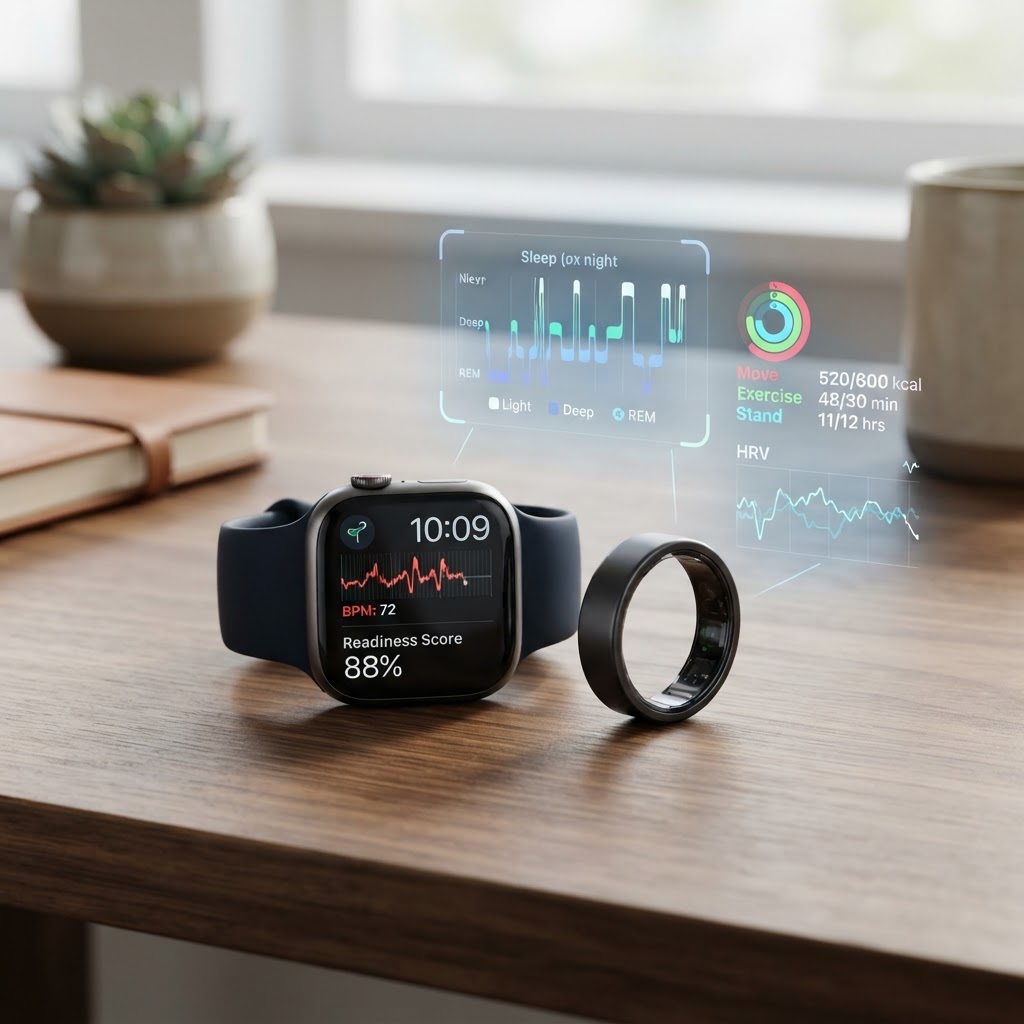
- Modern AI health trackers have transitioned from simple step counting to advanced physiological monitoring and predictive diagnostic tracking.
- The Oura Ring Gen 4 prioritizes non-intrusive sleep and readiness, while Whoop 5.0 focuses on granular performance and recovery metrics for athletes.
- Apple Health acts as a central data repository, utilizing Apple Intelligence to synthesize cross-device biometric data into actionable health trends.
- Personalized health insights now rely on sophisticated machine learning models that account for individual baseline variability rather than generic population averages.
- Choosing the right device requires balancing the desire for continuous high-fidelity data against considerations of comfort, battery longevity, and ecosystem integration.
The landscape of wearable health technology has undergone a profound transformation as we cross the threshold into 2026. What began as rudimentary motion-tracking hardware has evolved into a sophisticated network of AI health monitoring systems capable of interpreting complex physiological signals. Today, users are no longer satisfied with mere descriptive data; they demand predictive, personalized health insights that can preemptively identify trends in fatigue, stress, and systemic inflammation. As these devices become increasingly intertwined with proprietary machine learning models, the competition between major platforms like Whoop, Oura, and Apple has reached a critical juncture. Choosing the right tool for diagnostic tracking is no longer just about hardware aesthetics—it is about selecting the most accurate algorithmic engine to interpret the intricate rhythms of your body.
The Rise of AI in Personal Health Monitoring
The shift toward AI-driven health tracking marks a departure from static data collection toward dynamic, longitudinal analysis. Early wearable health technology relied primarily on threshold-based alerts—if your heart rate exceeded a specific number, the device notified you. Today’s AI health trackers utilize neural networks to establish a highly personalized baseline for every individual. This approach acknowledges that “normal” is a subjective term that fluctuates based on age, genetics, circadian rhythms, and environmental stressors.
Modern systems ingest massive datasets from optical heart rate sensors, electrodermal activity monitors, and accelerometers. Instead of providing raw numbers, these systems employ machine learning to filter out noise, such as movement artifacts during sleep or transient spikes caused by temporary physical exertion. This level of signal processing is essential for true AI diagnostic tracking, where the objective is to differentiate between a healthy response to strenuous exercise and an early warning sign of illness.
Furthermore, the integration of generative AI within these ecosystems has changed how users interact with their data. Rather than staring at complex graphs, users can now query their health history using natural language. For instance, a user might ask their app, “How did my sleep quality change after my late-night workout on Tuesday?” and receive an analysis that correlates heart rate variability (HRV) shifts with recovery speed. This capability represents the pinnacle of current personalized health insights. By synthesizing disparate data points—ranging from skin temperature fluctuations to blood oxygen saturation levels—AI can identify patterns that would be invisible to the human eye. This evolution signifies a broader trend in health tech: the transition from reactive care to proactive, data-informed self-management.
How AI Algorithms Analyze Your Biometric Data
At the core of every high-end wearable is an algorithmic architecture designed to parse millions of data points into a coherent narrative. The process generally begins with data acquisition through low-power sensors that continuously sample physiological signals. These sensors measure heart rate, blood oxygen levels, and skin temperature, but the real power lies in how this raw information is processed through proprietary AI pipelines.
One of the most critical metrics used in AI health monitoring is Heart Rate Variability (HRV). While a simple heart rate gives a snapshot of effort, HRV provides a window into the autonomic nervous system. AI models track the variation in timing between individual heartbeats to determine the balance between the sympathetic (fight-or-flight) and parasympathetic (rest-and-digest) nervous systems. Modern algorithms apply smoothing functions and weighted averages to this data, ensuring that brief stressors do not trigger false alerts while long-term trends—such as the onset of overtraining or chronic stress—are highlighted for the user.
In addition to HRV, sophisticated sensors now monitor electrodermal activity (EDA), which measures changes in skin conductance to detect stress or emotional arousal. AI diagnostic tracking systems synthesize this EDA data with sleep architecture—categorized by deep, REM, and light sleep phases—to create a “Readiness” score. By continuously retraining on the user’s historical data, these models improve their accuracy over time. They learn to ignore “baseline noise,” such as a slight increase in heart rate due to a large meal, while flagging abnormal deviations that might suggest systemic inflammation or pending burnout. This personalized learning process ensures that the diagnostic insights remain relevant and actionable, avoiding the pitfall of generic, one-size-fits-all medical advice.
| Platform | Primary Focus | Best For |
|---|---|---|
| Whoop 5.0 | Physiological Strain & Recovery | Serious athletes and performance optimization |
| Oura Ring Gen 4 | Sleep & Readiness Optimization | Holistic wellness and non-intrusive monitoring |
| Apple Health | Ecosystem Integration & Daily Activity | General health users and cross-device data syncing |
Whoop 5.0 Review: Precision Recovery and Strain Tracking
The Whoop 5.0 continues to cement its reputation as the gold standard for users who view their health through the lens of performance. Unlike consumer-grade smartwatches, Whoop has eschewed a screen entirely, focusing exclusively on the collection and interpretation of biometric data. This design choice underscores the brand’s commitment to “invisible” wearable health technology—a device that records data 24/7 without the distraction of notifications or third-party apps.
The 5.0 iteration introduces enhanced sensor arrays that improve the frequency and accuracy of biometric sampling. For those interested in AI health monitoring for athletic purposes, the device excels at quantifying the “Strain” on the body. It does not just track calories burned; it interprets the cardiovascular load of specific activities, offering a strain score that helps users decide whether to push for a personal best or prioritize a recovery day. The proprietary recovery algorithm is arguably the device’s strongest asset, using sleep quality, HRV, and resting heart rate to provide a percentage score each morning.
For individuals focusing on diagnostic tracking, the Whoop 5.0 offers deep-dive analytics into respiratory rate and blood oxygen levels throughout the night. By aggregating this data, the system can often detect early signs of physiological stress or illness before the user exhibits symptomatic distress. The app’s AI-powered journal feature is another highlight; it encourages users to log behaviors—such as alcohol consumption, late-night meals, or specific supplement intake—and then analyzes the correlation between these choices and recovery metrics. This creates a feedback loop where the AI provides personalized health insights based on the user’s actual life events, proving that the device is not merely a recorder of biological facts, but a tool for behavioral optimization.
Oura Ring Gen 4: Stealthy Sleep and Readiness Insights
The Oura Ring Gen 4 represents the pinnacle of discrete wearable design, catering to users who want accurate health metrics without the aesthetic burden of a wrist-worn gadget. By utilizing the finger as the primary point of data collection, Oura leverages the high concentration of superficial arteries, allowing for remarkably stable signal detection. This form factor is particularly advantageous for sleep tracking, as the ring’s unobtrusive profile minimizes the risk of sleep disruption during the night.
The Gen 4 model refines the Oura approach to readiness, which remains one of the most comprehensive systems for assessing systemic physiological health. While Whoop leans into high-intensity exertion, Oura focuses on the equilibrium between activity, sleep, and restorative rest. The ring tracks circadian alignment by monitoring temperature fluctuations, providing users with a “Readiness Score” that effectively communicates how prepared the body is for a day of work or physical stress. This is widely considered to be one of the best health apps 2026 has to offer for those who prioritize long-term recovery and mental performance over raw output.
One of the most significant upgrades in this generation is the refinement of its AI-driven sleep staging algorithms. By processing signal data through advanced neural networks, Oura can accurately differentiate between REM, light, and deep sleep with high fidelity. The “Sleep Contributor” metrics—such as sleep latency, efficiency, and disturbances—are presented in a clear, actionable format. For users interested in diagnostic tracking, the ring’s ability to detect shifts in body temperature is a standout feature, often serving as a reliable early indicator of illness or menstrual cycle phases. It is a tool for those who want a holistic, “always-on” view of their health, integrated seamlessly into their daily routine without requiring constant attention or manual data input.
Apple Health and Intelligence: The Ecosystem Advantage
Apple occupies a unique position in the wearables market, acting not only as a hardware provider but as the primary aggregator for health data across an entire digital ecosystem. The integration of Apple Health with Apple Intelligence has transformed the iPhone into a central hub for health analytics. Unlike dedicated fitness trackers, Apple’s strength lies in the breadth of data it can synthesize, pulling information from the Apple Watch, third-party medical devices, and even clinical records linked via patient portals.
With the rise of Apple Intelligence, the Health app has become a powerful AI diagnostic tracking tool. It is no longer just a database of steps and heart rates; it now actively analyzes long-term trends to highlight potential health deviations. If the system detects a persistent change in walking steadiness or a recurring trend in irregular heart rate notifications, it can generate summarized insights that the user can take to a healthcare professional. This capability represents the maturation of the device from a fitness toy to a meaningful health companion.
The synergy between the Apple Watch hardware and the Health app on the iPhone provides a level of cross-device intelligence that is difficult for competitors to replicate. For instance, the system can correlate sleep data gathered by the watch with respiratory patterns and daily activity intensity, then surface this data in the Health app with intelligent commentary. While dedicated trackers like Whoop or Oura may provide deeper insights into specific niches, Apple Health offers the best health apps 2026 experience for the average user who wants a holistic view of their wellbeing. It bridges the gap between daily lifestyle habits and long-term health metrics, providing a platform that is secure, accessible, and increasingly predictive, ensuring that the user remains informed about their physiological state without needing to be an expert in data science.
Comparing Predictive Health Analytics Across Devices
The primary value proposition of modern AI health trackers in 2026 lies in their shift from passive data collection to proactive predictive analytics. While traditional wearables merely displayed historical data, the current generation of devices utilizes machine learning algorithms to identify physiological patterns before they manifest as overt symptoms. This predictive capability depends heavily on the device’s form factor and the sensor suite it employs.
Whoop emphasizes longitudinal physiological recovery. By analyzing Heart Rate Variability (HRV) and respiratory rate trends over several weeks, Whoop’s AI engine, “Whoop Coach,” attempts to predict a user’s readiness for strain. It does not look for singular data spikes; instead, it identifies deviations from the user’s established baseline. This makes it particularly effective for athletes or individuals managing high-stress careers who need to optimize their recovery windows. The predictive model is heavily weighted toward autonomic nervous system regulation.
In contrast, the Oura Ring leverages a distinct sensor array—specifically skin temperature sensors—to provide predictive insights into the onset of illness or hormonal shifts. Because temperature regulation is a highly sensitive metric, Oura’s predictive AI often alerts users to potential immune system activation or cycle-related changes several days before the user might feel symptomatic. This diagnostic-lite approach turns the device into a tool for early environmental adjustment, such as preemptively lowering work strain when the AI detects anomalous temperature trends.
Apple Health acts as a sophisticated aggregator. Its strength in predictive analytics is not tethered to a single sensor but to the synthesis of data from the Apple Watch and third-party inputs. Apple’s “Vitals” and trend analysis algorithms are designed to detect subtle changes in walking steadiness, sleep architecture, and even potential atrial fibrillation signals. Unlike dedicated recovery trackers, Apple’s ecosystem focuses on long-term clinical trends, effectively bridging the gap between a consumer wearable and a functional diagnostic monitoring tool.
| Device | Primary Analytical Focus | Predictive Strength | Best For |
|---|---|---|---|
| Whoop | Autonomic Nervous System Recovery | Strain and load management | Performance Athletes |
| Oura Ring | Circadian & Thermoregulatory Health | Early illness & hormonal alerts | Holistic Wellness Seekers |
| Apple Health | Clinical Trend Synthesis | Overall wellness & system alerts | General Ecosystem Users |
Privacy and Security: Protecting Your Sensitive Health Data
As wearable health technology becomes increasingly diagnostic, the sensitivity of the data collected necessitates rigorous security standards. Users are no longer just sharing steps and heart rates; they are sharing highly personal biological identifiers. In 2026, the industry standard for protecting this data revolves around end-to-end encryption and localized processing.
Whoop and Oura have moved toward ensuring that sensitive raw data is encrypted both at rest and in transit. A critical feature for health-conscious users is the ability to opt out of data sharing with third-party partners. Many users are concerned that their biometric information could be utilized by insurance companies or employers to penalize them for suboptimal health markers. To mitigate this, companies have implemented granular privacy controls, allowing users to choose exactly what data is synced to cloud-based AI engines and what remains stored locally on their hardware.
Apple Health utilizes an on-device processing approach for most of its health metrics. By keeping the AI analysis local to the iPhone or Apple Watch hardware, Apple significantly reduces the risk of data interception. This architecture ensures that even in the event of a cloud security compromise, the user’s most sensitive health insights are not accessible to external actors. Furthermore, the inclusion of “Health Sharing” features allows users to selectively grant access to their diagnostics to trusted family members or medical providers, maintaining a secure ledger of who has permission to view specific data points.
Experts generally recommend that users audit their app permissions monthly. Even with robust encryption, a user may accidentally grant a third-party application read-access to their comprehensive health record. Utilizing the “Data Access” dashboard within iOS or the corresponding settings in Android-integrated health suites is a fundamental step in ensuring that AI-driven insights do not come at the expense of privacy.
Customizing Your Wellness Routine with AI Recommendations
The transition from “data-driven” to “action-driven” wellness is the hallmark of 2026 AI health trackers. Simply knowing your sleep score is insufficient; the current AI standard involves dynamic adjustments to your daily routine based on your forecasted biological capacity. These systems operate as digital wellness coaches, providing specific, actionable instructions rather than abstract data points.
For Whoop users, this manifests as “Strain Recommendations.” If the AI detects poor recovery, it will proactively suggest a lowered intensity for cardiovascular training that day. By adjusting the target strain based on the user’s physiological state, the system helps prevent overtraining injuries. This dynamic feedback loop ensures that the wellness routine remains fluid and responsive to the user’s immediate biological needs.
Oura emphasizes “Readiness-Based Activity.” If the AI identifies that the user is under significant physiological stress, it may suggest restorative activities like breathwork, meditation, or light movement rather than intense exercise. The personalization here is rooted in circadian rhythm alignment; the AI recommends specific windows for exposure to sunlight or the commencement of a “wind-down” routine based on the user’s historical sleep patterns. This turns the device into a tool that helps structure the entire day to optimize metabolic health.
Apple Health’s approach is more multifaceted, focusing on “Health Goals” that adapt based on achievements and consistency. If the AI notices a trend toward sedentary behavior during work hours, it may offer suggestions to break up prolonged sitting periods. This granular, behavior-shaping feedback is designed to build sustainable habits over time rather than simply rewarding short-term spikes in activity.
Integration: Connecting Your Wearables to Medical Apps
The true power of AI health monitoring is unlocked when data silos are broken. By connecting wearable data to professional medical apps and electronic health records (EHR), users can provide their healthcare teams with context that is impossible to capture during a fifteen-minute appointment. Integration is no longer a luxury; it is a clinical necessity for proactive care.
Many specialized medical apps now support native integration with Apple HealthKit, allowing data from Oura or Whoop to be piped directly into clinical diagnostic platforms. For instance, individuals monitoring chronic conditions can share longitudinal heart rate and oxygen saturation data with their primary care physicians through these secure conduits. This empowers doctors to make informed decisions based on months of data rather than a snapshot taken in a clinical setting.
However, users must be cautious about the quality of the data they share. AI health trackers are often calibrated for wellness and lifestyle management, not necessarily for clinical diagnosis. When connecting these devices to medical apps, it is vital to communicate with healthcare providers about the nature of the data being shared. Experts typically advise that wearable data should be used as a conversation starter rather than a replacement for professional diagnostic testing. The integration is best used to highlight trends, such as persistent tachycardia or unexplained fluctuations in sleep architecture, which the physician can then investigate using medical-grade equipment.
Future Trends in AI-Driven Personal Diagnostic Tools
As we look beyond 2026, the trajectory of wearable health technology points toward more invasive and granular sensing capabilities. We are moving toward the era of continuous biomarker monitoring. While current trackers focus on surface-level biometrics like pulse and temperature, future iterations are expected to integrate sensors capable of analyzing sweat or even non-invasive blood glucose trends.
Another emerging trend is the democratization of “Clinical-Grade” AI. As machine learning models become more efficient, they can run on increasingly lower-power hardware. This will likely lead to wearables that can perform high-fidelity ECG analysis continuously rather than on-demand. Such technology will fundamentally shift the relationship between patients and the healthcare system, as devices transition from “wellness trackers” to “diagnostic assistants.”
Furthermore, the integration of generative AI within these ecosystems will revolutionize how we interact with our health data. Instead of looking at charts and graphs, users will soon be able to engage in natural language conversations with their health trackers. A user might ask, “Why did my recovery drop last week?” and receive a contextualized, AI-generated summary that correlates their diet, weather patterns, activity levels, and sleep quality to provide a holistic explanation.
Frequently Asked Questions
Are AI health trackers accurate enough to diagnose medical conditions?
While AI health trackers are remarkably advanced, they are generally categorized as wellness and fitness tools rather than medical-grade diagnostic devices. They are excellent at identifying trends and deviations from your personal baseline, which can alert you to potential issues, but they should never be used as a substitute for professional medical testing or a doctor’s diagnosis.
Can I use multiple wearables at the same time for better tracking?
Yes, many power users utilize multiple devices, such as an Oura Ring for sleep and recovery tracking alongside an Apple Watch for activity and notification management. Platforms like Apple Health serve as a central repository for this data, preventing fragmentation. However, be aware that conflicting data points between devices can occasionally occur due to different sensor placements and analytical algorithms.
How often should I review my AI health data?
For most users, a weekly review is sufficient to identify meaningful trends without becoming obsessive. Checking your data multiple times a day can lead to unnecessary health anxiety. If you are training for a specific goal or managing a health condition, your healthcare provider may suggest a specific review cadence that aligns with your individual objectives.
Does using AI-driven wellness features negatively impact battery life?
Yes, continuous heart rate monitoring, advanced blood oxygen tracking, and background AI synchronization place a higher load on your device’s battery. To maximize longevity, many users customize their settings to only enable high-frequency monitoring during sleep or specific workout periods, balancing the need for actionable insights with the practical reality of charging frequency.
Can insurance companies access the data from my wearable?
In most jurisdictions, your health data is private and protected by various privacy laws, such as HIPAA in the United States, when handled by medical entities. However, you should always review the Terms of Service for your specific device. Some wellness programs offered by employers or insurance companies may offer incentives for sharing data, but this is typically voluntary and requires your explicit consent.
What should I do if my AI tracker detects an anomaly?
If your device detects a persistent anomaly—such as a sudden, unexplained drop in HRV, consistently elevated resting heart rate, or irregular sleep patterns—treat it as a signal to pay closer attention to your body. If you feel unwell or the data suggests a trend that deviates significantly from your norm, contact your healthcare provider. Use your data as evidence to facilitate a more informed medical consultation.
Conclusion
The landscape of personal health monitoring in 2026 is defined by a shift toward intelligence, autonomy, and integration. Whether you gravitate toward the athletic-focused recovery insights of Whoop, the circadian-aligned wellness of Oura, or the comprehensive, integrated ecosystem of Apple Health, the primary benefit remains the same: a deeper, more actionable understanding of your biological state. By leveraging these AI-driven tools, you are no longer guessing how your body feels; you are measuring, analyzing, and optimizing your health with precision.
As these tools continue to evolve, the distinction between lifestyle tracking and clinical diagnostics will continue to blur, placing the power of preventative healthcare directly into your hands. However, it is essential to remember that these devices are sophisticated assistants, not replacements for human clinical judgment. Use them to identify trends, build sustainable habits, and open critical dialogues with your healthcare professionals. The future of health is proactive, but it remains a partnership between your data and your doctor.
Ready to take control of your health data? Start by auditing your current wearable’s analytical features today and see which AI insights you’ve been missing. For further reviews and deep dives into the latest wearable innovations, keep following our analysis to stay at the cutting edge of health technology.
By aismarttoolsreview Editorial Team
Leave a Reply