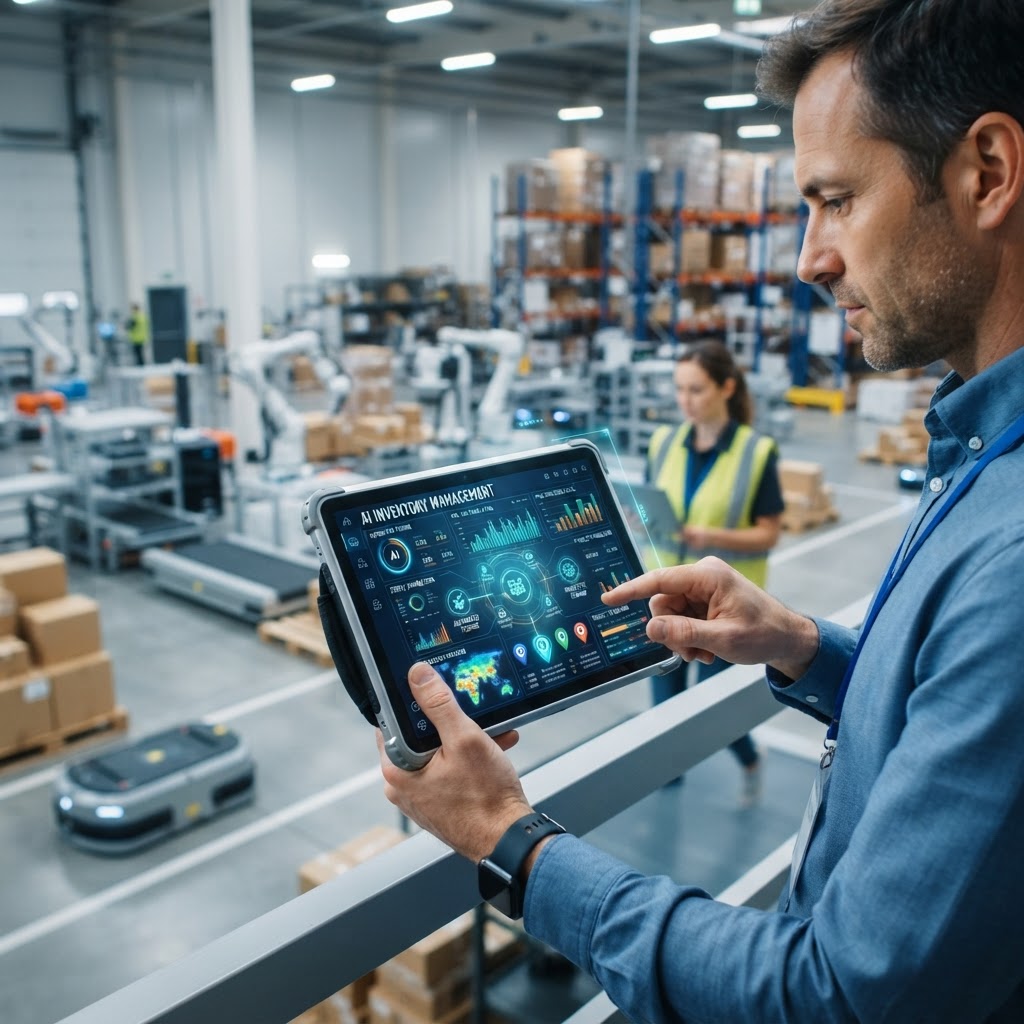
- AI inventory management has transitioned from a competitive advantage to a baseline requirement for scaling e-commerce brands in 2026.
- Advanced demand forecasting models are drastically reducing the capital tied up in dead stock and mitigating expensive stockout scenarios.
- Real-time stock tracking across multiple channels is now facilitated by automated inventory software that integrates directly with logistics providers.
- Choosing the right tool depends on your specific volume, supply chain complexity, and technical infrastructure requirements.
- Automated reorder points now account for supplier lead time fluctuations and seasonal market trends, minimizing human manual intervention.
The landscape of global e-commerce has shifted dramatically as we move through 2026, with the sheer volume of SKUs and the complexity of omnichannel retail rendering manual tracking obsolete. Today, the most resilient retail enterprises are those that have successfully implemented AI inventory management systems to navigate the complexities of global supply chains. As customer expectations for lightning-fast delivery accelerate, the margin for error in stock levels has narrowed to near-zero. By leveraging machine learning models that analyze historical sales, market trends, and even external variables like weather or local economic indicators, e-commerce stock tools are no longer just organizational aids; they are the strategic engine room of modern digital business. In this guide, the aismarttoolsreview Editorial Team analyzes the top-tier solutions defining the market this year, helping you discern which technological investments will secure your supply chain for the future.
Why AI is Revolutionizing Inventory Management in 2026
In previous cycles of retail technology, inventory management was largely a reactive discipline. Warehouse managers relied on spreadsheets, periodic cycle counts, and intuition-based reordering. By 2026, the paradigm has shifted toward proactive, autonomous, and predictive methodologies. Supply chain AI is now capable of processing massive datasets—from social media sentiment analysis that predicts product virality to real-time shipping carrier performance metrics—to provide a comprehensive view of the entire retail lifecycle. This integration allows companies to transition from “just-in-time” delivery models to “just-in-case” efficiency, where the right inventory is positioned in the right warehouse at the precise moment demand spikes.
The primary revolution lies in the speed of decision-making. Traditional software tools could generate reports on what happened last month, but modern AI inventory management allows for live situational awareness. When a sudden supply chain disruption occurs, such as a port closure or a raw material shortage, automated inventory software can instantly recalculate reorder points and suggest alternative fulfillment paths to prevent service interruptions. This level of agility was once reserved for global conglomerates with eight-figure software budgets, but the democratization of cloud-based AI tools has brought these capabilities to mid-market e-commerce players.
Furthermore, the reduction of human error is a significant driver of this revolution. Manual entry remains one of the largest sources of inventory discrepancy. With IoT-integrated sensors and computer vision-equipped scanning systems, AI systems now ingest data directly from the warehouse floor. This leads to a higher degree of data integrity, ensuring that what the system reflects is exactly what is physically available. As companies expand into multiple marketplaces—such as Amazon, Shopify, and social commerce platforms—the ability of an AI system to centralize this data is not merely convenient; it is a fundamental requirement for operational sustainability. When stock levels are accurate and transparent across all channels, brands can avoid the pitfalls of over-promising to customers, thereby protecting their seller ratings and overall brand equity in an increasingly crowded marketplace.
Key Features to Look for in AI-Powered Stock Tools
As you evaluate the best inventory management apps 2026 has to offer, it is essential to prioritize platforms that offer deep, actionable intelligence rather than simple database logging. The hallmark of a robust AI tool is its ability to handle multi-layered data ingestion. You should look for systems that offer native, deep integrations with your specific e-commerce stack—whether that includes specialized 3PL (third-party logistics) software, ERP (enterprise resource planning) platforms, or specific front-end marketplaces. Without seamless data flow, the AI is effectively operating in a vacuum, leading to inaccurate predictions.
Another critical feature is the transparency of the “black box.” Many automated inventory software solutions utilize complex algorithms that act as a black box, offering suggestions without explaining the underlying reasoning. The most effective tools provide explainable AI (XAI) features, where the software shows users exactly why a specific reorder suggestion was made—for example, citing a spike in local competitor pricing or a historical trend in specific geographic sales. This transparency is vital for warehouse managers who need to maintain final oversight while automating the heavy lifting.
Scalability is equally important. An ideal tool should support batch tracking, serial number tracking, and complex bill of materials (BOM) management for those selling bundled kits. The software should also offer advanced reporting capabilities, including customizable dashboards that can be tailored to different stakeholders, from procurement specialists to executive leadership. Finally, look for robust API support. Even if the platform is comprehensive today, the ability to build custom automations or connect to future logistics technologies via an open API ensures your tool won’t become a bottleneck as your brand grows.
| Tool Name | Primary AI Capability | Best For |
|---|---|---|
| InventoryBot | Conversational procurement analytics | Small to Mid-sized D2C Brands |
| Stockly | Automated supplier lead-time prediction | High-growth Retailers |
| Katana | Advanced manufacturing & BOM tracking | Manufacturers & Custom Makers |
How AI Demand Forecasting Prevents Overstocking and Stockouts
The “bullwhip effect”—where small fluctuations in retail demand cause increasingly large swings in inventory orders up the supply chain—has plagued retailers for decades. AI demand forecasting is the definitive solution to this volatility. By utilizing neural networks to process vast amounts of historical sales data, seasonal patterns, and promotional calendars, these systems can generate highly granular demand projections. Unlike traditional forecasting, which typically uses linear moving averages, AI considers non-linear relationships. For instance, it can understand that a specific product might sell better during a particular type of weather event, or that a shift in social media trend cycles will disproportionately affect certain SKUs.
Preventing overstocking is equally as valuable as preventing stockouts. Overstocking ties up massive amounts of working capital in stagnant goods that eventually require deep discounts to clear, eroding profit margins. AI models analyze the “velocity of sale” for every item, identifying products that are underperforming before they become dead stock. By recommending smaller, more frequent orders based on precise predicted demand, the system ensures that capital is deployed efficiently. This lean approach is essential for maintaining liquidity in high-growth environments where cash flow is often tight.
On the flip side, stockouts represent a catastrophic loss of potential revenue and customer loyalty. When a popular item is out of stock, customers rarely wait; they move to a competitor. AI systems mitigate this by incorporating “safety stock” buffers that are dynamic. Instead of maintaining a static percentage of safety stock for every product, the AI adjusts these levels based on current fulfillment risk. If a supplier is showing signs of delay, the system proactively increases the safety stock for those items. This intelligent, risk-aware inventory strategy allows brands to offer consistent availability even during periods of supply chain turbulence, creating a reliable customer experience that builds long-term retention.
InventoryBot vs. Stockly vs. Katana: Which Platform Fits Your Business?
Selecting the right platform among the best inventory management apps 2026 has to offer requires a candid assessment of your operational maturity. InventoryBot has positioned itself as the go-to choice for fast-moving direct-to-consumer (D2C) brands. Its primary innovation is its conversational AI interface, which allows warehouse managers to query their inventory data as easily as sending a text message. For teams that don’t have a dedicated data scientist, this natural language processing (NLP) layer makes complex supply chain insights accessible to everyone, from the warehouse floor to the marketing team.
Stockly, conversely, focuses heavily on the “backend” of the supply chain. Its core strength lies in its ability to synchronize inventory across complex distribution networks. If you operate multiple warehouses or utilize a hybrid model of self-fulfillment and 3PL, Stockly offers superior cross-site balancing. Its automated reorder point logic is arguably the most sophisticated in the current market, as it accounts for varying lead times from different global suppliers automatically. It is the ideal choice for companies that have outgrown simple stock tracking and are now facing the logistical challenges of scaling across international borders.
Katana takes a different approach by focusing on the “make-to-stock” and “make-to-order” segments of the market. For businesses that are not just reselling but actually manufacturing or assembling products, Katana provides a deep integration between production scheduling and inventory management. It treats your raw materials and finished goods as interconnected entities, ensuring that you never start production on a project only to find you are missing a critical component. While it may be overkill for a simple e-commerce dropshipping operation, it is the gold standard for small-to-medium manufacturing businesses that need precise control over their bill of materials and production flow. Ultimately, the decision rests on whether your primary constraint is front-end sales agility, multi-channel distribution complexity, or the intricacies of the production process itself.
Automating Reorder Points for Seamless Supply Chain Operations
The concept of a “reorder point” is fundamental to logistics, but in a manual environment, it is often a static number that remains unchanged for months. In 2026, automated inventory software has transformed this into a dynamic, “living” metric. Today’s AI-powered reorder points are calculated by the hour, incorporating real-time changes in consumer demand, current warehouse stock, and incoming shipments. When an automated system triggers a reorder, it does so not just because a threshold was reached, but because the AI has verified the optimal purchase quantity, reviewed vendor reliability, and considered current shipping costs.
The automation of these points provides a significant reduction in administrative overhead. Procurement teams no longer need to spend hours each week reviewing stock reports to decide what to order and in what quantities. Instead, they move into an “exception management” role, where the AI presents a list of proposed orders that the human operator simply reviews and approves. This shift allows the human workforce to focus on more high-level, creative tasks, such as supplier negotiation, product sourcing strategy, and brand growth initiatives. The system handles the repetitive, data-heavy calculations that are prone to human oversight.
Furthermore, these automated systems provide a level of integration that extends into the vendor’s domain. Many advanced platforms allow for electronic data interchange (EDI) connections where, once the reorder is approved, the purchase order is automatically transmitted to the supplier’s ERP system. This creates a closed-loop supply chain where the time between recognizing a need for stock and the supplier confirming the order is minimized to seconds. As e-commerce continues to move toward faster, more consolidated fulfillment speeds, this level of automation ensures that the internal supply chain is never the cause of a delivery delay. By removing the friction of human data entry and the lag of traditional communication, businesses can sustain higher levels of growth with a smaller, more focused team, effectively lowering their overhead while increasing their throughput.
Integrating AI Inventory Tools with Your E-commerce Platform
The successful deployment of AI inventory management software hinges entirely on the quality of its integration with your existing e-commerce infrastructure. An isolated system, regardless of how advanced its algorithms are, will inevitably lead to data silos that undermine the very efficiency you aim to achieve. To facilitate a seamless flow of data, modern automated inventory software utilizes robust API-first architectures. These interfaces allow for bidirectional communication between your digital storefront—such as Shopify, Magento, WooCommerce, or BigCommerce—and your inventory intelligence suite.
When planning your integration, the primary objective is ensuring real-time synchronization. This means every time a customer makes a purchase on your website, your supply chain AI must receive that transaction data instantaneously to decrement stock levels, trigger replenishment logic, and adjust lead-time calculations. Integration typically follows a tiered approach: connecting the frontend store, linking backend ERP systems, and finally syncing third-party logistics (3PL) providers. By leveraging middleware or native connectors provided by the inventory platform, businesses can avoid the common pitfall of manual data entry, which is a frequent source of human error and inventory variance.
Security during the integration process is paramount. Use OAuth 2.0 protocols for authentication to ensure that your inventory management tool has granular access to your store’s data without needing your master administrative credentials. Furthermore, establish a “single source of truth” hierarchy. If your inventory app is the primary source of truth, ensure that your e-commerce platform’s inventory settings are configured to defer to the software’s API updates. This configuration prevents conflicting data packets from causing “ghost inventory” scenarios, where a store shows a product as in-stock when it has, in fact, been allocated to an offline order or pending shipment.
Reducing Warehouse Operational Costs Using Predictive Analytics
One of the most profound impacts of AI in modern logistics is the transition from reactive to proactive warehouse management. Predictive analytics, a core component of supply chain AI, shifts the focus from managing current stock levels to forecasting the future state of your inventory. By analyzing historical sales velocity, seasonal trends, and even external variables like macroeconomic fluctuations or local holidays, these systems can generate highly accurate procurement suggestions. Reducing warehouse operational costs is not merely about ordering fewer items; it is about optimizing the turnover rate.
Excessive stock represents “dead capital”—money tied up in products that sit in climate-controlled space, accrue storage fees, and risk obsolescence. Conversely, under-stocking leads to backorders and missed revenue. Predictive models help strike the “Goldilocks” balance by identifying precisely when to reorder stock. By optimizing stock levels, businesses can reduce their physical footprint, minimize the labor hours spent on cycle counting, and negotiate better terms with suppliers based on consistent, reliable data-backed purchasing habits.
Labor allocation is another area where predictive analytics drives cost reduction. AI-driven systems can forecast labor demand based on projected order volumes. If the software anticipates a spike in activity—common during seasonal shifts—it can alert management to schedule additional staff for packing and shipping shifts. This granularity prevents the cost of overtime pay during quiet periods and ensures that warehouse throughput remains stable during high-demand surges. Essentially, the AI acts as a digital floor manager, constantly recalculating the cost-per-pick and recommending workflow adjustments that trim inefficiencies from every corner of the fulfillment process.
Scalability: Choosing Software for Small vs Enterprise Operations
As your business grows, the requirements for your inventory management system change. A small boutique merchant may prioritize ease of use, cost-effectiveness, and direct integration with social commerce platforms. In contrast, an enterprise operation demands multi-currency support, complex warehouse management system (WMS) integration, and highly customizable reporting dashboards that can handle millions of SKUs across global distribution centers. Choosing the right AI inventory management tool requires a clear assessment of your current scale and your trajectory for the next three to five years.
For small-to-medium businesses (SMBs), the priority should be “plug-and-play” scalability. Look for software-as-a-service (SaaS) inventory tools that offer tiered pricing models, allowing you to add more users, stores, or warehouses as you expand. These platforms often come with pre-built AI demand forecasting templates that are easy to deploy without needing a dedicated data science team. As your complexity increases, you should ensure that your chosen platform offers an open API, as you will eventually need to build custom workflows to connect to legacy databases or proprietary manufacturing systems.
Enterprise operations require a more sophisticated evaluation. Key considerations for larger firms include high availability (HA) infrastructure, disaster recovery capabilities, and the ability to process massive datasets without latency. Large-scale operations often benefit from AI tools that offer “advanced configuration” modules, enabling the platform to account for specific business constraints, such as unique shipping zones, specialized material handling requirements, or complex international trade compliance. The best inventory management apps for 2026 recognize this divide and offer either a “Lite” version for growth-phase companies or an “Enterprise” tier that supports high-volume, high-concurrency environments.
| Platform Tier | Best For | Core AI Features | Scalability Level |
|---|---|---|---|
| Entry/SMB | Startups & Boutiques | Basic Sales Trend Forecasting | Low to Moderate |
| Mid-Market | Growing Retailers | Multi-Channel Sync & Reorder Automation | High |
| Enterprise | Global Distribution | Global Demand Modeling & Warehouse AI | Limitless/Customizable |
Handling Multi-Channel Inventory Synchronicity with AI
Multi-channel retailing—the practice of selling products via your own website, Amazon, eBay, social media, and physical retail locations simultaneously—is a major revenue driver but a massive logistical headache. Without intelligent synchronization, it is common to experience “overselling,” where a product is purchased on two different channels simultaneously despite only one unit being in stock. AI inventory tools solve this by acting as a centralized command center that normalizes data across all connected endpoints.
These systems employ “distributed inventory logic.” When a sale occurs on any channel, the AI immediately updates the central database and pushes the revised stock level to every other connected platform within seconds. This process is significantly faster than manual updates or basic scripts, which may suffer from polling delays. Furthermore, sophisticated AI tools offer “stock reservation” capabilities, where they can intelligently reserve specific quantities of inventory for specific channels based on historical performance. For example, if the AI detects that a particular high-margin product sells faster on your own website than on Amazon, it can dynamically prioritize inventory levels to favor your own store.
Handling returns across multiple channels is another function where AI excels. By tracing an item’s lifecycle back to its original sale point, an AI system can update inventory levels across all channels in real-time, ensuring that a returned item is available for sale again as quickly as possible. This seamlessness maintains a consistent customer experience and prevents the manual labor of updating stock counts across three or four different platforms after every return or shipment.
Security and Data Privacy Considerations for Inventory Software
As you centralize your business data into an AI-powered inventory tool, you are effectively creating a goldmine of information—customer purchase habits, vendor pricing, product margins, and warehouse logistics. Protecting this data is non-negotiable. Modern AI inventory management software should adhere to strict industry standards, including SOC 2 Type II compliance, which provides assurance that the provider’s controls are effective at protecting data and maintaining system integrity.
Data privacy is especially critical when dealing with customer information associated with orders. Ensure that your inventory management software is compliant with regulations such as GDPR or CCPA, depending on your region of operations. This includes the ability to redact or delete customer data upon request and the use of robust encryption both in transit (using TLS 1.3 or higher) and at rest (using AES-256). Furthermore, consider the AI component itself. Reliable vendors will be transparent about whether they use your private data to train their global AI models. Reputable providers will typically offer a “private instance” or a setting that ensures your proprietary sales data remains segregated and is not used to benefit competitors.
Access control is the final pillar of security. Implement the principle of least privilege, ensuring that every user has only the access necessary to perform their job. Role-based access control (RBAC) should be standard in any enterprise-grade inventory tool. Additionally, multi-factor authentication (MFA) must be mandatory for all users. These technical safeguards reduce the risk of internal data leaks and external cyberattacks, ensuring that your inventory intelligence remains your competitive advantage rather than your primary vulnerability.
Frequently Asked Questions
Does AI inventory management really work for small businesses, or is it just for large corporations?
AI inventory management is highly effective for small businesses. While enterprise tools handle millions of SKUs, many modern AI platforms offer specialized versions for smaller retailers. These tools help small businesses avoid the “growing pains” of stock-outs and over-ordering, effectively leveling the playing field by providing predictive insights that were once exclusive to massive logistics firms.
How long does it typically take to integrate an AI inventory tool with an existing storefront?
The duration varies based on the complexity of your tech stack. Simple integrations with standard e-commerce platforms like Shopify or WooCommerce can often be completed in a matter of hours or days. More complex setups involving multiple warehouses, third-party logistics (3PL) providers, and legacy ERPs may require a few weeks of configuration and testing to ensure data accuracy.
What is the difference between automated inventory software and AI-powered inventory management?
Automated inventory software typically follows “if-this-then-that” rules, such as “reorder when stock hits 10 units.” AI-powered software goes further by predicting what those levels should be based on complex variables. It looks at market trends, historical velocity, and seasonal anomalies to dynamically adjust your operations, moving beyond simple manual rules into autonomous decision-making.
Will using AI inventory software mean I have to change my warehouse layout?
Not necessarily. However, many AI systems provide “slotting optimization” suggestions. Based on product velocity—how fast items sell—the software may suggest moving your best-sellers closer to your packing stations to reduce travel time for your staff. Adopting these suggestions can lead to significant efficiency gains, but the software is designed to adapt to your existing facility rather than forcing you to move infrastructure immediately.
How does AI handle unexpected events, like a global shipping delay?
AI systems monitor lead times in real-time. If a major supply chain disruption occurs, the software detects that your incoming shipments are delayed based on updated data from your suppliers. It then automatically recalibrates your reorder points and suggests alternative sourcing strategies or updates your storefront to manage customer expectations regarding stock availability, effectively mitigating the impact of the delay.
Are there security risks to feeding my sales data into an AI tool?
Any cloud-based software carries inherent risks, but reputable AI inventory management providers invest heavily in data protection. By choosing providers that offer SOC 2 compliance, end-to-end encryption, and clear data ownership policies, you can significantly reduce these risks. It is essential to review the vendor’s privacy policy to ensure your sales data is not being used to train broader AI models that your competitors might eventually access.
Conclusion
The landscape of retail is evolving at a breakneck speed, and in 2026, the difference between thriving and merely surviving lies in your ability to harness data. AI inventory management is no longer a futuristic luxury—it is the foundational infrastructure required to navigate the complexities of modern, multi-channel commerce. By integrating predictive analytics, automating repetitive fulfillment tasks, and maintaining tight control over your operational costs, you position your business to scale rapidly and maintain a resilient, efficient supply chain.
As you embark on this transition, remember that technology is only as effective as the strategy behind it. Choose a tool that scales with your growth, prioritize security as a core tenet of your tech stack, and remain vigilant in your data management. The future of e-commerce is data-driven, automated, and hyper-efficient. The time to optimize your inventory is now; evaluate your current needs against the tools discussed and take the first step toward a more intelligent fulfillment process.
Ready to modernize your operations? Start by auditing your current stock discrepancies and identifying the platform that best aligns with your long-term growth goals today.
By aismarttoolsreview Editorial Team
Leave a Reply