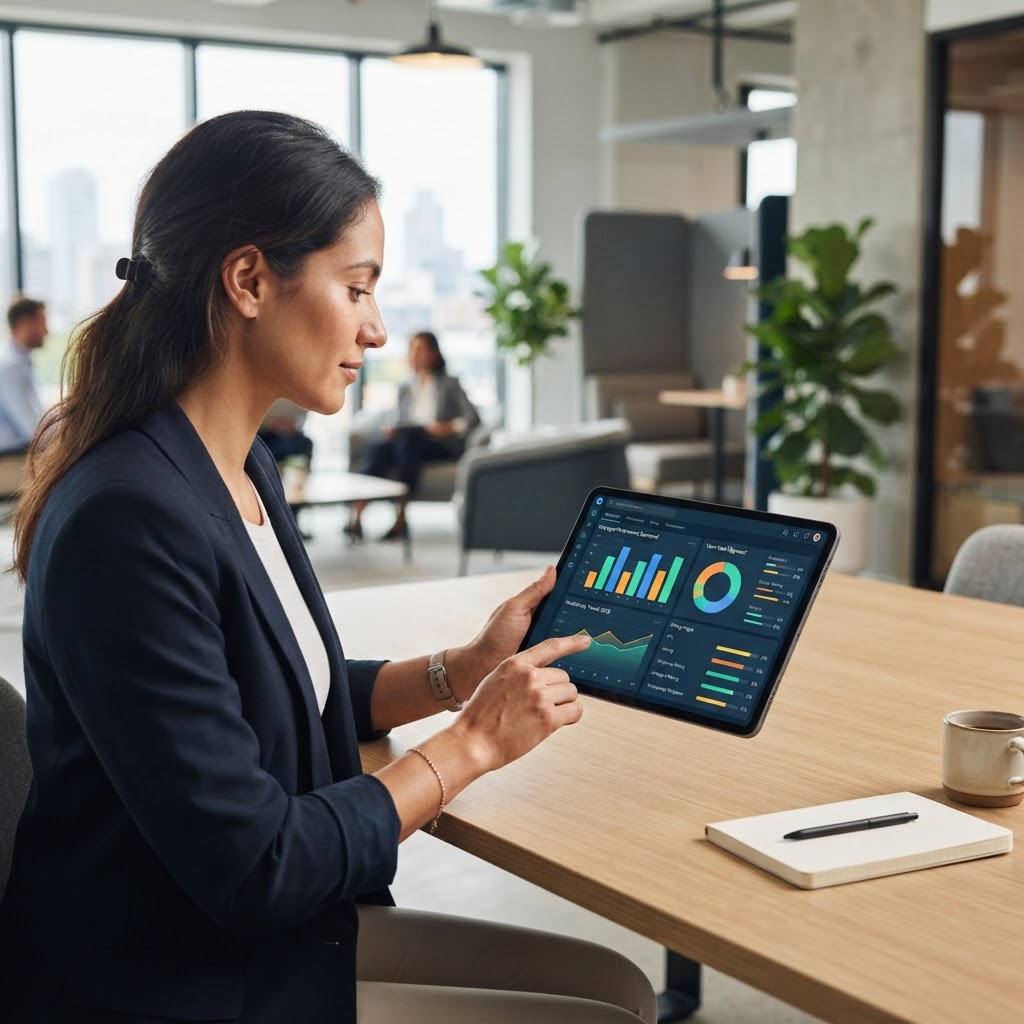
- AI HR software is shifting from reactive record-keeping to proactive, predictive talent development in 2026.
- Modern employee performance management now prioritizes continuous feedback loops over static, annual appraisals.
- Automation in HR allows managers to reduce administrative burdens by up to 40% through AI-generated review summaries.
- Eliminating bias in appraisals requires a hybrid approach, combining AI sentiment analysis with human oversight.
- Selecting the best HR tools 2026 requires balancing deep analytical capabilities with intuitive user interface design for employees.
The modern workplace has undergone a radical transformation, and the traditional methods of evaluating employee contributions are no longer sufficient to keep pace with global talent demands. As we step into 2026, the integration of AI HR software into daily operations has transitioned from a competitive advantage to a fundamental necessity. Businesses are moving away from rigid, once-a-year cycles toward fluid, real-time performance tracking that aligns individual objectives with broader organizational goals. By leveraging workforce management AI, leadership teams can now synthesize vast amounts of qualitative and quantitative data to create a holistic view of human capital. This article explores how technology is redefining the professional growth landscape, providing an objective look at the current market leaders and the strategic frameworks necessary to deploy these systems effectively.
How AI is Transforming Performance Management in 2026
The year 2026 marks a turning point for organizational psychology integrated with machine learning. Historically, employee performance management was plagued by “recency bias”—the tendency for managers to remember only the most recent successes or failures of an employee—and the time-consuming nature of administrative manual entry. Today, AI-driven platforms act as an “always-on” observer, aggregating micro-feedback, project completion metrics, and collaborative sentiment analysis into a cohesive narrative.
One of the most profound changes is the shift toward predictive talent intelligence. Unlike legacy systems that merely reported on historical data, modern AI performance review tools utilize sophisticated algorithms to identify potential high-performers before they are identified through traditional promotion cycles. By analyzing subtle patterns in cross-functional collaboration, meeting participation, and internal communication sentiment, these platforms provide HR departments with a predictive map of organizational health. This allows for proactive intervention—such as offering specialized training to an underperforming team member or fast-tracking a high-potential individual who is exhibiting signs of disengagement.
Furthermore, the democratization of feedback has changed the power dynamic of the workplace. In 2026, performance management is no longer a top-down mandate. Instead, it is a networked process. AI HR software facilitates 360-degree feedback loops, parsing peer-to-peer praise and constructive criticism to ensure that data-driven insights are balanced with human empathy. By automating the extraction of key themes from open-ended feedback, managers can spend less time synthesizing documents and more time coaching their direct reports. This evolution effectively transforms the manager from a judge into a mentor, backed by an AI assistant that handles the objective heavy lifting.
Integration capabilities have also matured significantly. In the past, performance management data often lived in a siloed HRIS, disconnected from project management tools like Jira, Asana, or Slack. Today, the best tools integrate deeply across the tech stack. This connectivity ensures that performance reviews are not based on subjective memory but on real-time evidence extracted from the tools employees use daily. This integration enables a continuous feedback loop that fosters transparency and trust, two pillars that are essential for remote and hybrid workforce management in 2026. As businesses continue to iterate on these workflows, the role of HR professionals is shifting toward high-level strategy and organizational design, supported by a digital ecosystem that handles the complexity of measuring human productivity with nuance and precision.
Key Features to Look for in AI-Powered HR Software
When evaluating the current market for best HR tools 2026, decision-makers must look beyond flashy marketing and focus on core technical functionality. The effectiveness of an AI-driven platform is contingent on the quality of its underlying data model and the security of its processing. One of the primary features to demand is natural language processing (NLP) that is fine-tuned for professional discourse. The ability for an AI to distinguish between constructive professional feedback and irrelevant commentary is what separates superior software from basic automation tools.
Another essential capability is objective setting using the OKR (Objectives and Key Results) methodology powered by machine learning. A robust employee appraisal software should offer “smart objective mapping,” where the software suggests, tracks, and adjusts individual goals based on the team’s current capacity and real-world project outcomes. If a team pivot occurs mid-quarter, the AI should be able to identify which individual objectives are now misaligned and suggest revisions to the manager. This adaptive goal-setting ensures that employees remain focused on tasks that generate actual value rather than arbitrary, outdated KPIs.
Integration with existing operational software is non-negotiable. Whether your organization uses Salesforce, Google Workspace, or GitHub, your performance software must be able to pull performance indicators from those sources without manual user intervention. This reduces friction and ensures that the data is as close to real-time as possible. Look for platforms that offer a centralized dashboard—a single pane of glass where managers can view individual progress, team sentiment trends, and organizational alignment metrics simultaneously.
Privacy and explainability are perhaps the most critical, yet often overlooked, features. Any system using AI for performance management must be transparent regarding how decisions are made. Managers should be able to view the data sources—the “how” and “why”—behind an AI-generated summary or score. This is vital for maintaining equity and trust. Furthermore, security protocols such as end-to-end encryption and compliance with global data privacy regulations (like GDPR) are mandatory. Organizations must ensure that employee data is used strictly for development purposes and never for discriminatory profiling. The following table provides a snapshot of how current tools differ in their primary focus areas.
| Tool | Core Specialization | Best For |
|---|---|---|
| Lattice | OKR Alignment & Goal Setting | High-growth tech companies |
| 15Five | Continuous Manager-Report Coaching | Development-focused teams |
| Culture Amp | Employee Engagement & Sentiment Analysis | Large, data-driven enterprises |
Lattice vs 15Five vs Culture Amp: Top Performance Tools Compared
Selecting the right employee performance management platform requires a deep dive into the unique philosophy each tool brings to the table. Lattice has long established itself as a leader for organizations that prioritize goal alignment. Its platform is built around the idea that employee performance is a function of how well an individual understands their specific role within the larger corporate strategy. By integrating OKRs directly into the review process, Lattice ensures that performance discussions are tied to concrete business results. Its AI capabilities in 2026 have expanded to include sentiment analysis of peer feedback, which helps managers surface potential friction points before they become major problems. For organizations that rely on agile methodologies and need strict alignment between individual output and quarterly milestones, Lattice provides the most rigorous structural framework.
Conversely, 15Five emphasizes the “continuous” aspect of HR automation software. Its approach is rooted in the “weekly check-in,” a methodology designed to facilitate consistent communication between managers and their direct reports. Rather than waiting for an annual appraisal, 15Five utilizes AI to summarize these weekly inputs, identifying themes of frustration, accomplishment, or resource bottlenecks. This is particularly beneficial for organizations that prioritize employee well-being and professional development. The platform is designed to make the manager a better coach, providing them with conversation prompts and insights based on the employee’s self-reported progress. If your organizational culture values mentorship and regular, informal feedback over strict corporate hierarchy, 15Five is often the preferred choice.
Culture Amp differentiates itself by focusing on the broader spectrum of employee experience, weaving together performance management with comprehensive engagement surveys. While the other two tools focus heavily on the tactical output of employees, Culture Amp excels at capturing the “pulse” of the workforce. Its AI engine is arguably the most sophisticated in the market when it comes to parsing open-ended survey comments to detect subtle shifts in morale or company culture. By combining performance data with engagement scores, Culture Amp provides a 360-degree view of why an employee might be performing at a certain level. For large enterprises where cultural cohesion and retention are as critical as individual task completion, this tool offers the most comprehensive analytical lens.
When comparing these three, the “best” tool is highly dependent on your company’s stage and cultural priorities. A startup scaling rapidly might gravitate toward the goal-driven nature of Lattice, while a company undergoing a cultural transformation or one with a high concentration of remote teams might find the engagement-first approach of Culture Amp more valuable. 15Five remains the gold standard for companies looking to transition from traditional command-and-control management to a more supportive, coaching-oriented leadership model. Ultimately, these tools are no longer just repositories for annual reviews; they are the connective tissue of the digital workplace, and choosing one requires an audit of your internal communication patterns.
Automating Performance Reviews with AI-Driven Insights
The traditional performance review cycle is notorious for being an administrative drain, often occupying weeks of HR time and causing anxiety for employees. HR automation software is drastically changing this dynamic by transforming the review process from a static, retrospective summary into a dynamic, forward-looking dialogue. The core of this transformation lies in the AI’s ability to synthesize massive data sets into concise, actionable summaries for the manager to review prior to meeting with the employee.
In a standard 2026 workflow, the AI pulls data from multiple sources: completed project tasks, peer recognition logs, and documented weekly check-ins. It then drafts a performance overview that highlights three key achievements, areas for improvement, and a summary of the employee’s contribution to team objectives. Crucially, the AI does not write the review in its entirety. Instead, it provides a draft that the manager can refine, edit, or reject. This process saves the manager hours of document preparation while ensuring that the review is grounded in verified, multi-point data rather than the manager’s recollection alone.
This level of automation also supports more equitable documentation. AI tools can analyze the consistency of feedback provided by a manager across their entire team, flagging potential discrepancies in how they write reviews for different employees. For example, if a manager consistently uses active, achievement-oriented language for male team members but passive, supportive language for female team members, the system can provide a gentle, automated prompt suggesting a more balanced framing. This “real-time coaching” for managers is a powerful tool in the fight against implicit bias.
Beyond the review itself, workforce management AI can help map out individual development plans. Once a review is completed, the system can cross-reference the identified skill gaps with the company’s internal training library or external learning platforms. It then automatically suggests personalized learning paths for the employee. This turns the performance review from an end-point into a starting line for professional growth. By making the entire process faster, more data-driven, and intrinsically linked to future training, automation allows managers to move from “administrative paperwork” mode to “strategic talent management” mode. The net result is a more engaged workforce that understands exactly how their efforts contribute to the organization and how they can continue to grow within the company framework.
Using AI to Eliminate Bias in Employee Appraisals
Bias in employee performance management remains one of the most significant challenges in human resources. Even with the best intentions, humans are subject to cognitive biases such as the halo effect, where one positive trait influences the overall perception of an employee, or affinity bias, where managers favor those who share their own background. Using AI to mitigate these biases is a critical priority for HR departments in 2026. The goal is not to remove the human from the decision-making process, but to provide a neutral, analytical layer that acts as a check against irrational or biased judgments.
Advanced AI performance review tools now utilize sentiment analysis and linguistic modeling to audit manager feedback. These systems are trained to identify biased language patterns—such as the use of descriptors that focus on personality traits rather than measurable behaviors. For instance, the system might flag feedback that describes a person as “aggressive” or “emotional,” and suggest rephrasing it to focus on specific work outcomes, such as “took an assertive stance during project planning” or “demonstrated high engagement during team conflicts.” This linguistic grounding forces the reviewer to be more precise, ensuring that the appraisal remains rooted in facts rather than generalizations.
Furthermore, AI-driven calibration meetings are becoming a standard practice. In traditional settings, calibration meetings are often subject to the most vocal manager or the person with the most influence. By utilizing an AI-powered platform to analyze scores across the entire organization, HR teams can identify outliers. If one department consistently rates employees significantly higher than other departments for similar roles, the AI can detect this variance and prompt the leadership team to review the criteria being used. This ensures that a “high performer” in engineering is measured against a similar standard as a “high performer” in marketing, fostering organizational fairness.
Transparency is the final piece of the anti-bias puzzle. When employees can see the rationale behind their performance scores and the supporting data points that informed the appraisal, the mystery—and the resulting sense of injustice—is removed. By providing employees with a clear, data-backed view of their performance, organizations can foster a culture of trust. However, it is vital that HR teams maintain a “human-in-the-loop” philosophy. AI should be used to provide data and uncover potential blind spots, but the final, sensitive decisions regarding promotions or compensation adjustments must involve human judgment that takes into account the specific context that the AI may miss. By pairing human wisdom with the objectivity of workforce management AI, companies can build performance processes that are not only more efficient but also demonstrably fairer.
Real-Time Feedback Loops and AI Goal Tracking
The transition from annual or bi-annual performance reviews to continuous feedback cycles is one of the most significant shifts in modern human resources. AI-driven HR software facilitates this transition by replacing the static, retrospective appraisal model with a dynamic, forward-looking framework. By leveraging real-time feedback loops, organizations can address performance gaps as they emerge rather than waiting for scheduled meetings, which often lose their impact due to recency bias.
AI performance review tools act as a bridge between high-level organizational objectives and daily tasks. Through intelligent goal tracking, these systems break down company-wide OKRs (Objectives and Key Results) into granular, actionable tasks for individual contributors. When an employee updates a task status, the AI monitors progress against the predefined goal. If an employee falls behind or encounters a bottleneck, the software can trigger automated nudges or suggest resources to get them back on track. This transparency ensures that employees are not working in silos and that their individual output directly supports the broader company vision.
Furthermore, AI sentiment analysis tools integrated into messaging platforms or feedback modules help HR managers understand the “soft” side of performance. By analyzing the frequency and nature of praise or constructive feedback shared between team members, the system can identify high-potential leaders and teams that might be struggling with morale. This data-driven approach removes the guesswork from management and enables leaders to offer timely support, significantly increasing retention rates and employee satisfaction.
Integrating AI HR Tools with Existing Payroll and Management Systems
Implementing a new AI performance tool is ineffective if it functions as an island within your organization. Seamless integration with your existing HRIS (Human Resource Information System), payroll software, and project management tools is critical for a unified workforce management strategy. The primary value of this integration is the creation of a “single source of truth.” When performance data is synced with payroll, organizations can create a direct link between performance metrics and compensation adjustments, such as performance-based bonuses or merit increases.
Effective integration usually occurs via robust API connections. For example, when a performance review is finalized in your AI HR software, the system should automatically update compensation modules in your payroll platform. Similarly, integration with project management platforms like Jira, Asana, or Trello allows the AI to ingest objective data—such as ticket completion rates or project delivery times—to provide a more objective evaluation of an employee’s work, minimizing the subjectivity often found in traditional manager-led appraisals.
Organizations must prioritize platforms that offer pre-built connectors for industry-standard suites. The following table illustrates how different types of AI HR solutions balance integration complexity with specific functional benefits:
| AI Tool Type | Primary Integration Target | Integration Complexity | Best For |
|---|---|---|---|
| Full-Suite HRIS | Native Payroll/Benefits | Low (Single Vendor) | Enterprises seeking all-in-one stability |
| Niche Performance AI | Slack/MS Teams/Jira | Medium (Requires API) | High-growth tech teams |
| Analytics-First Platforms | BI Tools (Tableau/PowerBI) | High (Custom Data Mapping) | Data-driven HR departments |
Data Security and Privacy Considerations for HR AI
As organizations aggregate sensitive employee data to fuel performance algorithms, the stakes regarding data security and privacy have never been higher. Employee appraisal software often stores highly personal information, ranging from performance notes and salary data to behavioral analysis. Consequently, HR leaders must ensure that their chosen AI solutions adhere to stringent global data protection standards, such as GDPR, CCPA, or SOC2 Type II compliance.
A major concern with HR AI is the risk of “algorithmic bias,” where the software may unfairly disadvantage certain demographic groups due to historical data patterns. To mitigate this, companies should perform regular audits of their AI models. Vendors must be able to demonstrate transparency regarding their training datasets and the logic behind their evaluation frameworks. When vetting an AI HR software provider, HR teams should ask for a “Privacy Impact Assessment” and clear documentation on how data is encrypted both in transit and at rest.
Access control is another pillar of security. Advanced platforms allow for role-based access control (RBAC), ensuring that only authorized personnel can view specific performance analytics. Additionally, organizations should consider where the data is stored. For multi-national corporations, localized data residency—where data stays within the country of origin—might be a legal requirement. Ensure that the AI vendor provides granular settings that allow your IT team to manage data retention policies, effectively purging or anonymizing data as employees leave the organization.
Choosing the Right Performance Management Software for Your Team Size
The scale of your organization dictates the complexity and feature-set requirements of your performance management software. A startup with 20 employees has vastly different needs than a global corporation with 5,000 headcount. Small to medium-sized businesses (SMBs) typically benefit from lightweight, user-friendly interfaces that prioritize continuous feedback and goal alignment over complex, multi-layered reporting hierarchies.
For SMBs, the focus should be on “speed to value.” Look for platforms that offer self-onboarding and minimal configuration. These tools should provide basic analytics that highlight who is meeting their goals and who is at risk of burnout. Conversely, large enterprises often require a robust AI infrastructure that can handle complex organizational structures, such as matrix management, where an employee might have multiple dotted-line reporting relationships. Enterprise-grade tools also need to support “calibration,” a process where managers align on performance ratings to ensure fairness across departments.
Regardless of size, the common denominator for a successful implementation is user adoption. If the tool is too difficult to navigate, employees will bypass it, leading to incomplete data. Experts generally recommend conducting a pilot program with a cross-functional team before committing to a company-wide rollout. This allows HR to gather feedback on the user experience and ensure that the AI-driven nudges and workflows align with the company culture.
Measuring the ROI of AI-Powered HR Implementation
Measuring the return on investment (ROI) for AI performance management software goes beyond tracking software subscription costs. It involves assessing the impact of the software on both productivity and human capital preservation. To build a business case for these tools, HR leaders should focus on key performance indicators (KPIs) such as the reduction in time spent on manual administrative appraisal tasks. If an AI tool reduces the preparation time for annual reviews by 30%, that represents a significant gain in billable or productive hours for the management team.
Another crucial metric is the correlation between AI-driven performance insights and retention. By tracking turnover rates among employees who use the system regularly versus those who do not, companies can often identify a positive correlation between frequent feedback loops and employee longevity. Furthermore, consider the “Quality of Hire” metric; if the AI performance software helps managers provide better coaching, the overall quality of output within the first year of employment should theoretically increase.
To track ROI effectively, establish a baseline before the implementation. Measure the time spent on manual goal setting, the frequency of 1:1 meetings, and current employee sentiment scores. After 6 to 12 months, compare these data points against the post-implementation results. Many organizations also find that AI tools help them discover hidden talent—employees who are consistently high-performing but were previously overlooked by traditional management methods. The cost of replacing an employee is often significantly higher than the cost of an annual seat license for an AI performance tool, making a small improvement in retention a massive financial win.
Frequently Asked Questions
How does AI ensure fairness in performance reviews?
AI tools can promote fairness by analyzing objective output data rather than relying solely on subjective manager perception. By comparing an employee’s goals against actual performance metrics and providing standardized templates for feedback, the software helps reduce the influence of unconscious bias and halo/horn effects in evaluations.
Can AI HR software replace human managers in the review process?
No, AI is designed to augment the role of the manager, not replace it. The software provides the data, insights, and reminders, but the human element remains vital for nuanced discussions, coaching, empathy, and career pathing that require deep interpersonal understanding.
What happens to employee data privacy when using AI tools?
Reputable HR AI software providers employ enterprise-grade encryption and strictly adhere to data privacy regulations such as GDPR or CCPA. Organizations maintain ownership of their data, and top-tier vendors offer robust configuration options to restrict access and control data retention periods.
Is AI performance management software only for large enterprises?
While large enterprises often require the complex features of these tools, there are many AI-driven platforms specifically designed for startups and small-to-mid-sized businesses. These versions focus on ease of use, agile goal tracking, and continuous feedback rather than complex structural hierarchies.
How long does it typically take to see results from these tools?
Results often emerge in two phases. Within the first quarter, teams typically see immediate operational gains as administrative overhead drops and goal clarity improves. Over 6 to 12 months, organizations generally begin to see longer-term impacts, such as improved engagement, higher retention, and a more consistent performance culture.
Do I need an IT team to manage the integration of these AI tools?
While many modern AI tools are designed for intuitive, HR-led deployment, more complex integrations with legacy payroll or ERP systems may require assistance from IT or a dedicated implementation partner. Most cloud-based platforms offer robust API documentation and dedicated support teams to guide your technical setup.
Conclusion
The integration of AI into performance management is no longer a futuristic luxury—it is a core necessity for organizations aiming to remain competitive in 2026 and beyond. By moving toward real-time, data-backed feedback loops, companies can transform their appraisal processes from dreaded administrative tasks into powerful engines for professional growth and business success. Whether your goal is to reduce turnover, increase management efficiency, or simply foster a more transparent workplace culture, selecting the right AI HR software is a strategic decision that pays dividends in both productivity and employee morale.
As you evaluate your options, focus on the tools that align best with your specific company size, integration needs, and privacy requirements. The future of work is undeniably connected, automated, and intelligent; by embracing these technological advancements now, you position your workforce to adapt, thrive, and exceed organizational expectations. Take the first step by conducting a needs assessment of your current workflow and scheduling demos with the top-tier platforms that fit your operational scope.
By aismarttoolsreview Editorial Team
Leave a Reply