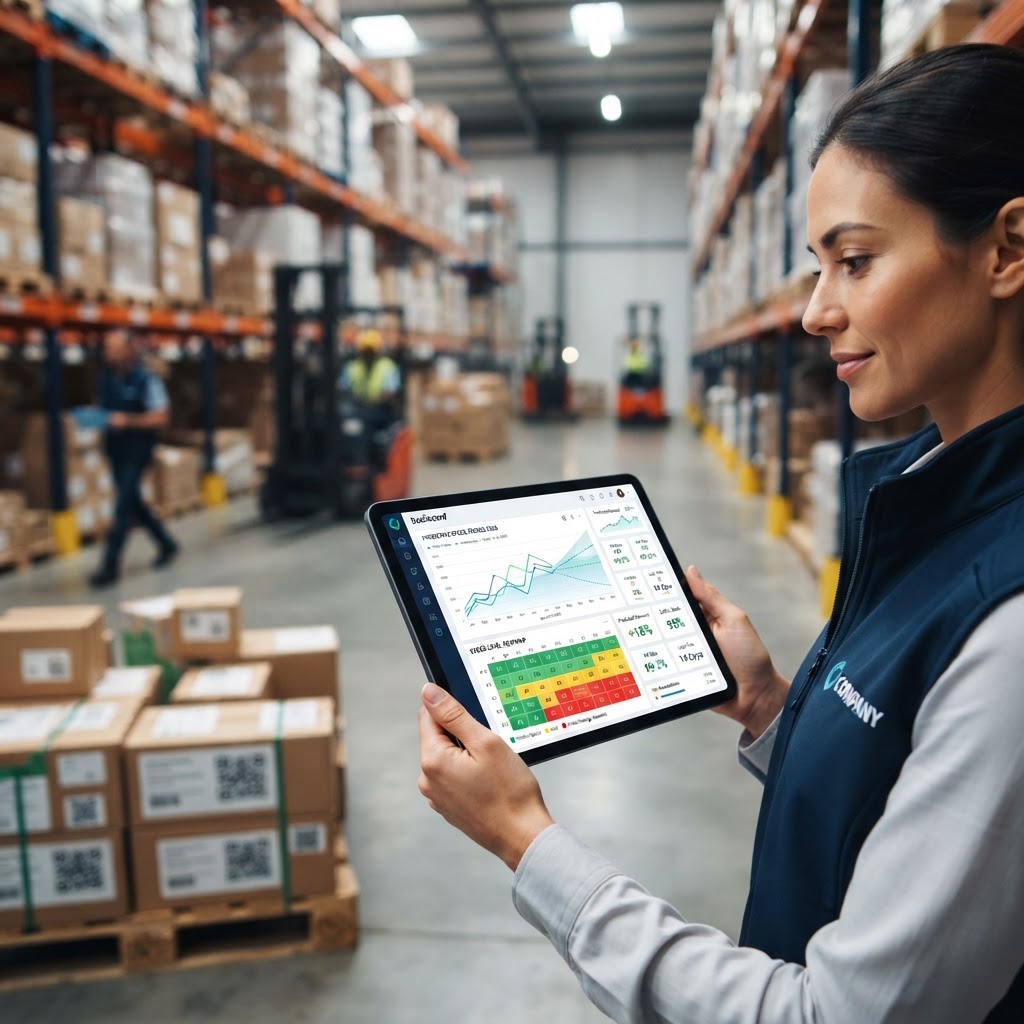
- AI inventory forecasting moves beyond static historical data to analyze real-time market trends and micro-signals.
- Effective demand planning software reduces capital tied up in excess stock while preventing costly stockouts.
- Integration capabilities are critical for connecting AI tools with existing ERP, WMS, and e-commerce platforms.
- Modern AI supply chain optimization relies on multi-variate modeling, accounting for promotions, weather, and economic shifts.
- Choosing the right inventory control tools requires balancing budget, scalability, and specific industry complexities.
In the high-velocity world of modern digital retail, the margin for error has narrowed significantly. Retailers are no longer just competing on product quality; they are competing on the precision of their logistics. As consumer expectations for rapid fulfillment continue to rise, the traditional methods of calculating reorder points through basic spreadsheets have become dangerously obsolete. Enter AI inventory forecasting: the bridge between unpredictable consumer behavior and efficient warehouse operations. As we approach 2026, the transition toward intelligent, automated systems is no longer a luxury but a fundamental necessity for businesses aiming to scale profitably. This guide from the aismarttoolsreview Editorial Team explores how sophisticated algorithms are transforming the landscape of retail inventory management, allowing merchants to achieve unprecedented levels of operational clarity and financial stability.
Why AI is Essential for Modern Inventory Forecasting
The core challenge of retail today is the “bullwhip effect,” where small fluctuations in retail demand cause increasingly larger swings in inventory requirements up the supply chain. Traditional forecasting models often rely on linear extrapolations, assuming that what happened in the past will repeat in the future with minimal variation. However, the modern market is characterized by volatility, influenced by social media trends, sudden economic shifts, and global supply chain disruptions. AI inventory forecasting addresses these limitations by processing vast, unstructured datasets that human planners simply cannot analyze in real time.
Machine learning models excel at identifying non-linear patterns. For instance, while a human analyst might notice that sales of outdoor furniture spike in the spring, an AI system can cross-reference historical sales with local weather patterns, historical inflation rates, and even sentiment analysis from social platforms to predict the exact intensity of that spike. This granular level of insight is essential for AI supply chain optimization. By automating the analysis, businesses move from reactive stocking to proactive inventory positioning.
Furthermore, AI-driven systems operate with a “living” logic. As new sales data flows into the system, the model updates itself, refining its predictive accuracy. This constant state of self-correction helps mitigate the risks associated with “black swan” events—unforeseen disruptions that typically paralyze supply chains using static forecasting software. When the system detects a deviation from the expected demand, it can immediately suggest adjustments to procurement orders or redistribution strategies across multi-channel warehouses.
Beyond simple predictions, AI enhances the strategic deployment of capital. When inventory levels are optimized, cash flow that would otherwise be trapped in dead stock—items that sit on shelves for months without movement—becomes available for re-investment in marketing, product development, or expanding market share. For growing e-commerce brands, this liquidity is the difference between stagnation and hyper-growth. By leveraging inventory control tools powered by predictive intelligence, companies ensure that their capital works as hard as their staff, maintaining a lean operation that is resilient in the face of inevitable market fluctuations.
How AI Predicts Seasonal Demand and Market Shifts
Predicting demand is rarely as simple as looking at last year’s holiday sales. Modern demand planning software utilizes sophisticated neural networks to isolate variables that traditional tools miss. Seasonal demand is influenced by a complex web of environmental, psychological, and economic triggers. AI models treat these variables as dynamic inputs rather than static historical averages, allowing for a multidimensional understanding of the consumer journey.
For example, a high-performing AI system might analyze “micro-seasonal” trends. If a sudden surge in a specific color palette occurs on social media platforms, the AI can detect this early signal in trend-tracking datasets and adjust the demand forecast for products featuring those colors, even before the primary season begins. This capability allows retailers to capitalize on fleeting consumer interest, turning ephemeral trends into tangible revenue. The ability to synthesize macro-economic indicators, such as consumer confidence indices, with micro-level transactional data gives AI a distinct advantage in forecasting market shifts.
Another critical area is the impact of promotions and marketing campaigns on stock levels. Many retailers have experienced the “runaway success” scenario—a marketing campaign performs unexpectedly well, leading to instant stockouts and missed revenue. Conversely, many promotions fail to move the needle, leaving warehouses full of expensive, discounted goods. AI forecasting bridges this gap by simulating the potential impact of various promotional scenarios before they launch. By feeding historical campaign data into the model, the system can estimate the “elasticity of demand,” suggesting optimal stock levels to support a campaign without over-committing capital.
Finally, AI excels at managing the complexity of product lifecycles. For items that are nearing the end of their lifecycle, AI can model the decay rate of demand, signaling the warehouse team to reduce stock levels just before the product becomes obsolete. This prevents the “markdown trap,” where retailers are forced to discount goods heavily to clear shelf space. By precisely aligning the phase-out of old products with the launch of new ones, AI systems maintain a balanced, healthy inventory mix. This level of foresight is vital for businesses managing large SKUs across distributed networks, where a unified view of demand is essential for preventing the logistical nightmare of regional inventory imbalances.
Key Features to Look for in Inventory Management Software
When evaluating stock forecasting software, it is tempting to focus solely on the sophistication of the algorithm. However, an AI model is only as effective as the environment in which it operates. A robust platform must offer a suite of features that prioritize data integrity, actionable insights, and operational connectivity. First and foremost, look for seamless data integration. The AI must be able to ingest real-time data from your e-commerce storefront, point-of-sale (POS) systems, warehouse management systems (WMS), and enterprise resource planning (ERP) software. If the AI cannot “talk” to your existing infrastructure, it will operate in a silo, leading to incomplete forecasts.
Secondly, prioritize transparency and explainability. Many AI models function as a “black box,” providing a number without context. Top-tier e-commerce inventory analytics platforms provide “explainable AI” features, allowing users to see the variables that influenced a particular prediction—such as specific holiday dates, local weather events, or recent price adjustments. This transparency builds trust with the procurement team, who are ultimately responsible for making the final purchasing decisions. If the procurement team understands *why* the AI is suggesting a high reorder quantity, they are significantly more likely to adopt the tool’s recommendations.
A third essential feature is multi-node inventory management. If your business operates across multiple warehouses or fulfills orders from both retail storefronts and online channels, the software must account for regional demand variations. An AI system that treats all your inventory as one giant pool will fail to account for the costs and timelines associated with inter-facility transfers. Advanced software should intelligently route stock based on local demand probability, ensuring that products are staged in the warehouses closest to the customers most likely to buy them.
Finally, consider the user interface and the level of automated action. The best inventory control tools don’t just alert you to a potential problem; they offer automated workflows to solve it. Whether it is triggering a purchase order draft when stock hits a certain threshold or recommending a price adjustment to clear stagnant stock, the system should act as a force multiplier for your operations team. Look for platforms that offer customizable dashboards, enabling different stakeholders—from the warehouse floor manager to the CFO—to track the metrics that matter most to their roles. In a landscape defined by rapid change, the agility of the interface is just as important as the depth of the engine.
Comparing Top AI Demand Planning Solutions for 2026
The market for AI-driven inventory solutions is maturing rapidly, with specialized tools emerging to cater to different business scales and industry verticals. While some platforms focus on enterprise-level supply chain complexity, others are designed to integrate easily with small-to-mid-sized e-commerce stacks. The following table highlights common approaches to AI supply chain optimization and where they typically find their greatest success.
| Software Approach | Core Strengths | Best For |
|---|---|---|
| Cloud-Native SaaS Suites | Seamless API integration, rapid deployment, automated updates. | Fast-growing mid-market e-commerce brands. |
| Legacy ERP Add-ons | Deep integration with existing back-end finance and ledger systems. | Large enterprises with established ERP infrastructure. |
| Predictive Analytics Modules | Focuses exclusively on forecasting accuracy and trend modeling. | Specialized operations teams needing standalone forecasting power. |
| Autonomous Supply Chain Platforms | End-to-end automation of procurement and distribution flows. | High-volume retailers with complex logistics requirements. |
When comparing these options, it is helpful to define your business’s “operational maturity.” If your organization is still manually managing purchase orders in spreadsheets, moving straight to an autonomous, end-to-end platform may be overwhelming. Many firms find success by first implementing a cloud-native SaaS suite that integrates directly with their existing e-commerce platform. This allows for a shorter “time-to-value” and provides immediate benefits in inventory accuracy without requiring a massive architectural overhaul.
Conversely, for enterprises with decades of accumulated logistical data, an ERP add-on may be the most logical path. These tools benefit from the historical data already residing within your organization, using it to “train” the AI model from day one. Regardless of the route chosen, successful adoption is rarely about finding the “best” software on the market; it is about finding the software that fits the current technical constraints and organizational workflows of your team. The goal is to reduce cognitive load on your staff, not add another layer of complex configuration to their daily responsibilities.
Integrating AI Forecasting with Your Existing E-commerce Platform
The success of your AI inventory forecasting project depends heavily on the quality of your integration strategy. An AI model is a consumer of data, and if the data provided to it is incomplete or inconsistent, the resulting forecasts will be unreliable—the “garbage in, garbage out” principle. Before flipping the switch on an AI implementation, you must ensure that your data pipelines are robust and that your underlying product and sales data is structured correctly across all sales channels.
The first step in integration is data normalization. If your online store lists a product as “Blue T-Shirt – Size M” but your WMS lists the same item as “TSHIRT-BLU-MD,” the AI will view these as two separate inventory items, rendering its forecasts useless. You must establish a unified product catalog that serves as the “single source of truth.” Many teams find it useful to implement a PIM (Product Information Management) system as a precursor to AI adoption. This ensures that every item in your warehouse has a consistent identifier that is shared across your website, shipping software, and procurement tools.
Secondly, consider the latency of your data. For real-time AI supply chain optimization, you need a high-frequency data pipeline. If your system only updates sales totals once every 24 hours, the AI will always be behind the curve. Modern integrations should utilize webhooks or real-time API polling to ensure that every sale—whether online, in-store, or via a third-party marketplace—is captured by the forecasting model immediately. This speed allows for “dynamic reordering,” where the system can react to a sudden trend shift before the stock levels become critical.
Thirdly, build in a “human-in-the-loop” validation phase. When you first integrate your new demand planning software, treat the initial 30 to 90 days as a learning period. Compare the AI’s suggested procurement orders against your manual projections. During this phase, you are not just testing the software; you are training it. By manually adjusting parameters and providing feedback on the software’s logic, you help the model understand the nuances of your business, such as vendor lead times that might be longer than the system expects or specific seasonal behavior that the AI might initially misinterpret.
Finally, focus on the user experience for your team. The integration is not just a technical process; it is a change management challenge. Your inventory managers need to be trained not just on how to use the tool, but on how to trust the data it provides. Create clear protocols for what happens when the AI signals a stock-out risk. By integrating the AI’s output into existing communication channels—such as Slack or Microsoft Teams—you make the insights actionable. When your team can see a trend, understand the recommendation, and approve an order with a single click, you have successfully transformed your inventory from a passive burden into a competitive advantage.
The Financial Impact of Reducing Overstock and Stockouts
For modern e-commerce enterprises, inventory represents one of the most significant line items on the balance sheet. When inventory is improperly balanced, it creates a dual-threat environment: the cost of carrying excess stock and the lost revenue from stockouts. AI inventory forecasting tools act as a precision instrument to mitigate these financial risks, directly improving cash flow and profitability.
Overstocking is essentially “frozen cash.” When warehouses are filled with products that move slowly or have entered the decline phase of their life cycle, capital is tied up in physical assets rather than being available for marketing, product development, or operational improvements. Furthermore, excessive inventory incurs secondary costs: warehouse rent, insurance, labor for handling, and the inevitable risk of obsolescence or spoilage. By using AI supply chain optimization, companies can transition from a “just-in-case” inventory model to a “just-in-time” methodology, freeing up working capital that can be reinvested into growth initiatives.
Conversely, stockouts represent a silent but profound drain on long-term brand equity. Beyond the immediate loss of a sale, stockouts lead to customer attrition. In an era where consumer loyalty is fragile, a customer who encounters an “out of stock” notification is highly likely to pivot to a competitor. Once that switch is made, the cost of re-acquiring that customer often exceeds the initial profit margin of the lost sale. AI-driven demand planning software prevents these occurrences by identifying consumption patterns weeks or even months before they culminate in a zero-stock scenario, ensuring that safety stocks are dynamically adjusted based on seasonality, lead-time volatility, and regional demand surges.
By leveraging AI, retailers effectively minimize the variance between supply and demand. This alignment optimizes the “inventory turnover ratio”—a key metric for evaluating operational health. Businesses that effectively utilize predictive analytics often see a reduction in carrying costs alongside a corresponding increase in top-line revenue, effectively turning the supply chain from a cost center into a strategic competitive advantage.
Automating Reorder Points Using Machine Learning Models
Traditional inventory management often relies on static “Min/Max” logic—a system where a reorder is triggered when stock reaches a fixed quantity. While functional in simple environments, this method fails under the complexity of globalized e-commerce. AI-driven reorder point automation elevates this process by incorporating real-time variables that static systems simply cannot process.
Machine learning models function by analyzing historical time-series data, then layering on external exogenous factors. These factors may include historical weather patterns, social media sentiment, upcoming promotional schedules, and even shipping port delays. Instead of reordering at a fixed number, the system calculates a dynamic reorder point that updates daily based on the current probability of sale and the current lead time of the supplier.
For instance, if an AI detects that a global shipping lane is experiencing congestion, it may automatically trigger an early reorder for a popular product, even if current stock levels appear sufficient by traditional metrics. Conversely, if demand for a seasonal item is trending lower than historical averages, the AI will lower the reorder point to prevent unnecessary stock buildup. This automation removes human bias and emotional decision-making from the process, ensuring that procurement is driven by hard, objective data.
Implementing these models generally requires three core components: data ingestion, anomaly detection, and predictive modeling:
- Data Ingestion: The software aggregates data from POS systems, ERPs, and external marketplaces.
- Anomaly Detection: The model filters out “noise,” such as a one-time bulk order from a B2B client that shouldn’t be mistaken for a permanent shift in consumer demand.
- Predictive Modeling: The tool predicts future demand volume, providing a confident window of time until the next stockout, then triggers a procurement request only when necessary.
Scaling Your Warehouse Efficiency with Predictive Analytics
As e-commerce brands scale, warehouse operations often face the “complexity tax.” Managing 500 SKUs is a fundamentally different challenge than managing 50,000 SKUs across multiple distributed fulfillment centers. Predictive analytics serves as the central nervous system of a scaling warehouse, optimizing everything from slotting to labor allocation.
One of the primary benefits of AI inventory analytics is the optimization of warehouse slotting. By predicting which items will see high velocity in the coming weeks, AI can recommend the reconfiguration of warehouse aisles. Fast-moving items can be relocated closer to the shipping docks, while seasonal items are moved to long-term storage. This minimizes travel time for warehouse pickers, effectively increasing the “units per hour” (UPH) metric without requiring additional headcount.
Furthermore, predictive analytics assists in labor planning. By forecasting the volume of orders expected for a specific time period, warehouse managers can predict the staffing levels required for packing and shipping. If the software anticipates a surge in demand due to an upcoming holiday, the manager can schedule overtime or temporary staff in advance, preventing a bottleneck in the fulfillment pipeline.
Comparison of Top Tier Predictive Tools
| Software Name | Core Capability | Best For |
|---|---|---|
| StockSense AI | Real-time demand sensing | High-growth D2C brands |
| InventoryFlow Pro | Multi-warehouse optimization | Omnichannel retailers |
| SupplyChain-ML | End-to-end logistics forecasting | Large-scale B2B enterprises |
| SwiftStock AI | Small-business inventory automation | Growing Shopify/Amazon stores |
Common Challenges When Implementing AI Inventory Tools
While the benefits of AI inventory forecasting are clear, the implementation process is rarely without friction. Successful adoption depends as much on internal data culture as it does on the software itself.
The most pervasive challenge is “dirty data.” AI models are inherently dependent on the quality of the input. If historical records are fragmented, incomplete, or siloed across disparate spreadsheets, the AI’s output will inevitably be flawed. Before deploying an AI solution, organizations must ensure their data pipeline is clean, standardized, and integrated across all sales channels. This involves a period of “data hygiene” where technical teams must map products accurately and ensure that stock records match physical counts.
A second challenge is organizational inertia. Inventory teams often have decades of experience relying on intuition and manual spreadsheets. Introducing an AI tool can be perceived as a threat to job security or autonomy. To overcome this, management must position AI as a “copilot” rather than a replacement. The transition requires training employees to interpret AI outputs and shift their role from data entry to data analysis, where they can add value by reviewing the AI’s suggestions and providing strategic context that the model might miss.
Finally, there is the challenge of “black box” outcomes. Some sophisticated AI models are difficult to interpret, leading to scenarios where a planner may not understand why a reorder was triggered. This lack of transparency can lead to distrust in the system. The best practices involve selecting tools that offer explainable AI (XAI) features, allowing users to drill down into the specific variables—such as localized weather or competitor pricing—that informed a specific forecast.
How to Choose the Right AI Forecasting Tool for Your Business Size
Selecting the right tool requires an assessment of your business’s operational maturity. Not every company requires a multi-million dollar, enterprise-grade AI suite; similarly, many smaller tools will fail to handle the needs of an international conglomerate.
For Small to Mid-Sized Businesses (SMBs): Focus on tools that offer “plug-and-play” integration with your existing e-commerce platform (e.g., Shopify, WooCommerce, or BigCommerce). These tools should emphasize ease of use and dashboard visualization. Prioritize software that provides automated notifications for reorder points and low-stock alerts, as these provide the most immediate ROI for growing teams with limited administrative staff.
For Mid-Market Enterprises: Look for solutions that emphasize multi-location inventory management. If your business utilizes a hybrid model—perhaps selling on your own website, Amazon FBA, and a few physical retail locations—your AI tool must aggregate data from all these channels. Predictive accuracy across multiple shipping points is the key differentiator at this stage.
For Enterprise-Level Corporations: At this scale, the focus shifts to custom integration capabilities. You need a platform that can plug into your existing ERP (such as SAP, Oracle, or NetSuite) via API and handle massive datasets. Consider tools that offer advanced machine learning capabilities, allowing you to train custom models based on your unique industry nuances, such as specific material lead times, manufacturing supply constraints, or complex global customs regulations.
Frequently Asked Questions
How does AI improve upon traditional spreadsheet-based forecasting?
Traditional spreadsheets rely on static formulas and past averages, which struggle to account for sudden market shifts. AI tools process thousands of variables—including real-time trends, seasonal spikes, and economic factors—to provide dynamic, forward-looking insights that adapt daily, far beyond the capability of manual entry.
Do I need a data scientist to operate AI inventory tools?
Most modern AI inventory tools are designed for non-technical users. They feature intuitive dashboards and automated reporting. While having a data-literate team is beneficial for extracting advanced insights, daily operations, such as reviewing reorder recommendations, can be handled by standard inventory managers.
Can AI handle inventory forecasting for perishable goods?
Yes, and it is often more effective than manual methods. AI models can incorporate expiration data and demand volatility to optimize stock levels specifically for perishables, significantly reducing waste by ensuring stock matches the shelf-life constraints of the inventory.
What happens if the AI makes an incorrect prediction?
AI is a probabilistic tool, not a crystal ball. Reputable platforms include “human-in-the-loop” functionality, allowing managers to override suggestions. Over time, providing feedback to the system when it makes an error helps the machine learning model “learn” from its mistakes and improve future accuracy.
How long does it typically take to see ROI from these tools?
Many businesses begin to see improvements in inventory turnover and stockout reduction within the first 90 days. The time to ROI depends on data quality; cleaner, more historical data allows the AI to calibrate more quickly, leading to faster operational optimizations.
Will AI replace my inventory procurement staff?
AI is intended to augment, not replace, humans. It automates repetitive, data-heavy tasks, allowing procurement staff to move into higher-level roles, such as supplier relationship management, strategic sourcing, and long-term supply chain architecture, where human judgment is irreplaceable.
Conclusion
The transition to AI-powered inventory forecasting is no longer a futuristic luxury—it is a functional requirement for any e-commerce business looking to scale sustainably. By reducing the capital tied up in excess stock and preventing the revenue drain of empty shelves, companies that adopt these tools gain a significant leg up on the competition. The path to success lies in choosing the right tool for your specific size, prioritizing data cleanliness, and empowering your team to use AI as a strategic asset rather than just an automated calculator.
As you evaluate your options, start by auditing your current inventory data and identifying the biggest bottlenecks in your supply chain. Whether you are a small Shopify store or a global distributor, the right AI platform exists to turn your inventory data into your most valuable business intelligence. Invest in the right technology today to build a more agile, profitable, and resilient tomorrow.
Ready to modernize your supply chain? Browse our curated list of top-rated AI inventory forecasting software to compare features, pricing, and integration capabilities suited to your specific operational needs.
By aismarttoolsreview Editorial Team
Leave a Reply