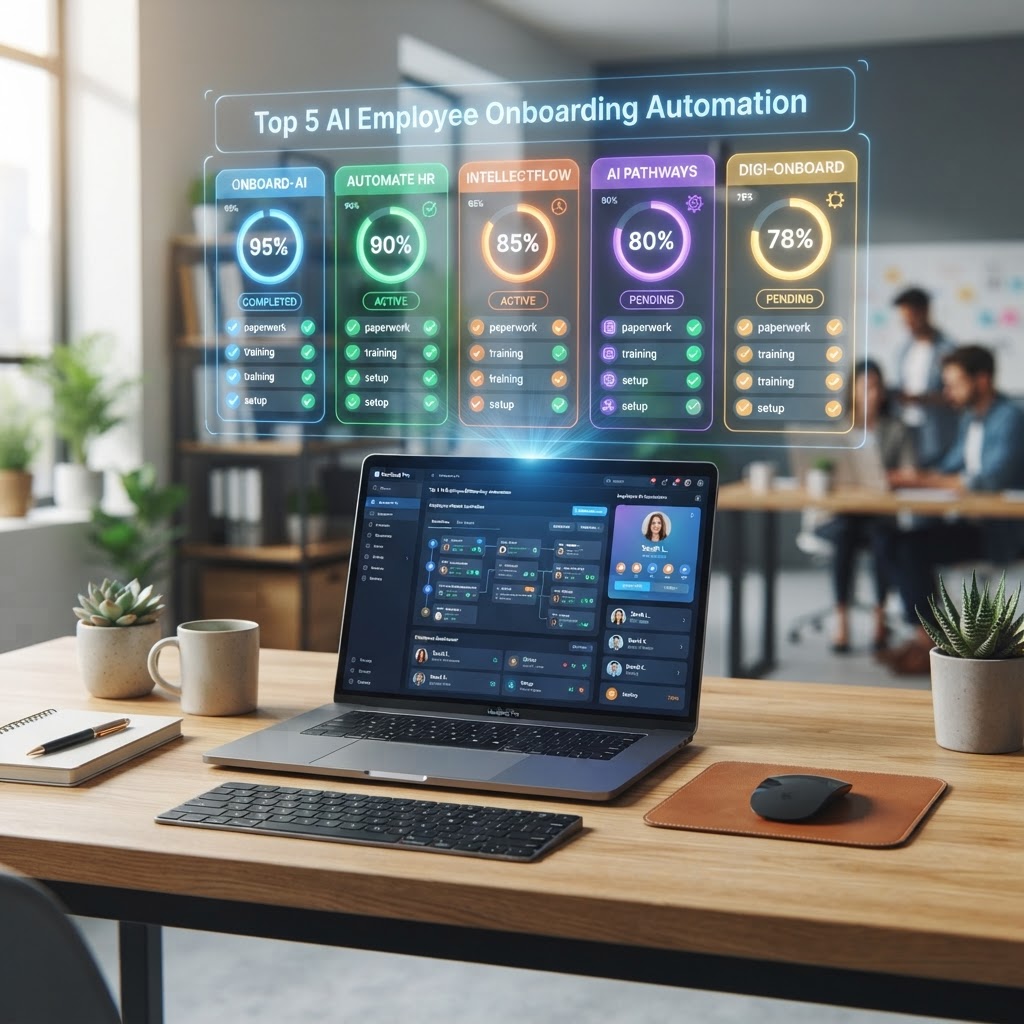
- AI-driven automation shifts HR focus from manual documentation to high-value talent development.
- Modern onboarding platforms now utilize generative AI to create personalized, role-specific learning paths.
- Key features for 2026 include intelligent document parsing, sentiment analysis, and adaptive feedback loops.
- Automated employee onboarding significantly reduces “time-to-productivity” by minimizing administrative bottlenecks.
- Selecting the right platform requires balancing technical integration capabilities with the employee experience.
The landscape of human resources has undergone a radical shift as we move deeper into 2026. What was once a document-heavy, linear process managed by spreadsheets and disjointed email threads has evolved into a dynamic, tech-forward journey. As organizations prioritize retention and agility, the adoption of AI onboarding software has become a non-negotiable standard rather than a luxury. By leveraging sophisticated algorithms to manage the logistical heavy lifting, HR teams are finally reclaiming the time needed to build meaningful human connections. This guide, compiled by the aismarttoolsreview Editorial Team, explores the current state of automation and provides a comprehensive analysis of the best onboarding tools 2026 has to offer for modern enterprises.
Why AI is Transforming Employee Onboarding in 2026
By 2026, the definition of an effective onboarding experience has moved beyond simple document collection and IT provisioning. It is now defined by hyper-personalization, immediate integration, and predictive support. AI for HR automation has transitioned from a backend utility to a front-facing strategic partner. Traditionally, onboarding was characterized by the “firehose” method: dumping policies, handbooks, and compliance forms on a new hire within their first 48 hours. This approach often led to cognitive overload, resulting in lower retention rates and a slower time-to-productivity. Today, the integration of Large Language Models (LLMs) and predictive analytics allows organizations to curate the onboarding journey in real-time, adapting content based on the new hire’s specific role, department, and interaction patterns.
One of the primary drivers of this transformation is the need for adaptive learning. In the current hybrid and remote work climate, a “one-size-fits-all” approach to employee orientation frequently fails to account for diverse learning styles and varying levels of technical proficiency. AI-powered platforms can now assess a new hire’s existing knowledge base through diagnostic assessments and adjust the delivery of training modules accordingly. If a developer joins the team, the AI might prioritize complex environment setups and specific coding standard documentation, while a marketing hire receives curated insights into brand voice and social sentiment analytics.
Furthermore, AI-driven platforms act as a 24/7 concierge for the employee. In previous years, new hires would often sit idle waiting for HR managers to respond to questions about benefits enrollment or hardware issues. Now, intelligent conversational agents—trained on the specific internal knowledge base of the company—provide instantaneous answers, effectively eliminating the common “day-one friction” that hinders momentum. By automating the mundane, the technology ensures that the human element of onboarding—team introductions, culture immersion, and mentor-mentee relationship building—takes center stage. This synergy between machine efficiency and human connection is the hallmark of high-performing HR departments in 2026.
Key Features to Look for in AI Onboarding Platforms
When evaluating employee integration software, stakeholders must look beyond simple task-tracking functionality. To truly achieve a streamlined onboarding process, a platform must integrate robust AI capabilities that address both administrative and psychological integration. The first essential feature is “Contextual AI Assistance.” This goes beyond simple chatbots; it involves systems that proactively reach out to a new hire based on milestones. For instance, if an employee has not completed their tax forms or security certifications by mid-morning on their first day, the AI triggers a personalized, gentle nudge via the communication channel the employee prefers, such as Slack or Microsoft Teams.
Intelligent Document Processing (IDP) is another critical functionality. Manual data entry is the primary culprit behind clerical errors in HR systems. Leading 2026 platforms utilize sophisticated OCR and AI parsing to scan identification documents, contracts, and certification records, automatically populating the core HRIS (Human Resources Information System) with high accuracy. This ensures compliance is managed in the background without requiring the new hire to re-type the same information into five different portals.
Integration with existing tech stacks is paramount. An AI onboarding tool is only as good as its connectivity. The best platforms offer bidirectional API support, allowing them to talk seamlessly to Jira, Salesforce, GitHub, and various payroll processors. If a new hire is marked as “onboarded” in the HR system, the AI should ideally trigger automated provisioning for every other tool required for that specific role, creating a “zero-touch” provisioning cycle. Additionally, look for platforms that offer “sentiment analysis and feedback loops.” Advanced tools analyze survey responses and engagement metrics throughout the first 90 days, flagging potential “flight risks” or instances where a new hire feels stuck, allowing HR to intervene before a problem escalates.
How Automated Onboarding Reduces Administrative Workload
The administrative burden of onboarding has historically been the primary distraction preventing HR from acting as a strategic business partner. By implementing automated employee onboarding, organizations can eliminate repetitive tasks that consume hundreds of hours annually. The reduction in workload begins with automated workflow orchestration. Instead of a manual checklist where an HR professional must track if an email was sent, a password was reset, or a benefit packet was signed, the AI platform acts as a conductor. It triggers events based on triggers: when an offer letter is signed in the ATS (Applicant Tracking System), the onboarding tool automatically initiates account creation, triggers a “welcome” email sequence, and sends out the internal hardware request.
This automated flow significantly reduces the “ping-pong” effect where HR must constantly coordinate between IT, Facilities, and Department Heads. With automated provisioning, the platform handles the handshake between internal systems, ensuring the new hire has access to all necessary tools exactly when they need them. Many of these tools now include “predictive compliance scheduling,” which automatically tracks deadlines for government-mandated documents and mandatory training based on the employee’s location and role. By automating these scheduling tasks, the risk of compliance lapses is drastically lowered, and HR professionals are spared from manually tracking hundreds of individual due dates.
Perhaps the most significant reduction in workload comes from the “Self-Service Empowerment” provided by AI. By providing an intelligent interface where employees can resolve 90% of their inquiries—from “How do I set up my health savings account?” to “Where can I find the company holiday calendar?”—the volume of support tickets landing in an HR professional’s inbox is cut by a significant margin. This doesn’t just save time; it empowers the new hire to feel self-sufficient and competent from the start, rather than feeling like a burden to their new manager. This structural shift allows HR to focus on high-touch activities like performance coaching, cultural alignment, and long-term career planning, which are the true drivers of employee retention in the modern era.
Improving New Hire Engagement with Personalized AI Workflows
Engagement in the first 90 days is a predictor of long-term success, yet many companies struggle to maintain momentum after the “first-day excitement” wears off. Personalized AI workflows are the antidote to the “post-onboarding slump.” By treating the onboarding process as a journey rather than a project, AI platforms use data to create a tailored experience that evolves with the employee. For example, the system can schedule “connection points” where the AI suggests a coffee chat with a peer in a different department based on shared interests identified in the new hire’s profile. This facilitates organic networking, which is often difficult to foster in a remote or hybrid environment.
Personalization also extends to the delivery of culture-focused content. Rather than forcing every hire to watch the same hours-long video on company history, AI platforms can offer a modular, interactive experience. A junior staffer might receive gamified, bite-sized lessons, while a senior executive might be provided with high-level strategy documents and summaries of key cross-functional projects. The AI monitors which content the new hire engages with, adapting future recommendations to ensure the information remains relevant and stimulating.
Furthermore, AI platforms can measure “Engagement Velocity.” By tracking how quickly a user completes their onboarding milestones and how they interact with internal communications, the software builds an engagement score. If an employee is consistently interacting with internal social channels or project boards, the AI might suggest advanced training modules. If the score is low, the platform can subtly prompt the manager to initiate a check-in conversation. This proactive engagement management is only possible because the AI is constantly “listening” to the data generated by the onboarding process. This ensures that no employee slips through the cracks, and every individual feels seen and supported during their transition into the organization.
Top 5 AI Tools for Seamless Employee Integration Compared
Choosing the right platform involves assessing your organizational scale, the complexity of your tech stack, and the maturity of your current HR processes. While many providers claim to offer AI capabilities, the top-tier solutions distinguish themselves through the sophistication of their automation engines and their ability to integrate with diverse third-party applications. The following table provides a high-level comparison of the market leaders in 2026, categorized by their primary strengths.
| Tool Name | AI Core Capability | Integration Depth | Best For |
|---|---|---|---|
| OnboardPro AI | Predictive Compliance & Scheduling | Extensive API suite for SaaS stacks | Mid-to-large Enterprises |
| FlowHire Intelligence | Conversational AI Concierge | Strong native Slack/Teams integration | Remote-first organizations |
| TalentBridge Nexus | Behavioral Analytics & Retention | Deep HRIS and ATS synchronization | HR teams focused on retention |
| SwiftStart Tech | Automated Provisioning/IT Logic | Focus on security and hardware | IT and Engineering-heavy firms |
| CultureGrow Smart | Personalized Learning Pathways | Integrates with major LMS providers | Scalable, high-growth startups |
When selecting from the options listed above, it is important to consider the “Total Cost of Ownership,” which includes not just the subscription fee, but the time required to train the AI on your internal knowledge base. Some platforms, like OnboardPro AI, prioritize deep, automated compliance workflows that are essential for heavily regulated industries. Others, such as FlowHire Intelligence, lean into the employee experience, utilizing a conversational interface to foster a warm, inclusive remote onboarding experience. TalentBridge Nexus is particularly noteworthy for its ability to analyze communication patterns, providing HR teams with a diagnostic look at whether new hires are successfully integrating into the social fabric of the company.
The decision-making process should be grounded in a “pilot” approach. Before committing to an enterprise-wide rollout, most of these providers offer a sandbox environment. HR leaders should take advantage of these environments to test the platform against a specific, representative cohort of new hires. Measure how many hours are saved on manual data entry and, more importantly, collect qualitative feedback from the new hires themselves. Did they find the AI support helpful? Was the information provided during the first week relevant to their specific role? The best tools of 2026 are those that facilitate a “human-in-the-loop” model, where the machine handles the logistical complexity, allowing the human manager to focus on the interpersonal nuances that build long-term loyalty and commitment.
Beyond the technical features, consider the long-term support infrastructure. As you scale, your onboarding needs will evolve. The best AI onboarding platforms in 2026 are those that offer a modular architecture, allowing you to turn on or off features based on your current size and complexity. If your organization is expected to undergo rapid growth, prioritize platforms that offer robust, scalable APIs. This ensures that when you eventually switch to a new payroll processor or project management tool, your onboarding software remains a stable, reliable foundation for your workforce integration efforts.
Ultimately, the technology you select is a reflection of your organizational values. Choosing an automated solution that prioritizes clarity, transparency, and personal connection signals to your new hires that you respect their time and their growth trajectory. By investing in the right AI tools now, you are building a resilient, agile organization that is prepared to welcome and integrate the best talent, regardless of where they are working from or what their specific technical requirements may be.
Ensuring Compliance and Security During Data Collection
As organizations transition toward automated employee onboarding, the centralization of sensitive personal data—ranging from government-issued identification and banking details to tax forms—becomes a significant security mandate. AI-driven onboarding platforms are potent, but they must be architected with a “security-by-design” philosophy. When selecting an AI onboarding tool in 2026, HR departments must prioritize platforms that provide granular data encryption, both in transit and at rest, alongside robust access control protocols.
One of the primary concerns with AI for HR automation is the training of machine learning models on sensitive data. Organizations should ensure their chosen providers utilize isolated environments for data processing. This means your company’s internal documentation and new hire information should not be used to train public-facing AI models. Look for vendors that offer SOC 2 Type II compliance, GDPR, and CCPA certification, which serve as foundational benchmarks for data privacy.
Furthermore, automated employee onboarding systems must facilitate local data residency. For multinational corporations, this is non-negotiable. Modern AI onboarding software should allow administrators to choose where their data is stored geographically to comply with regional data sovereignty laws. Beyond storage, the human-in-the-loop (HITL) architecture remains critical. Even when AI automates document verification, HR personnel should maintain a high-level oversight dashboard where they can audit AI decisions, especially those concerning sensitive document authentication (e.g., verifying a Passport or Visa).
Integrating Onboarding Software with Your Existing HR Stack
An AI onboarding tool is only as effective as its ability to communicate with the rest of your technical ecosystem. If your onboarding software functions as a data silo, it ultimately increases the administrative burden rather than reducing it. Seamless integration with your existing HR Information System (HRIS), Applicant Tracking System (ATS), and Identity and Access Management (IAM) platforms is the key to true automated employee onboarding.
Most enterprise-grade platforms now rely on secure API-first architectures. When evaluating the integration capabilities of your potential AI tools, consider the following technical checklist:
- Bi-directional Sync: Does the tool send data back to your HRIS as well as pull from it? Efficient integration should update employee profiles in real-time once a document is uploaded.
- Provisioning Workflows: Can the tool trigger automated account creation in platforms like Slack, Microsoft 365, or Salesforce via SAML/SSO once the onboarding milestone is reached?
- Custom Webhooks: Does the tool allow for custom triggers? For instance, if an onboarding milestone is hit, can it trigger an automated email in your CRM to notify the department head to schedule a welcome meeting?
- Identity Provider (IdP) Integration: Ensure the software supports SCIM (System for Cross-domain Identity Management) to synchronize user accounts across your cloud service providers automatically.
| Integration Capability | Why It Matters | Best For |
|---|---|---|
| Native API Connectors | Reduces custom coding and maintenance overhead. | Small to Mid-sized businesses needing “plug-and-play” simplicity. |
| SCIM/SAML Support | Automates account provisioning and security provisioning. | Enterprise firms prioritizing cybersecurity and speed. |
| Webhook Extensibility | Allows for complex, multi-tool automation workflows. | Technical organizations with custom internal workflows. |
| Flat-file/SFTP Export | Essential for legacy HR systems lacking modern APIs. | Organizations transitioning away from legacy infrastructure. |
Measuring the ROI of Automated Onboarding Systems
To justify the budget for advanced AI onboarding tools, HR leaders must look beyond the initial price tag. The Return on Investment (ROI) of employee integration software is typically measured across three primary pillars: administrative time savings, compliance risk mitigation, and early-stage employee retention metrics.
First, calculate the “hours-per-hire” saved. Before automation, an HR generalist might spend five to ten hours manually managing document collection, background checks, and email sequences. With AI automation, this is often compressed to less than one hour of active management. Multiply these saved hours by the average hourly rate of your HR staff to arrive at your hard-dollar savings.
Second, consider the cost of compliance errors. Fines associated with incomplete I-9 documentation or improper storage of sensitive employee records can be catastrophic. AI tools automate the audit trail, ensuring every document is signed and stored correctly, effectively acting as an insurance policy against regulatory non-compliance.
Finally, measure the correlation between streamlined onboarding and early retention. Data often suggests that a disjointed, confusing onboarding process leads to higher turnover within the first 90 days. By providing a slick, branded, and frictionless digital experience, organizations often see higher engagement scores in “Day 30” surveys, which serves as a leading indicator of long-term employee satisfaction and eventual retention, directly reducing the high costs associated with employee turnover and recruitment.
Common Mistakes to Avoid When Implementing AI Onboarding
The most frequent error organizations make is attempting to automate too much, too soon. A common pitfall is the “Over-Automation Trap,” where companies design workflows that exclude human touchpoints entirely. Onboarding is, by its nature, a social integration process. If an AI tool manages the process so rigidly that the new hire never speaks to a peer or manager during the first week, the system has failed to integrate the employee culturally.
Another frequent mistake is neglecting the mobile experience. Many candidates view initial onboarding materials on their smartphones during notice periods at their previous jobs. If your AI platform relies on desktop-only document signing or clunky mobile rendering, you will frustrate your new talent before they even step through the door.
Finally, avoid the “Set it and forget it” mentality. AI models and integration workflows require periodic optimization. As your tech stack changes—for example, upgrading from one project management tool to another—your onboarding workflows must be updated. HR teams should conduct a quarterly audit of their automated workflows to identify bottlenecks where new hires are dropping off or where the AI is failing to trigger the necessary administrative actions.
Future Trends in Automated Employee Onboarding
As we look toward the latter half of the decade, the landscape of automated employee onboarding will move toward “Hyper-Personalized” integration. Future iterations of AI onboarding software will likely utilize generative AI to tailor the onboarding experience to the individual’s role, learning style, and previous expertise. Instead of a one-size-fits-all digital checklist, an employee might be greeted by an AI agent that builds a customized 30-day learning path based on the employee’s specific resume and the team’s project goals.
Another emerging trend is the integration of Augmented Reality (AR) and Virtual Reality (VR) into the onboarding process. For remote teams, these technologies offer the potential for virtual office tours and immersive team-building exercises, significantly enhancing the feeling of belonging that is often lost in fully distributed work environments.
Furthermore, predictive analytics will play a much larger role. Rather than just tracking whether a task is complete, future AI tools will analyze onboarding metadata to predict when a new hire is at risk of disengagement. By flagging these patterns to managers before a resignation occurs, AI will evolve from a simple administrative assistant into a proactive retention partner.
Frequently Asked Questions
What is the difference between a traditional HRIS and an AI-driven onboarding tool?
While a traditional HRIS serves as a record-keeping database for payroll and benefits, an AI-driven onboarding tool is a workflow orchestrator. It sits on top of your HRIS to manage the communication, document verification, and administrative triggers that turn a candidate into a productive employee, often utilizing natural language processing and machine learning to handle unstructured data like resumes or ID scans.
Can AI onboarding software handle background checks?
Yes, many modern onboarding platforms feature native integrations with specialized background check services. The AI acts as the bridge—triggering the check, monitoring the status, and automatically updating the HRIS once the report is cleared, ensuring a seamless flow without manual input from HR.
Is it possible to customize the branding within these AI onboarding tools?
Absolutely. Most high-end onboarding platforms offer white-labeling capabilities. This allows organizations to incorporate their specific logos, color palettes, and tone of voice into the candidate portal, ensuring that the onboarding experience reflects the company’s internal brand identity consistently from the first point of contact.
How do these tools protect the privacy of sensitive employee documents?
Leading tools employ end-to-end encryption for all uploaded documents. They also frequently utilize Role-Based Access Control (RBAC), ensuring that only authorized HR personnel can view sensitive tax or banking documents, while the AI processes the data for validation purposes without exposing the underlying files to unauthorized users.
Will using AI for onboarding make my company feel less “human”?
If implemented correctly, the opposite should be true. By automating the monotonous, manual paperwork, HR professionals are freed from administrative drudgery, allowing them to dedicate more time to meaningful face-to-face interactions, mentorship, and cultural integration, which are the elements that truly make a company feel human.
What is the typical setup time for an enterprise onboarding automation system?
Implementation time varies based on the complexity of your existing HR stack and the degree of custom workflows required. Generally, a straightforward integration with a modern cloud-based HRIS can be deployed in two to four weeks. Complex, custom-coded enterprise workflows involving multiple legacy systems may require a phased rollout over several months.
Conclusion
The transition toward automated employee onboarding is no longer a luxury reserved for tech giants; it is an operational necessity for any organization looking to scale efficiently in 2026. By selecting the right AI onboarding tool, companies can convert a traditionally high-friction process into a polished, welcoming, and compliant experience that sets the stage for long-term employee success.
We encourage you to audit your current manual processes, identify the most time-consuming administrative hurdles, and trial at least two of the platforms discussed in this guide. Remember that the goal is not just to save time, but to create an environment where your new hires feel supported from the very first minute they interact with your digital infrastructure. Invest in your onboarding process today to secure your competitive advantage in the global talent market.
By aismarttoolsreview Editorial Team
Leave a Reply