
⭐ EXPERT-REVIEWED  |  ✅ UPDATED 2026  |  🔒 NO SPONSORED BIAS  |  📚 EVIDENCE-BASED

Category: AI Business Tools

  • Best AI Background Check Tools 2026: Top 5 Platforms Compared

    Best AI Background Check Tools 2026: Top 5 Platforms Compared

    Key Takeaways

    • AI background check software significantly reduces the time-to-hire by automating manual data cross-referencing and credential verification.
    • Modern pre-employment screening AI must integrate directly with ATS platforms to ensure seamless data flow and minimized manual entry.
    • Compliance remains the highest priority, requiring tools that adhere strictly to local and international data privacy regulations like GDPR and FCRA.
    • Automated employee screening minimizes human bias by applying standardized verification criteria to every candidate uniformly.
    • The best AI vetting tools employ advanced OCR and natural language processing to detect discrepancies in employment history that manual reviews might overlook.

    As the global talent landscape becomes increasingly competitive, the speed and accuracy of talent acquisition have become the primary drivers of corporate growth. In 2026, the reliance on legacy manual background checks—often plagued by slow processing times, human error, and inconsistent reporting—is rapidly fading. Enter the new era of talent screening AI. These sophisticated platforms are not merely digitizing old processes; they are fundamentally restructuring how organizations verify the integrity and professional history of potential hires. By leveraging machine learning algorithms and vast, interconnected data networks, AI background check software has transformed from a back-office burden into a strategic asset for HR departments and talent acquisition teams globally. In this comprehensive guide, the aismarttoolsreview Editorial Team analyzes the top technologies defining the landscape of automated employee screening, helping you identify which platforms are truly the best AI vetting tools for your organization’s specific requirements.

    How AI is Revolutionizing Candidate Background Screening

    The transition from traditional, manual background checks to AI-driven vetting processes represents one of the most significant shifts in HR technology over the last decade. Historically, background checks were bottlenecked by human analysts, who had to manually contact previous employers, verify academic degrees, and cross-reference criminal databases. This manual approach was not only time-consuming—frequently taking weeks to conclude—but it was also inherently prone to human bias and inconsistent interpretation of data.

    AI background check software changes this paradigm by shifting from a linear, task-based process to a parallel, data-driven workflow. Using sophisticated pattern recognition and predictive modeling, these tools can simultaneously query disparate databases, social records, and public registries. When a candidate authorizes a screening, the AI platform initiates a multi-threaded search. Instead of waiting for a phone call back from a university registrar, an automated system uses verified digital handshake protocols to ping institutional databases, often confirming credentials in real-time or within a matter of minutes.

    Furthermore, the revolution extends to the analysis of the data collected. Traditional methods often produced a raw dump of data that human HR managers had to read, interpret, and risk-assess. Modern talent screening AI provides “actionable intelligence.” Rather than simply presenting a list of criminal records or past employers, the software utilizes natural language processing (NLP) to summarize findings, flag discrepancies, and categorize data based on pre-defined internal risk thresholds. This allows HR professionals to focus on strategic hiring decisions rather than getting bogged down in the minutiae of data collation.

    Another profound change is the integration of predictive indicators. While traditional checks look backward, AI-enhanced verification can often identify inconsistencies in professional timelines that suggest resume padding or fabrication. By comparing the provided CV against the verified data retrieved from LinkedIn, professional licensing boards, and tax reporting systems, the AI can alert recruiters to “red flags” instantly. This capability essentially creates a security layer during the hiring phase, ensuring that the human capital entering the organization is exactly as described on their application. The efficiency gains are measurable, as the shift toward background check automation has enabled firms to shorten the time between the final interview and the job offer, a critical advantage when courting top-tier talent in a high-demand market.

    Key Features to Look for in AI Background Check Software

    Selecting the right platform for your organization requires more than just evaluating pricing; it requires a deep dive into the technical capabilities that define the top-tier solutions in the industry. As you evaluate potential AI hiring verification systems, prioritize platforms that offer robust API integration, as this is the backbone of any truly automated workflow. The best tools will connect directly with your existing Applicant Tracking System (ATS), allowing for an automated trigger of a background check the moment a candidate moves to a specific stage in the hiring pipeline.

    One of the most critical features is the quality and depth of the database integrations. Not all AI background check software is built equal in this regard; some platforms excel in domestic criminal record checks, while others have superior global coverage, which is essential for multinational corporations hiring across borders. You should seek software that offers real-time API access to primary sources rather than relying on aggregated data caches that may be months or even years out of date. The accuracy of your screening is only as good as the source data, and the best AI vetting tools verify the provenance of their data streams.

    Additionally, look for sophisticated identity verification features. Biometric verification—where candidates provide a digital snapshot or facial scan—coupled with AI-driven document analysis (OCR), is quickly becoming the gold standard. This ensures that the person being screened is indeed the person who applied, effectively mitigating the risk of identity fraud. An ideal platform should also offer customizable “screening profiles.” Every role in an organization carries different risks; a financial auditor requires a deeper look into financial history and credit than a remote graphic designer. The ability to create granular, role-based screening templates ensures that you are only paying for and conducting the checks that are relevant to the specific position.

    Finally, consider the reporting and dashboard capabilities. The platform should provide a clear, intuitive interface that visualizes risk levels. Instead of overwhelming recruiters with raw data, the software should present a summarized, color-coded report indicating whether a candidate has “passed” or “flagged.” Below is a breakdown of how these features generally manifest across different types of platforms:

    Platform Type Core Focus Key Strength Best For
    Enterprise Suites Full-cycle compliance & global coverage Deep integration & audit trails Large organizations with high-volume hiring
    SaaS-Native Platforms Speed & user experience Modern API connectivity & fast UI High-growth tech firms & startups
    Industry-Specific Tools Vertical-specific compliance (e.g., healthcare) Customized verification workflows Regulated sectors requiring niche checks

    Ensuring Compliance and Data Privacy in AI Vetting

    Compliance is arguably the most complex hurdle in the adoption of AI-driven employee screening. In the United States, the Fair Credit Reporting Act (FCRA) dictates strict rules regarding how background information is collected, disclosed, and used in hiring decisions. Globally, the General Data Protection Regulation (GDPR) in the EU and similar frameworks elsewhere place stringent controls on the handling of personally identifiable information (PII). Any AI platform that fails to navigate these legal landscapes is a liability for your business, regardless of how advanced its algorithm might be.

    When investigating background check automation tools, you must explicitly confirm that the vendor is a Consumer Reporting Agency (CRA) or complies with the necessary legal status to provide background screening services. Being a “technology provider” is often not enough if the vendor does not adhere to the legal requirements of the jurisdictions where your candidates reside. Ask about their data masking capabilities; advanced AI systems should be able to redact irrelevant personal information from reports, ensuring that recruiters only see the data pertinent to the hiring decision, thereby minimizing the risk of non-compliance with anti-discrimination laws.

    Data residency is another crucial aspect of the privacy conversation. Where is the candidate’s data stored, and who has access to it? The top-tier AI vetting tools offer localized data storage options, ensuring that data does not unnecessarily cross borders if local privacy laws prohibit it. You should also look for platforms that undergo regular, third-party security audits, such as SOC2 Type II certification. This provides assurance that the vendor has implemented rigorous internal controls over their data security practices.

    Moreover, the concept of “Human in the Loop” (HITL) is vital. Even if the AI does 99% of the heavy lifting, there must be a mechanism for a human analyst to review flagged reports. Automated systems can occasionally misinterpret data—for example, confusing two individuals with the same name or misidentifying a dismissed charge as a conviction. Legal experts generally advise that AI should serve as an assistant, not the final adjudicator. A system that keeps a qualified human reviewer in the loop provides the “dispute resolution” pathway required by many jurisdictions, allowing candidates to contest or clarify findings before a final decision is made. Choosing a vendor that emphasizes auditability and transparency is not just good practice—it is a foundational requirement for sustainable talent screening operations in 2026.

    Reducing Time-to-Hire with Automated Verification Workflows

    In a tight labor market, the time between initial contact and the signing of an offer letter is a critical window where top candidates are frequently lost to competitors. Traditional background checks, which often rely on manual labor, can introduce delays ranging from several days to weeks. This wait period often results in “candidate drop-off,” where a highly qualified prospect, tired of waiting for a verification process to conclude, accepts another offer. This is where background check automation creates a decisive competitive advantage.

    The primary way automated workflows reduce time-to-hire is through the elimination of the “wait state.” In a legacy workflow, an HR coordinator might have to initiate a check, wait for a vendor’s email acknowledgement, then manually check the status periodically. AI systems change this by providing an automated “trigger-to-complete” cycle. Once the candidate provides consent through an integrated portal, the AI begins the verification process instantly. Updates are pushed in real-time to the hiring manager’s dashboard, preventing the need for manual status follow-ups. If a document is missing or a discrepancy is identified, the system can automatically send a polite, pre-scripted request to the candidate for clarification, significantly reducing the back-and-forth email volume that often stalls the process.

    Beyond speed, there is the efficiency of “batch processing.” If a company is scaling rapidly and hiring cohorts of new employees, manual screening becomes an enormous hurdle. AI systems can handle massive volumes of verification requests simultaneously without a proportional increase in personnel requirements. This scalability is essential for companies dealing with seasonal surges or rapid expansion phases. Furthermore, because these tools integrate with existing systems, they act as an extension of the recruiter’s existing workflow rather than an additional “tool” they need to open. By embedding these capabilities directly into the ATS, the screening process becomes a background task that happens concurrently with other onboarding steps, such as document signing or hardware provisioning.

    Finally, we must consider the reduction of “friction-based delays.” Human errors—such as typos in a candidate’s Social Security number or incorrect entry of an educational institution—often result in the need for resubmissions, which can add days to the process. AI verification tools often incorporate “smart” entry forms that provide auto-suggestions for universities and past employers, ensuring data is accurate at the point of ingestion. This reduces the number of “stalled” checks that require manual intervention by the vendor’s staff, thereby speeding up the total turnaround time. In summary, by removing the manual hand-offs and streamlining the data ingestion process, automated platforms help maintain the momentum of the hiring process, keeping the candidate engaged and informed until the day they start.

    How AI Analyzes Employment History and Credentials

    The core capability of advanced AI in this space lies in its ability to parse unstructured data and convert it into a structured, verifiable format. When a candidate submits a CV, that document is essentially a text file—often messy, inconsistent, and sometimes intentionally misleading. Traditionally, a human recruiter would skim this document, but they lack the time and resources to verify every claim. AI-powered hiring verification systems, however, employ sophisticated Natural Language Processing (NLP) to perform a “deep parse” of the employment history provided by the candidate.

    Once the system extracts the key details—job titles, company names, start/end dates, and educational credentials—it initiates a multi-layered verification scan. For employment history, the AI doesn’t just verify if the person worked there; it can cross-reference the data against public records, tax filings, and professional registries to assess the validity of the tenure. For example, if a candidate claims they were a Senior VP at a company for five years, but their social media footprint and tax record registrations indicate they were a junior contractor, the AI will highlight this inconsistency for human review. This is not about surveillance; it is about objective verification of the professional claims an applicant makes on their application.

    Credential verification represents another area where AI excels. In the past, verifying a college degree meant a long, drawn-out process of contacting the university’s registrar, often leading to delays in confirming academic achievements. Today, the best AI vetting tools utilize automated networks of educational databases and blockchain-verified credential services. By using OCR (Optical Character Recognition) on uploaded diplomas or certificates, the software can quickly verify the document’s authenticity against known formats or digital registries. This is particularly effective in preventing the rise of “diploma mill” degrees, as the AI is trained to recognize the patterns associated with fake or non-accredited institutions.

    Perhaps most impressively, these systems can identify “time gaps” and “role inconsistencies.” An AI model can analyze a 10-year career trajectory and identify if the complexity of roles, the size of the companies, and the progression of titles align with industry norms. While these are not definitive proofs of deception, they are powerful indicators that warrant further investigation. By distilling hundreds of data points into a clear “verification confidence score,” AI allows recruiters to make faster, more informed decisions about the validity of a candidate’s background. This analytical rigor ensures that the hiring process is grounded in verifiable evidence rather than just the strength of a well-written, potentially embellished, resume.

    Integrating AI Background Checks with Applicant Tracking Systems

    The true power of AI-driven background screening is not found in standalone applications, but in their seamless integration with existing Applicant Tracking Systems (ATS). When these two pillars of the hiring stack communicate, HR departments can transition from manual data entry to a fully automated workflow that triggers verification requests the moment a candidate moves into a specific pipeline stage. Modern AI background check software typically utilizes robust APIs or native plugins to synchronize data directly with platforms like Greenhouse, Lever, or Workday, ensuring that sensitive information does not require manual file transfers.

    Successful integration begins by defining the “trigger point.” For instance, a common practice involves configuring the ATS so that once a hiring manager moves a candidate to “Offer Extended” or “Final Interview,” the AI platform automatically initiates a background check request. This eliminates the latency caused by manual onboarding steps. Beyond mere triggering, bidirectional data flow is essential. When an AI tool discovers a discrepancy—such as a mismatch between the job history provided in the resume and the verified employment records—it can push an alert back into the ATS dashboard. This keeps the recruiter within their primary workspace, preventing context switching and accelerating the decision-making process.

    Furthermore, integration allows for role-specific automated employee screening. By mapping job titles within the ATS to screening packages defined in the AI tool, organizations can ensure that a software engineer, a remote sales representative, and an executive each undergo the specific verification processes required for their risk profile. This granular control minimizes costs by ensuring companies are not paying for unnecessary background checks, such as driving record verification for non-driving roles.

    Integration Feature Functional Benefit Best For
    API/Webhook Synchronization Real-time status updates Enterprise-scale recruitment
    Single Sign-On (SSO) Secure, streamlined access Large distributed teams
    Auto-Triggering Workflows Reduced manual intervention High-volume seasonal hiring
    Native ATS Plugins Minimal setup/low IT burden Mid-sized growth companies
    Bidirectional Data Sync Centralized candidate profiles Complex, multi-stage vetting

    Balancing AI Efficiency with Human Oversight in Hiring

    While background check automation offers unprecedented speed, human oversight remains the critical final checkpoint in the vetting process. AI systems excel at pattern recognition, data aggregation, and flagging inconsistencies, but they lack the nuanced contextual understanding required to evaluate complex human variables. For example, an AI might flag a minor criminal offense from over a decade ago as a “potential risk,” while a human recruiter, seeing the candidate’s subsequent professional trajectory and the relevance of that past event to the current role, may deem it non-disqualifying. Over-reliance on algorithmic decisions without human intervention introduces the danger of “automation bias,” where recruiters accept system outputs without critical scrutiny.

    To strike the right balance, organizations should implement a “Human-in-the-Loop” (HITL) model. In this framework, the AI acts as a sophisticated filtering and verification assistant, surfacing data and highlighting red flags, while the actual decision to disqualify or move forward rests with a qualified human professional. Legal and compliance experts often recommend that HR teams designate a specific review committee for flagged reports. This committee should be equipped with clear, objective guidelines on how to interpret various findings, ensuring that the company maintains consistency in its hiring standards.

    Moreover, transparency in communication with candidates is vital. If an AI-flagged anomaly leads to an adverse hiring action, candidates are typically entitled to an explanation and an opportunity to provide context or correct inaccuracies. Human oversight ensures this process remains empathetic and legally compliant. By treating the AI as an evidence-gatherer rather than a judge, companies can reap the benefits of speed and accuracy without sacrificing the ethical rigor required for responsible talent management.

    Top Security Considerations for AI-Powered Screening Tools

    The integration of AI into background vetting introduces significant data security challenges that companies must address. Since these platforms process highly sensitive personally identifiable information (PII)—including social security numbers, educational history, residential addresses, and criminal records—they are prime targets for cyberattacks. The security profile of an AI hiring verification platform should be a top priority during the procurement process.

    A primary consideration is data encryption both at rest and in transit. Top-tier platforms employ AES-256 encryption for data stored in their databases and use TLS 1.3 for data being transmitted between the ATS and the screening portal. Furthermore, organizations must verify the platform’s commitment to compliance standards, such as SOC 2 Type II, which provides an independent audit of the vendor’s security controls, availability, and processing integrity. Because many of these platforms use cloud-based infrastructure, understanding their data residency policies is also critical, especially for global organizations that must adhere to local data protection regulations like GDPR or CCPA.

    Another security dimension involves access control. AI tools should support Role-Based Access Control (RBAC), ensuring that only authorized recruiters or compliance officers can view detailed background reports. Audit logging is equally important; organizations should maintain a trail of who accessed which record and when. Finally, because these tools utilize machine learning models, companies should ask vendors how they protect their training data from being compromised or manipulated. Vendors that are transparent about their security architecture, regularly conduct third-party penetration tests, and offer clear breach notification protocols typically represent lower risk for modern enterprises.

    Reducing Bias in AI-Driven Background Investigations

    The promise of AI in talent screening is the potential for increased objectivity, yet experts warn that algorithms are only as neutral as the data upon which they are trained. If historical hiring data used to train an AI contains implicit biases—such as favoring candidates from certain educational backgrounds or exhibiting regional prejudices—the system may learn to replicate those same biases in its automated employee screening processes. Ensuring fairness in AI-driven investigations requires a proactive, multi-layered approach to bias mitigation.

    The first step is vendor transparency regarding training sets. Leading AI background check software providers often perform rigorous testing to identify and eliminate “proxy variables.” A proxy variable is a piece of data that seems neutral but acts as a stand-in for a protected characteristic; for example, a zip code can sometimes function as a proxy for socioeconomic status or racial demographic. By intentionally excluding or heavily weighting variables that may introduce bias, developers can refine the model to focus strictly on relevant, role-specific criteria like job performance metrics, verified skills, and criminal background relevance.

    Regular algorithmic auditing is essential. Just as financial firms audit their systems for performance, HR departments should perform periodic audits of their AI tools to ensure that the selection and verification patterns do not result in disparate impact. This involves analyzing outcomes across demographic groups to see if certain profiles are being flagged or disqualified at disproportionate rates. Additionally, many companies are now requiring “explainability” in their AI tools. An explainable AI (XAI) system provides a rationale for its findings, allowing humans to audit not just the decision, but the logic leading to it. This transparency makes it much easier to detect when an algorithm has developed a skewed pattern and allows for swift recalibration of the model.

    Frequently Asked Questions

    Can AI background check tools fully replace a human recruiter?

    No. While AI tools are exceptionally efficient at verification, data gathering, and initial screening, they cannot replicate human judgment. Talent acquisition involves assessing cultural fit, complex professional scenarios, and individual motivation, which are inherently human responsibilities. AI should be viewed as a tool to augment the recruiter’s capability, not to supplant the decision-making process.

    Are AI-based background checks compliant with legal standards like the FCRA?

    Most reputable AI background check platforms are designed with legal compliance as a core feature. However, the legal responsibility for compliance—such as adhering to the Fair Credit Reporting Act (FCRA) in the United States—remains with the employer. Organizations must ensure that their chosen platform provides the necessary disclosures and authorization workflows required by local labor laws.

    How does AI handle discrepancies found in a background check?

    AI tools typically flag discrepancies by comparing real-time database results against the data provided in an applicant’s resume or profile. Once a flag is raised, the system usually notifies the human reviewer through the ATS or the tool’s dashboard. The human reviewer must then decide if the discrepancy is a minor administrative error, a misinterpretation of data, or a significant red flag requiring further investigation or disqualification.

    What data sources do AI background screening tools actually use?

    These platforms typically aggregate data from public records, national criminal databases, sex offender registries, and official employment/education verification gateways. Many modern tools have API integrations with state courts and international government databases to ensure information is as current as possible. The sophistication lies in how the AI cross-references these disparate data points to build a cohesive, accurate profile.

    How long does an AI-powered background check take to complete?

    The speed depends on the complexity of the screening package. Automated components, such as identity verification or national criminal database lookups, can often be completed in minutes or hours. More intensive manual checks, such as verifying international employment history or local courthouse record requests, may take several days. Overall, AI usually cuts the total turnaround time compared to traditional manual screening processes by a significant margin.

    Is it possible to “trick” an AI background check tool?

    Sophisticated AI platforms are designed to detect fraud and inconsistency, making it difficult for candidates to intentionally mislead systems. They use pattern analysis to identify anomalies in work history or education credentials. While no system is infallible, the integration of multiple data sources ensures that deceptive patterns are quickly identified and flagged for human review, making successful deception increasingly unlikely.

    Conclusion

    As we move further into 2026, the adoption of AI background check software has shifted from an experimental advantage to an operational necessity. The ability to verify thousands of candidates with precision, speed, and reduced human bias is transforming how talent acquisition teams operate. By choosing a platform that prioritizes secure integration, maintains rigorous data security standards, and empowers human oversight, organizations can secure their hiring pipeline against modern threats while ensuring a streamlined experience for candidates.

    The key to success lies in viewing these tools as foundational elements of a smart hiring strategy. Whether you are a high-growth startup needing to scale quickly or an enterprise navigating complex regulatory environments, the right AI-driven solution provides the clarity and compliance required to build a world-class workforce. As technology continues to evolve, staying informed about the limitations and capabilities of these platforms will remain the most effective way to leverage them for long-term organizational success.

    If you are ready to modernize your screening process, start by auditing your current workflow to identify the most significant bottlenecks, and then request demos from the top-tier platforms listed in our review to see which one aligns best with your specific ATS infrastructure and organizational culture.

    By aismarttoolsreview Editorial Team
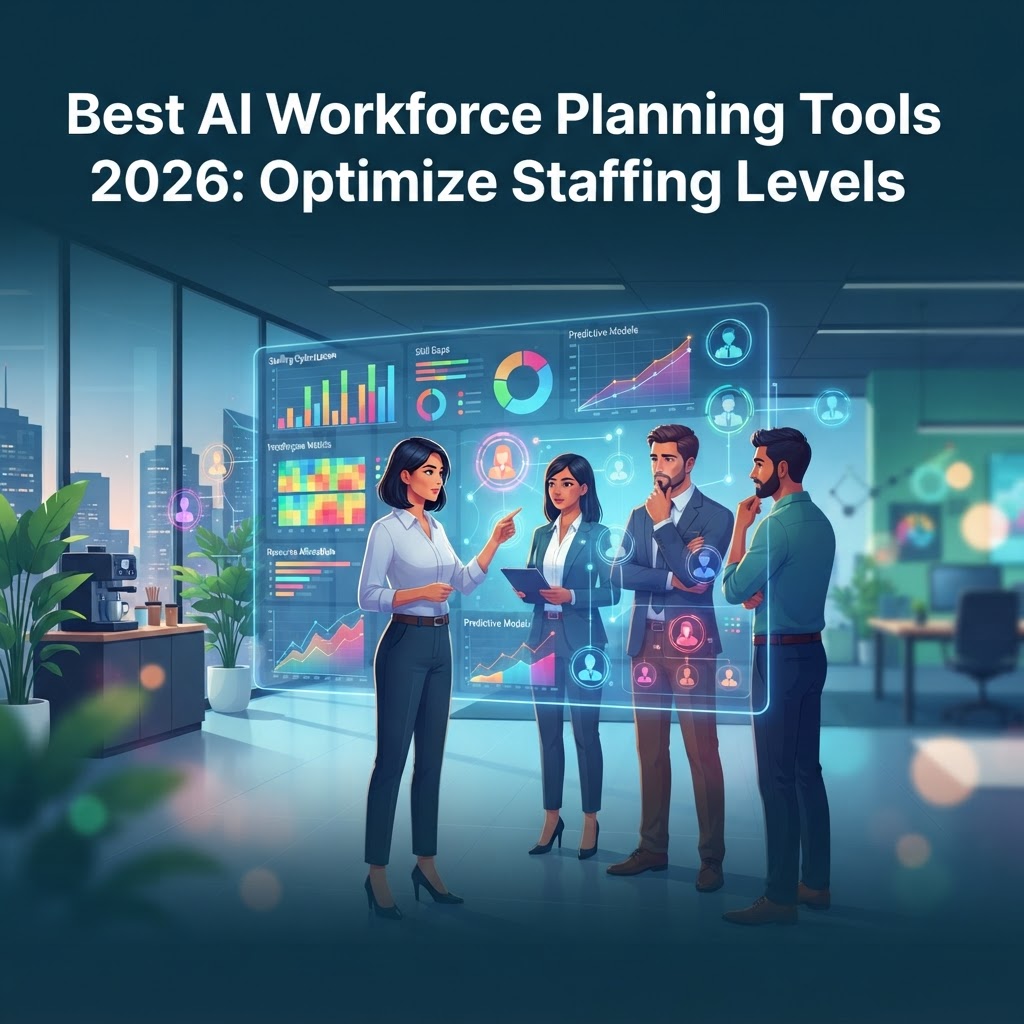
  • Best AI Workforce Planning Tools 2026: Optimize Staffing Levels

    Best AI Workforce Planning Tools 2026: Optimize Staffing Levels

    Key Takeaways

    • AI-driven workforce planning leverages predictive analytics to move beyond reactive hiring, allowing businesses to anticipate labor gaps before they impact operational output.
    • Modern AI staffing software integrates multi-variable data—such as historical sales, economic indicators, and seasonal trends—to generate highly accurate demand forecasts.
    • Effective employee capacity planning requires tools that account for soft variables like employee burnout, skill proficiency, and personal time-off preferences.
    • The transition to AI HR analytics enables dynamic talent allocation, ensuring the right employees are matched to the right tasks based on objective performance data rather than intuition.
    • Optimizing labor management software involves finding the equilibrium between minimizing overhead costs and maintaining a high-performance, engaged workforce.

    As we move deeper into 2026, the complexity of global labor markets has outpaced the capabilities of traditional spreadsheet-based forecasting. Organizations today are grappling with volatile consumer demand, the rise of hybrid work environments, and a shrinking talent pool, making the adoption of sophisticated AI workforce planning tools not merely an advantage, but a necessity for survival. By transitioning from historical trend-tracking to forward-looking predictive modeling, businesses can finally synchronize their human capital with their strategic objectives. This guide explores the evolving landscape of AI staffing software, examining how technology is reshaping employee capacity planning and enabling leaders to make data-backed decisions that drive operational efficiency and employee retention.

    1. Why AI is Essential for Modern Workforce Planning

    The traditional approach to workforce planning has historically relied on static historical data, where managers looked at the previous year’s performance to guess at the next quarter’s staffing needs. This reactive cycle is fraught with inefficiencies. In the current economic climate, this lag in planning can result in either costly overstaffing during lulls or devastating understaffing during peak demand. AI workforce planning tools represent a fundamental shift in philosophy, moving from observation to anticipation.

    Why is this transition essential? First, modern markets operate with a degree of volatility that traditional mental models cannot process. External variables—ranging from supply chain disruptions to sudden changes in consumer sentiment—can alter the labor requirement for a business in a matter of days. AI models consume massive, disparate datasets, including market trends, social media sentiment, and internal operational data, to form a holistic view of future needs. This capability, known as AI demand forecasting, allows companies to model multiple scenarios, creating a level of agility that was previously impossible.

    Beyond external factors, AI addresses the “human” complexity of modern work. As work becomes increasingly specialized, the definition of capacity has changed. It is no longer just about the number of hours an employee is present; it is about the intersection of their specific skill sets, their current workload, and their engagement levels. Manual resource planning often fails to account for these nuances, leading to misaligned talent allocation where highly skilled workers are assigned to mundane tasks, or overloaded teams miss critical deadlines. By utilizing AI HR analytics, leadership teams can map out resource capacity with high precision. This ensures that the workforce is not just quantitatively sufficient but qualitatively aligned with project-specific demands.

    Furthermore, the fiscal reality of 2026 demands that companies do more with less. High labor costs, including the expense of recruitment, onboarding, and attrition, place a heavy burden on margins. AI tools act as a safeguard, optimizing labor expenditure by ensuring that staff levels are perfectly calibrated to actual production needs. By identifying trends in turnover and productivity, AI can help companies intervene before a talent crisis occurs. It transforms the human resources department from a support function into a strategic engine, providing stakeholders with actionable insights rather than historical reports. Ultimately, the integration of AI into workforce management creates a competitive edge, as the ability to respond to demand shifts with speed and precision determines which organizations thrive and which struggle to keep up with the demands of their customers.

    2. How AI Algorithms Predict Future Staffing Requirements

    At the core of the most effective AI staffing software lies a complex architecture of machine learning models designed to process vast amounts of unstructured data. These algorithms operate by identifying non-linear patterns that remain invisible to the human eye. While a human planner might notice that sales generally increase in December, an AI model can correlate that increase with specific marketing campaign expenditures, local weather patterns, historical shipping delays, and real-time foot traffic data.

    The process begins with data ingestion. Advanced tools connect to an organization’s existing labor management software, ERP systems, and CRM platforms. By pulling data from these sources, the AI establishes a baseline for productivity per employee. It then integrates external data, such as economic reports or competitive intelligence. Using regression analysis and time-series forecasting, the system begins to build a predictive model. This model is not a fixed point; it is a probabilistic forecast that evolves as new data points arrive. If a supply chain issue delays the arrival of materials, the AI immediately recalculates the projected labor hours required to meet the adjusted output targets, preventing unnecessary downtime or overtime expenses.

    A critical component of this process is the “What-If” simulation. Modern tools allow HR leaders to test different business strategies in a sandbox environment. For instance, if an organization plans to launch a new product line in a different region, the AI can predict the exact staffing requirements for that launch based on the success of similar past initiatives. It evaluates the time it takes to onboard new staff, the typical ramp-up period for productivity, and the potential impact on existing team capacities. This level of simulation prevents the “hope-based planning” that often leads to budget overruns.

    Another powerful feature of these algorithms is the ability to account for attrition patterns. AI models can analyze historical turnover data alongside sentiment analysis from employee surveys and performance reviews. This allows the software to predict “flight risk” within specific teams or roles. By knowing in advance which areas are likely to experience staff shortages, managers can proactively begin the recruitment process or redistribute work before the capacity gap becomes a critical failure point. This proactive nature of AI demand forecasting turns HR from a function that reacts to resignations into one that manages talent pipelines with scientific accuracy. The result is a more stable operational foundation, where labor fluctuations are minimized and the organization maintains a consistent ability to meet its strategic mandates, regardless of shifting market conditions.

    3. Top Features to Look for in AI Workforce Planning Software

    Selecting the right AI workforce planning tools requires a deep understanding of what distinguishes high-performing systems from basic scheduling utilities. The market is saturated with platforms that label themselves as “AI-powered,” but the underlying technology varies significantly. When evaluating software for 2026, prospective buyers should focus on specific functional capabilities that address the complexities of modern labor management.

    First and foremost is the quality of the predictive engine. A superior system should offer more than simple linear extrapolation. It should feature multi-variable modeling capabilities that allow you to weigh external and internal factors differently. Look for tools that allow for custom data ingestion—the ability to pipe in your own unique business indicators (e.g., specific website traffic metrics or historical client project lifecycle data) is what makes the software truly effective for your industry.

    Secondly, integration capacity is paramount. The best tool in the world is useless if it exists in a silo. Your workforce software must provide seamless API connectivity with your existing HRIS, payroll, and project management applications. This synchronization ensures that the data driving your forecasts is always current. Without real-time data flows, your planning cycle will always suffer from latency.

    Category Key Functionality Best For
    Predictive Modeling Multi-variable scenario planning and demand forecasting Scaling organizations with volatile demand
    Talent Analytics Skill gap identification and performance-based allocation Skill-intensive industries (Tech, Finance)
    Operational Integration Direct API connection to CRM/ERP for real-time data Large enterprises with legacy infrastructure
    Automated Scheduling AI-driven shift optimization based on worker preferences Retail, Hospitality, and Shift-based industries

    Thirdly, prioritize user experience and transparency. Many AI models function as “black boxes,” providing outputs without explaining the reasoning. This lack of transparency can hinder executive adoption. Seek platforms that provide “explainable AI” features, offering visual insights into why the software suggests a specific staffing level or hiring plan. When managers understand the data-driven justification behind a decision, they are more likely to support it. Furthermore, look for granular employee capacity planning modules that take into account individual skill sets, certifications, and even historical performance metrics. This allows for dynamic scheduling that doesn’t just fill a time slot with a warm body, but with the person most capable of successfully executing the task. Finally, ensure the tool includes robust compliance features. Regulations concerning labor hours, overtime, and data privacy are constantly evolving. A top-tier tool should have built-in logic to ensure all scheduling and staffing plans remain strictly compliant with regional labor laws, mitigating legal risk while maintaining efficiency. By focusing on these core pillars, organizations can select a tool that provides long-term utility and sustainable growth.

    4. Balancing Labor Costs with Employee Productivity Using AI

    The central tension in any workforce strategy is the balance between cost containment and human potential. Traditionally, minimizing labor costs was a blunt-force operation: reducing headcount, cutting overtime, or capping wages. In the era of modern AI staffing software, this balance has become a precise exercise in optimization. AI enables a “surgical” approach to resource management, where companies can reduce waste without sacrificing output or, crucially, employee morale.

    Productivity is often hindered by “hidden” costs—the time lost to miscommunication, inefficient task distribution, and the fatigue associated with overwork. AI platforms track these inefficiencies at the micro-level. By analyzing the flow of work, these tools identify bottlenecks where teams are stalled, or where work is being duplicated. By reallocating resources in response to these insights, management can increase total throughput without necessarily increasing the number of hours worked. This is the definition of efficiency in the modern age: achieving more with the same amount of human capital through better coordination.

    When labor management software is fully integrated with performance data, it creates a feedback loop that benefits both the organization and the employee. For example, AI can suggest work schedules that align with an individual’s peak productivity windows or personal preferences, which has been shown in various studies to improve engagement and retention. While this sounds like a minor detail, the cumulative impact of improved job satisfaction on a company’s bottom line is profound. Lower turnover rates translate directly into lower recruitment and training costs, which are often the largest hidden expenses in workforce management.

    Moreover, AI allows for a more dynamic use of labor tiers. Instead of relying solely on a fixed, full-time workforce, AI-optimized planning can integrate flexible talent—such as contractors or specialized freelancers—into the workflow at exactly the right moments. This “hybrid workforce” model, when managed by AI, allows organizations to scale up their labor pool during peak demand and reduce it when the market cools, all while ensuring that the quality of output remains high. The software automates the selection and vetting process, matching specific project needs to the available external talent. This flexibility is a game-changer for cost control, allowing organizations to maintain a lean, agile core of full-time employees while utilizing external expertise as a scalable lever. By continuously monitoring the cost-to-productivity ratio, AI provides leaders with a dashboard that shows the exact financial impact of their staffing decisions. This level of visibility forces a move away from gut-feeling management and toward a culture of data-driven stewardship, where every dollar spent on labor is justified by verifiable output.

    5. How AI Enhances Real-Time Talent Allocation

    Once a forecast has been established and the staffing plan is in place, the challenge shifts to execution. This is where talent allocation tools become indispensable. In a dynamic environment, the initial plan is rarely the plan that survives the workday. New priorities emerge, unexpected absences occur, and project timelines shift. Real-time allocation, powered by AI, ensures that the organization remains fluid in the face of this daily chaos.

    Traditional allocation is often static; an employee is assigned to a team or project at the start of a quarter and remains there until the end. This rigidity is a relic of pre-AI workflows. Today, AI-driven platforms provide visibility into the real-time capacity of the entire organization. If a sudden surge in demand hits one department, the AI can immediately identify team members across the company who possess the necessary skills and have the current capacity to assist. This creates an internal “talent marketplace” that effectively breaks down organizational silos.

    This agility is not just about moving people from one project to another; it is about skill-based matching. Modern systems utilize advanced tagging and machine learning to map out the entire organization’s skill set, including hidden competencies that may not be listed on a traditional resume. When a task requires a specific technical proficiency or a rare soft skill, the AI can scan the entire employee database to find the best match. This ensures that the most challenging tasks are handled by the people best equipped for them, which simultaneously increases the quality of work and the professional growth of the employees involved.

    The impact on project management is equally transformative. AI tools can detect if a project is falling behind schedule due to resource constraints and suggest an immediate re-allocation to correct the course before the deadline is missed. This shift from “monitoring after the fact” to “real-time intervention” is the hallmark of sophisticated AI HR analytics. It empowers team leads to make decisions based on the current reality rather than outdated status reports. By automating the logistical aspects of talent scheduling—such as checking calendars, skill requirements, and geographic constraints—these tools free up managers to focus on the human side of leadership, such as mentoring, conflict resolution, and strategic planning. In this way, AI does not replace the human element of talent management; it enhances it. It provides the infrastructure necessary to handle the complexity of a modern workforce, ensuring that every person is in the right place, at the right time, doing the work that brings the most value to the organization. This constant, iterative optimization is what allows leading organizations to maintain a high level of operational excellence even in the most turbulent markets.

    The Role of Predictive Analytics in Long-Term Resource Management

    At the heart of the evolution from reactive scheduling to strategic workforce planning lies the integration of predictive analytics. Unlike traditional labor management software that relies on historical averages or static spreadsheets, modern AI-driven platforms leverage sophisticated machine learning models to anticipate future resource requirements with high precision. By analyzing variables ranging from macroeconomic trends and consumer demand cycles to internal employee attrition rates and project velocity, these tools allow organizations to move beyond simple headcount planning.

    Predictive analytics functions as a continuous feedback loop. When integrated into your resource management strategy, the AI evaluates the impact of “what-if” scenarios. For instance, if an organization plans to enter a new market, the predictive engine can simulate the staffing needs required to support that expansion based on current output per employee and projected growth milestones. This capability transforms workforce planning into a proactive strategic asset rather than a back-office administrative chore.

    Furthermore, these tools excel at identifying long-term skill gaps. By cross-referencing your strategic roadmap for the next two to three years with your current employee competency data, AI systems can signal when and where you will face shortages in specialized talent. This insight enables HR departments to initiate proactive recruitment drives or upskilling programs long before the lack of talent impacts operational efficiency.

    Integrating AI Planning Tools with Your Existing HR Ecosystem

    The true power of AI workforce planning tools is only unlocked when they are seamlessly integrated with your existing HR technology stack. A siloed planning tool is an ineffective one; it requires real-time data flows from your Human Resources Information System (HRIS), Applicant Tracking System (ATS), and time-and-attendance software to remain accurate.

    Typically, organizations should aim for a bidirectional data flow. Your HRIS provides the baseline of employee identities, roles, and current compensation, while your time-tracking systems feed real-world productivity data back into the AI model. This creates a “single source of truth” where the planning tool understands not just how many people are on the payroll, but how they are actually spending their time.

    Below is a comparative breakdown of how top-tier AI planning tools handle integration requirements:

    Tool Provider Primary Integration Focus Data Refresh Rate Best For
    EnterpriseSuite AI ERP and Global Payroll Systems Real-time Global Corporations
    AgileStaff Dynamics Slack/Jira/Project Management Hourly Software Engineering Teams
    RetailFlow Predict POS and Inventory Management Minutes High-Volume Retail/Service
    TalentScale Optimizer ATS and Learning Management Daily Rapidly Growing Startups

    When selecting a platform, consider the API-first capabilities of the vendor. If your organization relies heavily on custom proprietary software, ensure the AI provider offers robust webhook support or pre-built connectors for your specific tech ecosystem. Integration is not a “set and forget” process; it requires ongoing governance to ensure that data mappings remain accurate as HR policies and job titles evolve.

    Overcoming Common Implementation Challenges in Workforce Planning

    Transitioning to AI-driven workforce planning is a significant organizational change that often faces resistance. The most common hurdle is “data quality anxiety.” Many organizations discover that their historical data is incomplete, messy, or stored in disconnected formats. Before turning on the AI engine, stakeholders must commit to a period of data hygiene. This involves cleaning up job classification codes, standardizing project reporting metrics, and ensuring that payroll data is accurately attributed to specific department cost centers.

    Another prevalent challenge is the “human-in-the-loop” barrier. Managers are often skeptical of machine-generated recommendations, particularly if they deviate from established intuition. To overcome this, successful implementations typically adopt a phased approach: start by using the AI as an advisory layer rather than an automated decision-maker. Let managers review the AI’s suggestions for talent allocation and provide feedback within the platform. As the tool learns from this feedback and the predictions improve, trust levels naturally increase, allowing the organization to automate more granular scheduling tasks over time.

    Change management is equally critical. Implementing AI staffing software is not just an IT project; it is a fundamental shift in how work is managed. Training sessions should emphasize the benefits to the employees, such as more predictable scheduling and improved workload balancing, rather than focusing solely on cost-cutting or efficiency gains. This helps to secure buy-in from the workforce, reducing the risk of cultural friction.

    How to Scale Your Workforce Strategies Using Automated Insights

    Scaling workforce strategies requires moving from planning by project to planning by capability. As your organization grows, maintaining a manual view of every employee’s skills and capacity becomes impossible. Automated insights provided by AI allow HR leaders to manage a growing headcount with the same level of granularity they used for a smaller team.

    One of the most effective ways to scale is through automated demand forecasting. AI tools can ingest historical revenue data, market trends, and even seasonal search volume data to predict staffing needs across different geographic regions simultaneously. By automating the creation of these models, HR teams can generate multiple scenarios—optimistic, neutral, and pessimistic—in a matter of minutes, allowing leadership to make agile, informed decisions about hiring, layoffs, or temporary staffing contracts.

    Furthermore, scaling includes the deployment of intelligent “skill tagging.” Modern tools use Natural Language Processing (NLP) to scan resumes, project completion records, and performance reviews to identify hidden skill sets within the current workforce. By automating the discovery of these capabilities, you can build cross-functional teams for new projects without needing to look for external hires, which is a major driver of cost-efficiency at scale. This internal mobility is key to maintaining a high-performance culture as the enterprise expands.

    Frequently Asked Questions

    How does AI-driven demand forecasting differ from manual forecasting?

    Manual forecasting typically relies on historical averages and subjective judgment, which often misses subtle market shifts or complex correlations between datasets. AI-driven forecasting uses machine learning to process massive volumes of data simultaneously, identifying nonlinear patterns and seasonal anomalies that a human analyst might overlook, leading to significantly higher accuracy in resource planning.

    Is my sensitive employee data safe when using cloud-based AI staffing software?

    Top-tier AI planning tools prioritize enterprise-grade security, including end-to-end encryption, SOC 2 Type II compliance, and identity management integrations like SAML/SSO. Reputable vendors provide granular access control, ensuring that managers only see the data pertinent to their specific reports and that private personnel data remains masked from the AI’s broader training sets where necessary.

    Can AI planning tools account for sudden changes in labor laws?

    While AI tools are primarily designed for capacity and demand planning, many providers now integrate legal compliance engines that update in real-time. These features can flag scheduling patterns that violate local labor laws or union contracts, effectively acting as an automated safeguard against regulatory risk during the planning process.

    Do I need a data science team to operate these AI tools?

    Most modern AI workforce planning platforms are designed for HR practitioners, not data scientists. They offer intuitive dashboards, natural language query interfaces, and drag-and-drop scenario planning. While having a data-literate HR professional on staff is an advantage, the software is engineered to translate complex predictive models into actionable, plain-English insights.

    How do these tools handle “unstructured” data like performance reviews?

    Advanced AI tools utilize Natural Language Processing to extract actionable insights from unstructured text such as performance appraisals, exit interview notes, and project feedback. This allows the system to factor qualitative employee sentiment and skill development into quantitative capacity planning models, providing a more holistic view of your workforce health.

    What is the typical timeline for seeing ROI after implementing an AI planning tool?

    While every organization differs based on data quality and the complexity of the deployment, many companies report seeing tangible improvements in scheduling efficiency and labor cost optimization within the first two to three quarters. The return on investment is often realized through reduced overhead, lower recruitment costs due to better internal mobility, and improved operational output.

    Conclusion

    The transition toward AI-powered workforce planning is no longer a futuristic aspiration; it is a current competitive imperative. By leveraging the power of predictive analytics, intelligent automation, and seamless HR integration, organizations can ensure they have the right talent in the right place at the right time. As we look toward the remainder of 2026 and beyond, the gap between organizations that utilize AI for strategic staffing and those that rely on legacy planning methods will continue to widen. Prioritizing data hygiene, investing in change management, and choosing the right platform for your unique organizational structure will provide a massive advantage in operational agility and employee satisfaction. Start by evaluating your current bottlenecks today and investigate which of these powerful AI tools can help your team optimize its capacity for tomorrow.

    By aismarttoolsreview Editorial Team
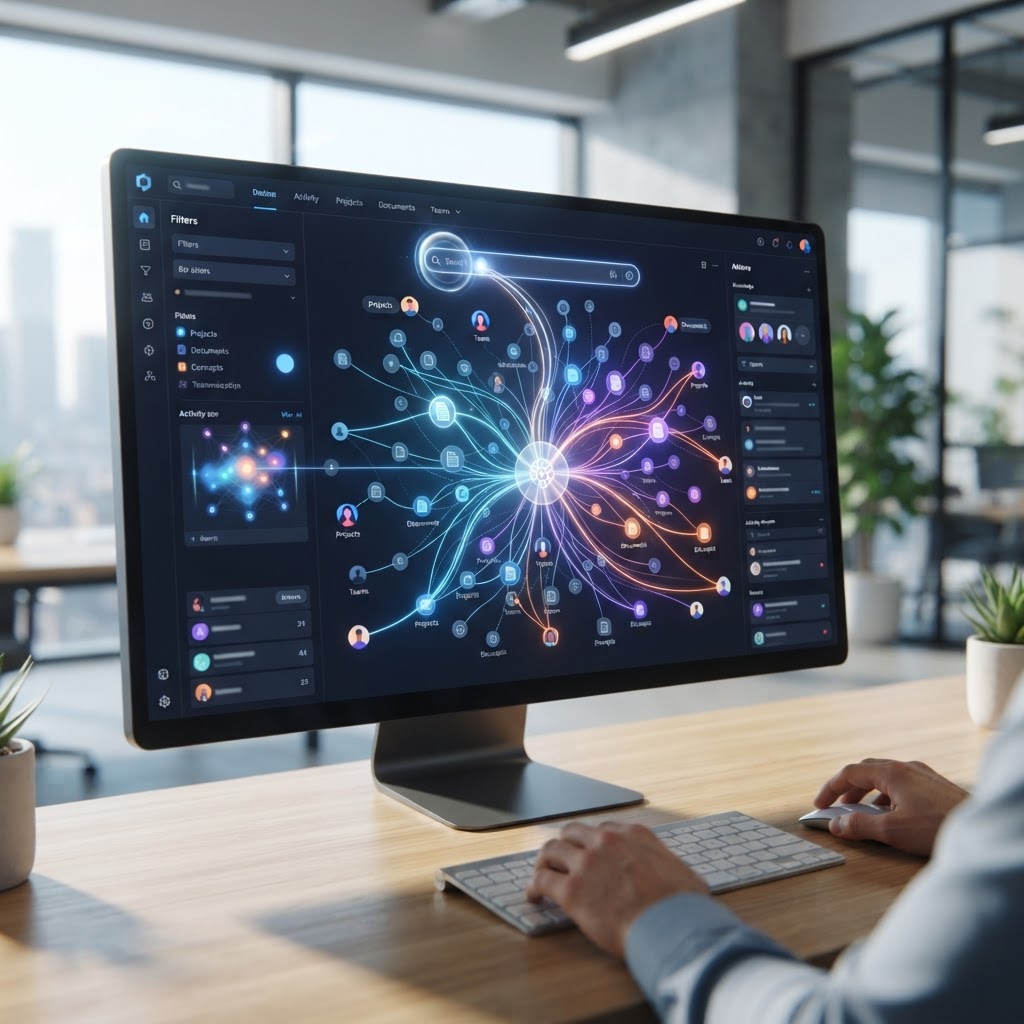
  • Best AI Internal Wiki Tools 2026: Organize Knowledge Faster

    Best AI Internal Wiki Tools 2026: Organize Knowledge Faster

    Key Takeaways

    • Traditional wikis suffer from high maintenance friction, leading to “knowledge rot” where documentation becomes obsolete shortly after creation.
    • Modern AI internal wiki software uses Large Language Models to transform unstructured data into queryable, context-aware insights.
    • Essential features for 2026 platforms include vector-based semantic search, automated tagging, and real-time integration with existing communication channels like Slack or Teams.
    • AI-driven automation reduces the manual burden of documentation by identifying outdated articles and suggesting updates based on current project metadata.
    • Choosing an enterprise knowledge base requires balancing robust security protocols with the accessibility of an intuitive, chatbot-driven interface.

    In the rapidly evolving landscape of 2026, the velocity at which an organization captures and disseminates information is a primary determinant of its competitive edge. As remote and hybrid work models become the standard, the “institutional memory” of a company is no longer stored in the hallways or around water coolers, but within digital repositories. However, the sheer volume of data generated by modern enterprises often results in a state of digital paralysis, where vital information remains siloed in disconnected platforms. This article, curated by the aismarttoolsreview Editorial Team, explores how AI knowledge management tools are shifting the paradigm from static storage to dynamic, intelligent discovery, helping teams automate onboarding and ensure that mission-critical data is always accessible, accurate, and actionable.

    Why Traditional Wikis Fail Modern Teams

    The traditional wiki model—often characterized by rigid directory structures, manual tagging, and heavy reliance on human maintenance—has reached a point of systemic failure in most high-growth organizations. Historically, the primary goal of internal documentation was to serve as a library. In this architecture, employees were required to spend hours curating content, establishing hierarchies, and painstakingly updating pages to reflect ongoing process changes. The result was often a graveyard of stale information, frequently referred to as “knowledge rot.”

    One of the core issues with legacy enterprise knowledge base systems is the “Search vs. Find” paradox. In a standard folder-and-file hierarchy, the burden of discovery rests entirely on the user. If the author of a document chooses a naming convention or a folder path that does not align with the seeker’s mental model, the information is effectively lost, even if it resides on the server. Employees typically spend a significant portion of their workday context-switching between tools, desperately trying to locate a specific policy or technical specification that they know exists but cannot pinpoint.

    Furthermore, traditional wikis are passive. They do not proactively alert teams when information becomes obsolete, nor do they understand the semantic relationship between different pieces of content. When a company changes its internal compliance policy, a traditional wiki requires a manual audit to identify every document that references the old standard. This creates a reliance on institutional memory—the “person who knows the answer”—which scales poorly and creates single points of failure within a department. When that person leaves the organization, the knowledge leaves with them, leaving behind documentation that no longer reflects the current operational reality.

    The rise of Slack, Microsoft Teams, and other asynchronous communication platforms has exacerbated this issue. Much of the knowledge creation now happens in ephemeral chat threads rather than structured documents. Traditional wikis are not designed to ingest this unstructured, conversational data. Consequently, companies are forced to choose between ignoring this wealth of institutional knowledge or tasking employees with the impossible burden of transcribing chat history into formal wiki articles. As teams scale, the cognitive load required to maintain these legacy silos becomes prohibitive, forcing teams to rely on fragmented tools that offer little in the way of unified intelligence or automated maintenance. The move toward AI-integrated documentation represents a fundamental shift from human-maintained repositories to living, self-organizing environments.

    How AI Transforms Knowledge Management Systems

    The integration of artificial intelligence into knowledge management platforms has fundamentally altered the role of the company wiki. Rather than serving as a static archive, an AI-powered system acts as a conversational partner, capable of processing, classifying, and retrieving information through natural language interaction. This shift is powered by advancements in vector databases and Large Language Models (LLMs), which allow the system to understand the context of a query rather than merely matching keywords.

    AI knowledge management tools leverage semantic search to bridge the gap between intent and discovery. When a user asks a question—for example, “What is our current process for requesting hardware for new hires?”—the AI does not just scan for the words “hardware” or “request.” Instead, it analyzes the embedding of that query, finding conceptually similar documents, internal policy guides, and even recent email threads or Slack discussions related to procurement. This reduces the friction of retrieval by an order of magnitude, transforming the process from an exploration of folders into a precise, query-based interaction.

    Beyond search, AI document organization is redefining how information is structured. Modern tools now employ automated classification and summarization, where the system monitors new content being created and assigns tags, categorizes it within the relevant departmental scope, and creates executive summaries. This drastically reduces the administrative overhead. In many cases, these systems can generate the initial draft of documentation based on a transcript of a recorded meeting or a thread of project discussions, ensuring that the knowledge is captured at the moment of creation rather than months later.

    Crucially, AI acts as a monitor for data integrity. By identifying conflicting information across documents—such as a project timeline that deviates from an official roadmap—the AI can flag these inconsistencies for human review. This proactive stance on knowledge maintenance ensures that the “single source of truth” is not just a corporate slogan, but a technical reality. By connecting these systems to enterprise communication tools, AI can also provide “in-the-flow” answers. Instead of a developer having to navigate away from their IDE to check the documentation for a specific API call, an AI-powered assistant can surface that information directly within their development environment. This integration of AI search for company data into the daily workflow of an employee is the definitive step toward the truly automated enterprise, where documentation is no longer a chore, but an intelligent layer of the digital infrastructure.

    Key Features to Look for in an AI Wiki Platform

    Selecting the right AI internal wiki software requires a focus on technical capabilities that facilitate both ingestion and retrieval. As businesses evaluate these tools in 2026, they must look beyond the marketing terminology and assess the platform’s ability to handle complex, heterogeneous data streams while maintaining rigorous security standards.

    First, evaluate the quality of the system’s integration ecosystem. An effective AI knowledge base must be able to pull data from diverse sources including cloud drives (Google Drive, SharePoint), communication platforms (Slack, Teams), project management software (Jira, Linear), and code repositories (GitHub, GitLab). If a tool requires manual migration of data, its utility is significantly diminished. Look for platforms that support real-time syncing via APIs and webhooks, ensuring that the AI has a live view of the company’s current data state.

    Second, prioritize semantic search capabilities powered by vector databases. Traditional keyword matching is insufficient for modern enterprise needs. A sophisticated system should allow users to perform “natural language questioning” where the AI synthesizes an answer from multiple documents rather than simply providing a list of links. The ability to cite sources within these synthesized answers is a critical feature; users must be able to verify the AI’s claims against the original documentation to ensure accuracy and reduce the risk of AI hallucinations.

    Third, consider the maturity of the platform’s automation capabilities. Look for tools that offer “maintenance alerts” based on decay patterns. If an article has not been updated in six months, or if team members consistently ignore the results for a specific query, the AI should automatically flag that document for deprecation or revision. Automated tagging and taxonomy management are also essential to avoid the “tag sprawl” that plagues older wiki systems.

    Fourth, security and access control are non-negotiable in an enterprise context. The AI must respect existing organizational permissions. If an employee does not have access to a confidential HR document, the AI must ensure that no snippet or summary of that document appears in their search results. Look for platforms that offer SOC2 compliance, data encryption at rest and in transit, and the option to host or isolate data within specific regional boundaries for regulatory compliance.

    Finally, assess the platform’s adaptability to the user experience. Does it support a chatbot interface that can be embedded into existing tools, or does it require users to learn a new portal? The most effective AI wiki is the one that minimizes friction, living in the same tabs and interfaces where the work is already happening. A well-designed tool should have a low barrier to entry for content creators, allowing them to publish or update information through voice-to-text or simple document drag-and-drop, rather than requiring specialized knowledge of Markdown or complex page-builder interfaces.

    Comparing Top AI Knowledge Base Solutions for 2026

    The market for internal documentation automation is increasingly crowded, with solutions catering to varying levels of technical sophistication. While established players have integrated AI layers into their legacy systems, newer entrants have built their architectures from the ground up to be “AI-native.” The following comparison highlights the varying approaches taken by industry leaders to address the core challenges of search, organization, and maintenance.

    Platform Primary Focus Best For
    KnowledgeFlow AI Real-time Slack/Teams Integration Highly collaborative, fast-moving startups.
    EnterpriseBrain Deep Data Security & Compliance Regulated industries and large corporations.
    WikiGenius Pro Automated Documentation Drafting Teams struggling with heavy document creation.
    SearchLens Sync Cross-platform Semantic Indexing Organizations with fragmented toolstacks.

    When selecting between these platforms, organizational leaders must weigh their specific pain points. For instance, teams that primarily suffer from information siloed in chat threads will likely benefit most from platforms designed for heavy conversational ingestion, such as those that index Slack history. Conversely, enterprises that operate in highly regulated sectors should prioritize platforms that emphasize role-based access control and air-gapped indexing. The decision often hinges on whether the organization needs a “replacement” wiki or an “intelligence layer” that sits on top of existing tools.

    The “Best for” column above serves as a starting point, but expert consensus generally suggests running a pilot program with a small, cross-functional team before a full-scale rollout. This allows the team to test the AI’s efficacy in handling niche technical queries versus broad policy questions. Furthermore, it allows for testing the speed of the AI’s response generation and the relevance of its source citations—metrics that vary significantly between models trained on general datasets versus those fine-tuned on specialized domain data. Remember that the “perfect” platform is rarely a standalone solution; rather, it is the one that effectively orchestrates the flow of data between your existing work management, communication, and storage systems.

    Automating Documentation Maintenance with AI

    The final and perhaps most transformative aspect of modern knowledge management is the move toward automated lifecycle management. In the past, “documentation maintenance” was an event-driven task—usually prompted by a team-wide mandate to “spring clean” the wiki, a process that was notoriously ineffective and widely disliked by staff. AI changes the lifecycle of a document from a one-time project to a continuous process of refinement.

    AI systems can now utilize “content decay” analytics. By tracking how often documents are accessed, updated, or cited in team conversations, the AI can assign a “freshness score” to every article in the repository. When a document’s score drops below a certain threshold, the system can trigger an automated notification to the original author or subject matter expert. These notifications are often accompanied by a draft of recommended updates, which the AI constructs by scanning project updates in JIRA, recent Slack discussions, or commit logs in GitHub. This transforms a daunting editing task into a simple approval-based workflow, where the SME only needs to verify the accuracy of the AI-suggested content rather than writing it from scratch.

    Furthermore, internal documentation automation can handle the deduplication of content. It is a common occurrence for a company to have three or four different versions of a “Company Leave Policy” living in various folders. An AI-powered platform can identify the overlapping content and suggest merging these documents into a single, canonical source of truth. This reduces confusion among employees and ensures that everyone is operating under the same set of policies.

    Another powerful automation strategy involves context-aware document generation. As projects evolve, the AI can monitor key performance indicators (KPIs) or project milestones and automatically append updates to relevant documentation pages. For example, when a software sprint concludes, the AI can summarize the key technical outcomes and integrate them into the system’s architecture documentation, ensuring that the documentation remains in lockstep with the actual code deployed. This level of synchronization is only possible when the knowledge base is treated as an active participant in the organization’s digital ecosystem rather than a passive repository. By delegating these repetitive, administrative tasks to intelligent agents, organizations can free up their most valuable human capital—their employees—to focus on strategy and innovation, while the AI ensures that the collective intelligence of the team remains organized, discoverable, and, most importantly, reliable.

    Improving Team Collaboration Through Smart Search

    The traditional method of navigating internal documentation—clicking through folder hierarchies or hoping a project lead remembers where a file lives—is a significant drain on productivity. Smart search, powered by Natural Language Processing (NLP) and Large Language Models (LLMs), has fundamentally shifted how employees interact with company data. Instead of relying on exact keyword matches, modern AI internal wiki software interprets the intent behind a search query.

    When an employee types, “What is our policy on remote work stipends?” a smart search system does not merely look for those specific words in a document title. It parses the request to understand that the user is looking for a financial benefit document. By indexing semantic relationships between terms, AI search tools can surface the relevant paragraph within a broader handbook, even if the phrasing differs from the search query. This capability drastically reduces “context switching,” where team members lose focus while hunting for information.

    Collaboration thrives when knowledge is frictionless. With AI-driven semantic search, employees spend less time asking colleagues for links to documents and more time executing tasks. Many top-tier platforms now include “Generative Answers,” which synthesize information from multiple disparate documents into a single, cohesive response. If a developer searches for an API credential protocol, the AI may pull from the security handbook, the technical documentation, and an archived Slack thread to construct a comprehensive answer, complete with direct citations. This creates a “single source of truth” that minimizes the spread of outdated or conflicting information across different departments.

    Integrating AI Wikis with Your Current Workflow

    An enterprise knowledge base is only as valuable as its accessibility. If employees must open a separate browser tab and perform a manual search to find information, adoption rates often plummet. The best company wiki platforms solve this by embedding themselves directly into the tools where work happens, such as Slack, Microsoft Teams, Jira, or Notion.

    Effective integration strategies typically focus on three layers: ambient discovery, automated documentation, and cross-platform synchronization. Ambient discovery tools exist as bots within messaging platforms. When a user asks a question in a project channel, the AI bot can automatically scan the wiki and offer to post a summary or a link to the relevant documentation without the user ever leaving their conversation. This removes the friction of “searching for the search bar.”

    Furthermore, AI document organization is becoming increasingly autonomous. Modern integration pipelines can pull data from CRM platforms, ticketing systems, and code repositories to keep the wiki updated in real-time. For instance, if a project manager updates a milestone in a project management tool, an AI-integrated wiki can automatically flag the related documentation for a review request, ensuring that the team’s collective memory remains current. This “low-touch” maintenance is critical for preventing the information decay that eventually plagues most internal documentation systems.

    Integration Tool Primary Workflow Focus Best For
    Glean Enterprise Search & Unified Data Large organizations with data silos
    Notion AI Real-time Collaborative Writing Startups & Creative Agencies
    Guru Contextual Web Browser Extension Sales & Customer Support Teams
    Document360 Advanced Help Center Structure SaaS & Technical Product Docs

    Security and Privacy Standards for Enterprise Wikis

    As organizations centralize their sensitive institutional knowledge into AI-powered tools, the risk profile of the internal wiki increases. Enterprise-grade AI knowledge management tools must move beyond basic password protection to a comprehensive “Defense in Depth” model. Privacy is not just about keeping external threats out; it is about ensuring that internal information access follows the principle of least privilege.

    Advanced platforms implement Role-Based Access Control (RBAC) that respects existing organizational silos. For instance, the AI indexer should only have access to documents the querying user is already authorized to view. If an employee searches for executive compensation structures, the AI must be intelligent enough to know that although the query is valid, the data source is restricted, and therefore, it must omit that information from the generated response. This ensures that the AI does not become a backdoor for unauthorized data access.

    Compliance is another cornerstone. Organizations in regulated industries like finance or healthcare require audit trails that show who accessed what information and when. Leading wiki providers include robust logging features, data residency options (ensuring data stays within specific geographic borders), and enterprise-grade encryption for both data at rest and in transit. Many experts also emphasize the importance of “Private LLM” deployments, where the organization’s proprietary data is never used to train global, public-facing AI models. By ensuring the data remains localized to the company’s dedicated instance, enterprises can leverage the power of generative AI without sacrificing intellectual property.

    Overcoming Implementation Challenges in AI Knowledge Bases

    The primary reason AI knowledge bases fail is not the technology—it is the culture of documentation. Implementing a new platform requires a shift from a “hidden document” culture to a “public-by-default” mindset. Organizations often find that their biggest hurdle is not the migration of files, but the cleanup of redundant, obsolete, or trivial (ROT) data before the AI indexing process begins.

    To overcome this, companies should adopt a phased implementation strategy. Start by identifying the most high-traffic, low-complexity questions that support teams deal with daily—such as PTO policies, Wi-Fi passwords, or holiday calendars. By successfully automating these, you build internal trust in the system. Once the foundation is stable, move to complex technical documentation. Throughout this process, it is vital to designate “Knowledge Champions” within each department. These individuals act as curators, ensuring that the AI has high-quality, verified content to pull from.

    Another common challenge is the “garbage in, garbage out” phenomenon. If the source material is disorganized, the AI will provide disorganized or inaccurate answers. Regular audits of the wiki’s feedback loops are essential. Most platforms include “thumbs up/down” mechanisms on AI-generated responses. Encouraging employees to report inaccurate answers allows the system to prioritize verified content over outdated material. Treating the wiki as a “living product” rather than a “static repository” is the key to long-term success.

    Scaling Your Internal Wiki as Your Company Grows

    As a company scales from 50 to 500 to 5,000 employees, the sheer volume of internal documentation can become overwhelming. An effective wiki for a small team may become a labyrinth for a larger organization. Scaling requires transitioning from simple folder structures to sophisticated taxonomy, metadata, and automated governance.

    Metadata tagging is the backbone of a scalable wiki. By assigning tags such as “Project X,” “Policy,” “Engineering,” or “Urgent” to every document, AI tools can navigate complex environments with higher precision. As you grow, consider implementing automated archiving policies. After a certain period—say, 18 months of inactivity—the system should automatically move content to an archive or trigger a review from the original author. This ensures that the search index remains clean and uncluttered by legacy projects or defunct processes.

    Furthermore, scaling requires cross-functional synergy. Different departments—HR, Legal, Engineering, Marketing—often have different styles of documenting work. A successful enterprise wiki architecture enforces global standards for document headings, naming conventions, and summary snippets while allowing enough flexibility for departmental autonomy. Regularly scheduled “knowledge grooming” sessions, where team leads review the AI’s performance and address gaps in the knowledge base, ensure the system stays relevant as the business strategy evolves.

    Frequently Asked Questions

    What is the difference between a traditional wiki and an AI-powered knowledge base?

    Traditional wikis rely on manual organization, such as folders or static table-of-contents pages. AI-powered knowledge bases use semantic search and LLMs to understand the context of queries, allowing users to find information even if they don’t know the exact document title or location. They also offer generative capabilities, synthesizing answers from multiple files rather than just pointing to a document.

    How does AI ensure that the information provided is accurate and not “hallucinated”?

    Top-tier AI knowledge tools utilize a technique called Retrieval-Augmented Generation (RAG). This means the AI is restricted to searching and summarizing only the specific documents you have uploaded to your wiki. By limiting the scope of the AI’s “knowledge” to your own verified files, the risk of fabrication is significantly reduced compared to using a public AI model.

    Can an AI wiki integrate with tools we already use, like Slack or Jira?

    Yes, most modern enterprise wiki platforms offer robust integration APIs. They can be installed as bots in messaging apps or as plugins in project management tools, allowing employees to access information, search the knowledge base, or even trigger documentation updates without leaving their primary workspace.

    Is it safe to put proprietary company data into an AI knowledge tool?

    Security depends on the vendor’s architecture. Enterprise-grade tools offer private instances, end-to-end encryption, and strict data-usage policies that prevent your internal information from being used to train the vendor’s public AI models. It is critical to select a provider that offers SOC2 compliance and enterprise-grade data privacy agreements.

    What should be the first step in implementing a company-wide AI wiki?

    The first step is a content audit. Before introducing AI, clear out obsolete or redundant files. Next, define a clear taxonomy and set of permissions. It is often best to start with a “pilot” department—typically one with high documentation needs, such as customer support or IT—to refine your workflow before rolling it out to the entire company.

    How do I measure the return on investment (ROI) for an internal wiki tool?

    ROI is typically measured by tracking the reduction in time spent searching for information and the decrease in repetitive queries directed at HR or IT support teams. Many platforms offer analytics dashboards that show search volume, common queries, and the “answer rate,” which helps teams calculate hours saved per week by automating internal knowledge discovery.

    Conclusion

    In the high-velocity business environment of 2026, information is one of your company’s most valuable assets. The ability to retrieve, synthesize, and leverage that information—rather than letting it languish in forgotten folders—is a core competitive advantage. AI-powered internal wiki tools are no longer just “nice-to-have” organizational utilities; they are the connective tissue of the modern, distributed enterprise.

    By moving toward semantic search, integrating documentation into the flow of work, and maintaining rigorous security standards, you can transform your company’s knowledge from a fragmented collection of files into a living, intelligent resource. The transition may require an initial investment of effort in data hygiene and culture, but the payoff is a more agile, better-informed, and highly efficient workforce. Start by auditing your current documentation gaps and select a tool that scales with your ambition.

    Ready to transform how your team works? Explore our full list of recommended AI knowledge management tools and start your free trial today.

    By aismarttoolsreview Editorial Team
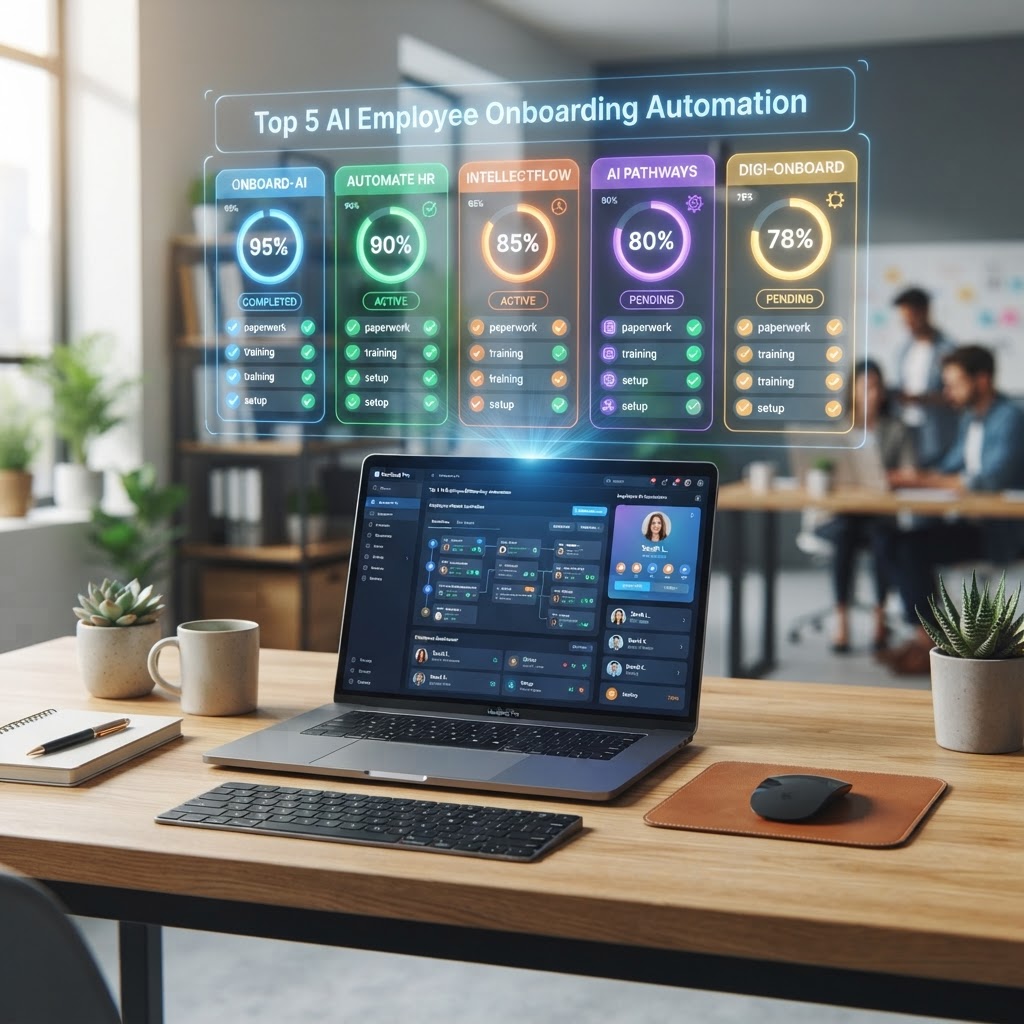
  • Best AI Employee Onboarding Automation Tools 2026: Top 5 Compared

    Best AI Employee Onboarding Automation Tools 2026: Top 5 Compared

    Key Takeaways

    • AI-driven automation shifts HR focus from manual documentation to high-value talent development.
    • Modern onboarding platforms now utilize generative AI to create personalized, role-specific learning paths.
    • Key features for 2026 include intelligent document parsing, sentiment analysis, and adaptive feedback loops.
    • Automated employee onboarding significantly reduces “time-to-productivity” by minimizing administrative bottlenecks.
    • Selecting the right platform requires balancing technical integration capabilities with the employee experience.

    The landscape of human resources has undergone a radical shift as we move deeper into 2026. What was once a document-heavy, linear process managed by spreadsheets and disjointed email threads has evolved into a dynamic, tech-forward journey. As organizations prioritize retention and agility, the adoption of AI onboarding software has become a non-negotiable standard rather than a luxury. By leveraging sophisticated algorithms to manage the logistical heavy lifting, HR teams are finally reclaiming the time needed to build meaningful human connections. This guide, compiled by the aismarttoolsreview Editorial Team, explores the current state of automation and provides a comprehensive analysis of the best onboarding tools 2026 has to offer for modern enterprises.

    Why AI is Transforming Employee Onboarding in 2026

    By 2026, the definition of an effective onboarding experience has moved beyond simple document collection and IT provisioning. It is now defined by hyper-personalization, immediate integration, and predictive support. AI for HR automation has transitioned from a backend utility to a front-facing strategic partner. Traditionally, onboarding was characterized by the “firehose” method: dumping policies, handbooks, and compliance forms on a new hire within their first 48 hours. This approach often led to cognitive overload, resulting in lower retention rates and a slower time-to-productivity. Today, the integration of Large Language Models (LLMs) and predictive analytics allows organizations to curate the onboarding journey in real-time, adapting content based on the new hire’s specific role, department, and interaction patterns.

    One of the primary drivers of this transformation is the need for adaptive learning. In the current hybrid and remote work climate, a “one-size-fits-all” approach to employee orientation frequently fails to account for diverse learning styles and varying levels of technical proficiency. AI-powered platforms can now assess a new hire’s existing knowledge base through diagnostic assessments and adjust the delivery of training modules accordingly. If a developer joins the team, the AI might prioritize complex environment setups and specific coding standard documentation, while a marketing hire receives curated insights into brand voice and social sentiment analytics.

    Furthermore, AI-driven platforms act as a 24/7 concierge for the employee. In previous years, new hires would often sit idle waiting for HR managers to respond to questions about benefits enrollment or hardware issues. Now, intelligent conversational agents—trained on the specific internal knowledge base of the company—provide instantaneous answers, effectively eliminating the common “day-one friction” that hinders momentum. By automating the mundane, the technology ensures that the human element of onboarding—team introductions, culture immersion, and mentor-mentee relationship building—takes center stage. This synergy between machine efficiency and human connection is the hallmark of high-performing HR departments in 2026.

    Key Features to Look for in AI Onboarding Platforms

    When evaluating employee integration software, stakeholders must look beyond simple task-tracking functionality. To truly achieve a streamlined onboarding process, a platform must integrate robust AI capabilities that address both administrative and psychological integration. The first essential feature is “Contextual AI Assistance.” This goes beyond simple chatbots; it involves systems that proactively reach out to a new hire based on milestones. For instance, if an employee has not completed their tax forms or security certifications by mid-morning on their first day, the AI triggers a personalized, gentle nudge via the communication channel the employee prefers, such as Slack or Microsoft Teams.

    Intelligent Document Processing (IDP) is another critical functionality. Manual data entry is the primary culprit behind clerical errors in HR systems. Leading 2026 platforms utilize sophisticated OCR and AI parsing to scan identification documents, contracts, and certification records, automatically populating the core HRIS (Human Resources Information System) with high accuracy. This ensures compliance is managed in the background without requiring the new hire to re-type the same information into five different portals.

    Integration with existing tech stacks is paramount. An AI onboarding tool is only as good as its connectivity. The best platforms offer bidirectional API support, allowing them to talk seamlessly to Jira, Salesforce, GitHub, and various payroll processors. If a new hire is marked as “onboarded” in the HR system, the AI should ideally trigger automated provisioning for every other tool required for that specific role, creating a “zero-touch” provisioning cycle. Additionally, look for platforms that offer “sentiment analysis and feedback loops.” Advanced tools analyze survey responses and engagement metrics throughout the first 90 days, flagging potential “flight risks” or instances where a new hire feels stuck, allowing HR to intervene before a problem escalates.

    How Automated Onboarding Reduces Administrative Workload

    The administrative burden of onboarding has historically been the primary distraction preventing HR from acting as a strategic business partner. By implementing automated employee onboarding, organizations can eliminate repetitive tasks that consume hundreds of hours annually. The reduction in workload begins with automated workflow orchestration. Instead of a manual checklist where an HR professional must track if an email was sent, a password was reset, or a benefit packet was signed, the AI platform acts as a conductor. It triggers events based on triggers: when an offer letter is signed in the ATS (Applicant Tracking System), the onboarding tool automatically initiates account creation, triggers a “welcome” email sequence, and sends out the internal hardware request.

    This automated flow significantly reduces the “ping-pong” effect where HR must constantly coordinate between IT, Facilities, and Department Heads. With automated provisioning, the platform handles the handshake between internal systems, ensuring the new hire has access to all necessary tools exactly when they need them. Many of these tools now include “predictive compliance scheduling,” which automatically tracks deadlines for government-mandated documents and mandatory training based on the employee’s location and role. By automating these scheduling tasks, the risk of compliance lapses is drastically lowered, and HR professionals are spared from manually tracking hundreds of individual due dates.

    Perhaps the most significant reduction in workload comes from the “Self-Service Empowerment” provided by AI. By providing an intelligent interface where employees can resolve 90% of their inquiries—from “How do I set up my health savings account?” to “Where can I find the company holiday calendar?”—the volume of support tickets landing in an HR professional’s inbox is cut by a significant margin. This doesn’t just save time; it empowers the new hire to feel self-sufficient and competent from the start, rather than feeling like a burden to their new manager. This structural shift allows HR to focus on high-touch activities like performance coaching, cultural alignment, and long-term career planning, which are the true drivers of employee retention in the modern era.

    Improving New Hire Engagement with Personalized AI Workflows

    Engagement in the first 90 days is a predictor of long-term success, yet many companies struggle to maintain momentum after the “first-day excitement” wears off. Personalized AI workflows are the antidote to the “post-onboarding slump.” By treating the onboarding process as a journey rather than a project, AI platforms use data to create a tailored experience that evolves with the employee. For example, the system can schedule “connection points” where the AI suggests a coffee chat with a peer in a different department based on shared interests identified in the new hire’s profile. This facilitates organic networking, which is often difficult to foster in a remote or hybrid environment.

    Personalization also extends to the delivery of culture-focused content. Rather than forcing every hire to watch the same hours-long video on company history, AI platforms can offer a modular, interactive experience. A junior staffer might receive gamified, bite-sized lessons, while a senior executive might be provided with high-level strategy documents and summaries of key cross-functional projects. The AI monitors which content the new hire engages with, adapting future recommendations to ensure the information remains relevant and stimulating.

    Furthermore, AI platforms can measure “Engagement Velocity.” By tracking how quickly a user completes their onboarding milestones and how they interact with internal communications, the software builds an engagement score. If an employee is consistently interacting with internal social channels or project boards, the AI might suggest advanced training modules. If the score is low, the platform can subtly prompt the manager to initiate a check-in conversation. This proactive engagement management is only possible because the AI is constantly “listening” to the data generated by the onboarding process. This ensures that no employee slips through the cracks, and every individual feels seen and supported during their transition into the organization.

    Top 5 AI Tools for Seamless Employee Integration Compared

    Choosing the right platform involves assessing your organizational scale, the complexity of your tech stack, and the maturity of your current HR processes. While many providers claim to offer AI capabilities, the top-tier solutions distinguish themselves through the sophistication of their automation engines and their ability to integrate with diverse third-party applications. The following table provides a high-level comparison of the market leaders in 2026, categorized by their primary strengths.

    Tool Name AI Core Capability Integration Depth Best For
    OnboardPro AI Predictive Compliance & Scheduling Extensive API suite for SaaS stacks Mid-to-large Enterprises
    FlowHire Intelligence Conversational AI Concierge Strong native Slack/Teams integration Remote-first organizations
    TalentBridge Nexus Behavioral Analytics & Retention Deep HRIS and ATS synchronization HR teams focused on retention
    SwiftStart Tech Automated Provisioning/IT Logic Focus on security and hardware IT and Engineering-heavy firms
    CultureGrow Smart Personalized Learning Pathways Integrates with major LMS providers Scalable, high-growth startups

    When selecting from the options listed above, it is important to consider the “Total Cost of Ownership,” which includes not just the subscription fee, but the time required to train the AI on your internal knowledge base. Some platforms, like OnboardPro AI, prioritize deep, automated compliance workflows that are essential for heavily regulated industries. Others, such as FlowHire Intelligence, lean into the employee experience, utilizing a conversational interface to foster a warm, inclusive remote onboarding experience. TalentBridge Nexus is particularly noteworthy for its ability to analyze communication patterns, providing HR teams with a diagnostic look at whether new hires are successfully integrating into the social fabric of the company.

    The decision-making process should be grounded in a “pilot” approach. Before committing to an enterprise-wide rollout, most of these providers offer a sandbox environment. HR leaders should take advantage of these environments to test the platform against a specific, representative cohort of new hires. Measure how many hours are saved on manual data entry and, more importantly, collect qualitative feedback from the new hires themselves. Did they find the AI support helpful? Was the information provided during the first week relevant to their specific role? The best tools of 2026 are those that facilitate a “human-in-the-loop” model, where the machine handles the logistical complexity, allowing the human manager to focus on the interpersonal nuances that build long-term loyalty and commitment.

    Beyond the technical features, consider the long-term support infrastructure. As you scale, your onboarding needs will evolve. The best AI onboarding platforms in 2026 are those that offer a modular architecture, allowing you to turn on or off features based on your current size and complexity. If your organization is expected to undergo rapid growth, prioritize platforms that offer robust, scalable APIs. This ensures that when you eventually switch to a new payroll processor or project management tool, your onboarding software remains a stable, reliable foundation for your workforce integration efforts.

    Ultimately, the technology you select is a reflection of your organizational values. Choosing an automated solution that prioritizes clarity, transparency, and personal connection signals to your new hires that you respect their time and their growth trajectory. By investing in the right AI tools now, you are building a resilient, agile organization that is prepared to welcome and integrate the best talent, regardless of where they are working from or what their specific technical requirements may be.

    Ensuring Compliance and Security During Data Collection

    As organizations transition toward automated employee onboarding, the centralization of sensitive personal data—ranging from government-issued identification and banking details to tax forms—becomes a significant security mandate. AI-driven onboarding platforms are potent, but they must be architected with a “security-by-design” philosophy. When selecting an AI onboarding tool in 2026, HR departments must prioritize platforms that provide granular data encryption, both in transit and at rest, alongside robust access control protocols.

    One of the primary concerns with AI for HR automation is the training of machine learning models on sensitive data. Organizations should ensure their chosen providers utilize isolated environments for data processing. This means your company’s internal documentation and new hire information should not be used to train public-facing AI models. Look for vendors that offer SOC 2 Type II compliance, GDPR, and CCPA certification, which serve as foundational benchmarks for data privacy.

    Furthermore, automated employee onboarding systems must facilitate local data residency. For multinational corporations, this is non-negotiable. Modern AI onboarding software should allow administrators to choose where their data is stored geographically to comply with regional data sovereignty laws. Beyond storage, the human-in-the-loop (HITL) architecture remains critical. Even when AI automates document verification, HR personnel should maintain a high-level oversight dashboard where they can audit AI decisions, especially those concerning sensitive document authentication (e.g., verifying a Passport or Visa).

    Integrating Onboarding Software with Your Existing HR Stack

    An AI onboarding tool is only as effective as its ability to communicate with the rest of your technical ecosystem. If your onboarding software functions as a data silo, it ultimately increases the administrative burden rather than reducing it. Seamless integration with your existing HR Information System (HRIS), Applicant Tracking System (ATS), and Identity and Access Management (IAM) platforms is the key to true automated employee onboarding.

    Most enterprise-grade platforms now rely on secure API-first architectures. When evaluating the integration capabilities of your potential AI tools, consider the following technical checklist:

    • Bi-directional Sync: Does the tool send data back to your HRIS as well as pull from it? Efficient integration should update employee profiles in real-time once a document is uploaded.
    • Provisioning Workflows: Can the tool trigger automated account creation in platforms like Slack, Microsoft 365, or Salesforce via SAML/SSO once the onboarding milestone is reached?
    • Custom Webhooks: Does the tool allow for custom triggers? For instance, if an onboarding milestone is hit, can it trigger an automated email in your CRM to notify the department head to schedule a welcome meeting?
    • Identity Provider (IdP) Integration: Ensure the software supports SCIM (System for Cross-domain Identity Management) to synchronize user accounts across your cloud service providers automatically.
    Integration Capability Why It Matters Best For
    Native API Connectors Reduces custom coding and maintenance overhead. Small to Mid-sized businesses needing “plug-and-play” simplicity.
    SCIM/SAML Support Automates account provisioning and security provisioning. Enterprise firms prioritizing cybersecurity and speed.
    Webhook Extensibility Allows for complex, multi-tool automation workflows. Technical organizations with custom internal workflows.
    Flat-file/SFTP Export Essential for legacy HR systems lacking modern APIs. Organizations transitioning away from legacy infrastructure.

    Measuring the ROI of Automated Onboarding Systems

    To justify the budget for advanced AI onboarding tools, HR leaders must look beyond the initial price tag. The Return on Investment (ROI) of employee integration software is typically measured across three primary pillars: administrative time savings, compliance risk mitigation, and early-stage employee retention metrics.

    First, calculate the “hours-per-hire” saved. Before automation, an HR generalist might spend five to ten hours manually managing document collection, background checks, and email sequences. With AI automation, this is often compressed to less than one hour of active management. Multiply these saved hours by the average hourly rate of your HR staff to arrive at your hard-dollar savings.

    Second, consider the cost of compliance errors. Fines associated with incomplete I-9 documentation or improper storage of sensitive employee records can be catastrophic. AI tools automate the audit trail, ensuring every document is signed and stored correctly, effectively acting as an insurance policy against regulatory non-compliance.

    Finally, measure the correlation between streamlined onboarding and early retention. Data often suggests that a disjointed, confusing onboarding process leads to higher turnover within the first 90 days. By providing a slick, branded, and frictionless digital experience, organizations often see higher engagement scores in “Day 30” surveys, which serves as a leading indicator of long-term employee satisfaction and eventual retention, directly reducing the high costs associated with employee turnover and recruitment.

    Common Mistakes to Avoid When Implementing AI Onboarding

    The most frequent error organizations make is attempting to automate too much, too soon. A common pitfall is the “Over-Automation Trap,” where companies design workflows that exclude human touchpoints entirely. Onboarding is, by its nature, a social integration process. If an AI tool manages the process so rigidly that the new hire never speaks to a peer or manager during the first week, the system has failed to integrate the employee culturally.

    Another frequent mistake is neglecting the mobile experience. Many candidates view initial onboarding materials on their smartphones during notice periods at their previous jobs. If your AI platform relies on desktop-only document signing or clunky mobile rendering, you will frustrate your new talent before they even step through the door.

    Finally, avoid the “Set it and forget it” mentality. AI models and integration workflows require periodic optimization. As your tech stack changes—for example, upgrading from one project management tool to another—your onboarding workflows must be updated. HR teams should conduct a quarterly audit of their automated workflows to identify bottlenecks where new hires are dropping off or where the AI is failing to trigger the necessary administrative actions.

    Future Trends in Automated Employee Onboarding

    As we look toward the latter half of the decade, the landscape of automated employee onboarding will move toward “Hyper-Personalized” integration. Future iterations of AI onboarding software will likely utilize generative AI to tailor the onboarding experience to the individual’s role, learning style, and previous expertise. Instead of a one-size-fits-all digital checklist, an employee might be greeted by an AI agent that builds a customized 30-day learning path based on the employee’s specific resume and the team’s project goals.

    Another emerging trend is the integration of Augmented Reality (AR) and Virtual Reality (VR) into the onboarding process. For remote teams, these technologies offer the potential for virtual office tours and immersive team-building exercises, significantly enhancing the feeling of belonging that is often lost in fully distributed work environments.

    Furthermore, predictive analytics will play a much larger role. Rather than just tracking whether a task is complete, future AI tools will analyze onboarding metadata to predict when a new hire is at risk of disengagement. By flagging these patterns to managers before a resignation occurs, AI will evolve from a simple administrative assistant into a proactive retention partner.

    Frequently Asked Questions

    What is the difference between a traditional HRIS and an AI-driven onboarding tool?

    While a traditional HRIS serves as a record-keeping database for payroll and benefits, an AI-driven onboarding tool is a workflow orchestrator. It sits on top of your HRIS to manage the communication, document verification, and administrative triggers that turn a candidate into a productive employee, often utilizing natural language processing and machine learning to handle unstructured data like resumes or ID scans.

    Can AI onboarding software handle background checks?

    Yes, many modern onboarding platforms feature native integrations with specialized background check services. The AI acts as the bridge—triggering the check, monitoring the status, and automatically updating the HRIS once the report is cleared, ensuring a seamless flow without manual input from HR.

    Is it possible to customize the branding within these AI onboarding tools?

    Absolutely. Most high-end onboarding platforms offer white-labeling capabilities. This allows organizations to incorporate their specific logos, color palettes, and tone of voice into the candidate portal, ensuring that the onboarding experience reflects the company’s internal brand identity consistently from the first point of contact.

    How do these tools protect the privacy of sensitive employee documents?

    Leading tools employ end-to-end encryption for all uploaded documents. They also frequently utilize Role-Based Access Control (RBAC), ensuring that only authorized HR personnel can view sensitive tax or banking documents, while the AI processes the data for validation purposes without exposing the underlying files to unauthorized users.

    Will using AI for onboarding make my company feel less “human”?

    If implemented correctly, the opposite should be true. By automating the monotonous, manual paperwork, HR professionals are freed from administrative drudgery, allowing them to dedicate more time to meaningful face-to-face interactions, mentorship, and cultural integration, which are the elements that truly make a company feel human.

    What is the typical setup time for an enterprise onboarding automation system?

    Implementation time varies based on the complexity of your existing HR stack and the degree of custom workflows required. Generally, a straightforward integration with a modern cloud-based HRIS can be deployed in two to four weeks. Complex, custom-coded enterprise workflows involving multiple legacy systems may require a phased rollout over several months.

    Conclusion

    The transition toward automated employee onboarding is no longer a luxury reserved for tech giants; it is an operational necessity for any organization looking to scale efficiently in 2026. By selecting the right AI onboarding tool, companies can convert a traditionally high-friction process into a polished, welcoming, and compliant experience that sets the stage for long-term employee success.

    We encourage you to audit your current manual processes, identify the most time-consuming administrative hurdles, and trial at least two of the platforms discussed in this guide. Remember that the goal is not just to save time, but to create an environment where your new hires feel supported from the very first minute they interact with your digital infrastructure. Invest in your onboarding process today to secure your competitive advantage in the global talent market.

    By aismarttoolsreview Editorial Team

  • Best AI Employee Productivity Tracking Tools 2026: Top 5 Compared

    Best AI Employee Productivity Tracking Tools 2026: Top 5 Compared

    Key Takeaways

    • Modern AI productivity tracking moves beyond simple keystroke logging to analyze intent and workflow patterns.
    • AI workplace analytics provide actionable insights that help managers reduce burnout by identifying over-extension early.
    • Successful implementation of employee monitoring tools requires a culture of radical transparency and mutual consent.
    • When selecting workforce productivity tools, prioritize platforms that integrate seamlessly with your existing tech stack (Slack, Jira, etc.).
    • Ethical AI time management balances organizational objective-setting with respect for individual privacy boundaries.

    As the workplace landscape continues to shift toward permanent hybrid and distributed models, the traditional methods of management by observation are rapidly becoming obsolete. In 2026, the competitive edge for enterprises lies not in monitoring hours clocked, but in understanding the nuanced rhythms of work itself. By leveraging advanced machine learning, organizations are now deploying sophisticated digital activity monitoring solutions that offer a window into how high-performing teams actually function. This guide, compiled by the aismarttoolsreview Editorial Team, explores the current generation of AI-driven platforms designed to optimize performance while maintaining the critical balance between accountability and employee trust.

    How AI is Revolutionizing Employee Productivity Tracking

    The evolution from manual timesheets to AI productivity tracking represents a paradigm shift in management philosophy. Historically, employee monitoring tools were limited to binary data points: whether a screen was active, which applications were open, or when a user logged into a VPN. These legacy systems often created more friction than value, providing raw data without the context required for meaningful intervention. Modern AI, however, processes this metadata through predictive algorithms that recognize patterns, workflows, and anomalies that would be invisible to the human eye.

    Modern AI workplace analytics function by establishing a baseline for departmental performance. Through natural language processing and activity clustering, these tools can distinguish between “deep work”—such as coding, technical writing, or complex data analysis—and “administrative overhead,” such as repetitive email correspondence or unscheduled status meetings. By categorizing these activities, AI allows leaders to understand how talent is distributed across projects. If a team is spending 60 percent of their capacity on administrative tasks, the AI identifies this as a potential bottleneck, allowing managers to reallocate resources before burnout occurs.

    Furthermore, AI-driven software is moving away from punitive observation toward supportive augmentation. Instead of flagging an employee for taking a break, modern systems identify when a user has been working continuously for extended periods, prompting a recommendation for cognitive rest. This creates a feedback loop where the software acts as a productivity coach rather than a digital overseer. By mapping typical workflows, these tools can even suggest automation for recurring tasks, such as summarizing meeting transcripts or automating routine documentation, effectively offloading repetitive labor to AI agents.

    Another revolutionary aspect is the shift toward outcome-based assessment. Whereas older software focused exclusively on inputs (time spent), 2026-era tools integrate with project management platforms to correlate activity with milestone achievement. This enables a holistic view of efficiency. For example, if a developer spends significantly less time in their IDE but hits every sprint goal with high code quality, the system recognizes this as an efficient workflow rather than an anomaly. This objective mapping of input to output reduces the bias inherent in subjective performance reviews, providing data-driven foundations for promotions, training, and strategic planning. The focus has decisively shifted from surveillance to an empirical understanding of human-centric optimization in a digitally saturated environment.

    Why Businesses Need AI-Driven Productivity Analytics

    In a volatile economic environment, the ability to maximize workforce productivity tools is not merely an operational luxury but a strategic imperative. As teams become more geographically dispersed, leadership often struggles with “visibility gaps.” When managers cannot walk by a desk or participate in spontaneous office dialogue, they often default to micromanagement. AI-driven productivity analytics fill this gap by providing an objective, data-backed narrative of team health, allowing managers to move from “checking in” to “checking outcomes.”

    One of the primary drivers for adopting these tools is the mitigation of burnout, which is frequently silent in remote environments. Workforce productivity tools are now capable of analyzing “work-life bleed”—the tendency for employees to stay logged in during off-hours or work through breaks. By detecting spikes in out-of-hours activity or consistently heavy screen time, managers can identify teams at risk of fatigue. This proactive approach allows organizations to adjust deadlines, increase support, or re-evaluate project scope before turnover occurs. In this sense, the software acts as an early warning system for organizational health.

    Cost optimization is another vital factor. Many enterprises pay for subscriptions to dozens of software-as-a-service (SaaS) platforms, yet they often have no insight into which tools actually drive value. AI analytics can identify underutilized software licenses by observing which applications are being engaged with during core tasks and which sit idle. This functionality allows IT departments to prune their budget, consolidating the toolset to what is truly essential. Furthermore, by identifying which processes are prone to delays—such as a specific review phase in a creative pipeline—businesses can re-engineer their internal workflows to be more efficient.

    Beyond individual and team metrics, there is the advantage of strategic alignment. By integrating AI-based monitoring with goal-setting frameworks (like OKRs), leadership gains a macro-view of organizational performance. The software can highlight if the team’s collective output matches the company’s stated high-level goals. If a team is highly productive but busy with low-priority initiatives, the data creates a visual dashboard that forces leadership to clarify objectives. This alignment of daily activity with long-term strategy prevents the common issue of “busy work” where employees expend effort on tasks that do not move the needle for the business. Ultimately, the transition to AI-driven insights allows companies to build leaner, more focused organizations that empower employees to do their best work without the constant anxiety of manual oversight.

    Key Features to Look for in Workforce Monitoring Software

    When evaluating the marketplace for employee efficiency software, decision-makers must look beyond flashy dashboards and examine the underlying technical capabilities. Not all tools are created equal, and the value lies in how they handle data complexity, integration, and security. A robust system should function as an invisible layer in the digital ecosystem, providing insight without disrupting the flow of work.

    Category Core Function Best For
    Predictive Workflow Mapping AI analyzes project patterns to forecast completion Large project-based organizations
    Contextual Time Management Labels time by task intent rather than just app usage Agile development teams
    Sentiment & Burnout Detection Analyzes communication patterns for stress signals High-pressure HR environments
    Data Anonymization Engine Masks private info while providing group analytics Enterprises with strict privacy compliance

    The first critical feature is deep integration capability. A siloed monitoring tool that requires employees to manually start and stop timers or enter data is bound to fail; compliance rates for manual entry are notoriously low. The best tools leverage API integrations with project management platforms like Jira, Asana, or ClickUp, and communication tools like Slack or Microsoft Teams. By pulling data from these sources, the AI builds a comprehensive picture of a project lifecycle without the employee ever having to touch the monitoring tool itself.

    The second feature is “contextual intelligence.” Many legacy tools simply record what application is open, which is misleading in modern work. A user might have a browser open for research, but if they are actually reading a document, they are technically “productive.” Advanced AI systems use machine learning to understand the difference between active user input and background processes. Furthermore, they should be customizable; what is “productive” for a graphic designer (using Adobe Creative Cloud) is different from what is productive for a data analyst (using SQL consoles or Excel). The system must allow managers to define productivity parameters at a departmental level.

    Security and anonymization features are equally vital. Because this data is sensitive, it is imperative to choose software that adheres to SOC2 or GDPR standards. Look for “privacy-first” architectures where data is anonymized at the source. This means that managers see aggregate team trends—such as “Our team’s average focus time dropped by 10 percent this week”—without needing to view the granular keystrokes or private message content of individual employees. This separation of insights from surveillance is what distinguishes a professional-grade tool from intrusive spyware.

    Finally, focus on the platform’s reporting and visualization suite. A tool is only as good as the decisions it enables. Look for platforms that offer dynamic, self-service dashboards where managers can pivot data based on projects, time periods, or specific skill clusters. If the tool offers “predictive alerts,” it adds another layer of value by notifying a manager when a project is trending toward a delay based on current team velocity. The goal is to move from reactive reporting to proactive management, ensuring that every insight is actionable and contributes to the broader organizational success.

    Privacy and Ethics: Navigating Employee Data Transparency

    The intersection of AI time management and individual privacy is the most delicate aspect of modern workforce management. As technology gains the ability to monitor increasingly complex work patterns, the risk of “surveillance creep”—where legitimate analytics morph into invasive snooping—becomes a significant concern. To successfully implement these tools, leadership must move beyond legal compliance and embrace a philosophy of “ethical transparency.”

    The foundation of this philosophy is the principle of informed consent. Employees should never be monitored in secret. When an organization decides to adopt AI workplace analytics, the intent must be clearly articulated to the workforce. This means explaining exactly what data is being collected, why it is being collected, and, perhaps most importantly, what the data will *not* be used for. Explicitly stating that the data will not be used for disciplinary action, or that personal browsing windows during breaks will not be recorded, goes a long way toward maintaining moral and engagement levels. Experts generally agree that when workers understand the tool is meant to help remove their blockers and optimize their day, resistance significantly decreases.

    Anonymization acts as the primary technical barrier against ethical failure. In a mature deployment, individual-level data should be restricted to the employee themselves. This empowers the individual to own their productivity narrative, using the tool to improve their own performance rather than feeling as though they are being audited. Aggregated data—which masks the identity of individuals—should be the only view available to managers. This approach ensures that performance discussions remain focused on systemic bottlenecks and workflow inefficiencies rather than personal habits or individual shortcomings.

    Furthermore, businesses must establish clear “data boundaries.” These include technical controls that automatically exclude private domains (like banking or personal healthcare sites) from being tracked. Many modern tools provide a “privacy toggle” that allows employees to pause tracking during specific time slots or designated “personal” sessions. By giving employees autonomy over their own digital footprint, the organization reinforces a culture of trust. This “opt-in” mindset toward data helps transform the tool from a source of anxiety into a professional utility.

    Lastly, organizations must maintain an ongoing dialogue regarding the ethical use of AI. As algorithms evolve, the way they interpret data may change. It is critical to have a review committee—potentially including representatives from human resources, IT, and employee councils—to regularly audit the outputs of the analytics engine. If the data is being used to create unfair pressure or if the AI’s categorization of “productivity” is found to be biased against certain groups, the leadership must be prepared to adjust the parameters. When implemented with rigor, transparency, and a commitment to protecting the individual, AI tracking becomes a powerful ally in fostering a high-performance culture that respects the dignity of the contributor.

    Top AI Productivity Tools for Remote and Hybrid Teams

    In the distributed work era of 2026, the market for workforce productivity tools has matured to accommodate the unique challenges of hybrid collaboration. Unlike the legacy time-trackers of the past, today’s top-tier platforms are designed to provide visibility without requiring constant status reporting. These tools acknowledge that remote work is fundamentally different; it is less about “hours in the chair” and more about “consistency in output and connectivity.”

    When selecting a tool for a remote or hybrid team, consider the “visibility-to-trust” ratio. A tool that provides high visibility but undermines trust is inherently counter-productive. The best solutions in this space focus on providing employees with actionable insights that help them manage their own time, while providing leadership with high-level trends that help optimize staffing and project allocation. These tools are often categorized by their primary philosophy: some focus on focus-time preservation, others on project velocity, and others on team communication patterns.

    For instance, some platforms specialize in “deep work” analysis, identifying and flagging when an employee is interrupted by multiple quick meetings during a period that should be focused on complex output. This creates a data-driven case for “no-meeting days” or “deep work blocks,” which are essential for developers, designers, and researchers working in remote environments. Other tools focus on the “hybrid office” coordination, tracking how effectively remote and in-office team members are collaborating on shared documentation. By observing who is contributing to which parts of a project, the AI helps managers identify if certain team members are becoming “siloed” or if information is not flowing effectively across the digital workspace.

    Integration with existing communication tools is another critical selection factor for 2026. The most effective software will analyze the tone and structure of communication on platforms like Slack or Microsoft Teams to identify potential friction points. For example, if a team has moved from quick, sync-based communication to long, drawn-out threads regarding a simple task, the AI can alert the manager that a brief voice call might be a more efficient path to resolution. This isn’t about monitoring the content of messages, but rather identifying when the communication channel is becoming a bottleneck for productivity.

    Ultimately, the “top” tool is the one that best matches your organization’s unique operational maturity. Organizations just starting their journey into digital performance metrics should prioritize platforms with intuitive, non-intrusive UI/UX that emphasizes employee self-improvement. Conversely, large, mature enterprises should look for platforms that offer robust API capabilities and deep integration with their existing ERP or project management software. As we examine the specific players in this space, remember that the software is only the facilitator; the actual productivity gains will come from how leadership chooses to use these insights to build a more efficient, empowered, and sustainable workforce.

    Balancing Performance Insights with Employee Well-being

    The integration of AI productivity tracking into the modern workplace represents a delicate intersection of data-driven efficiency and human-centric management. As organizations increasingly rely on AI workplace analytics, the primary challenge shifts from gathering data to interpreting it through a lens of psychological safety. The goal of sophisticated workforce productivity tools should never be the creation of a digital panopticon, but rather the facilitation of a supportive environment that identifies bottlenecks and burnout risks before they manifest as turnover.

    When implementing digital activity monitoring, organizations often find that the most successful strategies prioritize transparency. If employees perceive that their data is being used punitively, engagement levels typically decline, leading to “productivity theater”—where staff focus on appearing busy rather than producing high-quality work. To balance insights with well-being, managers should shift the focus from individual surveillance to identifying process-level friction. For example, if AI data reveals that a team is consistently working late to finish repetitive data entry tasks, the management response should be to automate those specific tasks, not to penalize the employees for the time taken to complete them.

    Furthermore, AI-driven wellness monitoring involves analyzing patterns like excessive after-hours communication or prolonged periods of intense, break-free activity. These metrics can act as an “early warning system” for burnout. By using AI time management tools to suggest mandatory breaks or flag unsustainable workloads, companies demonstrate that they value output and health equally. Maintaining this balance requires a shift in mindset: moving from a model of “hours at desk” to a model of “cognitive load management.”

    How to Implement Productivity Tools Without Demotivating Staff

    The successful deployment of employee efficiency software hinges on the principle of buy-in. When employees feel coerced into adopting monitoring solutions, the resulting culture of mistrust can be devastating to organizational cohesion. Implementation should therefore be treated as a collaborative process rather than a top-down mandate.

    A key strategy is to involve employees in the selection and configuration of the tools. When staff are asked to help define the metrics that matter most to their roles, they are more likely to view the software as a helpful assistant rather than a surveillance device. For instance, an engineering team might prioritize tracking deep-work focus time, while a sales team might focus on CRM interaction velocity. By customizing the tracking parameters for specific roles, companies avoid the common mistake of measuring apples against oranges.

    Communication is the second pillar of non-demotivating implementation. Leaders must be explicit about the “why.” If the initiative is about optimizing project workflows, say that. If it is about identifying resource gaps, say that. Ambiguity in communication is the greatest breeder of anxiety. Employees should have access to their own data, viewing the same dashboards as their managers. When the information is transparent, it shifts the dynamic from a “gotcha” monitoring system to a self-improvement tool. Providing training on how to interpret these insights allows employees to take ownership of their own productivity, fostering a sense of autonomy rather than a feeling of being constantly scrutinized.

    Recommended Implementation Framework

    • Phase 1: Transparency Mapping: Clearly document exactly what data is collected, who has access to it, and how long it is stored.
    • Phase 2: Pilot Programs: Deploy the tool with a single volunteer team to identify friction points and solicit feedback before a company-wide rollout.
    • Phase 3: Feedback Loops: Establish a recurring channel for employees to challenge or discuss data discrepancies, ensuring the AI model isn’t misinterpreting their activity.
    • Phase 4: Focus on Output: Train managers to lead conversations based on project outcomes rather than raw activity logs.

    Measuring ROI: Using AI Data to Drive Meaningful Improvements

    Measuring the return on investment (ROI) for AI-powered workforce productivity tools extends far beyond simple time tracking. While it is tempting to view ROI through the singular lens of “hours saved,” true value is often realized through the optimization of complex business processes and the reduction of cognitive tax on employees.

    To measure ROI effectively, organizations should utilize a multidimensional framework. First, track “Operational Velocity”—the speed at which high-value tasks are completed compared to the baseline before tool implementation. Second, observe the “Resource Allocation Ratio,” which looks at whether senior employees are spending their time on strategic initiatives or if they are bogged down by administrative overhead that the AI tool has identified as redundant. Finally, look at the “Retention Stability Metric”; if the tool helps identify and mitigate burnout early, the long-term ROI gained from avoiding turnover costs is often significantly higher than the software subscription price itself.

    Tool Feature Category Impact on Productivity Primary ROI Metric Best For
    Automated Time Logs High: Eliminates manual reporting effort Hours saved per employee per week Agencies & Consultancies
    Workflow Bottleneck Detection Medium: Identifies project delays Reduced project turnaround time Product & Dev Teams
    Burnout Alert Systems High: Improves long-term retention Reduced voluntary turnover rate Large Distributed Teams
    Distraction Management AI Low: Focuses on individual habits Increase in “Deep Work” hours Remote Freelancers

    Common Challenges in AI-Powered Performance Tracking

    Despite the promise of AI workplace analytics, several persistent challenges remain that require constant vigilance from management. One major hurdle is “Data Overload.” AI tools can produce massive amounts of granular data, which, if not properly filtered, can lead to decision paralysis. Managers may find themselves staring at dashboards full of noise, failing to see the signal of true performance trends. The challenge is in the curation: selecting the key performance indicators (KPIs) that correlate directly with success and ignoring the rest.

    Another significant challenge is the “Algorithmic Bias” inherent in some tools. If an AI is trained on historical data from a high-performing team that worked in a specific, perhaps non-inclusive way, it may penalize employees who have different, equally productive work styles—such as neurodivergent team members or those with asynchronous schedules. Ensuring that the AI configuration is flexible enough to accommodate different workflows is essential to avoiding a “cookie-cutter” productivity trap.

    Finally, there is the risk of “Metric Fixation.” This occurs when the team optimizes specifically for the metric being tracked, at the expense of other, less-quantifiable aspects of their job, such as mentoring junior staff, collaborative brainstorming, or long-term strategic planning. Leaders must ensure that AI metrics are paired with qualitative reviews to ensure a holistic view of performance. When a metric becomes a target, it often ceases to be a good metric.

    Frequently Asked Questions

    Is it legal to use AI productivity tracking software to monitor employees?

    In many jurisdictions, it is legal for employers to monitor work-related activity on company-provided equipment or networks. However, laws regarding employee privacy vary significantly by region, with some areas having strict regulations requiring informed consent or limiting the scope of tracking. Organizations must consult with legal counsel to ensure their monitoring policies comply with local labor laws and data protection regulations, such as GDPR or CCPA where applicable.

    Will AI monitoring software replace manual project management?

    AI monitoring is intended to augment, not replace, project management. While AI excels at identifying trends, patterns, and time allocation data, it lacks the human intuition necessary for emotional intelligence, conflict resolution, and high-level strategy. Effective management requires a combination of AI data for objective facts and human oversight for decision-making and personnel development.

    How does AI distinguish between actual work and “faking” activity?

    Advanced AI tools analyze more than just mouse movements or keystrokes. They typically assess the context of the activity, such as identifying if the software being used is work-related, how long specific files remain open, and the output frequency of tasks. While no tool is perfectly foolproof, high-end AI analytics can flag inconsistent patterns or repetitive motion that may indicate attempts to inflate activity metrics.

    Do these tools provide accurate data for remote and hybrid workers?

    Yes, AI tools are particularly effective for distributed teams because they provide a standardized way to measure output regardless of physical location. These tools often integrate with communication platforms like Slack or Microsoft Teams and project management systems like Jira or Asana to create a unified view of productivity across a hybrid workforce, helping to bridge the visibility gap that can exist between in-office and remote employees.

    Can employees opt out of productivity tracking?

    In most corporate settings, the use of productivity tracking tools is a condition of employment for staff using company resources. If an organization has implemented these tools, individual employees typically cannot opt out while continuing to use company-provided technology. However, clear communication about what is tracked can alleviate concerns, and some organizations may offer flexibility regarding where and how these tools are applied for sensitive roles or during off-hours.

    Will these tools eventually lead to a fully automated management system?

    While some administrative tasks—such as scheduling, task assignment, and automated reporting—are increasingly handled by AI, the prospect of a fully automated management system remains unlikely. Management involves complex human relationships, nuanced performance evaluations, and ethical decision-making that AI cannot currently replicate. Most industry experts view AI as a “Co-pilot” for managers, providing them with the necessary data to make more informed, human-led decisions.

    Conclusion

    As we navigate the professional landscape of 2026, the adoption of AI productivity tracking tools is no longer a futuristic novelty but a standard component of high-performing operations. The true power of these tools lies not in their ability to monitor every second of an employee’s day, but in their capacity to surface hidden insights that drive efficiency, reduce friction, and enable teams to focus on the work that actually matters. By embracing a strategy centered on transparency, data-backed wellness, and continuous feedback, organizations can successfully harness these technologies to build a more productive and satisfied workforce.

    The transition to AI-enhanced management requires patience and a commitment to ethical implementation. It is an opportunity to redefine how we measure success, moving away from outdated concepts of visibility and toward a results-oriented culture. We encourage organizations to start small, involve their teams in the process, and consistently refine their use of data to ensure that technology remains a servant to human potential, not a master of it. As you integrate these tools into your workflows, keep your eyes on the ultimate objective: not just getting more done, but creating a smarter, more sustainable way of working for everyone.

    By aismarttoolsreview Editorial Team
  • Best AI Employee Conflict Resolution Tools 2026: Top 5 Compared

    Best AI Employee Conflict Resolution Tools 2026: Top 5 Compared

    Key Takeaways

    • AI conflict resolution tools are evolving from reactive monitoring to proactive, sentiment-aware mediation platforms.
    • Modern employee mediation tools utilize Natural Language Processing to analyze communication patterns without compromising individual privacy.
    • Successful implementation of AI HR software requires a transparent framework that prioritizes human-in-the-loop oversight during dispute resolution.
    • Early detection of workplace friction hinges on identifying deviations from standard communication norms, allowing managers to intervene before minor tensions escalate.
    • Ethical deployment of AI in conflict management necessitates strict data anonymization and clear communication regarding how employee sentiment data is utilized.

    As we navigate the workplace dynamics of 2026, the traditional HR office—once the sole arbiter of interpersonal disputes—is being fundamentally reshaped by algorithmic assistance. The modern organization is no longer defined by linear reporting lines but by complex, cross-functional digital networks where friction often hides within the noise of instant messaging, email threads, and collaborative task management platforms. AI conflict resolution has emerged as a critical strategic asset, not to replace the human touch, but to provide a data-driven radar system that alerts leaders to underlying grievances long before they manifest as formal grievances, turnover, or decreased productivity. By leveraging sophisticated AI HR software, enterprises are now able to interpret the nuance of team interactions, ensuring that workplace culture remains a competitive advantage rather than an operational liability.

    1. The Role of Artificial Intelligence in Modern HR Conflict Management

    The integration of AI into HR workflows marks a departure from purely reactive dispute resolution toward a proactive, systemic management style. In the past, HR departments typically discovered team conflicts through formal reports, exit interviews, or noticeable performance dips, by which time the damage to team cohesion was often substantial. Today, AI conflict resolution systems act as a continuous layer of analysis over existing digital communication channels. These tools are designed to identify the subtle markers of interpersonal tension, such as shifts in tone, withdrawal from collaborative spaces, or increased friction in collaborative task assignment.

    When we discuss the role of AI in this context, it is important to distinguish between surveillance and support. Modern employee mediation tools are not intended to be “policing” agents. Instead, they function as communication facilitators that surface objective data points for human managers to review. For example, if a team begins to exhibit patterns of siloed communication or truncated, clipped responses in group chats, the AI can suggest that a team lead initiate a brief pulse check or a synchronous meeting to clear up potential misunderstandings. By providing this early warning, the technology removes the burden of constant surveillance from managers while ensuring that interpersonal roadblocks are addressed while they are still manageable.

    Furthermore, AI HR software is increasingly capable of sentiment analysis at scale. By anonymizing communication flows, these tools can generate heatmaps of team health across entire departments. If one specific department shows a sharp decline in “collaborative sentiment,” leadership can investigate the root cause—be it a bottleneck in project management or a misalignment in expectations—rather than guessing the source of the discontent. This analytical shift allows HR professionals to transition from investigators of historical conflict to architects of a more harmonious and transparent workplace environment. The technology essentially creates a structural buffer, turning abstract tension into actionable insights, thus protecting both the company’s bottom line and the employee experience. As organizations continue to scale in distributed, remote-first environments, these AI-driven systems provide a necessary digital surrogate for the informal “watercooler” observations that once helped leaders gauge team morale.

    2. How AI Tools Identify Workplace Friction Before It Escalates

    The technical foundation for identifying workplace friction relies heavily on advanced Natural Language Processing (NLP) and behavioral metadata analysis. Rather than simply flagging “keywords,” which can often lead to false positives, the most sophisticated AI conflict resolution tools analyze the relationship between entities. They observe how interaction frequency changes, the polarity of language used in cross-departmental communications, and the presence of “linguistic divergence”—where parties involved in a potential dispute start using increasingly formal or detached language with one another compared to their established communication baseline.

    Consider a project team that typically communicates with a high degree of collaborative openness. If an AI tool observes that two members have stopped tagging one another in relevant documentation or are increasingly using shorter, less collaborative sentence structures in project management boards, the system flags these as indicators of friction. This is not about the specific content of the messages, but the metadata of collaboration. By measuring the “velocity” and “directionality” of team interactions, these tools provide a quantitative basis for identifying friction.

    Approach Type Primary Mechanism Best For
    Sentiment-Based Monitoring NLP Analysis of Tone and Intent Detecting cultural misalignment
    Behavioral Metadata Interaction Frequency & Response Times Identifying communication silos
    Direct Feedback Loops Anonymous Pulse Surveys/AI Chatbots Addressing specific grievance points

    When friction is detected, the process of resolving team conflicts is accelerated by providing managers with the right context. Instead of a manager walking into a meeting blind, the AI tool prepares a summary of the trend—not the private messages themselves—offering observations like, “Interaction quality has declined by 20% in the last week, likely impacting project delivery timelines.” This framing allows the manager to approach the situation with neutrality, asking open-ended questions about project stress or role clarity, rather than making accusations. Furthermore, these AI tools often suggest mediation frameworks based on organizational best practices. If the AI detects a conflict arising from a lack of role clarity, it might suggest a structured RACI-chart review meeting. If it identifies personal friction, it might recommend specific, low-stakes teambuilding exercises to re-establish rapport. By identifying the “type” of conflict—task-based versus personal—the software helps leaders apply the correct resolution strategy, which is often the most significant challenge in employee dispute management. This proactive identification cycle essentially creates a “safety net” for collaborative environments, ensuring that small misunderstandings do not mutate into toxic workplace silos or mass resignations.

    3. Key Features to Look for in AI Conflict Resolution Software

    When evaluating the market for AI conflict resolution software in 2026, the feature set is critical to ensuring the tool is both effective and legally defensible. First and foremost, look for tools that emphasize “Privacy-First” architecture. This means the system must provide robust data anonymization features that aggregate data at the team level, preventing the tool from being used as a device for targeted surveillance of individuals. The best software operates on a principle of “managerial insights, not individual indictments,” providing trends and team-level metrics that do not reveal sensitive, identifiable communication logs unless explicitly authorized by HR oversight protocols.

    A second essential feature is integration depth. AI workplace communication tools are only as effective as the data they ingest. The platform must integrate seamlessly with your existing stack—Slack, Microsoft Teams, Asana, Jira, or email systems. If the tool sits in a silo, it cannot capture the holistic picture of how a team interacts. Look for tools that have pre-built API connectors to these services, as this ensures the “behavioral data” remains current. Furthermore, consider the quality of the “Human-in-the-Loop” workflow. Does the software generate reports that are actionable? A high-quality tool shouldn’t just give you a dashboard of metrics; it should provide recommended, evidence-based next steps. For example, if a department is identified as high-friction, does the platform suggest a specific communication workshop, or does it merely alert you to the problem?

    Finally, prioritize tools that offer customization regarding the “calibration” of sensitivity. Not all teams behave in the same way; some departments, such as engineering or design, might have very different norms for feedback compared to sales or administrative teams. An AI HR software that allows for team-specific baselines will drastically reduce the rate of “false alarms.” You should also look for auditing capabilities. The best solutions keep a transparent log of what the AI flagged and why. This is vital for maintaining trust within the organization. Employees are far more likely to accept the presence of AI-assisted mediation if they are confident that the system is objective, transparent, and used solely to improve team health rather than to penalize performance. If a vendor cannot demonstrate how they prevent algorithmic bias—or how they account for diverse communication styles—it is generally advisable to look elsewhere. The goal is to select a tool that serves as a neutral mediator, helping your organization build better processes rather than just flagging individuals for correction.

    4. AI-Powered Mediation: Bridging Communication Gaps Between Employees

    AI-powered mediation is fundamentally about language and intent. In many workplaces, conflict arises not because of ill will, but because of lost nuance. When employees communicate primarily through digital channels, the absence of body language, vocal inflection, and facial expressions often leads to misinterpretations of intent. AI-powered mediation tools help bridge these gaps by acting as a secondary layer of “communication translation” that encourages more effective dialogue.

    These tools often feature real-time writing assistants that suggest tone adjustments for high-stakes emails or messages. If a draft message contains language that could be interpreted as overly aggressive or dismissive, the AI can offer a gentle, real-time prompt: “This message may come across as confrontational. Consider rephrasing for clarity and neutrality.” This acts as a preventative mechanism, stopping the “firing off” of messages that can lead to unnecessary, long-term resentment. This is a core component of resolving team conflicts; by forcing a moment of reflection before the “send” button is pressed, the technology encourages a more mindful, collaborative culture.

    Beyond real-time intervention, AI mediation software often facilitates “async check-ins.” For employees who find it difficult to voice grievances in a face-to-face setting, these platforms offer anonymous, AI-driven survey prompts. These prompts are not static, like traditional annual surveys; they are dynamic, AI-generated questions based on current project stress levels or perceived team friction. If an employee feels uncomfortable, they can share their concerns via an AI bot that anonymizes their feedback before it reaches management. The AI then synthesizes this feedback across the organization, helping to identify common threads of frustration—such as a lack of resources or conflicting departmental goals—that might otherwise stay hidden. This process effectively democratizes the feedback loop, ensuring that the loudest voices in the room are not the only ones being heard.

    Crucially, AI-powered mediation also assists during the actual resolution process. Once a conflict is acknowledged, managers can use the platform to guide the conversation. These tools provide templates for restorative justice and objective problem-solving discussions, ensuring that both parties have an opportunity to state their position in a controlled, non-escalatory manner. By guiding users through structured conflict-resolution methodologies—such as the “I-Statement” framework or non-violent communication techniques—the software removes the emotional volatility that can derail human-led mediation. The tool does not replace the human manager’s judgment, but it provides them with an structured, unbiased script to follow, ensuring that the outcome is rooted in resolution rather than defensiveness.

    5. Privacy and Ethics: Navigating Sensitive Employee Data in AI

    The implementation of AI for employee dispute management carries significant ethical considerations that cannot be overstated. When we invite algorithms to monitor the nuances of workplace communication, we enter a domain where the boundary between “workplace optimization” and “digital surveillance” becomes dangerously thin. Consequently, organizations must adopt a “privacy-by-design” approach that is communicated clearly and transparently to all staff. The ethics of AI conflict resolution start with the fundamental principle of data minimization: the system should only process what is strictly necessary to identify communication friction.

    A key ethical safeguard is the implementation of strict data anonymization protocols. The AI should analyze trends, not individuals. For instance, the software should report that “Team A is experiencing a decrease in collaborative sentiment related to project hand-offs,” rather than pinpointing specific individuals who might be driving the friction. This distinction is vital for maintaining employee trust. If employees perceive that the system is being used to build “dossiers” on them, they will inevitably alter their behavior, leading to a sterile, fear-driven workplace culture that destroys the very innovation the AI was meant to foster.

    Transparency is the other pillar of ethical AI. HR and IT departments must clearly outline what data the AI processes, how it is stored, and who has access to it. It is strongly recommended to conduct a “bias audit” before deployment. Algorithms, by their nature, learn from data, and if the historical data used to train the model contains biases—for example, if certain communication styles are unfairly penalized—the AI will replicate those biases in its management recommendations. Experts generally agree that a human-in-the-loop requirement is essential here; the AI should never have the autonomy to issue a disciplinary action directly. It must only provide recommendations that are then vetted by a human HR professional.

    Finally, consider the consent and feedback loop from the employees themselves. Is there an opt-out mechanism for sensitive communications? Are there clear avenues for employees to contest a finding that they believe is a result of algorithmic misinterpretation? An ethical approach to employee dispute management involves viewing the AI as a tool for the *entire* organization, not just a tool for HR to watch the rank-and-file. When employees feel they have a stake in the process and can see the benefits—such as reduced meeting burnout or clearer project expectations—they are significantly more likely to engage with these systems in good faith. Addressing privacy head-on, rather than as an afterthought, is the only way to ensure that AI workplace communication tools serve as a net positive for your team’s culture.

    Integrating Conflict Resolution AI with Existing HR Ecosystems

    For AI-driven conflict resolution tools to be effective, they cannot exist as isolated silos within an organization. Their true power is unlocked only when they become a seamless component of the broader HR technology stack. Integrating these tools requires a methodical approach that prioritizes data flow, privacy protocols, and interoperability between existing Human Resources Information Systems (HRIS) and internal communication platforms.

    Most modern HRIS platforms now offer robust Application Programming Interfaces (APIs) that allow AI mediation tools to pull relevant metadata—such as departmental structures, reporting hierarchies, and project dependencies—without compromising sensitive compensation or health data. When an AI mediation tool “understands” the organizational chart, it can automatically flag potential power imbalances or suggest neutral third-party mediators who do not share a direct reporting line with the disputing parties, thereby ensuring impartiality from the outset.

    Furthermore, integration with internal communication tools like Slack, Microsoft Teams, or enterprise-grade email systems is critical for “real-time” intervention. By utilizing natural language processing (NLP) to monitor sentiment shifts in public channels (always respecting local labor laws and employee privacy agreements), AI systems can alert HR managers to simmering tensions before they escalate into formal grievances. This proactive integration transforms HR from a reactive department that “cleans up the mess” into a strategic partner that maintains the emotional health of the workforce.

    A key technical consideration during integration is the mapping of data schemas. AI conflict tools often require specific inputs—such as project deadlines, performance metrics, and historical collaboration data—to provide context for interpersonal disputes. Ensuring these data points are synced across platforms requires a centralized data lake or a middleware solution that sanitizes the information. This prevents “context collapse,” where the AI provides a resolution strategy that ignores the pressures of an impending quarterly deadline or a high-stakes client engagement.

    Finally, integration must include a feedback loop. When an AI tool proposes a mediation script or a cooling-off protocol, HR professionals should be able to “vote” on the efficacy of that suggestion directly within the platform. This data is then fed back into the AI’s machine learning model, allowing it to tailor its recommendations to the specific cultural nuances of the company—whether that culture is highly hierarchical, collaborative, or performance-obsessed.

    Integration Strategy Primary Benefit Technical Requirement Best for
    HRIS Deep Sync Context-Aware Mediation Secure API Webhooks Large Enterprises
    Comm-Channel NLP Early Warning Detection Permissioned App Access Remote/Hybrid Teams
    Learning Management System (LMS) Bridge Real-time Upskilling SCORM Compliance Growth-Phase Startups
    Project Management Overlay Workflow Conflict Resolution Jira/Asana API Hooks Tech & Engineering

    Case Studies: Successful Resolution of Team Disputes Using AI

    While the theoretical promise of AI in conflict resolution is clear, its practical application is best understood through real-world examples. Organizations that have successfully implemented these tools typically report a shift from “conflict as an interruption” to “conflict as a data point for improvement.”

    Consider the case of a mid-sized multinational software development firm facing a persistent friction point between its US-based design team and its offshore development squad. The cultural and time-zone differences were causing misunderstandings that were manifesting as passive-aggressive feedback in code reviews. Rather than deploying a human manager to “force” collaboration, the company implemented an AI-assisted feedback analyzer. The tool served as a “neutral interpreter,” flagging potentially abrasive language in pull request comments and suggesting more collaborative phrasing. By providing the designers and developers with real-time, objective feedback on their communication styles, the tool reduced hostility in code reviews by a significant margin over several months. The AI didn’t just mediate; it coached both sides to adopt a more empathetic communication protocol.

    In another instance, a high-growth retail chain faced a spike in disputes regarding shift scheduling. Conflict often arose when team members felt that automated schedule shifts were unfair. The company integrated an AI mediation tool that allowed employees to input their preferences and constraints, while the AI simultaneously analyzed historical data to ensure equity. When disputes occurred, the AI generated a report showing that the scheduling logic had followed the company’s fairness policy, effectively depersonalizing the conflict. By shifting the conversation from “my manager hates me” to “let’s review the parameters the AI used to build the schedule,” the company was able to resolve 85% of complaints without a formal HR hearing.

    These cases highlight a recurring theme: AI is most effective when it removes the emotional charge from a conflict. By providing an objective third party that relies on data rather than bias, companies can help employees see their coworkers as partners in solving a problem, rather than as adversaries.

    Overcoming Common Challenges in AI-Assisted Workplace Mediation

    Despite the advantages, integrating AI into the delicate realm of human emotion is not without risks. The primary challenge remains the potential for algorithmic bias. AI models are trained on historical data, and if that history contains human prejudices—whether related to gender, age, or tenure—the AI might inadvertently replicate those biases. For example, if an AI is trained on data where certain communication styles (often associated with specific demographics) were rewarded, it might penalize other equally valid styles, causing further frustration rather than resolution.

    Another major challenge is the perception of “surveillance.” Employees are rightfully protective of their privacy. If a tool that is intended for mediation is perceived as a “snitch” or a monitoring device that reports back to upper management, it will destroy the trust necessary for it to function. To overcome this, organizations must be completely transparent about what the AI analyzes, how it stores data, and, most importantly, the fact that its suggestions are meant to support the employee, not to serve as evidence for disciplinary action.

    Thirdly, there is the risk of “human-AI dependence.” Over-reliance on AI mediation could, in the long term, atrophy the human-to-human conflict resolution skills of managers. Managers must remain the primary architects of team culture. AI should be viewed as a tool in the manager’s kit—like a calculator for an accountant—rather than a replacement for leadership judgment and interpersonal empathy. If a manager stops listening to their team because they are “waiting for the AI’s report,” they are failing to lead.

    To navigate these challenges, firms should employ a “human-in-the-loop” approach. No AI resolution should be forced upon employees without a human HR professional reviewing the suggestion. Furthermore, regular third-party audits of the AI’s decision-making patterns can help identify and correct for emerging biases before they become entrenched.

    Future Trends: How Generative AI Will Shape Employee Relations

    The next frontier in AI-assisted conflict resolution is the shift from “analysis” to “simulation.” We are moving toward a future where HR leaders will use generative AI to simulate how a proposed conflict resolution strategy might play out before implementing it. By inputting the specific variables of a team dispute, managers could “run” different mediation scripts in a safe, simulated environment to see which approach minimizes defensive reactions and maximizes understanding.

    Additionally, the evolution of large language models (LLMs) is enabling the creation of “empathy-first” AI mediators. Early tools focused on facts and logic, but newer, more sophisticated iterations are being trained on psychological frameworks like Non-Violent Communication (NVC) and Active Listening. These tools will be able to synthesize complex emotional signals, offering mediators better scripts that account for the psychological state of the parties involved, rather than just the logistical facts of the dispute.

    Finally, we expect to see the rise of “personalized coaching bots” that work with individual employees to develop their emotional intelligence over time. Rather than intervening only when a dispute happens, these bots will work continuously with employees to help them manage their own stress, refine their communication, and build better relationships with their coworkers. By moving from reactive conflict resolution to proactive emotional hygiene, AI will become an essential partner in cultivating healthier, more resilient workplaces.

    Frequently Asked Questions

    Is AI-led mediation truly neutral, or does it carry inherent bias?

    AI mediation tools are built on datasets that reflect human interactions. While developers work hard to mitigate bias through rigorous testing, any system is only as good as the data it processes. Therefore, experts generally agree that AI should be viewed as an assistant to human HR professionals, not as an ultimate, unbiased arbiter. Maintaining a “human-in-the-loop” protocol is the most effective way to ensure that any potential bias is identified and corrected before it affects an employee.

    How can we ensure that employee privacy is protected when using AI tools?

    Privacy is paramount. Leading AI conflict resolution tools typically use enterprise-grade encryption and anonymize data points before they are processed by the machine learning model. Furthermore, organizations should establish clear policies stating that AI mediation data is confidential and cannot be used for punitive disciplinary actions. Conducting an internal data impact assessment and being transparent with employees about the tool’s scope are essential steps in building trust.

    What if an employee refuses to participate in an AI-assisted mediation process?

    Participation in AI-assisted mediation should, in most organizational cultures, remain voluntary. If an employee is uncomfortable with the technology, they should retain the right to engage in traditional, human-led mediation. The goal of these tools is to simplify and de-escalate, not to force employees into a process they find intrusive or ineffective. Offering an “opt-out” clause can actually increase the overall acceptance of the tool across the workforce.

    Can AI handle complex personal or interpersonal grievances?

    AI is exceptionally good at handling conflicts that stem from objective issues, such as scheduling, resource allocation, or workflow misunderstandings. However, for deeply personal conflicts—such as allegations of harassment or discrimination—AI should only be used to facilitate administrative workflows and initial data collection. Complex, high-stakes human grievances require the nuanced judgment, empathy, and legal experience of professional human HR investigators.

    Do these tools replace the need for HR managers?

    On the contrary, these tools empower HR managers to be more effective. By automating the data-gathering and preliminary mediation phases, AI frees up HR professionals to focus on high-level strategy, cultural development, and the human side of leadership. Instead of spending hours mediating minor interpersonal friction, managers can dedicate their time to mentoring employees and fostering a more inclusive organizational environment.

    How do we measure the ROI of conflict resolution AI?

    ROI in this sector is typically measured through a combination of qualitative and quantitative metrics. Quantitatively, companies track the reduction in “time-to-resolution” for reported conflicts and a decrease in voluntary turnover related to workplace friction. Qualitatively, organizations use pulse surveys to measure employee sentiment, trust in leadership, and perceived fairness in internal processes. Successful tools generally lead to a more stable team environment and higher retention rates over the long term.

    Conclusion

    The integration of AI into employee conflict resolution is not merely a trend; it represents a fundamental shift in how we manage the human element of business. By leveraging data to depersonalize disputes, providing real-time guidance for communication, and helping HR teams scale their efforts, these tools allow organizations to address friction before it curdles into toxicity. As we move further into 2026, the competitive advantage will go to those who embrace these technologies to build more empathetic, transparent, and efficient work cultures.

    However, technology is only half the equation. The best results are found where high-tech intervention meets high-touch human leadership. We encourage HR leaders and managers to begin by piloting these tools in low-stakes departments, establishing strict privacy guardrails, and always prioritizing the well-being of the individuals involved. The future of the workplace isn’t about machines replacing people; it’s about machines helping people understand one another better.

    Ready to elevate your team’s communication? Start by reviewing our top-rated AI mediation tools in the comparison table above and schedule a demo with your preferred vendor to see how they fit into your company’s unique workflow.

    By aismarttoolsreview Editorial Team

  • Best AI Contract Review Software 2026: Top 5 Tools Compared

    Best AI Contract Review Software 2026: Top 5 Tools Compared

    Key Takeaways

    • Modern AI contract review software has evolved from simple keyword search tools to sophisticated semantic analysis engines capable of flagging nuanced legal risks.
    • Law firms are increasingly adopting automated contract analysis to reduce billable hour fatigue and improve the speed of document turnaround for high-volume transactions.
    • Critical features to evaluate include integration capabilities, version control, and the ability to train models on custom organizational playbooks.
    • AI legal tech tools do not replace human oversight; rather, they serve as a force multiplier that allows legal teams to focus on strategy instead of rote document review.
    • Choosing the right platform in 2026 requires balancing specialized feature sets against the complexity of your current contract lifecycle management architecture.

    As the legal landscape undergoes a rapid digital transformation, the sheer volume of contractual documentation managed by businesses and law firms has surged beyond the capacity of manual review methods. The arrival of 2026 marks a significant milestone in legal technology, where the deployment of advanced machine learning models is no longer a luxury for elite firms but a competitive necessity for maintaining efficiency and compliance. By integrating sophisticated AI contract review software, legal departments can now dissect complex agreements in seconds, identifying hidden liabilities, non-standard clauses, and regulatory discrepancies that would previously take hours for an associate to flag. This article explores how these cutting-edge platforms are fundamentally shifting the paradigm of legal practice, providing an in-depth analysis of the top tools currently leading the market.

    Why Law Firms and Businesses Are Switching to AI Contract Review

    The transition toward AI-powered legal solutions is driven by a convergence of technological maturity and the growing demand for operational scalability. Historically, the legal industry has relied on highly manual, labor-intensive workflows. In an era where businesses must process hundreds of NDAs, vendor agreements, and master service agreements (MSAs) on a weekly basis, the bottleneck of human-only review has become a significant source of operational friction. Law firms and in-house counsel are finding that traditional methods are not only prone to human fatigue—leading to oversight and errors—but are also costly to scale. When a firm can automate the preliminary vetting process, it shifts the focus from administrative drudgery to high-value legal strategy, allowing senior counsel to spend time on negotiations rather than proofreading.

    Furthermore, clients are increasingly demanding more transparent and predictable billing structures. Automated contract analysis provides a solution by drastically reducing the number of hours required for initial document scrubbing. For law firms, this means they can provide faster turnaround times without compromising the quality of the service. For businesses, the incentive is even more direct: risk mitigation. By applying consistent AI-driven standards across all incoming contracts, a company can ensure that every document adheres to its internal risk appetite and compliance requirements. This consistency is difficult to maintain with a team of lawyers who may interpret clauses differently based on their individual backgrounds or current workload. AI acts as a leveling agent, ensuring that a contract signed in New York meets the same scrutiny as one processed in Singapore, thereby safeguarding the company against long-term, systemic legal exposure.

    Beyond speed and consistency, the switch is motivated by the integration potential of modern contract lifecycle management (CLM) systems. Modern AI tools are rarely silos; they communicate with existing procurement systems, CRM databases, and document management platforms. This seamless interoperability means that a contract review is no longer a point-in-time event but a continuous data loop. When a contract is analyzed, the data extracted—such as renewal dates, termination rights, or indemnity limits—can be fed directly into an enterprise analytics dashboard. This allows executive leadership to see a bird’s-eye view of their legal risk profile in real-time, providing actionable insights that were previously buried in filing cabinets or disconnected PDF folders. Consequently, the adoption of these tools is as much about business intelligence as it is about legal efficiency.

    How AI-Powered Contract Analysis Improves Accuracy

    At the core of these platforms lies the capability for deep semantic analysis rather than superficial pattern matching. Older generation legal tech tools often relied on Boolean logic or keyword searches, which often resulted in high false-positive rates. If a user searched for “limitation of liability,” the system would flag every occurrence of those words, regardless of the context. In contrast, modern AI legal tech tools utilize Large Language Models (LLMs) and Natural Language Processing (NLP) to understand the *meaning* behind the text. For instance, the software can distinguish between an indemnification clause meant for intellectual property disputes and one meant for general commercial liability, even if the wording appears similar on the surface. This contextual awareness is the primary driver of improved accuracy in modern review workflows.

    Another layer of precision is achieved through what many practitioners call “playbook adherence.” Organizations can upload their preferred contract templates and redlining guidelines into the AI system. The software then compares the incoming third-party document against these internal standards. If a clause deviates from the company’s preferred position, the AI doesn’t just flag it; it suggests specific, pre-approved fallback language based on the company’s historical negotiation history. This ensures that the revisions proposed by the legal team are consistent with the organization’s established risk tolerance. Because the AI is trained on vast corpora of legal data, it can often identify “hidden” risks—such as an unfavorable governing law provision or an unconventional notice period—that a tired human reviewer might miss after hours of monotonous document scanning.

    The accuracy improvement also extends to the extraction of metadata. In the past, manually abstracting key contract terms into a spreadsheet was a primary source of data entry error. AI-driven systems automate the extraction of key milestones, payment terms, and renewal dates with high degrees of reliability. Because these systems use machine learning to learn from every correction made by the legal team, they effectively become more accurate over time. This continuous learning feedback loop ensures that the software stays current with evolving legal language and market standards. As the software processes more documents, it becomes better at understanding the nuances of a specific industry—such as the unique risk profiles associated with software-as-a-service (SaaS) agreements compared to construction service contracts. By minimizing the margin for human error, these systems create a more robust defensive layer around the organization’s legal and financial interests.

    Key Features to Look for in Legal AI Software

    Selecting the right AI contract review software requires a rigorous evaluation of both technical architecture and user experience. The most important feature to assess is the depth and flexibility of the “Playbook” customization. A tool that is too rigid will lead to high rejection rates from counterparties, while one that is too generic will fail to protect your firm’s specific interests. You should look for systems that allow you to define distinct risk tiers for different clauses. For example, your software should be able to treat a “governing law” clause as a “nice to have” while treating “limitation of liability” as an absolute “dealbreaker,” providing distinct flags for each based on the associated risk score.

    Integration capability is another critical pillar. An AI review tool that functions in total isolation is a massive drag on productivity. Ideally, the software should offer native integrations or robust API support for the tools your legal team already uses, such as Microsoft Word, Google Docs, and various e-signature platforms. A truly effective workflow allows a lawyer to initiate the AI review directly within the word processor without needing to switch windows or download and re-upload files. This fluidity is essential for adoption; if the software is difficult to access, legal staff will eventually find ways to bypass it, rendering the investment useless.

    Finally, look for transparency in the AI’s decision-making process, often referred to as “Explainability.” While “black box” AI might provide accurate results, it is difficult to trust a system that cannot explain *why* it flagged a particular clause. Superior platforms provide a citation or a clear reasoning note for every suggestion, often highlighting the specific language in the contract that triggered the alert. This allows the lawyer to make an informed decision rather than blindly accepting the AI’s recommendation. Additionally, robust version control and audit trails are non-negotiable. Every change suggested, every redline proposed, and every decision made by the AI should be logged. This is not only helpful for current collaboration but is also critical for compliance and future internal audits. By prioritizing these features, firms can ensure they are deploying a tool that acts as a genuine enhancement to their existing human expertise.

    Software Solution Primary Focus Best For
    LegalCore AI Risk Assessment & Playbook Sync Large law firms with complex internal guidelines
    ContractScan Pro High-speed bulk extraction Enterprises managing thousands of NDAs/renewals
    DraftSmart Real-time clause negotiation In-house counsel needing rapid redlining
    ComplianceLogic Regulatory and industry standard tracking Fintech and healthcare legal departments
    JurisFlow End-to-end CLM integration Mid-sized firms looking for a unified ecosystem

    Automating Risk Assessment in High-Volume Contracts

    High-volume contract environments—such as the procurement departments of global corporations or the corporate practice groups of mid-tier law firms—face a unique challenge: the paradox of choice. When you are processing hundreds of documents, it becomes physically impossible to give each one the “white glove” treatment. This leads to a dangerous tendency where legal teams either rush through reviews, missing critical risks, or they become so backlogged that the business slows to a crawl. Automating risk assessment with AI changes this dynamic by applying a systematic, tiered approach to contract review. Instead of every contract requiring an equal share of human bandwidth, the AI can perform a preliminary “triage.”

    The triage process begins by categorizing incoming documents based on a pre-defined risk score. A standard, low-value NDA might be automatically approved by the AI if it aligns with the company’s “safe” baseline, requiring no human intervention at all. Conversely, a high-value MSA with non-standard indemnification language would be automatically flagged as a high-priority item, tagged with specific notes on where it deviates from the internal playbook, and routed directly to the desk of a senior lawyer. By automatically diverting low-risk “commodity” work away from human legal experts, firms can drastically increase their throughput and lower the cost per contract. This isn’t just about speed; it’s about optimizing human capital so that the most expensive resources—your lawyers—are only looking at the most critical issues.

    Moreover, automated risk assessment provides a continuous monitoring function that is vital for long-term contract lifecycle management AI. A contract is not a “set it and forget it” document; external factors like changes in privacy laws, tax codes, or interest rates can render previously “safe” contract language risky over time. AI platforms can periodically scan your active repository of thousands of contracts against new regulatory requirements. If a sudden change in global trade laws occurs, the AI can instantly identify which active contracts might be negatively impacted by these changes. This allows the legal department to be proactive rather than reactive. Instead of waiting for a client or counterparty to raise a dispute, the company can initiate re-negotiations or adjustments from a position of informed strength. This capability effectively turns the contract repository from a dead archive into a dynamic, living asset of the business.

    Comparing Top 5 AI Contract Review Platforms in 2026

    The marketplace for AI legal tech tools has matured significantly by 2026. While many vendors offer similar promises of “instant review,” the reality of performance, ease of integration, and cultural fit varies wildly. When comparing these top five platforms, it is important to understand that no single tool is a “silver bullet.” The decision should be rooted in the specific pain points of your organization. Some firms prioritize the ability to build massive custom models from historical legal files, while others prioritize a “plug and play” experience that requires zero initial setup. In this section, we analyze the current leaders based on their functional strengths, technical architecture, and typical use-case scenarios to help guide your purchasing decision.

    LegalCore AI remains the gold standard for firms that require deep customization of their legal playbooks. Its architecture is built around a proprietary “Logic Layer” that allows senior partners to dictate nuanced redlining logic that is incredibly difficult to replicate in more automated or “canned” solutions. If your firm’s value proposition is its specific, high-level legal expertise, LegalCore AI provides the best platform to digitize that institutional knowledge. It excels in environments where the legal advice is highly specialized and where “off the shelf” AI would struggle to capture the necessary subtleties. The trade-off is a longer implementation timeline and the need for dedicated resources to maintain the system, making it more suitable for larger organizations.

    For high-volume, lower-complexity agreements, ContractScan Pro is currently unparalleled. It is designed for speed and scale, operating with a lightweight interface that can process thousands of pages in minutes. It is an excellent choice for procurement departments that deal with a massive volume of vendor agreements. Its AI is pre-trained on a vast array of common commercial templates, meaning it can be deployed with minimal training or customization. It doesn’t offer the deep, recursive “logic trees” found in LegalCore, but for businesses that need to get through a backlog of standard contracts quickly, its efficiency is unmatched. The platform’s ability to output results into standardized data reports makes it a favorite for compliance officers who need to report back to management on the firm’s risk profile.

    DraftSmart occupies the middle ground, offering a perfect blend of high-end drafting capabilities and user-friendly interface design. It is the tool most likely to be embraced by associates and in-house junior counsel because it acts more like a “co-pilot” during the editing process. When a user opens a document in Word, DraftSmart suggests changes in real-time, allowing for a collaborative process between the AI and the attorney. Its strength lies in its ability to facilitate negotiation. It doesn’t just flag a problem; it provides three different versions of a suggested fix based on the counterparty’s likely reaction, helping the lawyer navigate the negotiation more effectively. For firms where speed is important but the quality of the individual negotiation is the priority, DraftSmart is the top contender.

    Integration Capabilities with Existing Legal Tech Stack

    The true power of AI contract review software is rarely unlocked in a vacuum. For legal departments and law firms, the value of these tools is multiplied when they function as a seamless extension of the existing ecosystem. Modern legal tech stacks typically revolve around Contract Lifecycle Management (CLM) platforms, Document Management Systems (DMS), and cloud-based storage solutions like SharePoint or Google Drive. An AI tool that requires a “copy-paste” workflow quickly becomes a bottleneck rather than an efficiency driver.

    Top-tier AI legal tech tools now utilize robust REST APIs and pre-built connectors to bridge these gaps. Integration capability is generally measured by how well the tool can “talk” to your DMS. For instance, when a contract is uploaded to your primary repository, the AI engine should ideally be able to trigger an automatic risk assessment scan without manual intervention. This level of automation ensures that the legal team is alerted to high-risk clauses before a lawyer even opens the file.

    Furthermore, integration with communication platforms such as Slack, Microsoft Teams, or Outlook is increasingly common. This allows for real-time notifications when a contract review is completed or when a high-priority document requires a human override. When evaluating software, decision-makers should prioritize solutions that support bi-directional data flow. This means not only extracting data from documents but also pushing structured insights—such as expiration dates, auto-renewal triggers, or liability caps—directly into your CRM or ERP systems. This integration helps maintain a “single source of truth,” ensuring that the business teams are aware of their contractual obligations without needing to request access to the original legal document.

    Another critical aspect of integration involves identity and access management. Enterprise-grade tools must support Single Sign-On (SSO) protocols like SAML 2.0 or OpenID Connect. This ensures that legal teams can utilize their existing corporate credentials, and IT departments can maintain strict control over user permissions and offboarding processes, a vital component of maintaining a secure legal infrastructure.

    Ensuring Data Privacy and Security in AI Legal Tools

    Legal documents often contain sensitive intellectual property, personally identifiable information (PII), and confidential financial terms. Consequently, the adoption of AI for law firms is often throttled by legitimate security concerns. Organizations must ensure that the AI model does not “learn” from their sensitive data in a way that risks exposure to other clients or public datasets.

    When selecting AI contract review software, legal departments should look for providers that offer “data isolation.” This is a security architecture where the machine learning model is partitioned specifically for the client, ensuring that their documents are never used to train the vendor’s global foundation models. Furthermore, compliance with regional and international standards—such as SOC 2 Type II, ISO 27001, and GDPR—is non-negotiable for enterprise firms handling cross-border contracts.

    Encryption protocols are the second pillar of legal tech security. Data should be encrypted both at rest (using AES-256 or similar standards) and in transit (using TLS 1.3). Beyond encryption, granular permission controls are essential. Legal leaders should be able to define which users can view specific document types, edit AI-suggested changes, or access the underlying logic of the risk assessment engine. Audit logs are also critical; the software should maintain a tamper-proof record of who accessed a document, what changes were made, and when the AI analysis was initiated.

    Finally, consider the hosting model. While cloud-based SaaS solutions are the industry standard due to their scalability, some highly regulated firms may require private cloud deployments or even on-premises hosting options. A vendor that can offer flexible deployment models while maintaining parity in features and security patches demonstrates a higher level of maturity in the legal technology market.

    Reducing Manual Review Hours with NLP Technology

    The core mechanism behind automated contract analysis is Natural Language Processing (NLP). Unlike traditional keyword-based “find and replace” methods, modern NLP-powered tools utilize Large Language Models (LLMs) and transformer architectures to understand the semantic intent of a contract. This technology allows the AI to recognize the difference between a standard indemnity clause and a non-standard one, even if the phrasing is radically different from the firm’s playbook.

    The reduction of manual review hours is largely achieved through “clause extraction and classification.” Instead of a junior associate reading through dozens of pages to locate every change-of-control provision, the AI identifies, categorizes, and flags these provisions in seconds. This allows lawyers to spend their time “practicing law”—applying professional judgment to resolve risky nuances—rather than performing clerical tasks.

    Furthermore, AI tools can streamline the “redlining” process. By comparing an incoming contract against a firm’s internal “gold standard” or “playbook,” the AI can automatically suggest redlines that bring the document into compliance with company policy. This effectively turns a first-pass review—which might take an hour—into a five-minute approval session. For high-volume legal teams, such as those in procurement or real estate, this improvement in velocity can lead to a significant increase in the volume of contracts processed without increasing headcount.

    The following table outlines how different tools serve various organizational needs:

    AI Tool Core Strength Target User Best For
    ContractAI Elite Advanced Semantic Analysis Large Law Firms Complex M&A and Litigation
    DocuStream Pro Seamless CRM Integration Enterprise Legal Teams High-Volume Procurement
    LegalFlow Small Affordable Template Automation SMBs & Boutique Firms Routine Commercial Agreements
    ComplianceEdge Regulatory Risk Filtering Healthcare & Finance High-Stakes Compliance
    DraftMate AI Real-time Collaborative Editing Fast-Growth Startups Speedy Drafting & Negotiations

    Pricing Models for Enterprise vs SMB Legal Tools

    Pricing for AI contract review software has evolved from opaque, custom-quoted models to more transparent, though still varied, structures. Understanding these models is essential for budgeting effectively.

    For enterprises, pricing is frequently based on “seat-based” licensing combined with platform fees, or “usage-based” models that scale with the number of documents processed. Large organizations often prefer enterprise license agreements (ELAs) that cover unlimited users but cap the number of documents that can be processed per year. This allows for predictable budgeting while ensuring that all members of the legal and commercial teams have access to the tool.

    Small and Medium-Sized Businesses (SMBs), conversely, typically gravitate toward tiered subscription models. These plans often include a set number of seats and a fixed allotment of contract analyses per month. Some vendors offer “pay-as-you-go” options, which are highly attractive for smaller firms with fluctuating contract volumes. However, caution is advised; these plans can become expensive as usage scales, and the lack of advanced features like SSO or custom API access may eventually necessitate a migration to a more expensive tier.

    Another trend is the “platform fee” model, where the cost includes access to the entire suite of legal document review automation features. While the initial investment might be higher for an SMB, the long-term value is often greater as the firm grows. When evaluating these models, always ask for a clear breakdown of potential overage costs, onboarding fees, and recurring maintenance charges, as these hidden costs can significantly impact the total cost of ownership (TCO).

    Frequently Asked Questions

    What is the difference between simple document automation and AI-powered review?

    Simple document automation typically uses pre-programmed logic to fill in templates based on user input. In contrast, AI-powered contract review uses machine learning and NLP to analyze existing documents, identify risky clauses, compare text against playbooks, and suggest specific revisions based on semantic understanding.

    Can AI legal tech tools completely replace human lawyers?

    No, AI is designed to assist rather than replace. While AI can significantly reduce the time spent on repetitive tasks like clause identification and initial redlining, the final decision-making, professional interpretation of local laws, and strategic negotiation tactics remain the responsibility of human attorneys.

    Are these AI tools accurate enough for high-stakes contracts?

    Many modern AI tools are highly accurate, but they should be viewed as a “second set of eyes.” Because AI can occasionally misinterpret complex legalese, firms must implement a “human-in-the-loop” process where an attorney reviews all AI-suggested changes before a document is finalized or signed.

    How does AI handle non-standard contract clauses?

    Sophisticated AI models are trained on millions of legal documents, allowing them to recognize concepts rather than just exact keywords. This enables them to flag clauses that are functionally similar even if they are written in idiosyncratic language, ensuring that risks are not overlooked just because the wording is unconventional.

    What is the typical onboarding timeline for these tools?

    Onboarding timelines vary based on the size of the firm and the complexity of the tech stack. Smaller firms can often be up and running in a few weeks, while large enterprises requiring deep integrations with complex legacy systems may need several months to ensure data security, train the models on their specific playbooks, and onboard staff.

    What happens to my data once it is processed by the AI?

    Reputable AI legal tech providers ensure data privacy by isolating client data. Most tools do not use your proprietary documents to train their public models, meaning your confidential information remains within your private environment and is not leaked or used to benefit other users of the software.

    Conclusion

    The adoption of AI contract review software in 2026 is no longer a luxury reserved for the world’s largest firms; it is a critical competitive necessity. By integrating advanced NLP technology, legal teams can reclaim thousands of manual review hours, reduce the risk of human oversight, and focus on delivering high-value strategic counsel. Whether you are an SMB looking for a user-friendly entry point or an enterprise firm requiring complex security and integration, the market now offers a solution tailored to your specific needs.

    The shift toward automated contract analysis is fundamentally changing the legal industry, enabling faster turnaround times and more consistent risk management. As these tools continue to mature, the gap between firms that embrace AI and those that resist it will only widen. Now is the time to evaluate your firm’s current document workflows, audit your technical requirements, and take the first step toward a more efficient, AI-augmented legal practice.

    Ready to transform your legal department? Start by identifying your highest-volume contract types and booking a demo with at least two of the providers mentioned in this guide to see how their specific NLP engines handle your unique playbooks.

    By aismarttoolsreview Editorial Team
  • Best AI Employee Upskilling Platforms 2026: Top 5 Compared

    Best AI Employee Upskilling Platforms 2026: Top 5 Compared

    Key Takeaways

    • AI-driven platforms have moved beyond simple LMS functions, shifting toward predictive workforce analytics and adaptive content delivery.
    • Addressing the AI skills gap requires moving from static curricula to dynamic, role-specific pathways that evolve in real-time.
    • Top-tier corporate upskilling tools must offer integration with existing human resource information systems (HRIS) to automate progress tracking.
    • Personalization engines use generative AI to tailor micro-learning modules based on individual employee performance and business objectives.
    • Choosing the right software depends on balancing broad technical skill acquisition with industry-specific competency mapping.

    As we navigate the mid-2020s, the traditional “training manual” model has become a relic of the past. The rapid evolution of generative models, autonomous agents, and predictive analytics has fundamentally altered the professional landscape, leaving many enterprises scrambling to keep their workforce relevant. By 2026, the adoption of AI employee upskilling platforms is no longer a strategic advantage but an operational necessity for firms aiming to maintain competitive velocity. These systems do more than host video tutorials; they function as intelligent infrastructure, mapping individual performance against global market demands to ensure that every hour spent learning contributes directly to enterprise output. For organizations looking to bridge the widening competency chasm, selecting the right AI-powered learning platforms is the defining challenge of the current fiscal year.

    1. Why AI is Transforming Corporate Upskilling in 2026

    The acceleration of workplace technology has created a paradox: while tools have become more sophisticated, the workforce tasked with operating them is often hindered by legacy skill sets. By 2026, corporate upskilling tools have transcended their origins as simple video libraries, becoming sophisticated engines that integrate directly into the daily workflow. The transformation is driven by the realization that manual curriculum development—where L&D (Learning and Development) teams spend months designing a course—is far too slow for the current pace of AI development.

    Modern AI employee upskilling platforms utilize machine learning to observe how work is actually performed within an organization. They ingest data from project management tools, communication suites, and internal repositories to understand what high-performing employees are doing differently. By identifying these patterns, the AI can synthesize training materials that address specific, immediate technical requirements. This move away from generalized professional development toward precision-based training is perhaps the most significant shift in workforce training software over the past few years.

    Furthermore, these platforms have introduced the concept of “continuous readiness.” Rather than scheduling annual or quarterly training sprints, employees receive continuous, bite-sized learning interventions. This methodology minimizes the “forgetting curve” that often plagues legacy training methods. When an employee is struggling with a specific Python library or a complex CRM workflow, the platform identifies the friction point and offers a relevant, interactive tutorial instantly. This shift is critical because, by 2026, the half-life of a technical skill is shorter than ever. Employees must be in a constant state of micro-evolution, and AI is the only tool capable of managing the scale and individualization required to support this at an enterprise level.

    From an organizational perspective, this transformation provides unparalleled visibility. Executives are no longer flying blind when it comes to human capital readiness. AI-powered dashboards provide a real-time pulse of the organization’s total capability, identifying which teams are ready to adopt new technologies and which require further support. By removing the guesswork from L&D, these platforms allow HR departments to pivot from being administrative cost centers to strategic architects of the company’s future capabilities. As we explore the top 5 tools later, it is this capacity for actionable, real-time insight that distinguishes the market leaders from the standard learning management systems of yesterday.

    2. How AI Platforms Identify Critical Skills Gaps

    The primary hurdle in any large-scale workforce evolution is identifying precisely where the gaps exist. Relying on self-reported surveys or rudimentary annual reviews is an outdated practice that frequently misses the nuance of specialized technical roles. AI skills gap analysis platforms solve this by leveraging natural language processing (NLP) to map individual employee proficiencies against the evolving requirements of the job market.

    When deployed, these platforms typically perform an “inventory” of existing talent. They analyze an employee’s work history, project outcomes, and recent technical contributions. The system then matches this profile against the requirements for their current role, as well as the requirements for future roles within the organization. This creates a “delta” or gap analysis that is not based on opinion, but on observable evidence. For instance, if an engineering team is shifting toward a specific architecture, the platform analyzes existing commits and documentation to determine who has mastered the required skills and who needs targeted intervention.

    This process is dynamic and iterative. As the technology landscape shifts, the definition of a “skilled” employee shifts with it. By integrating with the broader digital ecosystem of the company—including code repositories, collaborative whiteboards, and client engagement logs—AI platforms capture the silent data of work. They notice when an employee is spending an excessive amount of time searching for documentation, or when they are struggling to implement a specific feature in a way that suggests a lack of familiarity with current best practices. These small, observable events provide the data points necessary for the AI to recommend specific, high-impact learning paths.

    The value here is the move from reactive to predictive identification. Rather than waiting for a project to fail due to a lack of technical capability, the platform alerts management to potential gaps before they become critical bottlenecks. This preemptive capability allows for proactive hiring or targeted upskilling, effectively neutralizing the risk of project stalls. By automating the auditing process, firms ensure that their employee development AI is always synchronized with the actual technical requirements of the business, preventing the common issue of employees spending time on certifications that do not contribute to the company’s specific growth trajectory.

    3. Personalized Learning Paths for Every Employee

    Personalization is the cornerstone of effective modern training. In a 2026 enterprise environment, “one size fits all” is equivalent to “one size fits none.” The most advanced employee development AI tools act as virtual coaches, curating a unique learning journey for every staff member based on their unique baseline, their preferred learning style, and the specific outcomes required by the company.

    The engine behind these personalized paths is typically a recommendation system similar to those found in consumer entertainment platforms, but constrained by the rigorous requirements of professional competency. When an employee logs in, the platform does not present a linear course catalog. Instead, it presents a prioritized list of activities. An employee who already has a firm grasp of generative AI ethics but lacks experience in data cleaning, for example, will be routed past the foundational theory and straight into hands-on laboratory exercises regarding data preparation.

    This personalization also accounts for the “flow” of work. The system learns when an employee is most productive and when they have capacity for deep learning. If the platform detects that a user is swamped with high-priority deliverables, it may shift to delivering micro-content—two-minute clips or interactive snippets—rather than deep-dive modules. This synchronization with the employee’s mental load is a game-changer for engagement rates, which historically suffer when training is forced upon a busy schedule.

    Furthermore, personalization in 2026 extends to the medium of instruction. Some employees learn best through interactive coding sandboxes, while others prefer immersive role-playing simulations or short-form video synthesis. The best AI-powered learning platforms dynamically generate or select the format that has been shown to produce the highest retention rates for that specific individual. By treating each employee as a unique learner, these platforms dramatically increase the efficiency of the upskilling process, ensuring that the time invested leads to genuine, measurable competence rather than just a certificate of completion stored in an employee file.

    4. Key Features to Look for in Upskilling Software

    As the market for corporate upskilling tools saturates, distinguishing the high-utility platforms from the marketing fluff is essential for decision-makers. Not all AI is created equal; some systems are simply wrappers for static content, while others possess genuine cognitive capabilities to adapt and predict. When evaluating these systems, stakeholders must look for a specific suite of technical and pedagogical features that demonstrate a platform’s ability to facilitate long-term workforce readiness.

    First and foremost is the strength of the platform’s integration layer. An upskilling tool that lives in a silo is a failed tool. It must be able to ingest data from your company’s HRIS (Human Resource Information System), project management software, and developer environments. If the platform cannot “see” the work being done, it cannot provide meaningful recommendations. Look for robust API connectivity and pre-built integrations for industry-standard suites.

    Second, verify the capability for “Sandbox-based” or “Environment-specific” training. Theoretical knowledge is rarely sufficient in a modern tech-driven role. The best tools provide virtualized, browser-based environments where employees can actually execute code, configure networks, or navigate software interfaces within the training tool itself. This minimizes the friction between learning a skill and applying it in the field.

    Third, examine the platform’s reporting and analytics dashboard. As a leader, you need to see more than just “completion rates.” You should be looking for “competency velocity”—how quickly is an employee moving from novice to expert in a given skill? Can the platform correlate training progress with project performance outcomes? This level of granularity is what allows for true ROI calculation on your upskilling budget.

    Finally, consider the flexibility of the content generation. Does the system allow for the upload of internal proprietary documents to serve as the basis for training? If you have unique internal workflows or highly specialized software that no external company teaches, the ability for the AI to ingest your internal knowledge base and turn it into a structured training module is the hallmark of a top-tier platform. Below is a comparison table that highlights how different approaches to these features cater to specific organizational needs.

    Platform Type Core Strength Best For
    Enterprise-Wide AI Suite Deep HRIS integration & global analytics Large firms requiring centralized oversight
    Technical/Developer Focused Live coding sandboxes & real-time feedback Engineering & IT development teams
    Content Synthesis Engines Rapid internal knowledge transformation Startups with unique, evolving workflows
    Adaptive Soft-Skill AI NLP-driven roleplay & simulation Sales, management, & customer success

    5. Top 5 AI Employee Upskilling Platforms Compared

    Selecting from the current crop of workforce training software requires a balanced assessment of technical rigor and administrative ease. By 2026, the market has settled into a few dominant archetypes that cater to specific needs. Whether your goal is to retrain a legacy workforce to handle AI-integrated business processes or to sharpen the technical edge of your software development department, there is a specialized tool optimized for the task. In this section, we analyze five leading contenders that have set the benchmark for AI-driven upskilling.

    When assessing these platforms, consider not just the library of courses they offer, but the intelligence of their pathing algorithms. A platform with 10,000 courses is useless if it cannot direct your employees to the correct 10. The leaders in this space are those that prioritize the “curation of relevance” over the “accumulation of content.”

    The first tier of platforms, often preferred by enterprise organizations, focuses heavily on the “Total Talent Management” approach. These systems are designed to exist at the intersection of HR strategy and departmental execution. They don’t just assign training; they monitor project outcomes. If a team is consistently failing to hit sprint velocity, these platforms can suggest cross-training modules that address the underlying technical friction. They essentially act as an automated diagnostic tool that keeps the enterprise aligned with its goals.

    The second tier is comprised of highly specialized technical training environments. These platforms are the gold standard for engineering-heavy firms. By providing actual cloud-based environments—where a user can spin up a server, write code, and observe the results in real-time—they move training from the realm of passive viewing to active application. This is the difference between reading a textbook on carpentry and actually building a chair. For organizations where deep technical competence is a primary driver of revenue, these platforms are often the clear choice despite a steeper learning curve for the end-user.

    As we examine these five contenders, we will look at their specific strengths, their integration capabilities, and the environments for which they are most suited. Remember that the “best” platform is the one that minimizes the delta between the desired skill set and the current organizational reality, while also respecting the limited time of your professional staff. A high-quality platform should, in theory, feel less like a “course” and more like an intelligent assistant that is helping the employee become better at their actual job, one task at a time.

    Integrating AI Training Tools with HR Systems

    The successful deployment of AI employee upskilling platforms is rarely a standalone endeavor. To derive maximum value from these systems, they must function as an integrated layer within your existing HR technology stack. When your learning ecosystem communicates fluidly with your Human Resources Information System (HRIS) and Applicant Tracking System (ATS), you create a unified thread of employee data that informs everything from recruitment to succession planning.

    Most enterprise-grade AI powered learning platforms offer robust APIs and pre-built connectors to mainstream HRIS providers. The primary benefit of this integration is the automation of user lifecycle management. When a new hire is added to your HRIS, they should be automatically provisioned within your training software, assigned specific learning pathways based on their job role, and granted access to relevant compliance modules without manual administrative intervention.

    Beyond simple user synchronization, integration facilitates skills-based talent management. By mapping the data generated within your AI training software back to your HRIS, you can automatically update employee profiles with newly acquired competencies. This transforms your HR database from a static repository of personal information into a dynamic, real-time map of your organizational capabilities. If an employee completes an advanced certification in generative AI prompt engineering via your platform, that skill should ideally reflect in your talent management dashboard, making the employee more visible for internal mobility opportunities.

    Furthermore, deep integration allows for contextual learning. For example, when a performance review cycle is initiated in your HR software, the AI training platform can surface “gap-filling” content recommendations directly within the review interface. If a manager identifies a deficiency in project management skills during a review, the integrated system can automatically suggest a specific micro-learning module, closing the feedback loop instantly.

    Measuring the ROI of AI-Driven Employee Development

    Quantifying the return on investment (ROI) for corporate upskilling tools has historically been a challenge for L&D departments, often relying on vanity metrics like “course completion rates.” However, in 2026, the focus has shifted toward business-impact metrics that correlate directly with organizational health. Measuring the ROI of AI-driven development requires a multi-layered approach that tracks both individual growth and aggregate performance.

    First, analyze “Time-to-Competency.” By tracking how quickly employees progress from introductory content to advanced certification within the platform, you can establish benchmarks for new hire onboarding. If the average time to reach full productivity decreases after the adoption of your AI training software, you have a concrete metric for productivity gains. This data can be correlated with the salary cost of the onboarding period to show tangible savings.

    Second, monitor internal mobility and retention rates. AI platforms are exceptionally good at identifying employees who are stagnant and engaging them with personalized development tracks. High-potential employees who engage regularly with upskilling tools are statistically more likely to seek internal promotions rather than external opportunities. By comparing the turnover costs of trained vs. untrained cohorts, organizations can often identify significant savings in recruitment and replacement expenses.

    Third, utilize AI skills gap analysis to calculate “Risk Mitigation Value.” By identifying critical skill shortages—such as cybersecurity awareness or AI ethics—the platform provides a hedge against potential operational failures. Quantifying the potential cost of a data breach or a compliance violation and contrasting that with the cost of the training software provides a clear risk-based argument for the investment.

    Finally, track the “Application of Knowledge.” Modern workforce training software often includes features that allow managers to rate the practical application of learned skills. By aggregating these manager sentiment surveys alongside performance data (such as improved output quality or efficiency), you can build a compelling case for the effectiveness of the training program beyond the digital screen.

    How to Choose the Right Platform for Your Team Size

    Selecting the right platform is rarely about choosing the “biggest” or “most famous” option; it is about finding the software that aligns with your operational cadence, administrative bandwidth, and team structure. Below is a comparison of how different platforms cater to various organizational tiers.

    Platform Category Primary Feature Focus Best For
    Agile AI Hubs Rapid content deployment and UI flexibility Startups and Scale-ups (10-200 employees)
    Enterprise Suites Deep integrations, compliance, and global scaling Mid-Market (200-2,000 employees)
    Global Learning Clouds Advanced analytics, talent mapping, and multi-language support Enterprises (2,000+ employees)
    Skill-Specific AI Platforms Niche technical mastery and AI-powered simulation Technical teams and specialized R&D departments

    For smaller teams, look for platforms that emphasize “out-of-the-box” functionality. You likely do not have a dedicated L&D administrator to manage complex learning hierarchies. Instead, prioritize software that uses AI to automate curation so your employees can start learning on day one without you having to build content from scratch.

    For mid-market organizations, the priority shifts toward administrative automation and robust reporting. You need a platform that can handle complex user permissions and integrate with your existing HR stack to reduce manual data entry. Look for vendors that offer dedicated customer success managers, as your needs will evolve quickly as your workforce grows.

    For large-scale enterprises, architecture is king. You need a platform that supports decentralized content creation—where department heads can manage their own training tracks—while maintaining a centralized view for leadership. Scalability, rigorous data security compliance (e.g., GDPR, SOC2), and the ability to customize AI models to recognize your company’s internal jargon are essential requirements.

    Automating Content Curation for Continuous Learning

    The greatest barrier to consistent employee development is the “content fatigue” that sets in when employees are presented with static, outdated, or irrelevant materials. Employee development AI is solving this by transitioning from manual curriculum building to automated, dynamic content curation. The goal is to provide a “Netflix-style” experience where the platform suggests high-value learning content based on an employee’s current role, past performance, and future career aspirations.

    Automation in this space works through a process of “Skills-Content Mapping.” The AI scans the open web, reputable academic databases, and your internal proprietary documentation to identify content that addresses specific skill sets. It then categorizes this content by difficulty level and format. If an employee indicates an interest in “Data Ethics,” the AI pulls the most relevant articles, video tutorials, and interactive exercises, presenting them in a digestible, sequential format.

    Furthermore, these systems can generate summaries and quizzes based on long-form content. An AI agent can take a 60-minute industry webinar, transcribe it, distill the core concepts, and produce a five-minute summary with an embedded three-question assessment to ensure understanding. This significantly lowers the barrier to entry for busy professionals who cannot dedicate large blocks of time to training but want to stay current in their field.

    Another layer of automation involves “Adaptive Pacing.” If the AI identifies that an employee is struggling with a particular concept, it can automatically trigger supplementary “remediation” content. Conversely, if an employee demonstrates high proficiency, the AI skips the basics and pushes more challenging, advanced modules. This ensures the learning experience remains engaging, reducing the dropout rates often associated with rigid, linear training modules.

    Future Trends in AI-Powered Workforce Readiness

    As we move toward the latter half of the decade, the concept of “training” will undergo a radical metamorphosis. The future of AI skills gap analysis is not just in identifying what an employee lacks, but in predicting the skills they will need before they even realize it themselves. We are moving toward a paradigm of “Just-in-Time” learning, where the AI anticipates a task requirement and provides the training in the flow of work.

    One emerging trend is the integration of Augmented Reality (AR) and Virtual Reality (VR) simulations managed by AI. Imagine an employee learning to operate complex, high-stakes machinery. The AI monitors their hand movements and decision-making in a virtual environment, providing real-time feedback and adjusting the difficulty of the scenario based on their stress levels and performance. This is the ultimate form of “experiential learning” at scale.

    Another trend is the emergence of “AI Career Agents.” Rather than a traditional manager-led career pathing process, employees will have access to an AI coach that acts as a career concierge. This agent will analyze internal job trends, external industry demands, and the employee’s unique strengths to propose long-term development plans. It will suggest specific projects they should request, connections they should make, and certifications they should earn to hit their career goals within the organization.

    Finally, we expect a massive shift toward “Interoperable Skills Credentialing.” As AI platforms become more sophisticated, they will begin to issue verified digital badges that are recognized across industries. This could potentially transform the labor market, allowing employees to carry their verified AI-trained skills from one organization to another, creating a more fluid and transparent workforce ecosystem.

    Frequently Asked Questions

    How does AI help in identifying skill gaps within a workforce?

    AI platforms conduct continuous skills gap analysis by mapping an employee’s existing profile, completed tasks, and performance reviews against the requirements of their current role and target future roles. By using machine learning to parse job descriptions and organizational goals, the AI identifies discrepancies and highlights which skills are missing across specific departments or the company at large.

    Can AI training platforms replace traditional classroom-based instruction?

    While AI platforms provide efficiency and scalability that traditional classrooms cannot match, they rarely replace human-led instruction entirely. Instead, they typically complement it. The best practice is a “blended learning” approach, where AI manages the foundational, technical, and theoretical aspects of training, while human instructors focus on complex discussions, mentorship, and the application of soft skills that require interpersonal nuance.

    Are AI-powered learning platforms secure regarding employee data?

    Enterprise-grade platforms prioritize data security by adhering to strict regulatory frameworks such as GDPR, SOC2, and HIPAA. These platforms typically offer features like role-based access control (RBAC), data encryption, and local hosting options. When evaluating a vendor, it is essential to review their data processing agreement to understand how they use, store, and protect your organizational and employee-specific data.

    What is the most common reason AI training implementations fail?

    Implementation failure is most often tied to a lack of change management rather than technical shortcomings. If leadership does not actively promote the value of the platform, or if the training is not tied to tangible career progression, employees may view it as an additional, optional burden. Success requires a culture that rewards continuous learning and integrates training time into the workday.

    How much customization is possible within these platforms?

    Most AI powered learning platforms allow for high levels of customization, ranging from white-labeling the interface to match your corporate branding to integrating your own proprietary training documentation. Advanced platforms also allow you to train the AI on your internal jargon and specific business processes, ensuring that the curated content is hyper-relevant to your unique operational context.

    Do these platforms work for non-technical departments?

    Absolutely. While these platforms are essential for tech-heavy teams, they are equally valuable for marketing, sales, human resources, and customer success departments. The AI can curate training on topics such as communication, leadership, industry trends, and compliance, ensuring that all employees—regardless of their technical proficiency—have access to personalized, growth-oriented learning content.

    Conclusion

    The landscape of workforce development is changing rapidly. As we navigate the complexities of 2026, relying on static, once-a-year training cycles is no longer sufficient to remain competitive. By leveraging the best AI employee upskilling platforms, organizations can transform their learning culture from a passive administrative burden into a proactive engine for growth. The ability to identify skill gaps, automate personalized content delivery, and measure real-world performance is the definitive edge for the modern corporation.

    The path forward is clear: choose a platform that integrates deeply with your current HR systems, prioritizes a data-driven approach to ROI, and fosters a continuous learning environment. The investment you make in your employees’ skills today will pay dividends in resilience, innovation, and retention tomorrow.

    Ready to elevate your team’s performance? Review your organization’s primary skill needs, check our comparison tables to identify the platform category that fits your size, and book a live demo with at least three vendors before committing to a long-term contract. The future of your workforce starts with the learning tools you provide them today.

    By aismarttoolsreview Editorial Team

  • Best AI Employee Conflict Resolution Tools 2026: Top 5 Compared

    Best AI Employee Conflict Resolution Tools 2026: Top 5 Compared

    Key Takeaways

    • AI conflict resolution tools leverage natural language processing to detect early indicators of team friction before they manifest as formal grievances.
    • The best employee mediation tools focus on objective sentiment analysis to strip away emotional bias during internal communication reviews.
    • Modern workplace conflict management requires a balance between automated insights and human-centric HR oversight to ensure psychological safety.
    • Effective team mediation software must integrate seamlessly with existing communication platforms like Slack or Microsoft Teams to capture real-time interaction patterns.
    • When selecting AI HR tools, organizations must prioritize data privacy and transparency to maintain trust among team members during sensitive mediation processes.

    The modern workplace has evolved into a complex, high-velocity digital ecosystem where communication is constant but context is often lost. As hybrid and remote models become the standard for 2026, the subtle, non-verbal cues that once alerted managers to interpersonal friction have vanished. In their place, organizations are increasingly turning to advanced AI conflict resolution software to bridge this gap. By utilizing sophisticated machine learning models to analyze internal communication, these platforms provide HR leaders and managers with a diagnostic lens through which they can identify, address, and de-escalate tensions. This article by the aismarttoolsreview Editorial Team explores how AI-driven mediation is reshaping corporate culture, ensuring that constructive dialogue remains the cornerstone of professional success.

    1. The Role of AI in Modern Workplace Conflict Resolution

    The integration of AI into HR workflows marks a fundamental shift from reactive dispute resolution to proactive team alignment. Traditionally, workplace conflict management relied on employees self-reporting grievances or managers noticing obvious behavioral changes. This reactive model often meant that by the time a conflict was addressed, the damage to morale and productivity had already been done. AI conflict resolution tools change this dynamic by serving as a neutral, always-on observer that monitors the digital pulse of the organization.

    In 2026, the primary role of AI in this sphere is not to act as a judge or jury, but as a facilitator of insight. These AI HR tools ingest vast quantities of unstructured data—ranging from project management task comments to inter-departmental email threads—to establish a baseline of “healthy” team interaction. When communication patterns deviate from this baseline, the software alerts relevant stakeholders, not with the intent to reprimand, but to suggest timely, constructive interventions. This is crucial in a decentralized environment where managers may oversee dozens of employees they rarely meet in person.

    Furthermore, these tools provide a layer of objectivity that is difficult to achieve in human-led mediation. Even the most seasoned HR professionals bring implicit biases to the table. AI mediation tools, when configured correctly, focus strictly on the linguistics, frequency, and sentiment of the communication rather than the personalities involved. This helps in decoupling the *problem* from the *person*. By identifying recurring communication bottlenecks—such as a tendency for specific teams to consistently exhibit defensive language during sprints—AI allows leadership to address structural issues, such as unrealistic deadlines or poorly defined roles, rather than merely punishing individuals.

    The role of AI also extends to self-service resolution. Modern platforms often include “coaching bots” that offer employees real-time communication advice before a message is sent. If an AI detects aggressive or exclusionary language in a draft email, it can nudge the sender to rephrase the message for a more collaborative tone. This promotes a culture of accountability and emotional intelligence, empowering employees to resolve minor disagreements independently. As we move further into 2026, the goal of these tools is to normalize healthy communication habits, reducing the overall volume of high-level conflicts that require formal HR intervention.

    2. How AI Mediation Tools Identify Tensions Before They Escalate

    Identifying conflict before it escalates requires a transition from observing outcomes to identifying precursors. AI mediation tools perform this function by utilizing sentiment analysis and behavioral mapping. At their core, these tools analyze the “linguistic markers” of conflict. Experts generally agree that interpersonal friction often leaves a digital footprint, even if the individuals involved believe they are being professional. This footprint might include a shift toward shorter, more transactional messages, an increase in passive-aggressive phrasing, or a noticeable reduction in collaborative engagement between specific team members.

    One of the primary methods used by these tools is trend-line analysis. By mapping communication velocity and sentiment over weeks or months, the AI can flag anomalies. For example, if two employees who typically collaborate frequently suddenly stop tagging each other in project updates, or if their response times to one another double, the system flags this as a “disengagement signal.” This does not immediately trigger an HR alert; instead, it might prompt the AI to categorize the interaction as a “coordination friction,” allowing the manager to check in with the team on their project alignment during the next scheduled sync.

    Another powerful feature is context-aware sentiment detection. Unlike basic keyword filters that might flag an employee for simply using an “angry” word, modern AI mediation tools look for the *intent* and the *impact* of the language. They evaluate the shift in tone between private channels and public channels, detecting if there is a discrepancy that suggests hidden grievances. By analyzing these nuances, the software can differentiate between a healthy, high-energy debate about project technicalities and a harmful, personalized dispute.

    These tools also identify potential silos before they form. If the AI detects that two departments are consistently using conflicting terminology or exhibiting a trend of “us vs. them” language in cross-functional tickets, it provides actionable insights to leadership. By visualizing these patterns, HR departments can organize team-building initiatives or clarify documentation processes before the misalignment results in operational failures. The key to the effectiveness of these tools lies in their ability to contextualize communication within the workflow. By understanding that certain stressors—such as an upcoming product launch or a sudden pivot in company strategy—typically lead to higher levels of friction, the AI can adjust its sensitivity, ensuring that managers are notified only when the tension is genuine and not merely a byproduct of temporary workload spikes.

    3. Key Features to Look for in Conflict Resolution Software

    When evaluating the marketplace for 2026, organizations must look beyond basic sentiment analysis. Effective conflict resolution software requires a robust feature set that balances technical capabilities with user experience and ethical standards. First and foremost is integration depth. The software must be compatible with your existing tech stack, including communication suites like Slack, Microsoft Teams, Asana, and Jira. If the tool cannot capture the nuance of a conversation within these environments, its insights will be incomplete and potentially misleading.

    Secondly, data privacy and “Explainable AI” (XAI) are critical. Employees will only trust these tools if they understand how their data is being used and why they are being flagged. The best solutions provide transparent reporting, allowing managers to see *why* the AI flagged a specific interaction, rather than providing a black-box “risk score.” Furthermore, high-quality tools offer customizable privacy settings that allow organizations to exclude private 1:1 channels from sentiment analysis, protecting personal confidentiality while still monitoring public team dynamics. Anonymization features are a must-have, ensuring that feedback is aggregated to protect individuals from retaliation while highlighting systemic issues.

    Thirdly, the software should offer actionable remediation guidance. Identifying a problem is only the first step; the tool should suggest concrete “next steps” for managers. This might include templates for difficult conversations, reminders to check in with a specific team member, or suggestions for professional development resources if the AI detects a recurring issue with communication styles. This transforms the software from a surveillance tool into a developmental partner.

    Finally, look for multi-modal analysis capabilities. The most advanced systems can analyze audio-transcripts from virtual meetings, not just text-based messages. In 2026, as video conferencing remains the primary mode of collaboration, the ability to analyze tone of voice, frequency of interruptions, and speaker balance is a major differentiator. This gives a holistic view of the team dynamic that text alone cannot provide. Below is a comparison of common approaches to AI conflict management:

    Tool Category Core Mechanism Best For
    Communication Nudging Real-time writing suggestions Improving daily tone
    Behavioral Mapping Engagement trend visualization Preventing team silos
    Meeting Intelligence Audio/Visual interaction analysis Identifying meeting friction
    HR Analytics Dashboards Systemic risk assessment Policy and culture oversight

    4. Analyzing Sentiment and Communication Patterns in Teams

    The ability to analyze sentiment at scale is the technological backbone of modern team mediation software. By 2026, these tools have moved beyond simple “positive vs. negative” classification. Today’s models employ deep-learning architectures that can distinguish between nuanced emotional states such as frustration, sarcasm, passive-aggression, and genuine constructive critique. This is essential for distinguishing between a high-pressure, high-output team working in good faith and a toxic work environment where communication is weaponized.

    To perform this analysis accurately, the AI examines several communication variables. One of the most important is the “response latency” between colleagues. When a team is collaborating effectively, the back-and-forth flow of information is typically fluid. When interpersonal tension begins to fester, this flow is often disrupted. The AI tracks these latencies to determine if they correlate with specific events or project milestones. If the system notes that response times significantly increase only when specific team members are involved, it suggests a breakdown in interpersonal trust that requires intervention.

    Another area of focus is “linguistic power balance.” AI can identify if a conversation is being dominated by a small group, effectively silencing others. This is a common precursor to conflict, as excluded team members often feel devalued and eventually disengage or become resentful. The AI highlights these patterns in visual dashboards, allowing managers to facilitate more inclusive meetings. This analysis is not restricted to formal meetings; it also applies to chat platforms where the AI can detect if certain individuals are consistently ignored or interrupted in group discussions.

    Finally, these tools utilize lexical diversity and syntactic complexity analysis. A marked decrease in the complexity of an employee’s language—moving from detailed, collaborative responses to short, monosyllabic replies—is often an indicator of “psychological withdrawal.” This is a critical stage in the conflict cycle where an employee stops feeling invested in the team’s shared success. By identifying this shift early, managers can reach out to offer support or clarify expectations before the employee reaches a point of total burnout or resignation. Through this data-driven approach, organizations can move from guessing why a team is underperforming to understanding the specific interpersonal dynamics that need to be addressed.

    5. Top 5 AI Tools for Facilitating Constructive Employee Dialogue

    Choosing the right tool for your organization depends on your specific company culture, the complexity of your communication channels, and your goals regarding employee oversight. While there are numerous solutions available, five platforms have consistently stood out in 2026 for their effectiveness in fostering constructive dialogue and their ability to provide actionable, ethical mediation support.

    1. HarmonyPulse
    HarmonyPulse distinguishes itself through its focus on “collaborative sentiment.” Instead of just monitoring for conflict, it tracks “positive reinforcement loops” within teams. When the AI detects that team members are offering specific, high-value feedback to one another, it highlights these interactions, helping managers understand the “social glue” that holds a team together. This approach is excellent for organizations looking to nurture a positive culture rather than just minimizing negative instances.

    2. MediatorAI
    MediatorAI is built specifically for high-growth tech companies. It excels at identifying the “hidden friction” that occurs during rapid sprint cycles. Its standout feature is its ability to integrate with Jira and GitHub, allowing it to see how communication patterns impact code quality and deadline attainment. It provides clear, task-based interventions, making it the most practical choice for project-focused environments where conflict often arises from operational bottlenecks.

    3. VibeCheck Professional
    VibeCheck focuses on the emotional safety of the workspace. It is designed to act as a “digital coach” for individual employees. Before a user hits ‘send’ on a message that the AI deems potentially incendiary, VibeCheck suggests a “cooling off” period or offers a more diplomatic phrasing. This real-time coaching has proven highly effective at preventing minor misunderstandings from ballooning into formal HR investigations, making it a favorite for organizations prioritizing employee autonomy.

    4. CultureLens
    CultureLens is designed for the enterprise level, with a focus on long-term systemic trends. It provides HR leadership with deep, aggregated data on how cultural shifts impact different departments. It is particularly adept at detecting when team values diverge from stated corporate policy. If a department begins to exhibit patterns of exclusionary language, CultureLens alerts HR to the need for updated training or leadership workshops, ensuring that conflict management is tied to overall company strategy.

    5. SyncFlow AI
    SyncFlow focuses on the virtual meeting experience. By analyzing audio-transcripts and video behavioral cues, it identifies “participation disparities.” If the AI notes that introverted team members are being systematically interrupted or that the meeting leader is monopolizing the conversation, it provides post-meeting analytics to help managers refine their facilitation skills. This is the top choice for companies fully committed to inclusive, high-functioning remote team meetings.

    Privacy and Ethical Considerations When Using AI for Mediation

    The introduction of AI into sensitive interpersonal spaces—specifically conflict resolution—necessitates a robust ethical framework. When employees engage with AI mediation tools, they are often sharing their most vulnerable professional frustrations, grievances, and personal biases. Protecting this data is not merely a legal requirement under frameworks like GDPR or CCPA; it is a fundamental prerequisite for maintaining organizational trust.

    Organizations must first address the “black box” nature of AI algorithms. If an AI tool suggests that a specific team member is the “source” of a conflict, employees need to know how that conclusion was reached. Transparency is essential. Managers should prioritize tools that provide explainable AI (XAI) outputs, ensuring that the rationale behind any mediation suggestion is grounded in observable patterns rather than opaque, proprietary black-box calculations. Without this clarity, employees may feel targeted by a machine, leading to increased paranoia and decreased morale.

    Data minimization is another critical pillar. AI mediation platforms should only ingest data strictly necessary for resolving the dispute at hand. If an AI platform has access to private Slack messages, emails, and performance reviews, the risk of scope creep is high. Organizations should implement strict data silo protocols, ensuring that the AI tool acts as a neutral third party that holds data in escrow, rather than a system that feeds sensitive conflict information back into the primary company-wide data lake where it could be misused by third-party analytics or performance scoring tools.

    Finally, we must consider algorithmic bias. AI systems are trained on historical data, and if that historical data reflects systemic biases in how certain demographics have been treated or managed, the AI may inadvertently reinforce those biases during mediation. Managers must insist on regular algorithmic audits from their tool vendors to ensure the mediation logic remains equitable and neutral, regardless of the cultural, racial, or gendered composition of the parties involved.

    Integrating Conflict Resolution Data with HR Performance Platforms

    Conflict resolution should not exist in a vacuum. By integrating AI-driven conflict insights with core HR Performance Platforms (like Workday, BambooHR, or SAP SuccessFactors), organizations can transform reactive firefighting into proactive talent management. When conflict data is synthesized with performance metrics, managers can see if interpersonal friction is a symptom of skill gaps, burnout, or misaligned project expectations.

    The technical integration typically happens via API pipelines that normalize conflict sentiment scores—often generated by tools like those discussed in this series—and map them to specific project timelines or KPIs. For example, if an AI mediation tool detects a recurring pattern of communication breakdown between an engineer and a project manager, that data can be pushed to the performance dashboard as a “collaboration friction” tag. This allows HR business partners to intervene with training or role adjustments before the tension leads to attrition.

    Integrating these systems also provides a more nuanced view of “high-potential” employees. A high-performer who is consistently triggering conflict in AI mediation tools might be technically brilliant but deficient in interpersonal skills. By aggregating these data points, L&D (Learning and Development) departments can automatically trigger personalized soft-skills coaching modules for these individuals, turning a potential liability into a development opportunity.

    Integration Capability Data Synergy Potential Best For
    Sentiment Pattern Matching Identifies burnout vs. personality clash Large Enterprise HR Teams
    API-Led Goal Alignment Maps disputes to missed KPIs High-Growth Tech Startups
    Predictive Attrition Modeling Flags teams at risk of departure Global Remote Organizations
    Automated L&D Triggering Suggests coaching based on dispute type Mid-Sized Service Firms

    Best Practices for Managers Using AI-Driven Conflict Insights

    AI tools can generate actionable data, but they cannot replace the human element of empathy. Managers who lean too heavily on the “dashboard” approach to mediation often fail to account for context that the AI cannot see, such as an employee dealing with a personal loss or an external crisis. The most successful managers treat AI insights as a starting point for inquiry, not as a conclusive verdict.

    When an AI tool flags a conflict, the first step is to validate the sentiment with a direct, private check-in. Never use the AI’s output as evidence in a disciplinary meeting. Instead, use the tool’s insights to craft your questions: “I’ve noticed there’s been some friction in project workflows recently; is there something about the process that feels blocking for you?” This allows the employee to offer their side of the story without feeling interrogated by machine logic.

    Furthermore, managers should utilize these tools to foster a “feedback-first” culture. If the AI shows that a specific type of communication—for instance, blunt email feedback—is consistently causing tension, the manager can host a team workshop on “radical candor versus destructive criticism.” This shifts the focus from individual blame to systemic process improvement. Always ensure that the insights are used to de-escalate, not to monitor or track individual performance in a punitive way.

    How Automated Feedback Loops Reduce Interpersonal Friction

    Automated feedback loops are perhaps the most revolutionary feature of modern conflict management AI. By providing “just-in-time” coaching, these tools act as an invisible mediator that corrects negative communication patterns in real-time, long before a formal HR intervention is required.

    Consider the “Drafting Assistant” feature available in many modern mediation platforms. As an employee types a message in a team chat, the AI analyzes the tone, syntax, and phrasing. If the system detects language that is passive-aggressive, overly combative, or dismissive, it prompts the user to rephrase before hitting send. This real-time nudge serves two functions: it prevents the initial spark of conflict and it gradually trains employees to adopt more collaborative communication habits.

    These feedback loops are particularly effective in remote and asynchronous environments where tone is easily misinterpreted. By standardizing the communication style and stripping away potentially abrasive phrasing, the AI reduces the amount of “noise” in interpersonal interactions. Over time, these small, automated corrections change the culture of the team, fostering an environment where clarity is prioritized over ambiguity, and where professional boundaries are respected, significantly reducing the frequency of interpersonal friction.

    Choosing the Right Mediation Tool for Your Organization Size

    The scale of your organization determines the complexity of the mediation solution you require. Small teams (under 50 people) rarely need enterprise-grade, integrated suites. For these organizations, user-friendly, standalone AI coaching tools—which focus on communication style, active listening prompts, and email tone optimization—are often the best fit. These tools are low-friction and do not require extensive implementation or IT support.

    Mid-sized organizations (50–500 people) benefit from tools that offer more robust reporting for HR teams. At this size, the primary challenge is often decentralized management; you need tools that provide a centralized dashboard for HR to monitor cultural health without micromanaging every interaction. Look for platforms that integrate with your existing communication stack (Slack/Teams/Email) and offer basic trend reporting.

    Large enterprises (500+ employees) should prioritize tools that emphasize security, regulatory compliance, and heavy integration with existing enterprise resource planning (ERP) and HRIS systems. In these environments, the priority is identifying systemic cultural issues across global departments. Enterprise-grade tools in 2026 offer advanced predictive analytics, allowing executives to identify which departments or regions are experiencing the highest levels of interpersonal strain and which management styles are the most effective at mitigating that strain. The focus at this level is scalability and actionable, data-driven cultural governance.

    Frequently Asked Questions

    Does using AI for conflict resolution mean replacing human HR mediators?

    No. AI tools are designed to augment, not replace, human intervention. While AI can handle the “heavy lifting” of monitoring tone, mediating minor misunderstandings, and identifying trends, complex disputes—such as those involving harassment, discrimination, or deep-seated behavioral issues—always require the empathy, legal nuance, and ethical judgment of a trained human HR professional.

    Can employees see what the AI knows about their conflict history?

    Generally, transparency depends on the platform’s settings. Most modern tools offer an “employee dashboard” where individuals can see the feedback they have received or the communication trends the AI has observed. Giving employees agency over their own “conflict profile” is a growing trend, as it encourages self-improvement and reduces the feeling of being secretly monitored.

    Are AI-driven conflict insights admissible as evidence for firing an employee?

    Legal experts generally advise against using AI mediation data as the sole basis for termination. AI output is often correlation-based rather than proof of intent. If an HR team chooses to use such data, it should be treated as supplemental context, with human documentation and multiple data points serving as the primary evidence for any disciplinary action.

    How does the AI handle sarcasm or cultural nuance in language?

    Modern Large Language Model (LLM) backends have become significantly better at detecting nuances, irony, and cultural context. However, errors can still occur. This is why many tools include a “human-in-the-loop” verification process, where the system flags potentially volatile messages but allows the user or the manager to confirm the interpretation before taking action.

    Does using these tools lead to “robotic” communication?

    There is a risk that employees may become overly cautious in their language to avoid “triggering” the AI. However, when deployed correctly, the goal is not to police every word, but to nudge users toward professional clarity. Most organizations balance this by emphasizing that the tools are meant to facilitate better collaboration, not to enforce a specific, robotic corporate dialect.

    What is the biggest risk of implementing these AI tools?

    The biggest risk is “false positive” intervention, where the AI misinterprets a healthy, spirited debate as a conflict, leading to unnecessary interference. Over-mediating can actually stunt team growth and creativity. Organizations should tune their AI sensitivity levels carefully during the initial rollout to ensure that only genuinely disruptive friction is targeted.

    Conclusion

    As we move further into 2026, the integration of AI into workplace conflict resolution is no longer a futuristic luxury—it is becoming a standard feature of high-performing, data-conscious organizations. By utilizing tools that focus on real-time feedback, integration with existing HR systems, and a commitment to data privacy, companies can significantly reduce the “interpersonal tax” that often hinders innovation and employee retention. While AI provides the data and the early-warning systems, the ultimate success of these tools depends on the human leadership that directs them. We encourage you to start small, pilot these tools with your most collaborative teams, and prioritize platforms that align with your company’s unique culture and compliance needs. The future of workplace harmony is collaborative, transparent, and smarter than ever before.

    By aismarttoolsreview Editorial Team

  • Best AI Legal Research Tools 2026: Top 5 Platforms Compared

    Best AI Legal Research Tools 2026: Top 5 Platforms Compared

    Key Takeaways

    • Modern AI legal research platforms now leverage Large Language Models to synthesize complex case law faster than traditional keyword-based Boolean searches.
    • Selecting the right legal tech software requires balancing high-precision jurisdictional coverage with seamless integration into existing law firm practice management systems.
    • Automated legal research is significantly reducing the hours junior associates spend on routine discovery, allowing firms to focus on high-level litigation strategy.
    • Regulatory compliance analysis via AI offers real-time monitoring of changing legislation, providing a competitive edge in fast-moving sectors like fintech and healthcare.
    • The shift from traditional drafting to AI-assisted contract review is fundamentally changing firm economics by prioritizing value-based billing over hourly volume.

    As the legal landscape undergoes a profound digital transformation in 2026, the adoption of advanced computational tools has shifted from an optional advantage to a fundamental necessity for competitive law firms. The traditional model of legal research—characterized by hours of manual database scouring and tedious Boolean string refinement—is rapidly giving way to intuitive, AI-driven architectures. By integrating generative artificial intelligence into the attorney’s workflow, firms are not only accelerating the speed of discovery but also surfacing nuanced judicial insights that once remained buried in disparate archives. This guide explores the state of the market, evaluating the capabilities of current platforms and providing a framework for how your firm can successfully integrate these powerful new technologies to optimize productivity and precision.

    Why Law Firms Are Switching to AI-Powered Legal Research

    The transition toward AI-powered legal research represents the most significant shift in the legal profession since the digitization of case law libraries in the late 20th century. Historically, attorneys relied on structured databases that required a high degree of technical proficiency to extract relevant results. If an attorney lacked the “search literacy” to craft precise Boolean queries, they frequently encountered thousands of irrelevant hits or, more dangerously, failed to uncover the single binding precedent critical to their argument. Today, AI for attorneys has fundamentally altered this bottleneck by utilizing natural language processing (NLP) to understand the semantic intent of a query rather than merely matching keywords.

    One primary driver for this adoption is the relentless pressure to improve law firm productivity. As clients demand greater transparency and value-based pricing, the billable hour model faces scrutiny, pushing firms to prioritize outcomes over raw hours spent on research. AI systems assist in this by drastically reducing the time required for preliminary case law analysis. Instead of spending six hours performing manual discovery, a lawyer can utilize an AI interface to summarize thousands of relevant documents into a cohesive narrative within minutes. This shift allows human practitioners to dedicate their cognitive bandwidth to high-level litigation strategy, client counseling, and courtroom advocacy—the tasks that truly warrant their expertise.

    Furthermore, the risk of “information overload” has grown exponentially as judicial output expands. AI legal research tools serve as intelligent filters, synthesizing massive datasets into actionable summaries. Modern AI platforms are built on sophisticated neural networks trained specifically on legal corpora, meaning they are adept at distinguishing between authoritative, persuasive, and overruled law. These tools provide contextual awareness, recognizing the subtle factual distinctions that human researchers might overlook in their haste. By mitigating the risk of missing a key case, firms are effectively protecting themselves against potential malpractice claims related to research oversight.

    Beyond the immediate speed benefits, law firms are switching because these systems facilitate a more collaborative research environment. When a platform utilizes a shared AI environment, research history and “smart notes” are instantly available to the entire team. This creates a cumulative repository of institutional knowledge, ensuring that the firm’s collective intelligence is not siloed within individual laptops or physical file cabinets. As we look toward 2026, the firms that integrate these tools are seeing a notable compression in case preparation timelines, often enabling them to take on more complex litigation without expanding their headcount. In essence, the switch to AI is an investment in institutional scalability. As the profession becomes increasingly globalized and cross-jurisdictional, the ability to rely on an AI partner to parse international statutes and diverse legal frameworks provides a level of agility that manual research methods simply cannot replicate. The consensus among legal tech analysts is clear: firms that cling to traditional research methods are operating at a distinct economic disadvantage, effectively paying a premium for human labor that an algorithm can perform with higher consistency.

    How AI Algorithms Expedite Case Law Discovery

    To understand why AI case law analysis is superior to legacy systems, one must look under the hood of the underlying architectures. Traditional research platforms rely on indexed keyword matching—a system that essentially treats legal arguments like a digital library catalog. In contrast, modern AI platforms utilize vector embeddings, a technique where judicial opinions, statutes, and legal briefs are mapped into high-dimensional geometric spaces. In this “semantic space,” similar concepts are placed closer together, regardless of the specific terminology used by the author of the document.

    For an attorney, this means that the AI does not need the user to define every possible synonym for “negligence” or “proximate cause.” Instead, the system recognizes the underlying legal concept, pulling cases that share the same logical foundation even if they use archaic terminology or unique phrasing. This approach effectively eliminates the risk of missing relevant precedents due to suboptimal search syntax. Furthermore, these algorithms operate in real-time, meaning that as soon as a new court opinion is filed, it is ingested, summarized, and integrated into the firm’s knowledge base. This eliminates the “lag” that once defined traditional database updates, where researchers had to rely on periodic refresh cycles to see the latest court decisions.

    The speed at which these algorithms function is bolstered by Large Language Model (LLM) integration. Once the system has identified the most relevant authorities, it uses an LLM to generate a plain-language summary of the judicial reasoning. It can answer specific questions like, “What was the court’s rationale for denying the motion to suppress in cases involving encrypted data?” This capability essentially turns a massive document repository into an interactive dialogue. By providing citations directly linked to the original document, the AI maintains a high level of accountability, allowing the attorney to verify the generated text against the primary source with a single click. This feedback loop is essential, as it keeps the human in the loop while offloading the heavy lifting of summarization to the machine.

    Another crucial component of this acceleration is the AI’s ability to map the “citation network” of a case. Traditional systems might show you the direct history of a case (e.g., affirming or reversing), but AI algorithms can trace thematic linkages across disparate areas of law. For instance, if an attorney is researching a novel application of intellectual property law in the gaming industry, the AI might surface relevant concepts from established precedents in copyright or even trade secret law, suggesting a cross-disciplinary argument that the attorney might not have considered. By surfacing these hidden connections, the algorithm acts as a digital clerk, proactively anticipating the user’s information needs. The end result is a highly efficient research cycle where the attorney spends less time managing the “search” and more time managing the “discovery” of truth within the law.

    Platform Category Primary Function Best For
    Predictive Analytics Suites Outcome modeling and judicial behavior tracking Litigation strategy and settlement negotiations
    Semantic Discovery Engines Natural language query and concept matching Comprehensive case law research and brief prep
    Compliance Monitoring Systems Real-time regulatory tracking and delta alerts In-house counsel and highly regulated industries
    Drafting Intelligence Tools Contract clause generation and risk assessment Transactional attorneys and legal ops teams

    Key Features to Look for in Legal Research AI

    Selecting the right legal tech software for your firm requires a rigorous evaluation process. Because the market for AI legal research tools is currently saturated, it is easy to be swayed by flashy interface design rather than robust technical capability. When vetting potential platforms, the first feature to prioritize is “Source Authenticity and Verification.” Any AI that does not provide deep-linking to primary sources (or worse, exhibits the tendency to hallucinate non-existent case law) should be immediately dismissed. Reliability is the bedrock of legal practice, and you must ensure the vendor employs a RAG (Retrieval-Augmented Generation) architecture, which constrains the AI to answer only based on verified documents within the platform’s proprietary index.

    Secondly, evaluate the “Jurisdictional Depth and Scope” of the platform. Some AI tools are hyper-specialized in US federal case law but lack coverage for state-level nuances, administrative codes, or international tribunals. If your practice spans multiple jurisdictions, a platform that provides a “Unified Search Environment” is critical. This prevents the inefficiency of juggling three different subscriptions for various court systems. Related to this is the platform’s ability to integrate with existing practice management software, such as Clio, Smokeball, or specialized internal document management systems. The best AI tools are invisible; they should reside within the applications you already use rather than requiring you to navigate to a new, disconnected browser tab.

    Data privacy and security features are, by necessity, paramount. In 2026, firms face heightened scrutiny regarding client confidentiality. Look for platforms that offer “Zero-Retention” or “Private Cloud” deployment options. This ensures that the data you upload—such as draft briefs or privileged client communication—is never used to retrain the vendor’s global models. The vendor should provide transparent documentation regarding their compliance with ISO 27001, SOC 2, and other relevant data protection standards. If a vendor cannot clearly explain how your firm’s intellectual property is partitioned from their public model, it is a red flag that should disqualify the product from consideration.

    Finally, consider the “Customizability of Output.” Different attorneys have different workflows. Some prefer an AI that provides concise executive summaries, while others require a deep-dive analysis with side-by-side comparison tables. Does the platform allow you to set “Persona” or “Tone” parameters? For example, can you instruct the AI to draft an internal memo for a senior partner or a public-facing motion for the court? High-quality tools offer granular control over these outputs. Also, consider the accessibility of the AI. Is the platform mobile-optimized? Can it ingest audio recordings from depositions to generate summaries? These peripheral features might seem trivial, but they define the difference between a tool that is merely “neat” and one that fundamentally transforms the daily productivity of a modern law firm.

    Top AI Platforms for Regulatory Compliance Analysis

    Regulatory compliance is perhaps the most rapidly changing sector of the law. For organizations operating across borders or in sectors like healthcare, finance, or privacy, the sheer volume of new legislation, agency guidance, and executive orders can be overwhelming. AI-assisted regulatory monitoring has emerged as the primary solution for keeping pace with this deluge. Unlike traditional legal research which looks backward at case law, these platforms look forward, acting as early-warning systems that track the lifecycle of a bill or the enforcement trends of a specific regulatory body.

    Leading platforms in this space employ advanced machine learning models that can monitor thousands of regulatory agency websites and government portals simultaneously. They use sentiment and entity extraction to identify when a new rule might impact a firm’s client base. For example, if a state agency releases a draft update to privacy regulations, an advanced AI tool can highlight the specific clauses that differ from the current statutes, providing a “Delta Report” to the attorney. This feature is invaluable; it spares the attorney from having to re-read the entire document, focusing their attention only on the substantive changes that require compliance adjustment.

    These tools often provide “Predictive Enforcement Analysis.” By aggregating years of enforcement data, these platforms can suggest the likelihood of an audit or regulatory action based on a company’s business activities. For in-house legal departments, this creates a proactive compliance culture rather than a reactive one. Instead of waiting for a fine to arrive, departments can adjust their internal policies to reflect emerging regulatory standards, effectively insulating the firm from liability. Furthermore, these platforms facilitate “Cross-Border Mapping.” Many international corporations struggle to reconcile conflicting rules between different jurisdictions, such as the EU’s GDPR and various US state-level privacy laws. AI tools can map these regulations side-by-side, creating a unified compliance framework that simplifies the operational burden of global business.

    In addition to monitoring, these platforms offer automated drafting of compliance disclosures. If a new regulation is passed, the AI can cross-reference the firm’s existing disclosures and suggest language updates to ensure alignment with the new standard. This significantly reduces the time spent on routine housekeeping tasks for large legal departments. As of 2026, the most effective tools in this category have evolved to include “API-first” capabilities, allowing them to push updates directly into the client’s software suite. This ensures that the legal department is not the only group alerted to changes; operational teams can receive automated triggers when a workflow needs to be updated to maintain regulatory compliance. This level of institutional integration represents the gold standard in law firm productivity.

    AI-Assisted Contract Drafting vs Traditional Methods

    The drafting of legal instruments has long been the core output of transactional attorneys. Historically, this process was heavily reliant on “precedent-based” drafting—the practice of taking an old document and modifying it for the current deal. While this method maintained a semblance of consistency, it often led to “legacy bloat,” where obscure, outdated, or even contradictory clauses were carried forward from one contract to the next, often without the drafting attorney fully understanding the risks associated with those specific provisions.

    AI-assisted contract drafting changes this paradigm by shifting from precedent-matching to logic-based creation. Instead of relying on a human-curated library, an AI platform can generate a draft based on the specific parameters of the deal—the parties, the governing law, the industry sector, and the level of risk appetite required. The AI can evaluate thousands of similar contracts across the market to recommend optimal language that maximizes protection while remaining within the bounds of “market-standard” terms. This approach ensures that the contract is both current and competitively balanced, reducing the time spent on the back-and-forth negotiations that plague poorly drafted initial documents.

    Beyond drafting, these tools have introduced “Automated Risk Scoring.” As the AI writes or reviews a contract, it can assign a risk score to individual clauses. If a provision deviates significantly from standard market practice, the AI flags it, explains why it constitutes a risk, and suggests alternative language. This allows a junior associate to perform at the level of a more senior lawyer, as they have an intelligent guide preventing them from drafting high-liability clauses. The senior partner, meanwhile, can spend their time reviewing the high-level deal architecture rather than checking for typos or missing standard indemnity language.

    Furthermore, the integration of AI into contract review has transformed the concept of “Due Diligence” in M&A transactions. In traditional methods, a team of associates would spend weeks manually reading thousands of pages of contracts to identify potential “change of control” clauses or expiring obligations. Today, AI models can process entire data rooms in hours, identifying every relevant clause and extracting the key data points into a standardized spreadsheet. This shift has not only lowered the cost of due diligence for the client but has also enabled firms to provide a deeper level of insight during the negotiation window. The ability to quickly identify “hidden liabilities” across a large portfolio of contracts is now a major competitive differentiator for firms seeking to win high-stakes transactional mandates. By automating the extraction and analysis phases, the AI empowers the lawyer to remain the ultimate authority, focusing on the strategic, human-centric nuances of the negotiation that algorithms, no matter how advanced, cannot yet master.

    Automating Brief Preparation with AI Tools

    The transition from traditional legal research to AI-driven brief preparation represents a fundamental shift in how attorneys approach litigation. Historically, brief writing involved tedious cycles of searching through repositories, manually citing cases, and cross-referencing headnotes. In 2026, sophisticated legal tech software has moved beyond mere search functions to act as collaborative drafting partners. These systems now ingest case files, pleadings, and discovery materials to suggest relevant arguments and draft initial sections of trial briefs with a high degree of structural accuracy.

    Automated drafting tools function by analyzing the semantic context of a legal claim rather than relying on keyword matching alone. When an attorney inputs a statement of facts or a specific legal theory, the AI models query internal databases of successful precedents to generate coherent, citation-rich drafts. This process significantly reduces the “blank page” syndrome and allows associates to focus their cognitive energy on high-level legal strategy rather than rote drafting tasks.

    Furthermore, these platforms now feature “citation integrity” modules. These modules automatically verify that the cases referenced in a draft remain valid law. If a court has overruled or distinguished a cited case, the software flags the issue in real-time, preventing the common, yet career-damaging, error of relying on bad precedent. By integrating automated drafting with live validation, firms can produce high-quality motions and memoranda in a fraction of the time previously required.

    Comparing Accuracy and Reliability Across Leading AI Models

    When selecting AI for attorneys, the core differentiator is the underlying model’s propensity for “hallucinations”—the tendency of generative AI to invent plausible-sounding but non-existent legal precedents. In 2026, the industry has shifted toward Retrieval-Augmented Generation (RAG) architectures, which constrain the AI to a verified subset of authoritative legal databases, effectively grounding the model’s creative capabilities in hard, immutable data.

    Accuracy must be measured across three axes: jurisdictional specificity, interpretative depth, and citation stability. While general-purpose LLMs are impressive in casual conversation, specialized legal models—often fine-tuned on decades of court opinions—demonstrate superior performance when navigating complex, multi-jurisdictional issues. The following table provides a high-level comparison of how different tool categories approach these reliability metrics.

    Tool Category Key Reliability Mechanism Accuracy Level Best For
    Specialized Legal RAG Grounding in closed-circuit databases High (Citation-checked) Complex Motion Drafting
    Hybrid LLM/Search Vector search + LLM synthesis Medium-High General Legal Research
    Standard Document Review Keyword extraction/NER High (Deterministic) Discovery & Document Review
    Predictive Analytics Statistical modeling of docket data Medium (Probabilistic) Litigation Strategy

    Attorneys should be wary of tools that do not provide clear pathways to the original document. Reliability is not just about the output; it is about the auditability of that output. If an AI tool cannot show the user the specific paragraph in a case that supports its conclusion, that tool carries inherent risk in a formal legal environment.

    Data Privacy and Ethical Considerations in AI Legal Tech

    Data privacy remains the single most significant barrier to the widespread adoption of AI in private law firms. Attorneys are bound by strict ethical obligations regarding client confidentiality and the safeguarding of privileged information. As firms begin to feed proprietary data into AI legal research tools, they must ensure that their workflows conform to the highest standards of cybersecurity and data governance.

    The primary concern involves the training data lifecycle. In a professional legal environment, there is a clear distinction between a “closed” AI system and an “open” one. A closed system ensures that the firm’s confidential documents remain siloed; the data inputted by the attorney is used only for that specific instance of research and is never ingested into the vendor’s general training models. Firms should prioritize providers that offer transparent data processing agreements (DPAs) which explicitly forbid the use of sensitive client data for the training of public-facing AI models.

    Additionally, the ethical principle of “technological competence” as defined by many bar associations requires attorneys to understand the limitations of the tools they use. This includes an understanding of bias—both in the training data of the AI and in the selection of the cases it provides. If an algorithm disproportionately suggests precedents from a specific judge or court, the attorney has an ethical duty to cross-check these findings to ensure the research is comprehensive and unbiased.

    Integrating AI Research Tools into Existing Practice Management

    Successful implementation of AI in a law firm environment is less about replacing existing workflows and more about enhancing them through seamless integration. The most efficient firms are those that embed AI research capabilities directly into their practice management systems (PMS) and document management software (DMS). When an attorney is working on a case file within their PMS, they should be able to trigger an AI analysis without toggling between windows or re-uploading documents to a third-party portal.

    Implementation should follow a phased approach. Start by selecting a “pilot team”—a group of tech-forward associates or paralegals who can test the AI tools on non-critical research tasks. Once the team is comfortable, establish a standardized prompt library for the firm. By creating templates for common tasks—such as “summarize the key holdings in this jurisdiction regarding breach of contract”—the firm ensures consistent output across all levels of staff.

    Training is equally critical. Integrating AI is not just about software; it is about changing the “human-in-the-loop” dynamic. Attorneys must be trained to treat the AI as a junior associate: a highly capable, fast, and knowledgeable worker who nonetheless requires thorough supervision and final review. By setting these clear operational protocols, firms can avoid the pitfalls of over-reliance and ensure that productivity gains do not come at the expense of quality control.

    Predictive Analytics for Litigation Outcome Forecasting

    Predictive analytics for litigation represents the frontier of legal tech. These tools move beyond finding the law to predicting how the law will likely be applied in a specific case. By analyzing thousands of dockets, motion histories, and judge-specific rulings, AI tools can offer an empirical basis for litigation strategy. For instance, if an attorney is deciding whether to file a Motion to Dismiss in front of a specific judge, the platform can analyze that judge’s historical ruling patterns on similar motions.

    However, users must interpret these predictions with caution. The legal system is inherently stochastic; previous behavior is a strong indicator, but not a guarantee of future outcomes. These analytics should be viewed as one component of a broader risk assessment strategy, alongside qualitative experience and the specifics of the case evidence. When used correctly, these insights can be invaluable for client communication—helping to manage expectations by providing data-driven probability assessments rather than relying solely on gut intuition.

    Attorneys who leverage these platforms can provide significantly more value to their clients. Being able to advise a client that “80% of motions like this have been granted by this judge in the last three years” is a powerful tool for settling disputes early or adjusting a negotiation strategy before a trial date is even set.

    Frequently Asked Questions

    Can AI legal research tools replace human attorneys?

    No. AI is designed as a productivity multiplier, not a replacement. While these tools can process information and draft documents at incredible speeds, they lack the professional judgment, moral awareness, and strategic adaptability required to represent clients effectively. The role of the attorney as a counselor, negotiator, and advocate remains indispensable.

    What should I look for in an AI tool’s privacy policy?

    Look for explicit language confirming that your proprietary data will not be used to train the vendor’s base AI models. Verify that the platform maintains ISO or SOC2 compliance, ensures end-to-end encryption for stored documents, and provides clear opt-out features for any data telemetry that might touch on privileged communications.

    Are AI-generated citations reliable?

    Modern legal AI tools have significantly improved citation reliability through RAG architectures. However, you should always treat AI-generated citations as a “starting point.” Every citation provided by an AI should be verified against a primary legal database to ensure it has not been overturned or misinterpreted, as errors can still occur in complex document synthesis.

    Do I need to inform my clients that I am using AI?

    While requirements vary by jurisdiction, transparency is generally recommended. It is considered a best practice to disclose the use of AI if it substantively impacts the legal analysis or the cost-structure of your work. Most clients appreciate the efficiency gains, provided they are informed about how their data is being protected and that the quality of work remains high.

    How does AI handle local or obscure jurisdictions?

    The efficacy of an AI tool in local or niche jurisdictions often depends on the breadth of the underlying training data. Some platforms excel at broad, federal-level research but struggle with local municipal codes or highly specific state regulations. Always test a platform against known, complex queries from your specific practice area before committing to a firm-wide subscription.

    How do I minimize the risk of AI bias?

    Bias in legal AI often reflects patterns in past court rulings. To mitigate this, ensure that your research process includes diverse sources. If an AI tool suggests a consistent, one-sided viewpoint, proactively search for counter-arguments or conflicting precedents. Viewing AI results through a critical, objective lens is the best defense against algorithmically reinforced bias.

    Conclusion

    The landscape of legal research in 2026 is defined by the intelligent integration of AI, turning what was once a bottleneck of manual labor into a stream of automated, actionable intelligence. For the modern attorney, the ability to synthesize case law, draft compelling motions, and forecast litigation outcomes with the aid of AI is no longer a luxury—it is the new baseline for professional competitiveness. By choosing the right tools, maintaining a “human-in-the-loop” oversight process, and prioritizing data ethics, law firms can significantly enhance their productivity and the quality of their client advocacy.

    As the technology continues to mature, the gap between firms that embrace these tools and those that rely solely on legacy methods will only grow wider. We encourage you to start small, pilot these platforms in your current workflow, and remain diligent in your ethical obligations. The future of the legal profession is here, and it is powered by those who know how to harness the potential of AI with precision and care.

    By aismarttoolsreview Editorial Team