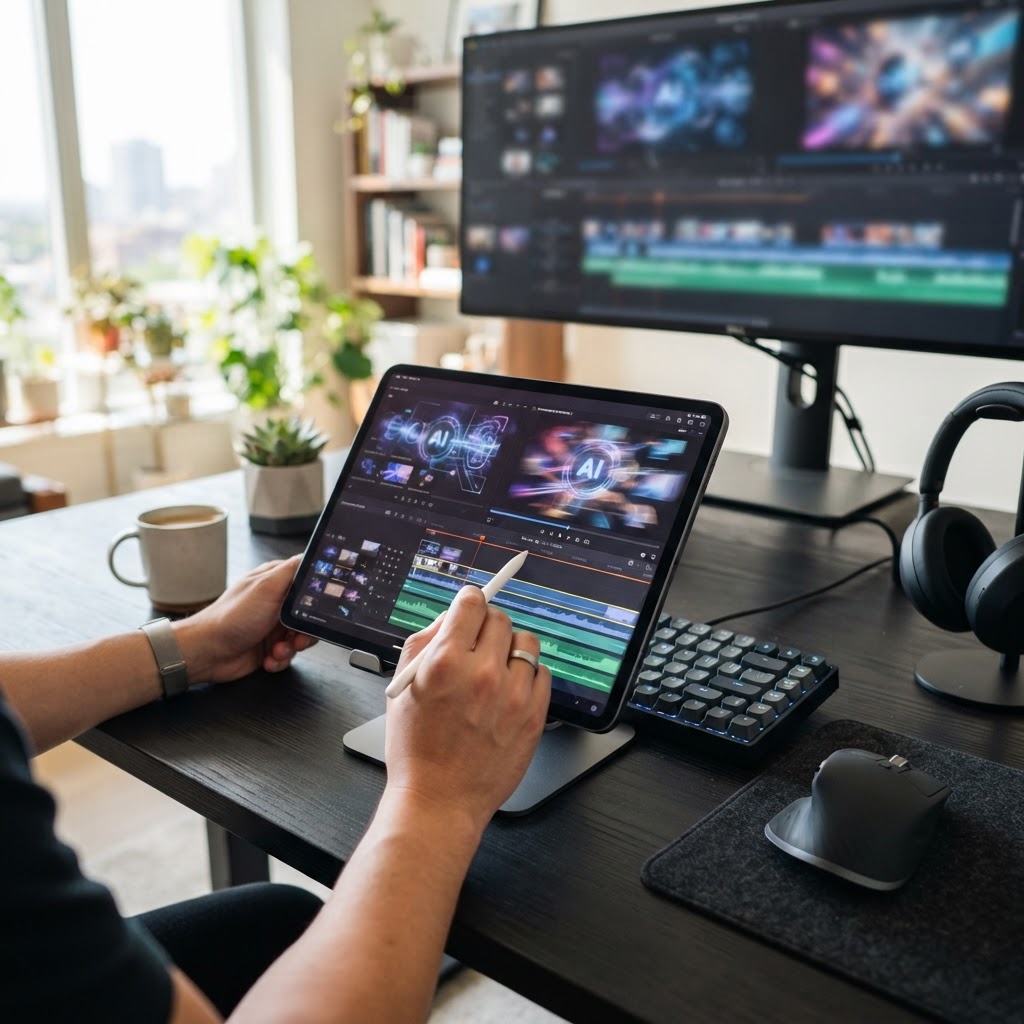
- AI video marketing tools have transitioned from novelty to necessity, drastically reducing the time required for high-quality production.
- Selecting the right platform requires balancing ease of use, hyper-realistic avatar fidelity, and robust editing capabilities.
- Automated video creation platforms allow marketing teams to iterate on content based on real-time performance data without manual re-editing.
- Personalization at scale is now achievable through AI-driven localization and dynamic content insertion, enabling brands to reach global audiences efficiently.
- Integration with existing marketing stacks is the most critical factor for long-term scalability and consistent brand governance.
In the landscape of 2026, the digital attention economy has reached a point of hyper-saturation where static imagery and text-based advertisements often struggle to capture engagement. As consumers increasingly prioritize video-first consumption across social media and professional platforms, the pressure on creative teams to output high-volume, high-quality motion content has grown exponentially. The emergence of sophisticated AI video marketing tools has fundamentally shifted this paradigm, enabling organizations to transition from manual, expensive production cycles to agile, AI-augmented workflows. By leveraging AI for video marketing, brands are now achieving levels of content velocity that were previously reserved for television-grade production houses, ensuring that they remain relevant, agile, and consistently visible in an increasingly fragmented digital marketplace.
1. Why AI Video Marketing is Essential in 2026
By 2026, the adoption of AI video marketing tools has become a prerequisite for maintaining competitive advantage. The primary driver for this shift is the need for content fluidity. Traditional production workflows—involving scriptwriting, storyboarding, filming, editing, and post-production—are inherently linear and slow, often taking weeks to deliver a single campaign asset. AI-driven solutions effectively collapse this timeline by enabling real-time generation and iterative refinement, allowing marketers to launch multiple variations of a campaign simultaneously to conduct A/B testing at an unprecedented scale.
Furthermore, the democratization of production value through automated video creation has allowed even lean, budget-constrained teams to compete with enterprise-level competitors. We see a significant shift where marketing departments are no longer limited by their budget for lighting crews, studio space, or high-end post-production editors. Instead, teams can now use generative models to synthesize high-fidelity visual assets, voiceovers, and motion graphics that align perfectly with their brand guidelines. This capability is not just about cost-cutting; it is about strategic responsiveness. When a cultural trend or market event occurs, teams that utilize social media video AI can pivot their messaging and deploy video content within hours rather than days.
The role of AI marketing automation in this space goes beyond simple generation. It involves the intelligent distribution and optimization of video assets. Advanced platforms now integrate directly with CRM and analytics software, allowing the video to change dynamically based on the viewer’s demographic, past purchase history, or current stage in the marketing funnel. This level of granular personalization represents the peak of modern marketing performance, as viewers are significantly more likely to engage with content that feels tailor-made for their specific needs. As we look at the evolution of the industry, the reliance on AI is no longer a “nice-to-have” innovation; it is the infrastructure upon which modern digital visibility is built. Organizations that neglect to integrate these tools risk stagnation, as they remain shackled to the slow, manual processes of the past while competitors benefit from the recursive efficiency of AI-powered creative pipelines.
2. Key Features to Look for in AI Video Marketing Software
When evaluating the marketplace, not all AI video solutions are created equal. Enterprise-grade tools must offer a sophisticated feature set that balances user accessibility with technical control. One of the primary features that experts generally agree is essential is high-fidelity neural lip-syncing. In 2026, the “uncanny valley” is being systematically bridged; users should look for platforms that offer nuanced facial expressions and natural micro-movements, ensuring that AI avatars or synthesized speakers look indistinguishable from real humans in promotional content.
Multi-modal input processing is another critical differentiator. The best AI video generator platforms allow for a “text-to-video” workflow while simultaneously offering granular control through visual scripting or drag-and-drop interfaces. This flexibility is vital because purely prompt-driven video often lacks the specific brand adherence required for professional settings. Users should prioritize software that supports custom asset ingestion—the ability to upload specific corporate fonts, logos, color palettes, and even proprietary voice clones to ensure brand consistency across all outputs.
Scalability features, such as bulk editing or “variable substitution,” are equally important for large-scale campaigns. If a campaign requires launching an ad in ten different languages with localized voiceovers, the software must handle this process automatically without requiring a complete manual overhaul for every variation. Additionally, integration capabilities cannot be ignored. The most effective AI tools act as central hubs, connecting seamlessly with project management platforms like Asana or Trello, and marketing automation systems like HubSpot or Salesforce. This ensures that the production process remains transparent and that metrics from the video’s performance can trigger automated iterations. Below is a comparative overview of how different categories of AI video tools align with marketing objectives.
| Tool Category | Core Functionality | Best For |
|---|---|---|
| Avatar-Led Platforms | Digital human generation for training and presentations. | Corporate training, sales outreach, internal comms. |
| B-Roll & Stock Fusion | Combining stock footage with AI narration and text. | Social media shorts, educational content, blog-to-video. |
| Generative Creative Suites | Full AI video editing with generative fill and texture. | Marketing agencies, high-end social campaigns. |
| Dynamic Localization | Automated translation and voice-swapping at scale. | Global marketing teams, multinational brand management. |
Finally, data security and compliance should be a foundational consideration. As AI models often process proprietary scripts or potentially sensitive company data, enterprise users should verify the platform’s stance on data privacy, specifically whether their inputs are used to train public models. The best-in-class software provides private, sandboxed environments, ensuring that all proprietary marketing strategies and brand assets remain strictly confidential, providing the security needed for high-stakes corporate environment operations.
3. Synthesia vs HeyGen: Which AI Avatar Tool is Better for Business?
In the domain of AI avatars, Synthesia and HeyGen have emerged as the dominant industry leaders, each catering to slightly different business needs. Synthesia has long been regarded as the gold standard for corporate professional development and large-scale onboarding videos. Its strength lies in its ecosystem of meticulously crafted, photorealistic presenters and its industry-leading stability. For businesses that require a consistent, high-end visual style for internal training, product explainers, and standardized sales videos, Synthesia provides a structured environment that minimizes the risk of AI “glitches” or unnatural movements, which is paramount for maintaining professional credibility.
Conversely, HeyGen has garnered significant attention for its rapid innovation and superior performance in hyper-personalization. HeyGen’s standout features often include their “instant avatar” technology, which allows users to create a high-quality, talking digital twin from a relatively short video sample of themselves. This capability makes HeyGen particularly attractive for thought leaders, influencers, and sales representatives who wish to maintain a personal connection with their audience while offloading the time-consuming process of manual recording. HeyGen’s interface is generally considered more intuitive for individual creators or smaller teams, offering dynamic features like interactive video integration—where the AI avatar can respond to user clicks—which brings a new level of engagement to digital brochures and outreach landing pages.
When comparing the two, the decision often comes down to the intended use case. Synthesia excels in scalability and uniformity; if your marketing department needs to produce 500 standardized product demos across 20 languages with identical production quality, Synthesia’s workflow is robust and dependable. It integrates well with corporate platforms and offers excellent support for team-based collaborative workflows. HeyGen, however, wins in the “creativity and engagement” category. Its ability to create unique, high-energy avatars and its frequent rollout of cutting-edge, experimental features make it an ideal choice for marketers who are looking to push the boundaries of social media engagement and personalized outbound messaging. The choice is not necessarily about which tool is “objectively” superior, but which tool better matches the internal culture and production velocity of your specific organization.
4. How InVideo AI Transforms Text Prompts into Polished Marketing Videos
InVideo AI represents a shift toward “conversation-first” production, moving away from complex timeline editing and toward an LLM-driven workflow. By interacting with a conversational interface, users provide a detailed prompt—such as “Create a 60-second vertical video for Instagram explaining the benefits of our new eco-friendly sneaker, targeting Gen-Z outdoor enthusiasts”—and the platform handles the heavy lifting. It scripts the content, sources relevant stock footage, arranges the clips, applies text-to-speech narration, and adds background music. This is a game-changer for lean teams who may lack a dedicated video editor but have a surplus of marketing ideas.
What distinguishes InVideo AI is its iterative refinement process. The initial output is rarely the final version, and the platform is designed to be “steered” through follow-up prompts. If the background music feels too aggressive, or a specific stock clip does not align with your brand’s visual aesthetic, you can simply type a command like “make the tone more chill” or “swap the forest background for a mountain vista.” This conversational edit loop drastically lowers the barrier to entry, allowing marketers to “direct” their video content in the same way they might brief a human freelancer, but with the speed of an automated processor. The AI understands cinematic pacing, ensuring that visual changes happen on the beat of the music or at logical narrative pauses in the script.
For social media video AI, InVideo provides a significant advantage in content volume. Because the platform can repurpose existing blog posts or product pages into multiple video formats (such as TikToks, Shorts, or Reels), teams can maintain a constant, fresh stream of content without constantly brainstorming from scratch. Furthermore, the tool includes sophisticated subtitling and captioning features that are optimized for mobile consumption—a vital factor in 2026 given that the majority of digital video is consumed with the sound muted. By automating the most tedious aspects of video production, InVideo AI allows marketing teams to focus on the higher-level strategy: content hooks, target messaging, and distribution channels, rather than the mechanical process of finding clips and trimming frames.
5. Scalable Content Production with Adobe Express and Generative Fill
Adobe Express has evolved into an essential component of the modern marketer’s toolkit, effectively bridging the gap between professional-grade creative capabilities and the need for high-speed, scalable content production. While other tools focus purely on video synthesis, Adobe Express leverages the power of Adobe’s Firefly AI, specifically utilizing its generative fill and generative extension capabilities to adapt video assets for different platforms and formats. For instance, if you have a primary horizontal video campaign for a website header, you can use AI to intelligently expand the composition for a vertical social media format or reframe the action to ensure the subject remains centered, saving hours of manual cropping and scene re-composition.
The strength of the Adobe ecosystem lies in the continuity of brand identity. For larger organizations that rely on Adobe Creative Cloud for their high-end design work, Adobe Express allows teams to pull in complex assets—such as custom vector graphics, motion animation presets, and professional-grade typography—into a simplified, AI-assisted interface. This ensures that even the most “automated” videos still possess the polished, professional look expected of established brands. The generative fill capabilities are particularly useful for marketing departments tasked with constant refreshes; if a product video requires a holiday-themed background or a quick change to the product’s environment, the AI can seamlessly alter the environment while keeping the subject and the call-to-action layers intact.
Furthermore, Adobe Express promotes collaborative efficiency by providing shared libraries where brand assets are pre-approved and locked. This prevents the “brand drift” that often happens when individual team members use unauthorized stock imagery or off-brand fonts in their AI-generated content. By combining the power of generative fill with centralized brand management, Adobe offers a unique value proposition: the ability to generate endless creative iterations while strictly adhering to corporate design standards. As the demand for platform-specific content increases, the ability to repurpose and “expand” video assets through AI—rather than just regenerating them from scratch—will become a cornerstone of sustainable, high-volume video marketing strategy in 2026 and beyond.
Automating Social Media Shorts with Opus Clip and Video AI
The explosion of short-form video content—led by TikTok, Instagram Reels, and YouTube Shorts—has fundamentally shifted the landscape of AI marketing automation. For marketing teams, the challenge is no longer just production, but repurposing long-form content into high-performing, bite-sized assets. Tools like Opus Clip and Video AI have emerged as the industry standards for this specific requirement, utilizing generative AI to solve the “repurposing bottleneck.”
Opus Clip functions primarily as a generative AI video re-purposing tool that specializes in “long-to-short” workflows. It analyzes long-form videos—such as podcasts, webinars, or long-form interviews—and uses natural language processing (NLP) to detect high-engagement moments. It then crops these sections into vertical 9:16 aspect ratios, generates dynamic captions, and provides a “virality score” for each clip. This automated scoring mechanism helps marketing managers prioritize which assets to push to social media, effectively turning a single hour-long production session into a week’s worth of social media output.
Video AI platforms, meanwhile, often integrate more heavily with social media management systems, allowing for direct scheduling and publishing. The technical advantage here lies in “context-aware cropping.” Unlike manual editing where a human editor must track a subject across a frame, AI video tools utilize face-tracking algorithms to ensure the primary speaker remains centered throughout the clip, regardless of movement. This preserves the visual integrity of the content while optimizing it for mobile-first consumption.
To maximize these tools, marketing teams should adopt a “pillar content” strategy. By creating one high-quality, long-form master video, they provide the AI with a dense source of data. The AI then extracts the “nuggets”—the most punchy quotes, surprising data points, or controversial takes—that act as top-of-funnel magnets for social media audiences. By automating the clipping process, teams reduce the need for manual non-linear editing, allowing human editors to focus on higher-level creative strategy rather than tedious frame-cutting.
Optimizing Video Campaigns for Higher Conversion Rates
AI for video marketing is not limited to mere production; it plays a critical role in conversion rate optimization (CRO). When deploying video ads, the objective is rarely just views—it is engagement and action. AI-driven video platforms now offer predictive analytics that can simulate audience reactions to specific visual hooks or color palettes before a campaign even goes live.
One of the most effective strategies for increasing conversions is A/B testing at scale. Historically, testing three different versions of an advertisement was a logistical challenge. With AI marketing automation, teams can generate dozens of variations of a single video, changing elements like the background music, the tone of the voiceover, or the placement of the Call-to-Action (CTA) overlay. By feeding these variations into ad platforms that utilize automated creative testing, the system can identify which version results in the lowest Cost-Per-Acquisition (CPA).
Furthermore, personalization is the new frontier of video conversion. AI tools now allow for “dynamic video templates” where specific text overlays—such as a viewer’s name, their company name, or a specific regional offer—can be injected into the video in real-time. This level of customization has been shown in many industry benchmarks to significantly improve click-through rates (CTR) compared to static, generic advertisements. When a user sees their own data reflected in a video, the psychological barrier to engagement is lowered, facilitating a more direct path to the conversion funnel.
| AI Video Tool | Primary Capability | Best For |
|---|---|---|
| Opus Clip | Long-form to short-form clipping | Podcast & Webinar Repurposing |
| HeyGen | Avatar-based video generation | Corporate Communications/Sales |
| InVideo AI | Text-to-video creative workflow | Social Media Ads & Promo Videos |
| Descript | Text-based video/audio editing | Editing & Polishing Narratives |
| Synthesia | Scalable avatar video creation | Training & Multilingual Marketing |
Balancing AI Efficiency with Brand Authenticity
As the barrier to entry for video production lowers, the marketplace is becoming increasingly saturated with synthetic content. This creates a new challenge for brands: maintaining authenticity in an era of AI-generated assets. When every brand uses similar AI voices and stock-like avatars, the “uncanny valley” effect can result in audience fatigue. To avoid this, marketing teams must balance automation with “human-in-the-loop” oversight.
The most successful companies use AI as a collaborator rather than a replacement for creative direction. For example, while AI can generate the foundation of a video, human editors should focus on “fine-tuning the soul”—injecting brand-specific storytelling elements, humor, or unique visual styles that AI algorithms cannot replicate. AI is excellent at structure and efficiency, but human intuition remains superior at identifying emotional resonance.
Authenticity also extends to transparency. Many organizations are finding success by being open about their use of AI. For instance, using an AI-generated narrator for a technical walkthrough is often acceptable to audiences, provided the brand remains transparent and the core message is helpful. However, replacing human testimonials or customer success stories with synthetic avatars can often backfire and erode trust. The rule of thumb for 2026 is: use AI for scale and technical precision, but use humans for connection, testimonials, and high-stakes brand messaging.
Pricing Models: Evaluating ROI for Marketing Teams
Evaluating the Return on Investment (ROI) of AI video tools requires a shift in how marketing teams account for production costs. Traditional video production often involves high capital expenditure (CapEx) on studio time, freelance editors, and equipment rentals. Conversely, AI video tools typically operate on a Software-as-a-Service (SaaS) subscription model, which shifts these costs to Operating Expenses (OpEx).
When calculating ROI, teams should consider the “Time-to-Asset” metric. If a marketing team previously spent three days producing a promotional video but can now produce that same asset in three hours using AI tools, the ROI isn’t just the saving on production costs—it is the potential for increased revenue through faster campaign deployment. Teams can launch more campaigns, test more messaging, and stay relevant in fast-moving social media trends that would have been inaccessible before.
However, users must be wary of hidden costs. Many AI video platforms charge based on “generation credits,” which can become expensive during periods of high output. Additionally, the premium features required for commercial rights or high-resolution exports often sit in higher-tier plans. Before committing to a subscription, it is recommended that teams conduct a pilot project to audit the total cost of ownership (TCO) against the actual volume of content produced. In many cases, it is more cost-effective to pay for a higher-tier subscription that covers an entire team than to maintain multiple individual seat licenses.
Future Trends in AI-Driven Video Advertising
The trajectory of AI video marketing points toward full-cycle automation. We are moving beyond the era of simple text-to-video generation and entering the era of “Agentic Video Workflows.” In the near future, we expect to see AI tools that don’t just create a video but research a topic, draft a script, generate the visuals, perform sentiment analysis on the finished product, and optimize the thumbnail—all based on a single prompt from the marketing manager.
Another emerging trend is the integration of real-time data into video rendering. Imagine an advertisement that automatically updates its CTA based on the current weather in the viewer’s location or the specific stock price of the company they are browsing. This “contextual rendering” will make video ads feel like living documents rather than static files. As generative AI models become better at understanding brand guidelines, the struggle of maintaining brand consistency across different AI-generated videos will also dissipate, as companies begin to train proprietary AI models on their own brand assets.
Frequently Asked Questions
What is the primary benefit of using AI for video marketing?
The primary benefit is scalability. AI tools allow marketing teams to produce a high volume of professional-quality video assets in a fraction of the time and cost compared to traditional production, enabling more frequent A/B testing and rapid campaign deployment.
Can AI-generated videos replace professional video editors?
While AI can automate routine tasks like clipping, subtitling, and basic assembly, it does not replace the strategic oversight and creative nuance of a professional editor. AI functions best as an augmentative tool that handles the repetitive workload, freeing humans to focus on complex editing and brand storytelling.
Are AI-generated videos detectable by platforms like YouTube or TikTok?
Most major platforms have implemented watermarking or metadata requirements for AI-generated content. While algorithms can often identify machine-produced patterns, well-edited AI content that incorporates human oversight is usually treated the same as standard content by recommendation engines.
Do I need to be a video editing expert to use these AI tools?
Most AI video marketing tools are designed with a low barrier to entry, utilizing drag-and-drop interfaces or text-based prompts. You do not need professional editing experience to start, though understanding the fundamentals of video composition and brand messaging will improve your final output.
How do I protect my brand’s voice when using AI?
To maintain brand consistency, use AI platforms that allow for “brand kits” or “style presets.” Uploading your specific fonts, color palettes, and voice samples helps ensure that every piece of AI-generated content remains aligned with your visual and tonal identity.
Will AI-generated videos hurt my organic reach on social media?
Organic reach is primarily determined by audience engagement rather than the origin of the production. If your AI-generated videos are high-quality, relevant to your audience, and encourage interaction, they are just as likely to perform well as traditional videos.
Conclusion
The evolution of AI video marketing tools in 2026 presents an unprecedented opportunity for teams to scale their creative output, optimize their conversion funnels, and maintain a competitive edge in an increasingly visual digital landscape. While the technology is powerful, the winning strategy remains constant: leverage AI to handle the heavy lifting of production, but ensure the final narrative is anchored in human insight and brand purpose. By choosing the right mix of tools and maintaining a thoughtful, data-driven approach, your marketing team can transform video production from a bottleneck into your most reliable engine for growth.
Ready to streamline your video workflow? Audit your current content creation pipeline today, sign up for a trial of one of the top tools mentioned in this comparison, and start testing your first AI-optimized campaign.
By aismarttoolsreview Editorial Team
Leave a Reply