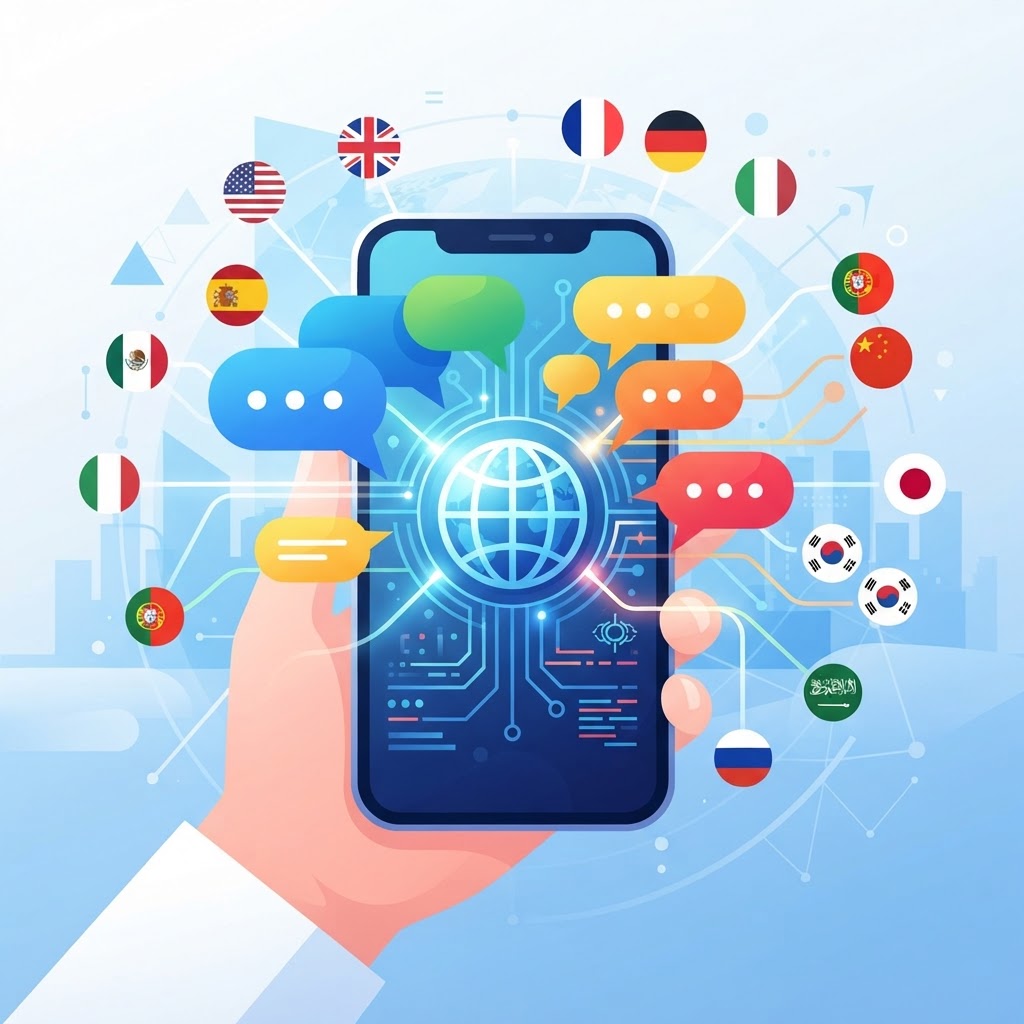
- Modern AI language learning apps have moved beyond simple vocabulary drills to offer dynamic, generative dialogue experiences.
- Adaptive algorithms now prioritize spaced repetition and personalized content gaps rather than fixed linear curriculum paths.
- Advanced speech recognition technology in 2026 allows for nuanced phoneme analysis that mimics the feedback loop of a human tutor.
- While traditional methods emphasize academic rigor, AI-driven platforms provide 24/7 conversational practice without the anxiety of human judgment.
- Choosing between Duolingo, Babbel, and ELSA requires balancing a preference for gamification, structured linguistics, or specialized pronunciation focus.
The landscape of linguistic education has shifted dramatically as we enter the middle of the decade. For years, digital platforms were restricted to static flashcards and fill-in-the-blank grammar exercises. Today, the best AI language learning apps leverage Large Language Models (LLMs) and sophisticated neural networks to create an immersive, responsive environment that adapts to the learner in real-time. Whether you are aiming for fluency in a professional setting or simply looking to navigate a new culture with confidence, the integration of generative AI has transformed the mobile device into a versatile AI language tutor. This guide explores the evolving hierarchy of these tools, focusing on how Duolingo, Babbel, and ELSA have pivoted to meet the high demands of the 2026 market, and how these advancements compare to the limitations of traditional language apps.
How AI is Revolutionizing Language Acquisition in 2026
In 2026, the term “language learning” has evolved from simple memorization to dynamic acquisition. In the past, language apps relied on pre-scripted dialogue trees that often felt robotic and predictable. If a learner deviated from the expected input, the app would fail to provide meaningful feedback, leading to a frustrating experience. The revolution we are witnessing today is powered by context-aware AI. By utilizing massive datasets, these applications now understand intent, sentiment, and nuance, allowing users to engage in open-ended conversations that evolve based on their unique performance history.
When you decide to learn languages with AI, you are essentially tapping into a personalized pedagogical engine. Modern platforms now utilize sentiment analysis and syntactic evaluation to determine exactly where a learner is struggling. Is it a lack of vocabulary? Or is it a misunderstanding of complex grammatical structures like the subjunctive mood in Spanish or the case systems in German? AI models can now diagnose these issues instantly. By analyzing thousands of user interaction points per session, these systems create a pedagogical “living document” of your progress. This shift away from rigid, linear modules allows learners to bypass material they have already mastered, saving significant time and maintaining engagement.
Furthermore, the democratization of high-quality language tutoring is perhaps the most significant change. Historically, private instruction was the gold standard, offering tailored feedback that apps simply could not replicate. However, the cost and availability of native-speaking tutors often created barriers to entry. Today, AI-driven models provide a “zero-barrier” entry point. Users can practice complex scenarios—such as job interviews, medical consultations, or casual social interactions—without the social anxiety often associated with speaking to a human in a new language. This “safe space” for failure is a crucial component of modern acquisition strategies; learners are statistically more likely to iterate on their mistakes when they do not feel the pressure of judgment. Experts generally agree that this psychological comfort is a primary driver behind the recent surge in daily active users on top-tier language platforms.
The architecture behind these systems is also becoming increasingly multimodal. It is no longer just about text. Integration with high-fidelity speech-to-text engines and image-recognition models allows the app to describe physical environments, translate signage in real-time, or explain cultural nuances found in images. This creates a holistic ecosystem where the learner is not just studying a language in a vacuum but is engaging with the world through the lens of their target language. The 2026 learner does not just study grammar; they experience a simulated immersion that adapts precisely to their current proficiency level, cognitive load, and personal interests, creating a feedback loop that is significantly more efficient than anything available in the previous decade.
Personalized Learning Paths: Adaptive AI Algorithms Compared
The core difference between the best AI language learning apps and their predecessors lies in the intelligence of their adaptive algorithms. In older apps, the curriculum was typically static—a “one-size-fits-all” map that every user traversed in the same order. Today, the curriculum is a fluid entity, constantly being rewritten by the app’s backend engine to optimize for retention and proficiency. This is often achieved through advanced implementations of spaced repetition systems (SRS) that are augmented by AI, rather than relying solely on simple, time-based algorithms.
Consider the difference in how these systems handle “leaked” knowledge. If a learner demonstrates a strong grasp of past tense verbs in French but struggles with irregular adjectives, the adaptive AI of a platform like Duolingo or Babbel will adjust the weighting of the daily curriculum. It will reduce the repetition frequency for the mastered material while injecting more varied examples of the weak point into different contexts—such as listening exercises, reading comprehension, or sentence-building tasks. This cross-contextual reinforcement is vital for long-term memory consolidation. Unlike traditional methods, which might simply force the learner to repeat a specific module, the AI intelligently weaves the problem area into fresh, engaging content.
| Feature | Duolingo Max | Babbel AI | ELSA Speak | Best For |
|---|---|---|---|---|
| Core Philosophy | Gamification/Habit | Academic/Practical | Phonetic Precision | Building daily consistency |
| Adaptive Logic | High frequency path | Contextual/Functional | Phoneme-level analysis | ELSA for accent correction |
| AI Chat Utility | Roleplay focus | Real-world scenarios | N/A (Pronunciation) | Babbel for professional use |
| Pricing/Tier | Subscription (Max) | Subscription/Individual | Subscription (Premium) | Value based on goals |
Adaptive algorithms also take into account the “forgetting curve.” By tracking how long a user takes to respond to a prompt and their history of correct versus incorrect inputs, the system calculates the optimal moment to re-introduce a word or phrase. If the model detects that the user is becoming bored or overconfident, it might intentionally increase the complexity of the sentence structures to force active recall. This is a far cry from the linear progression of traditional flashcard apps. In modern platforms, the “adaptive” element acts like a digital pedagogical coach, ensuring that the user is always in their “Zone of Proximal Development”—the sweet spot where the material is challenging enough to be effective but not so difficult that it causes the learner to quit.
It is important to note that the effectiveness of these algorithms relies heavily on user data density. The more a user interacts with the app, the more accurate the AI becomes in predicting their weak spots. This is why many of the best AI language learning apps now encourage “micro-learning” sessions throughout the day. By providing several short, high-density bursts of activity, the app collects more frequent data points compared to a single, hour-long session. This allows for a more granular adjustment of the user’s personal syllabus. As we look further into 2026, we expect to see even tighter integration between biometric feedback—such as time-on-task, touch-response latency, and even eye-tracking in AR-integrated apps—further refining how these paths are generated for the individual user.
Real-Time Speech Recognition and Pronunciation Feedback
One of the most persistent hurdles in language acquisition has always been the transition from “knowing” a language to “speaking” it. In the past, apps relied on simple waveform comparisons that often gave a “pass” even when the pronunciation was heavily accented or incorrect. Today, real-time speech recognition has been overhauled by transformer-based models that analyze speech at the phoneme level. This shift is critical because human language is not just a collection of words; it is a complex series of sounds, pitches, and rhythms that must be produced with precise muscular control.
Platforms like ELSA (English Language Speech Assistant) have set the standard for this category, utilizing AI to provide a visual breakdown of how the tongue, lips, and throat should move to produce a specific sound. When a user speaks into the app, the system performs a multi-layered analysis. It looks at the timing, the intonation (prosody), and the individual phoneme accuracy. Instead of a binary “correct” or “incorrect,” the AI offers a detailed map of where the pronunciation failed. For instance, if a user is struggling with the difference between a long and short vowel, the app can highlight that specific sound and compare it side-by-side with a native speaker’s waveform.
This level of precision changes the nature of speech recognition language learning. It moves from passive listening to active correction. The best AI language learning apps now employ “generative feedback,” where the AI explains *why* the user is failing to be understood. If a learner is consistently mispronouncing a word due to an interference from their native language—a common issue known as “L1 interference”—the AI can identify this pattern and suggest specific exercises to decouple the habit. This is effectively like having a phonetician in your pocket at all times. The pedagogical value of this cannot be overstated; it reduces the amount of time required to achieve a neutral or natural-sounding accent, which is often the biggest obstacle for adult learners.
Integration with LLMs also means that the pronunciation feedback is now context-dependent. If you are practicing a dialogue about ordering coffee, the app evaluates your pronunciation not just against a general baseline, but against the expected phrasing of that specific scenario. It considers the pace and emotional tone of the speaker. If the context is a heated argument or a casual greeting, the app’s AI adjusts its expectations for prosody and pitch. This nuance is crucial. In traditional language apps, a flat, monotonous recitation was often marked correct as long as the words were in the right order. In 2026, the AI evaluates the *naturalness* of the delivery. This encourages learners to develop a more rhythmic, fluid command of their target language, pushing them closer to the elusive goal of native-like fluency.
Moreover, the technological leap in low-latency processing means that feedback is now almost instantaneous. You don’t have to wait for the app to “process” your sentence. You speak, and the feedback appears on the screen in milliseconds, allowing you to iterate immediately. This is the difference between a delayed review process and a real-time conversation. When the brain receives immediate correction, it creates a much stronger neural association with the correct sound. This rapid loop of experimentation and correction is the hallmark of effective AI-driven pronunciation training, and it is a key reason why speech-focused apps have become such integral tools for professional development in international business and diplomacy.
Conversational Practice: AI Chatbots vs Human Tutors
The debate between AI chatbots and human tutors is one of the most prominent topics in the field of linguistics today. In 2026, the gap between these two options has narrowed significantly, though each serves a distinct role in the learner’s journey. AI chatbots provide a high-frequency, low-stakes environment for practice. They are available 24/7, possess infinite patience, and can switch between topics or dialects with the tap of a button. For many learners, the sheer volume of “talk time” is the single most important factor in achieving proficiency, and AI is arguably the most efficient way to achieve this volume.
However, human tutors bring something that AI, for now, cannot fully replicate: deep cultural context and complex emotional empathy. While an AI can simulate a debate, a human tutor can navigate the nuances of irony, sarcasm, and regional cultural taboos that a learner might not even know exist. A human tutor can also observe non-verbal cues—a frustrated look, a confused pause—and adjust their teaching style in ways that even the most advanced multimodal AI models have yet to fully master. If a learner is preparing for a specific, high-stakes situation like a business negotiation in Tokyo or a wedding toast in Paris, a human tutor provides a level of lived experience that offers invaluable guidance beyond just linguistic accuracy.
The AI vs traditional language apps distinction often comes down to this: AI is an engine for habit and skill-building, while human interaction is an engine for refinement and application. Many experts suggest a hybrid approach. Using an AI-driven app for 30 minutes a day builds the vocabulary foundation and the “muscle memory” of pronunciation, while a weekly session with a human tutor allows the learner to stress-test their skills in a complex, unpredictable environment. AI chatbots, particularly those integrated into Duolingo Max or Babbel AI, are excellent for practicing “scripts”—the bread and butter of daily communication. They are perfect for the early and intermediate stages where the goal is to build automaticity.
One of the limitations of AI chatbots is the “hallucination” factor, although this has been mitigated in 2026 through the use of Retrieval-Augmented Generation (RAG) and stricter training guardrails. Early AI chatbots would sometimes teach incorrect grammar or create non-existent vocabulary. Today, the best apps anchor their LLMs in validated, curated linguistic databases, ensuring that the content they produce is grammatically sound and culturally appropriate. This “academic grounding” is what differentiates top-tier commercial apps from open-source chatbots. When you interact with a specialized AI tutor, you can have a higher level of confidence that the feedback is pedagogically sound rather than just “plausible-sounding” output.
Ultimately, the choice between the two depends on the learner’s specific goals. If the objective is to pass a proficiency exam or reach a B2 level of conversational fluency, the efficiency of AI-powered conversational practice is unmatched. The ability to generate thousands of unique, context-specific scenarios—ranging from airport check-ins to technical software troubleshooting—provides a level of breadth that no single human tutor could reasonably cover in a sustainable timeframe. As AI continues to evolve, the “tutor” role may shift toward a managerial capacity, where the human mentor analyzes the data generated by the app to provide high-level strategy and motivation, rather than serving as the primary source of vocabulary and syntax drills.
Duolingo Max vs Babbel AI: Gamification vs Academic Rigor
As we compare the titans of the industry, Duolingo Max and Babbel AI represent two fundamentally different philosophies of education. Duolingo Max is the evolution of the “gamified” approach. It utilizes AI to deepen the engagement loop that has made the base app so successful globally. By incorporating “Explain My Answer” and “Roleplay” features, it takes the standard, repetitive tasks and injects a layer of depth. For the user, the AI feels like a natural extension of the game-like UI. It keeps the learner in the “flow state” by ensuring that the feedback is bite-sized, encouraging, and delivered within the existing structure of the app’s XP-based progression system.
Babbel AI, on the other hand, leans into the tradition of academic rigor. Babbel has long been known for its focus on practical, real-world utility—language you can actually use in a store, a restaurant, or a boardroom. Their integration of AI is less about keeping the user “addicted” through gamification and more about enhancing the realism of their functional dialogues. Babbel’s AI chatbots are typically more focused on specific real-world simulations, providing more detailed feedback on why a specific phrasing is better suited for a professional environment compared to a casual one. This appeals to a demographic that values efficiency and practical applicability over the social and competitive aspects of language learning.
The core of the “Duolingo vs Babbel” debate often hinges on the user’s motivation. If you are a casual learner who struggles with consistency, the gamification strategies in Duolingo Max are statistically more likely to keep you engaged over a long period. The strength of the platform lies in its ability to build a habit. If you do not show up, you lose your streak, which is a powerful psychological incentive. Conversely, if your goal is professional advancement or a structured approach to learning a language for a specific travel or work goal, Babbel AI’s structured modules offer a more predictable, academically grounded roadmap. Their content is often developed in partnership with linguists who prioritize structural building blocks over engagement metrics.
However, in 2026, both platforms have begun to bleed into each other’s territory. Duolingo is incorporating more complex, nuanced grammar explanations, and Babbel is becoming more interactive and responsive. The “AI” component is the common denominator. Both companies now realize that they cannot afford to have a static curriculum. They are both competing to see who can build a better “AI language tutor” that can parse the unique needs of a 21st-century learner. For the user, this is a win-win. We are seeing a competition to see who can provide the most personalized, accurate, and engaging experience. As these tools continue to mature, the distinction between a “fun” app and a “serious” app will likely become less meaningful, as both will have to perform at a high level of pedagogical proficiency to survive in an increasingly crowded market.
Elsa Speak vs Speak App: Which is Better for Fluency?
When discussing the best AI language learning apps focused specifically on oral proficiency, the conversation inevitably drifts toward the rivalry between ELSA Speak and the Speak App. While both platforms leverage advanced speech recognition, their underlying philosophies regarding fluency differ significantly. ELSA Speak (English Language Speech Assistant) primarily positions itself as a precise pronunciation coach. Its deep-learning engine is trained on diverse voice data to detect granular errors in phonemes, intonation, and rhythm. If your primary goal is to sound more like a native speaker and reduce your regional accent, ELSA’s diagnostic capabilities are arguably industry-leading. It provides a granular “ELSA Score,” offering visual feedback on where a user’s tongue or lip placement might be failing to produce the correct English sound.
Conversely, the Speak App adopts a communicative and functional approach to fluency. Rather than obsessing over the precise acoustic quality of a single phoneme, Speak focuses on the “production” aspect—helping users think and speak in full sentences at speed. It uses an AI-powered conversational partner that forces the user to construct responses, practicing the flow of discourse rather than just isolated sounds. In the context of 2026, where AI language tutors are moving toward multi-modal interaction, Speak’s strength lies in its ability to simulate real-world situational anxiety. It creates an environment where you must articulate complex ideas rapidly, which is often a better predictor of real-world fluency than perfect pronunciation.
To assist in your decision, the following table summarizes the core differences between these two powerhouses:
| Feature | ELSA Speak | Speak App | Best For |
|---|---|---|---|
| Primary Focus | Pronunciation & Accent | Sentence Structure & Fluency | Nuanced Needs |
| Feedback Type | Phoneme-level analysis | Semantic and speed-based feedback | Balanced Approach |
| AI Interaction | Coaching & Correction | Simulated Conversation | Conversational Practice |
| User Experience | Technical/Drill-oriented | Intuitive/Task-oriented | Personal Preference |
Choosing between them requires a realistic assessment of your current language level. If you are an intermediate learner who has already mastered grammar but suffers from intelligibility issues, ELSA’s focus on the mechanics of speech is indispensable. However, if your challenge is the “frozen” feeling—the inability to retrieve vocabulary during a live conversation—the Speak App offers the active repetition training necessary to build the neural pathways required for spontaneous communication. Many advanced learners in 2026 choose to use both: ELSA for refined pronunciation in the morning and the Speak App for active conversational output in the evening.
Integrating AI Language Tools into Your Daily Routine
The most sophisticated AI language tutor will fail if it remains a dormant icon on your home screen. Integrating these tools into a daily workflow requires moving beyond “passive consumption” toward “active habit stacking.” The most effective learners treat their apps not as games, but as high-intensity interval training (HIIT) for the brain. The first step in successful integration is identifying your “micro-learning” windows—the 10 to 15-minute gaps in your day, such as a morning commute, a lunch break, or time waiting for an appointment.
A rigorous routine involves three distinct phases: input, output, and reflection. During the input phase, use apps like Babbel or Duolingo to solidify vocabulary and grammar structures. In the output phase, transition to speech-heavy apps like Elsa or Speak to apply that knowledge in a controlled environment. The final phase, reflection, is often ignored but is critical: use the AI’s review features or a secondary LLM (Large Language Model) tool to analyze your past mistakes. Ask the AI, “Why is my sentence structure awkward here?” or “Give me three alternative ways to say this sentence to make it sound more professional.”
To maintain consistency, leverage the notification settings of your chosen AI tools, but be selective. Instead of allowing generic “daily reminder” pings, set specific learning goals such as “Complete three pronunciation drills” or “Practice ordering a coffee using the AI roleplay module.” By gamifying the integration process, you transform the language learning experience from a chore into a quantifiable pursuit of self-improvement. Furthermore, try to synchronize your AI practice with your real-world interests. If you are interested in technology, ask the AI to roleplay a tech-support scenario; if you enjoy cooking, use the app to explain a recipe. Connecting your language learning with your identity ensures that the content remains engaging and relevant, which is essential for long-term retention.
The Role of Contextual Learning in AI-Driven Education
Traditional language learning often suffers from “decontextualization,” where students memorize lists of words that lack real-world application. AI-driven education in 2026 has successfully pivoted away from this model toward contextualized learning. Contextual learning posits that language is best acquired when it is embedded in meaningful situations. When you learn the word “reserve” in a list, it is abstract. When an AI tutor guides you through a simulated scenario where you must reserve a hotel room for a client with specific dietary needs, the word becomes a functional tool for solving a problem.
AI tools have fundamentally altered this landscape through dynamic scenario generation. Unlike fixed textbooks, AI can generate infinite variations of a conversation based on your interests or professional requirements. This creates “cognitive friction”—the slight, productive struggle that occurs when the brain is pushed just beyond its current comfort zone. In 2026, the best AI platforms use adaptive difficulty algorithms. If the AI detects that your sentence complexity has improved, it will automatically increase the difficulty of the scenario, introducing slang, complex verb tenses, or professional jargon.
Furthermore, context extends to the feedback loop. Rather than just marking an answer “Correct” or “Incorrect,” modern AI provides situational feedback. For example, if you are learning Spanish, the AI might explain that a specific phrase is grammatically correct but culturally rude or overly formal for the situation you are roleplaying. This pragmatic competence—knowing not just how to speak, but how to speak appropriately for the context—is what distinguishes the AI tutors of 2026 from the rudimentary chatbots of the past. It shifts the learning objective from mere translation to effective cross-cultural communication.
Subscription Models: Are Premium AI Features Worth the Cost?
The market for AI language apps is increasingly bifurcated between freemium models and aggressive premium tiers. When determining if the upgrade is worth the expense, users must analyze whether the premium features directly address their specific bottlenecks. Typically, free versions of these apps offer limited access to repetitive exercises, which are excellent for beginners but quickly lose their utility as you advance. The premium features, such as unlimited AI conversational practice, personalized error reporting, and access to “pro-level” roleplay scenarios, are where the true value lies.
Many premium subscriptions also offer offline access and ad-free interfaces, which, while convenient, should not be the primary justification for the cost. The primary value proposition for a premium AI tool is the “personalization of the feedback loop.” Free versions often use static evaluation logic; premium versions leverage more sophisticated LLMs that can remember your past mistakes and tailor future lessons specifically to your weaknesses. If you have been struggling with a specific grammar point for two weeks, a premium AI tutor will recognize this trend and adjust your curriculum to provide targeted practice until the concept is mastered.
Before committing to an annual subscription, use the free trial period to test the “AI responsiveness” rather than just the user interface. Ask the AI complex, non-standard questions to see if it can handle nuanced responses. If the app consistently provides generic or pre-scripted answers, the premium features are unlikely to offer a return on your investment. If, however, the app engages you in a fluid, unpredictable dialogue that challenges your comprehension, the cost is arguably offset by the time saved in tutoring or the speed at which you reach functional proficiency.
Future Trends in AI-Powered Language Learning Technology
As we look past 2026, the trajectory of language learning technology is pointing toward hyper-personalized, immersive experiences. We are rapidly moving toward the era of “ambient learning,” where AI tutors move off the smartphone screen and into wearable devices. Imagine smart glasses that provide real-time translation and vocabulary cues while you are walking through a foreign city, or ear-worn AI assistants that coach your pronunciation during live conversations without disrupting your natural flow.
Another major trend is the integration of sentiment analysis. Future AI tutors will not just listen for correct grammar; they will evaluate your tone, confidence, and emotional state. By gauging whether a learner is frustrated or bored, the AI will be able to pivot the lesson to maintain optimal engagement levels. Furthermore, we expect to see a surge in “cross-platform synchronization,” where your AI tutor integrates with your digital lifestyle. For example, the AI might analyze the podcasts you listen to or the news articles you read to curate a personalized vocabulary list, ensuring your learning is constantly aligned with your actual interests.
Finally, the development of “multimodal LLMs” will allow learners to interact with AI through a combination of text, voice, and image recognition. You will be able to point your camera at an object and ask the AI not just for the name of the object, but for its role in local culture, how it is used in common idioms, and even to simulate a transaction involving that item. This shift from “learning a language” to “interacting with the world through language” is the ultimate goal of AI developers in the coming years.
Frequently Asked Questions
Can AI language apps truly replace human tutors?
While AI apps are exceptional for scale, consistency, and low-pressure practice, they generally do not replace the nuance, cultural insight, and personalized mentorship of a high-quality human tutor. For most learners, the optimal strategy is a hybrid approach where AI handles the repetitive drills and conversational volume, while human tutors provide guidance on complex cultural context and emotional nuance.
Do I need a paid subscription to reach fluency?
You can achieve basic conversational proficiency using free resources, but reaching advanced fluency typically requires the advanced feedback mechanisms, unlimited conversational practice, and tailored lesson plans found in premium versions. If you are learning for a professional or academic requirement, the investment in premium tools is often justified by the increased efficiency and faster progress.
How does speech recognition in AI actually work?
Most modern language apps utilize Automatic Speech Recognition (ASR) combined with neural networks. These systems break down your speech into audio “features,” compare them against massive databases of native-speaker audio, and identify deviations in phonemes, prosody, and speed. The AI then maps these deviations to specific pedagogical feedback to help you correct your physical speech production.
Are these apps effective for people with learning disabilities?
Yes, many AI-driven apps are highly beneficial for neurodivergent learners because they provide a private, non-judgmental, and highly customizable environment. Learners can control the pace of interaction, repeat exercises infinitely without social pressure, and use visual/auditory aids that cater to specific learning styles, which is often difficult to replicate in a traditional classroom.
Which app is best for a complete beginner?
For complete beginners, apps that offer a structured, foundational approach—such as Duolingo for basic vocabulary and pattern recognition, or Babbel for structured grammatical scaffolding—are typically the most recommended starting points. Once a foundation is established, transitioning to more conversational, AI-native tools becomes significantly easier.
How do I know if an AI language app is accurate?
To verify accuracy, look for apps that explicitly state their reliance on linguistically verified datasets or those that allow for “community-sourced” corrections. Additionally, test the app by inputting common idioms or slang; a high-quality AI tutor should be able to explain the meaning behind these phrases rather than simply providing a literal or nonsensical translation.
Conclusion
The landscape of language acquisition in 2026 is defined by unprecedented accessibility and personalization. Whether you choose the accent-perfecting drills of ELSA Speak, the structural focus of the Speak App, or the foundational gamification of Duolingo and Babbel, you are equipped with tools that previous generations could only dream of. The “best” app is ultimately the one that aligns with your specific goals, fits into your daily routine, and challenges you to move beyond your comfort zone.
However, technology is merely a catalyst; your progress remains the result of consistent, active engagement. Do not treat these apps as passive entertainment. Instead, use them as dynamic laboratories where you can experiment, make errors, and refine your voice. The path to fluency is not found in the perfect app, but in the sustained commitment to applying your language skills in increasingly complex and real-world scenarios. Now is the time to leverage these tools to bridge the gap between where you are and where you want to be. Download your chosen app, set your first 15-minute goal for today, and start speaking.
By aismarttoolsreview Editorial Team
Leave a Reply